The production of valuable herbs such as Yarsagumba, Satuwa, Niramsi, Vishajara etc. in Myagdi is decreasing every year.
We use Google Cloud Translation Services. Google requires we provide the following disclaimer relating to use of this service:
This service may contain translations powered by Google. Google disclaims all warranties related to the translations, expressed or implied, including any warranties of accuracy, reliability, and any implied warranties of merchantability, fitness for a particular purpose, and noninfringement.
Due to the loss of the biological balance of the forest and the spread of invasive plants, it has been found that herbs and useful plants are rapidly declining. Chaipaya Charicharan stopped the spread of weeds of Michaha nature.
Locals have complained that not only the herbs but also the grass eaten by the four-footed animals have disappeared from the forest due to the spread of unnecessary weeds after the cattle were taken to the forest.
According to the records of Division Forest Office Myagdi for the last five years, the production of valuable herbs such as Yarsagumba, Satuwa, Niramsi, Vishjara etc. which are collected and exported from the district is also decreasing .
According to Bhakta Purja, a member of the Ramche Community Forest Consumer Committee, new weeds such as unnecessary deforestation have spread due to the cessation of open grazing and mobile cattle sheds in the community forest and the decrease in attraction towards the traditional animal husbandry profession after the young people go abroad. The process of taking buffaloes and cows to the lake has been stopped . Allo, which grows abundantly in the area where cattle and sheep are manured in large pastures, is difficult to find now, said Purja.
Stakeholders have started to tell that this is one of the negative aspects of the community forest development model that has gained fame in Nepal's forest and environment protection. Forest Officer and Herbalist Chandramani Sapkota of the Divisional Forest Office says that although forest protection is achieved by community forest development, the economy and biodiversity are affected due to the reduction of open pastures and mobile herds.
'Community forest concept, which was once considered successful in Nepal's forest management, is no longer a relevant model. It has developed the forest, but the economy and biological diversity of the forest-based people have started to be seriously affected," said Sapkota, the forest officer. How much trampled. Allo species used to grow only in pastures and cultivated land . Now the mobile sheds are closed, the fields for planting potatoes and millet are barren . Unnecessary plants spread more than the plants of the desired species.' He said that the vegetation including the multi-purpose multi-purpose herbs are dying and the production of many herbs has decreased drastically in a few years.
decline in revenue
Even though 208 types of herbs can be collected from Magdi, it seems that the results of herb collection has been continuously decreasing for some years . According to the records of the last 5 financial years of the Division Forest Office, 5 thousand 500 kg of allo was collected in 077/78, 200 kg last year and not even one kg was collected in the current financial year.
Similarly, in 077/78, 850 kg of nagbelly was allowed to be collected, but in the current financial year, it has dropped to 200 kg. Setakchini which was collected 5 years ago was 3 thousand 500 kg, has dropped to 400 kg in the current financial year.
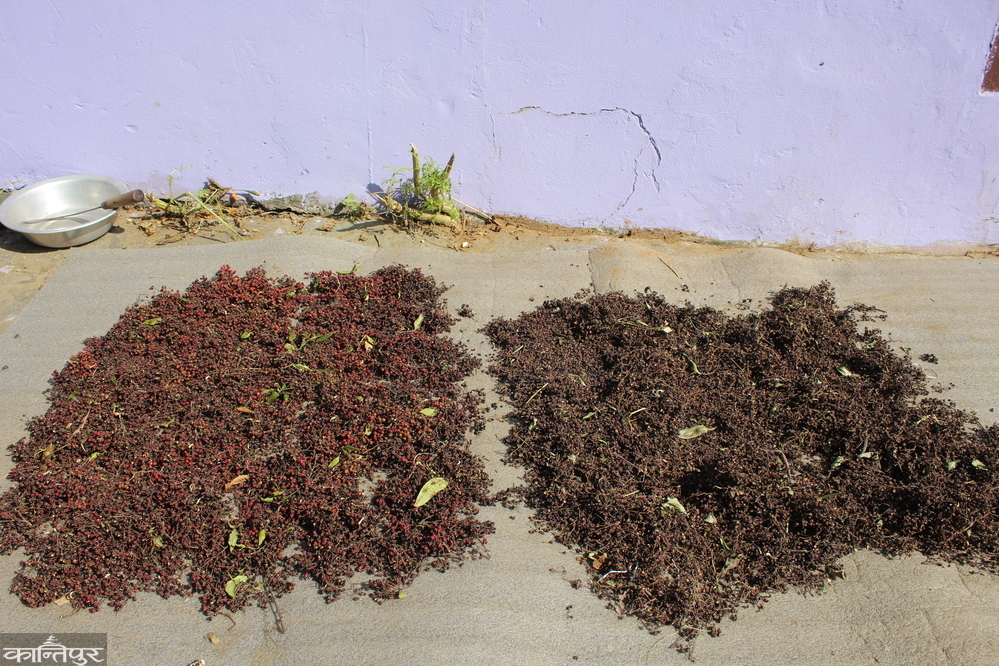
Until 12 years ago, Yarsagumba, which collected more than 10 kg annually, decreased to 3.5 kg in 077/78 . Last year, Yarsa has dropped to only half a kg . Similarly, up to 5 years ago, the annual collection of 25 kg of Satuwa's song has dropped to zero in the current financial year. Sugandhwal has reduced from 1 thousand 100 kg to only 45 kg this year. This has also caused a huge decline in revenue collection.
Division Forest Office Myagdi collected revenue of 377 thousand 410 rupees in 077/78 when issuing license for herb collection, but it has been limited to 191 thousand 800 rupees last year.
'The collection of herbs in the district is decreasing every year . Due to the decrease in both the production and collection of herbs in the forest, not only the revenue has decreased, but the jobs and sources of income of the locals have also been lost," said Bishnu Prasad Adhikari, Divisional Forest Officer of Myagdi, "The concern is that biodiversity will be destroyed more than the revenue and income will be lost due to the decrease in the collection from the forest of the district, which is said to have immense potential for herbs."
Collector changing profession
According to studies, herb production has decreased by 20-40 percent compared to the previous decade due to climate change, changes in snowfall and rainfall patterns, unscientific collection methods and changed grazing patterns.
Although the international demand for herbs exported from Nepal is stable, another major reason is the decrease in the income of herbs due to the decrease in the number of collectors due to foreign employment and migration to cities. Traders involved in the transportation of herbs say that due to the lack of skills to process herbs, they do not get a reasonable price and because they do not have guaranteed income every month, the collectors have started changing their profession.
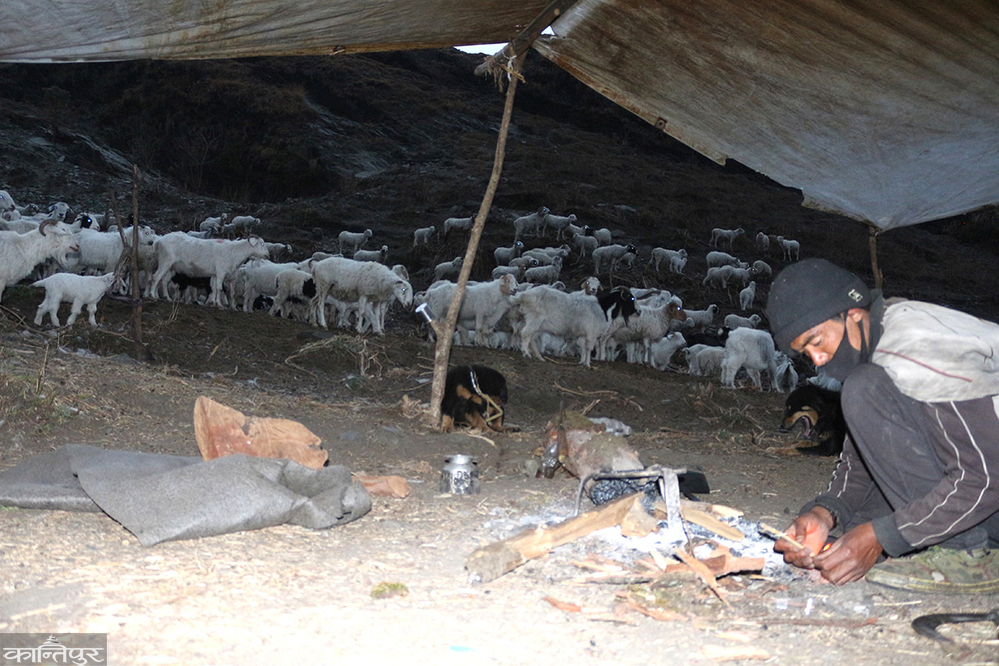
According to the study report published in 'Nepal's Forest Resource Assessment 079' published by Nepal Forest Research and Training Center (FRTC), in the national and community forests of Raghuganga and Mangla Rural Municipality of Myagdi, the production of chiraito, jatamsi, pakhanved lagaya has decreased by 30-35 percent in the last 5 years. .
According to the records of herb collection parts issued by the office, it seems that annual collection from the forest of the district is decreasing . Climate change, unorganized collection in the past, and the spread of weeds in the forest are the main reasons for the decrease in herb production or collection. It is not a completely destroyed situation, we can increase the production again by protecting and managing it," said Vinay Bahadur Adhikari, Information Officer of the Division Forest Office.
Open grazing prevents unwanted plant growth and requires herbicides And foresters say there is a biological management process that helps plants grow. However, it is also mentioned in the 'West Himalayan Herb Diversity and Ease of Ecosystem Report 2022' that there is an opportunity for Michaha species to spread after the closure of the open grazing system that controls such unnecessary weeds of the rapidly spreading species or the significant reduction in the number of domesticated animals grazing in the forest.

