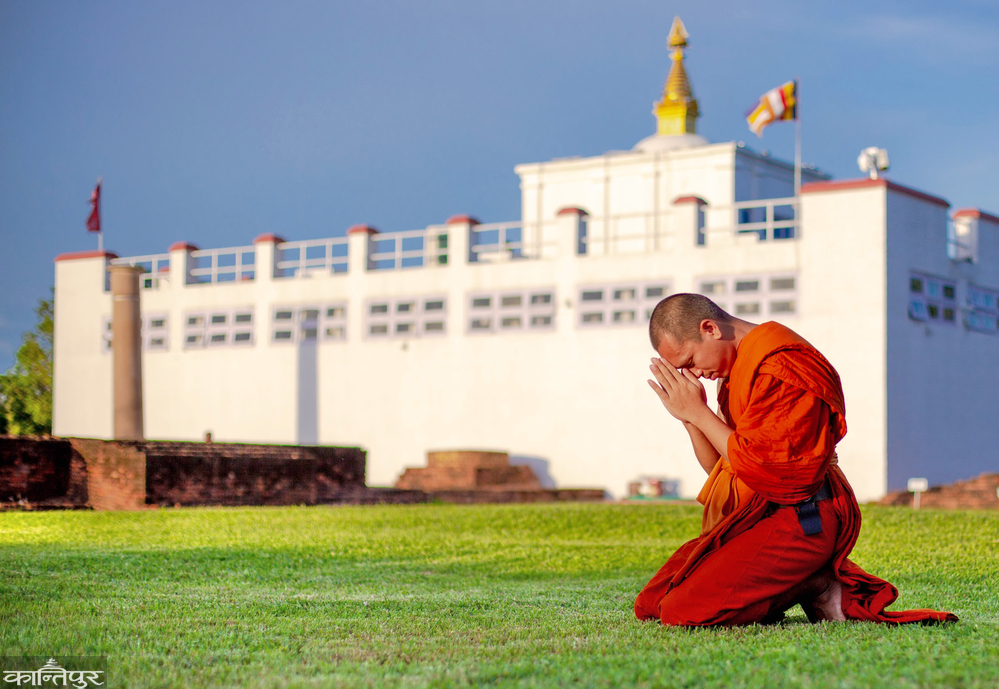
The peaceful energy emanating from Lumbini instills harmony, compassion, friendship, non-violence and equality in human beings. Lumbini is not called the source of world peace.
We use Google Cloud Translation Services. Google requires we provide the following disclaimer relating to use of this service:
This service may contain translations powered by Google. Google disclaims all warranties related to the translations, expressed or implied, including any warranties of accuracy, reliability, and any implied warranties of merchantability, fitness for a particular purpose, and noninfringement.
Many people say that if the great emperor Ashoka had not come to Lumbini, Lumbini would not have been recognized or discovered. The kingdom of Magadha extended from Afghanistan to the Terai part of Nepal, to the lower part of Myanmar in the east. The Emperor of such a great kingdom came to Lumbini as a pilgrim, in 249 BC.
He recorded the experience and memories of his pilgrimage. Because of that record, now the identity of Lumbini has become irrefutably authentic in the world . It is known as the birthplace of Buddha.
Emperor Ashoka's comprehensive record has covered many things. His record is 90 letters in 5 lines . Each word of the record in the Brahmi script of the Pali language has the same significance . At the beginning of the third line of the column, is mentioned. He mentioned that 'I put this stone pillar' to remember that he had come for a long time . Senior archeologist Vasant Bidari speculates that even though there was plenty of wood in the Terai at that time, it might have been written on the stone so that it would remain for a long time without writing on it. He brought the pillar here and buried it by writing letters from Chunar near Vanaras. When reading the second line written by him, the followers of the Buddhist religion are mocking . According to experts, the meaning of the first is 'I came here by myself'.
Hidbudhejate Sakyamuniti (Here Shakyamuni Buddha was born) can be more clear about the Buddha . Hidbudhejate If only was written, there would be doubt as to which Buddha was born. Archaeologist Bidari says that he was very wise at that time and kept records. This fact is accepted that there was a Buddha even before Shakyamuni in the 3rd century BC . As the word Konakmanas is written on the pillar in Niglihawa, it proves Kanak Muni Buddha . In the travelogue of the Chinese traveler Hruwensang, there is a mention of Krakuchhand Buddha in Gotihwa. It seems to accept the Buddha before Shakyamuni .
According to the Buddhist text called Divyavaada, Emperor Ashoka came to Lumbini with his Guru Upagupta . Upagupta showed the tree, which Mayadevi, who was standing holding the branch of the tree, gave birth to Gautama Buddha . Ashoka worshiped there. Where a stone was also marked. Ashoka inscribed records of his travel memories, purpose and sacred activities at Lumbini. He wrote Shakyamuni Buddha on the column so that people would not be confused in the future, and it has become authentic that Lumbini is the birthplace of Buddha in the world. At the time of burial, a 30-foot, 10-and-a-half-inch section of the pillar, which was 40 feet high, was broken. Buddha said to Ananda from his death bed - first go to Lumbini with devotion and then go to Bodhgaya, Sarnath and Kushinagar. This may be the reason, Ashoka came to Lumbini 234 years after Buddha's Great Reformation!
Thus the attraction towards Lumbini increased and it became a city of peace . Became a world heritage . In this Lumbini, 6 Secretary Generals including the current Secretary General of the United Nations, Antonio Guterres, have visited .
Trip Advisor, Lonely Planet and the New York Times have promoted peace tourism by naming Lumbini as one of the world's top cities to visit. 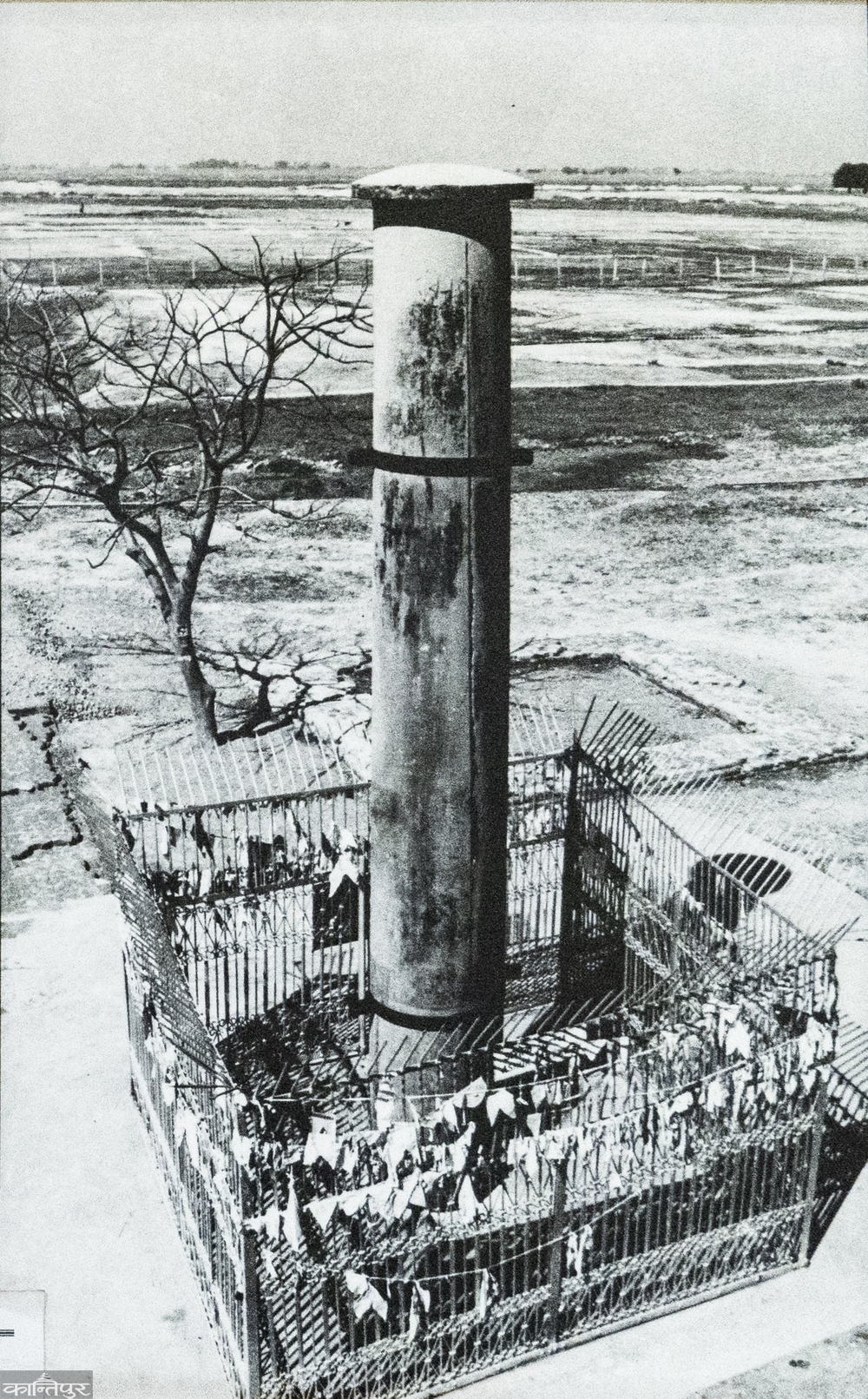
This happened a long time ago. During the period in which Emperor Ashoka left evidence of Lumbini as the birthplace of Buddha .
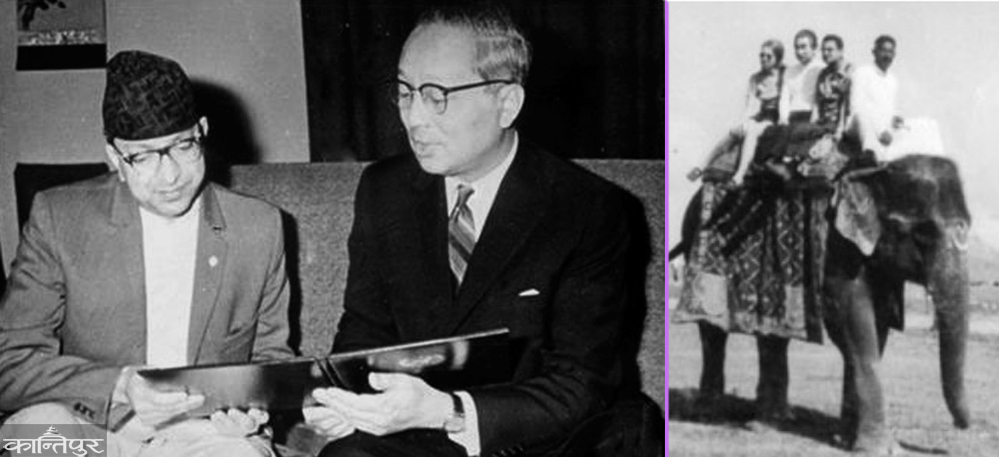
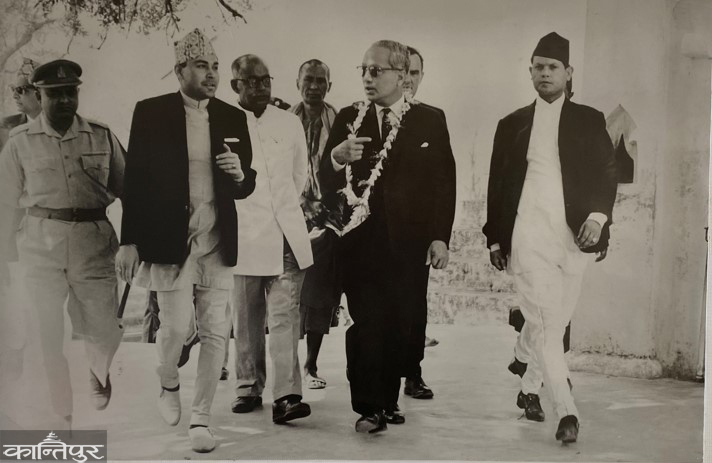
The name of U Thant, the Secretary General of the United Nations, cannot be missed in making Lumbini known to the world. "If he had not come, the whole of Lumbini that we can see today would not have been there," said Gyanin Rai, senior director of Lumbini Development Fund's World Heritage Branch. As today, there are modern buildings, hotels, market areas adjacent to most of the Buddhist sites including Sarnath, Boudha Gaya, Kushinagar and Shravasti. The uncontrollable development work there has created a problem for those who come for peace due to crowding, uproar and human activity.'
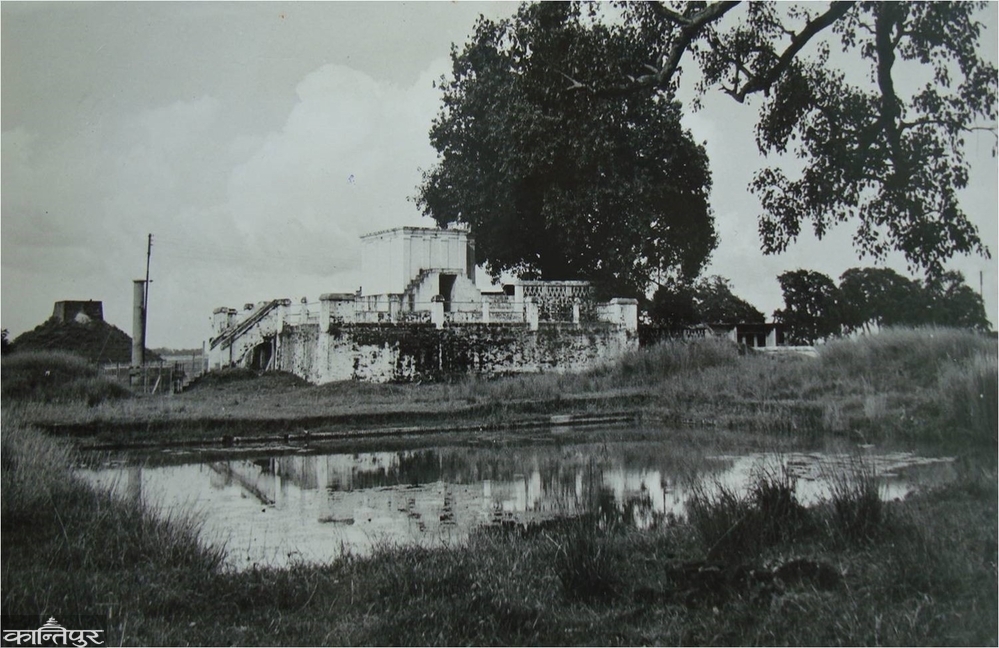
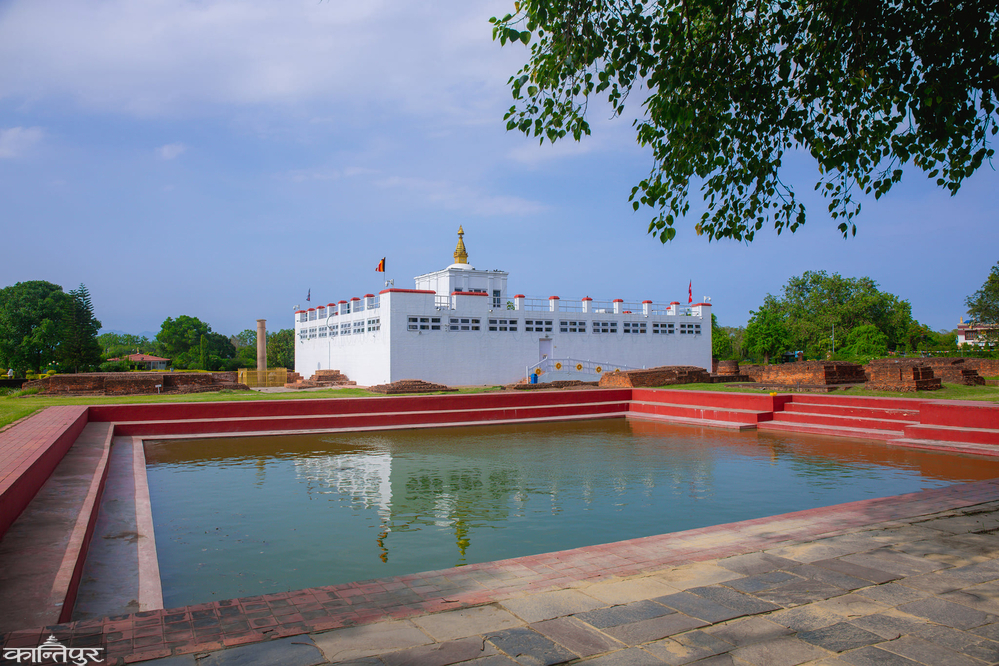
When he came to Lumbini, the ruins seen now were all covered. There was no excavation. Archeology department has started excavation in Lumbini since 1972 in a scientific manner . Before that, in 1967, he had come to Lumbini. There was an old structure of Mayadevi temple here.
Keshar Shamsher collected the soil from the excavation of the Ashoka pillar to the north-south side of the pillar and made it like a spit . There was a water tank on the spit to the north. There was a big peepal tree in front of the temple. When the temple was high, a staircase was built to climb from the east.
Nepal Temple was built by King Mahendra in 1956 at the eastern end of Mayadevi Temple, which is the oldest temple in Lumbini. Monk Aniruddha lived there . After learning that a monk who had studied in Burma was here, he went to meet Thant . Both spoke in Burmese.
'Seeing the state of Lumbini, he burst into tears,' says senior archaeologist Vasant Bidari, quoting the words of monk Anirudh, 'the monk himself began to cry . Reverence and faith towards Buddha created a silent atmosphere.'
After spending about 2 hours in Lumbini, he returned to Thant . There was no Bhairawa-Lumbini road when he came. However, a bus used to run from Kakrarahwa market in neighboring India to Delhi Kanpur. In Bhagwanpur village on the border, the Nepalese army used to check passports and give permission for movement.
There was no provision of drinking water in Lumbini. The pilgrim had to stay for one night and had a problem . Buddha said 'I will go to Lumbini for the first time after my death' and seeing the desolate condition of the place, Mr. Bajir, the deputy professor of Lumbini Buddhist University, said that he was very pained and worried. He also told that Thant met King Mahendra after returning from Lumbini. Monk Sri Bajir expressed his concern seeing the condition of the place leading the world for peace. He insists that something must be done now.
After reaching New York, Thant sent three people to Lumbini on behalf of the United Nations in 1969, Alchin, Matsuhito and one other person. They suggested to build the basic needs of water, electricity, housing and Bhairahawa-Lumbini road in Lumbini. Suggested to expand the airport in Bhairahawa.
In 1970, at the General Assembly of the United Nations, U Thant himself proposed to help Lumbini . He was excited when the United Nations pledged to help. After that, a committee named Lumbini Development International Organization was formed in the United Nations. Its headquarters are located in New York. It was arranged that the person who will be the permanent representative from Nepal will be the head of the committee. In the beginning, 13 national committee members were . They include Afghanistan, Myanmar, Kampuchea, India, Indonesia, Japan, Laos, Malaysia, Nepal, Pakistan, Singapore, Sri Lanka and Thailand. After
, Bangladesh and Bhutan also became members after the separation of Bangladesh with Pakistan in 1972. South Korea was also added to become a committee with 16 member countries. Then this committee requested the world famous architect Professor Kenzo Tange to make a master plan .
The Supreme Court of Pakistan, the Hiroshima Memorial Museum in Japan and the city of Singapore were designed by Tange.
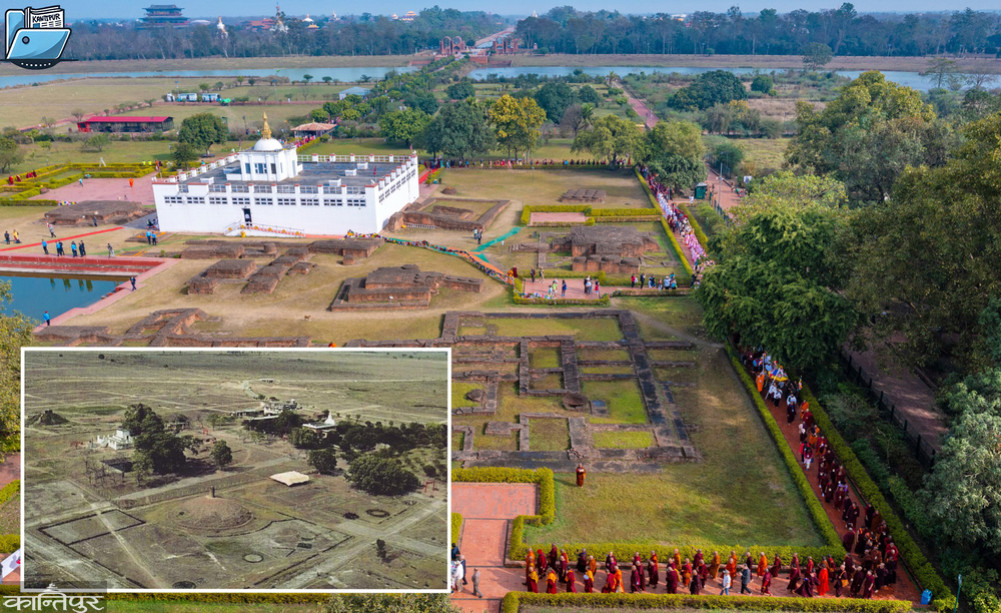
After 6 years, he created a master plan for the development of Lumbini. In the master plan, not only the paper but also the philosophical aspects of Buddha have been brought out. Created a core zone of three square miles. Apart from that, a buffer zone was also created as a restricted zone.
New Lumbini village in the north has a mundane life . A little further south are libraries, museums and research institutes. As soon as you cross the bridge area there, you will reach the monk life . which reaches the monastic zone Dhamma life . After passing through it and entering the circular canal, one reaches the life of knowledge .
Senior archaeologist Bidari says that the master plan of Tange has given vitality to Buddhist education. Because of this message, Thai, Taiwanese, Chinese and Vietnamese people from other countries are very emotional as soon as they enter Lumbini.
The arrival of Ashoka revealed the spirituality of Lumbini to the world, said Fraraj Bodhividesh Vajrasudi, the head of the Royal Thai Monastery in Lumbini and the vice president of Nepal-India Thai missionary monks. He has been serving in Lumbini for 22 years and says, 'People are proud to step on the holy ground to spread the message of world peace.'
According to him, heritage-friendly physical development started after the arrival of Thant. Tange is considered to be the originator of the beginning of systematic development. If he had not come immediately, he would not have come to Tange . If Tange had not come, the excellent master plan would not have been made,' he said .
According to that master plan, 770 hectares of land was acquired in Lumbini. Otherwise Mahilwar village was next to Mayadevi temple . There was a cloth shop and a liquor factory. Before 1978, there was a big market near the Mayadevi temple. Indians used to come to buy Chinese goods. There was direct trade from Delhi and Kanpur. Because of the bridge, roads were built in Lumbini, basic facilities like electricity, drinking water and communication were added . The plant grew and became green. For a long time, the United Nations agency UNDP supported .
The World Food Program also provided food aid. The Lumbini Development Fund helped dig the central canal and the canal around the Mayadevi temple by giving 5 rupees per day. The event, which was halted after the World Food Programme's Asia director came to Lumbini after sending the general staff to welcome him, has been suspended until now. UNDP and the World Food Program withdrew their hands from Lumbini around 1990.
Now Lumbini
Samathar is a clean path made by printing green leaves and stones. A statue watching everyone with two eyes. With the flow of the wind, the clear water ripples in the ponds, and the colorful lungdar flutters along with it. Resounding holy voice in melodious voice.
Lumbini has truly become a place of peace with the fragrant atmosphere of seasonal flowers. On top of that, the followers of Shanti who are wearing red ocher clothes and reciting Shanti, it seems that this geography is special.
If there is violence and tension in any corner of the world, everyone comes to send a message of peace from Lumbini. The peaceful energy emanating from Lumbini instills harmony, compassion, friendship, non-violence and equality in humans. Similarly, Lumbini is called the fountain of world peace!
For the identification, proof and expansion of this Lumbini, Emperor Ashoka and Heritage experts say that the Secretary General of the United Nations has a unique role. After that, how to forget the links connected with the development of Lumbini and !