Lack of birthing centers in health facilities, rising costs to reach facilities and road woes
We use Google Cloud Translation Services. Google requires we provide the following disclaimer relating to use of this service:
This service may contain translations powered by Google. Google disclaims all warranties related to the translations, expressed or implied, including any warranties of accuracy, reliability, and any implied warranties of merchantability, fitness for a particular purpose, and noninfringement.
Anami Yamkumari Gharti of the community health unit in Nisikhola Rural Municipality-5, Niseldhor, reached Palpa three years ago before giving birth and stayed in camp for a month. The village was saved only after the danger of giving birth was over. His village is reached by a journey of 150 km from the headquarters.
The health unit where she is working does not have a birthing center . You have to walk for three to four hours to reach the nearest center. Premkumari Gharti, office assistant of the same unit, has 5 children. She gave birth to all her children at home since there was no one to teach her that she should go to a health institution when giving birth. Like Yamakumari, she could not camp. The economic condition of the house was weak and there was no one to work in the house while camping. She went to Dhorpatan Municipality-8 Bobang to get vaccinated and said that she was forced to give birth at home as there was no birthing center nearby.
It has been two years since the community health unit was established in Niseldhor. But there is still no birthing center here. It takes 10 hours to reach Nisi, which has its own ward office, and 4 hours to reach Dhorpatan Valley. If you get a jeep from Dhorpatan, you can reach Burtibang in 2 and a half hours. You have to ride a jeep for another hour to reach the municipality. Yamakumari and Premkumari are the only employees in this unit . 10 to 12 patients come here daily. They keep a record of pregnant women and send them to a convenient place. Premkumari said that most of the women camped in Burtibang and returned after giving birth because it is far to reach the municipality.
Because the road is difficult, there are no regular vehicles in Dhorpatan. Since there is nothing else to go from Dhorpatan to Niseldhor, the locals have no choice but to travel on foot. Even though the track of the road is open, it is not easy. In the rainy season, the rivers with the Bhujikholas cannot be crossed. If you have to reserve a car on the winter road, more than 10,000 It costs more. It is also difficult to get a car. Local residents cannot reach the hospital by spending so much. 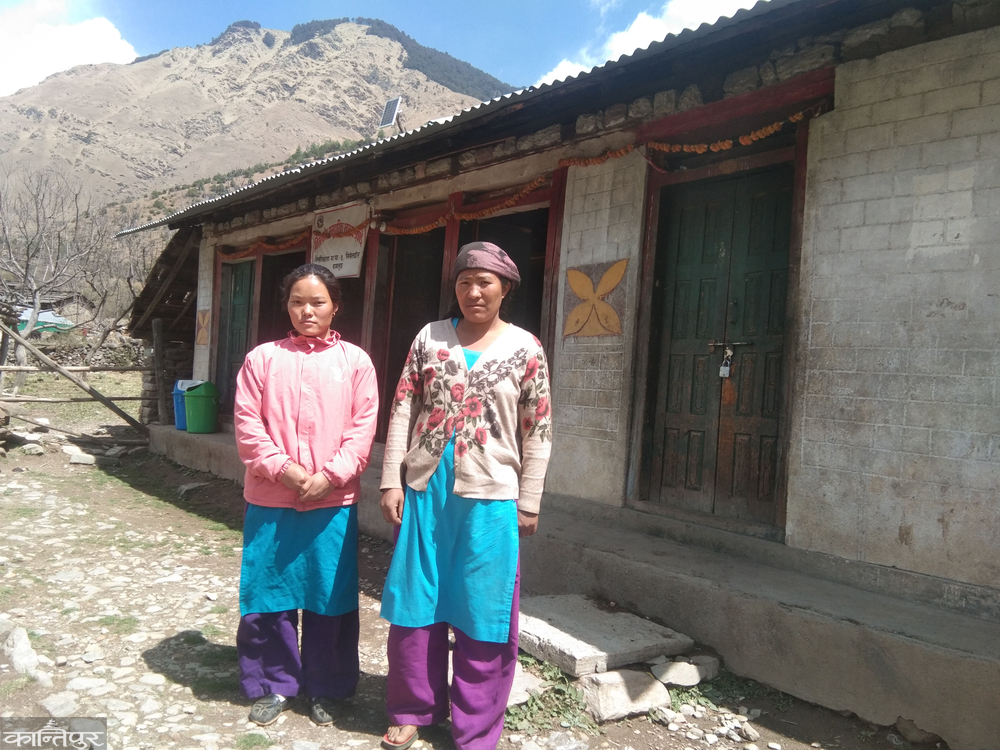
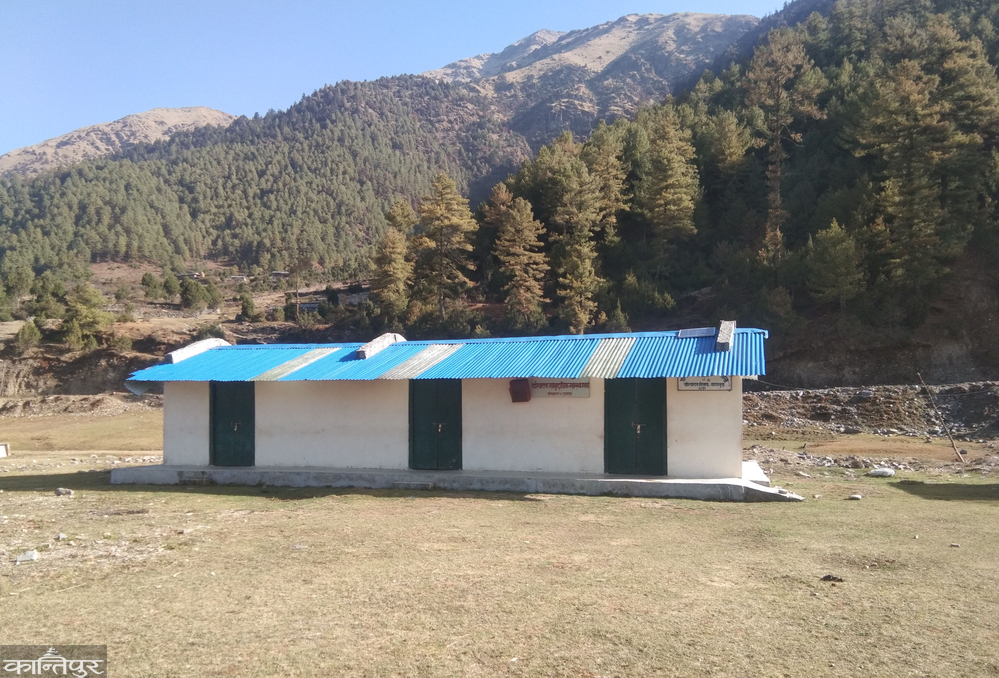
There is a birthing center in another community health unit established by Dhorpatan Municipality near Sikar Reserve, but the service is not effective due to broken equipment. "Because it's cold here, the delivery takes a long time, some people panic and go to Burtibang to look for an expensive car," said Anami Sita Budhamgar of the unit. There is a lack of a machine to warm the newborn baby because it is too cold . "The existing machine has been broken for four months, it cannot be repaired, there is no possibility of another one," Budhamgar said, "We cut eight/ten heavy firewood during every delivery." When new machines were not available, health workers and family members of those who came to Betha together started blowing the fire. After blowing the fire in the cold, everyone cooks children and pregnant women together.
There are more than 600 houses in Dhorpatan. Including Niseldhor, there are 1,000 households throughout the valley. There is a population of 3,500 to 4,000 here. Everyone lives here from February to October, and four months of cold fall. As Niseldhor is somewhat warm, most of them live in villages. It is very difficult for them to get health care in winter. In other seasons too, you have to stay in a tent to get service.
In Dhorpatan unit last March only 334 people have taken health care . Last year, 11 people gave birth. In the current fiscal year, 16 people gave birth. Out of the 35 people who come for pregnancy test in a year, some of them go to the city and some of them gave birth at home, Budhamgar informed.
In the snow in Dhorpatan, even a car cannot be found, so we have to walk to the municipality a few days ago. There is no road network from Niseldhor to Nisikhola. In Niseldhor, there is also a problem in getting children vaccinated. At present, the unit has only medicine distribution and pregnancy test services . If you see a complicated situation, Anami Yamkumari Ghartimar, the only health worker here, has suggested to go to a convenient place immediately. "Here there is only treatment for common injuries and pregnancy test for women," she said, "There is no manpower to provide other services, there is no material and equipment."
77 percent of the total population of the valley is Dalit community. Most of the poor families also belong to other communities. Most of them have made a living by moving cattle, raising cattle and growing potatoes. They are still deprived of treatment due to lack of finances . Poornima Vick of Dhorpatan, who was stranded in June last year when she was pregnant, was rescued by an army vehicle and taken to Burtibang Hospital.
Hospital building incomplete
The hospital under construction in Dhorpatan valley is still stalled. Only 50 percent of the hospital building contracted by Dhorpatan Municipality in October 2080 has been completed. The contractor quit the job after not getting the payment . So far, the contractor has received only 876 million for the building, which was contracted for 175 million. There is an agreement that the construction of the building should be completed by the end of next June. If the building is built, the municipality plans to bring the hospital into operation with skilled manpower.
The district hospital built in Burtibang Bazar, 90 km west of the capital, has been operational only since last February. Still there is a lack of equipment and skilled doctors. This hospital was inaugurated only 14 years after it was announced in 2067. Up to 250 patients come here every day and up to 20 people have to be delivered with surgery every month. Parvati Aryal, a nurse at the hospital, said that some people go to Palpa and Butwal due to lack of equipment.
Only 69 percent of institutional deliveries
Provincial Public Health Office Baglung Public Health Officer Lakshmi Sharma says that only 69 percent of deliveries take place in health institutions within Baglung. Apart from that, some of those who reached Pokhara, Palpa and Butwal, 80 percent of the women were institutionalized, she said. "The rate of institutional delivery has increased, but home delivery is still left in Nisi, Dhorpatan and Badigad," Sharma said, "Health awareness has not yet reached the rural settlements." Although vaccination campaigns and awareness campaigns have been conducted together with the municipal health department, home births are not zero.
Dhorpatan's 'Baby Warmer' was damaged, Sharma said. "We gave it to you last year, we just found out that it was broken, we understand that it will not be repaired," she said, "We are taking efforts to deliver essential equipment to all institutions as far as possible."
The government of Nepal has made arrangements to pay 2,000 transportation expenses in case of institutional delivery. Apart from that, Nisikhola Rural Municipality gives an additional 2 thousand rupees. Sushil Poudel, head of the health branch, said that after Galkot Municipality gave 4,600 additional allowances, 'home delivery' has reached zero.
In Dhorpatan and Nisi, it was found that even those who were referred to the city by health workers return home and give birth taking risks. "We sent to Burtibang, one woman has gone home," said Anami Hiramoti Gharti of Valkot health post.