What is the country of the refugee?
We use Google Cloud Translation Services. Google requires we provide the following disclaimer relating to use of this service:
This service may contain translations powered by Google. Google disclaims all warranties related to the translations, expressed or implied, including any warranties of accuracy, reliability, and any implied warranties of merchantability, fitness for a particular purpose, and noninfringement.
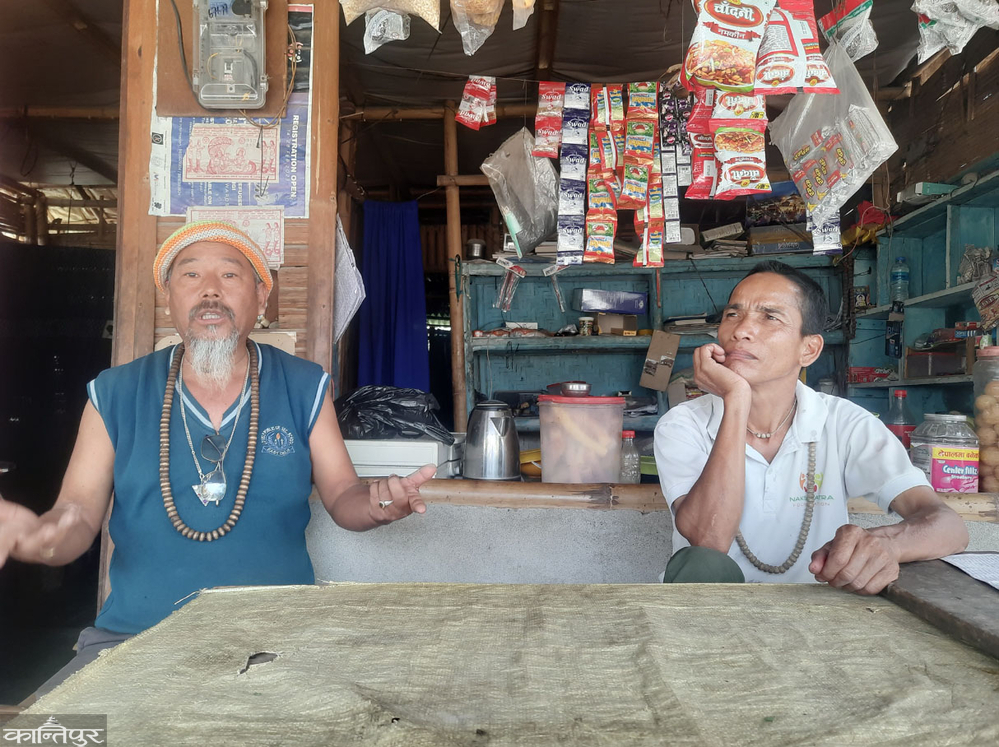
75-year-old Birman Tamang, who lives in Sector B-1, Chapro No. 112 of the Bhutanese refugee camp in Jhapa Beldangi, has been seriously worried for the past few days. Since 2018, he has been working as a foster carer at the Bhutanese Refugee Women's Forum, and now he is losing his job soon.
However, the pain of losing a job is not too much for him . His deep concern is whether his relatives who have gone abroad will be repatriated. "I'm more worried about my children and relatives abroad than about my job," Veerman said while distracting from his mobile phone, "What if the children who reached America will be chased away from there tomorrow?" As recent developments have begun to deport Bhutanese refugees who have been resettled on American soil, it has spread like wildfire across seven seas and reached refugee camps. The US Immigration and Border Protection Agency (ICE) has so far sent 18 Bhutanese refugees back to Bhutan.
In the second week of March, 10 people were directly deported from America to Bhutan. Out of which Roshan Tamang, Santosh Darji, Ashish Subedi and Ashok Gurung were arrested from Nepal. "As soon as the United States sent them back to the Bhutanese government, they were found to have been chased to Nepal," said Gopal Sivakoti, a human rights activist who returned after understanding the situation of the deported a few days ago, "Can such a big inhuman act be done? Shouldn't Bhutan accept and keep its citizens?'
According to the relatives of the deportees in the camp, the condition of 14 of the 18 people is still unknown. The family is unaware of their whereabouts and condition. It has also raised serious questions about their security. There is a serious challenge in their security. But, who will protect ? Bhutan, India or Nepal?', asked Dil Bhutani, a refugee rights activist from Beldangi, 'It is necessary for the international community to take a serious interest in this matter.' Refugees have also come to know the news that 40 Bhutanese have been arrested and detained by IC from various places in the last one month.
The suffering of statelessness
What is the country of refugees deported from America, rejected from Bhutan and confused in Nepal? Now this question is getting complicated . History has repeated itself once again at the Beldangi refugee camp in Damak. More than one lakh Nepalese speakers, who fled three decades ago by taking away their citizenship from Bhutan, have returned to the same camp for the second time with an uncertain future. However, this time they are not only completely without identity, they have returned with the pain of being without a country . They are neither considered Bhutanese citizens, nor accepted by America. Ashish Subedi, Santosh Darji, Roshan Tamang and Ashok Gurung have fallen into this uncertainty.
'Now even Nepal is not ready to be officially recognized as a refugee', Tilak Rai, Acting President of the Bhutanese Refugee Representative Swadesh Firti Committee said, 'What will happen to their future? How is the international community looking at this issue?' 'Now these four are citizens of which country?', this serious question of Rai of the repatriation committee has caused an international humanitarian crisis.
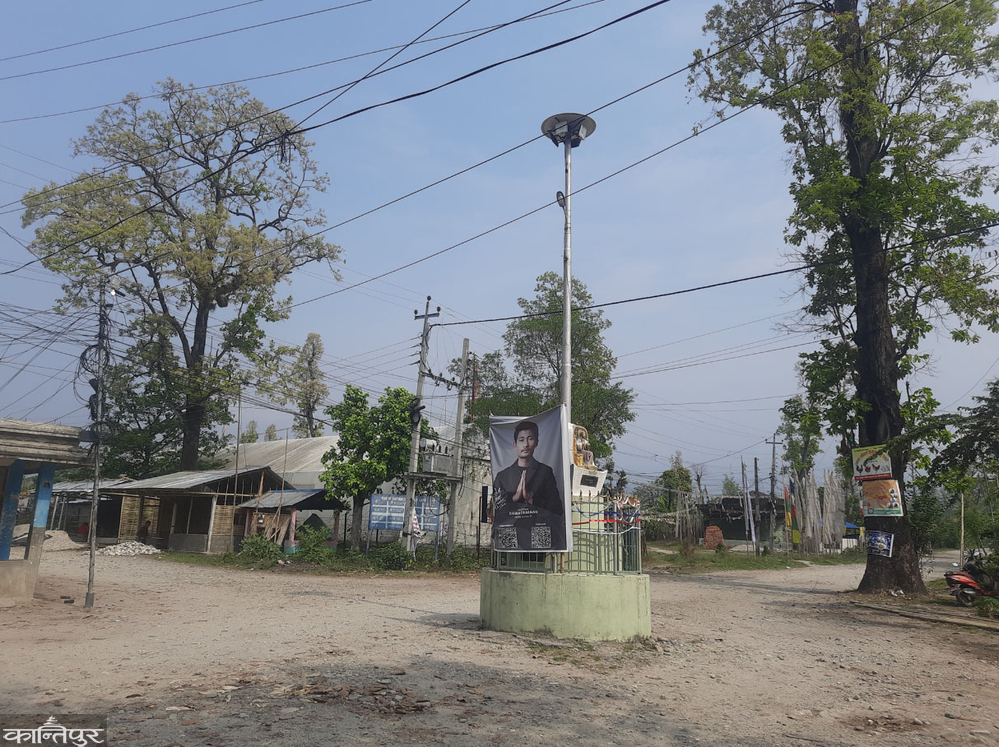 According to Balram Paudel, the president of Bhutan People's Party, he was first chased by Bhutan, after spending three decades in Nepal, he went to America in the hope of resettlement. "If both the US and Bhutan do not accept it, then we will become countryless again", President Paudel's face was not only angry. Even a small stream of pain seemed to be running . Bhutan-Nepal-USA-Bhutan-Nepal again. Krishna Tamang, chairman of the Bhutan Reconciliation Committee, sees this initiative as a 'refugee roundabout'. Where should we go? Which door should I knock on?', says Tamang.
After three decades of struggle, many refugees were drawing a new life after reaching America. However, after Donald Trump became the president for the second time, the Bhutanese Americans have become distressed. The problem has become more complicated after the United States started deporting some people based on criminal records. Rights activist Dr. Gopalkrishna Sivakoti says, 'Making a person stateless is a serious violation of international human rights treaties.' That desire is not for any material gain, it is to touch the soil of your country, to get your identity back and to live with dignity . 70-year-old Harikala Ghimire says, "Our childhood was spent in Bhutan, youth in Nepal, now we are going to return to Bhutan and die there." Even today, around 7,500 refugees are living in these camps. Apart from a few, most of them are rejecting the resettlement program of third countries including the US and living in the same condition, 'We want to return to our Bhutan.' But, on the contrary, an emotional wave has also been created in them. Which has increased the consciousness that "now we have to return anyway". Krishna Tamang, president of the Bhutan National Reconciliation Committee, says, "We have not given up hope of returning to our country." We will not kill until we live . According to him, the latest developments have created an opportunity to create international pressure with the Bhutanese government. "We want to turn this crisis into an opportunity", says Tamang, "But the Nepalese government should support us as much as possible." Refugees have been pleading with the Nepalese government to take diplomatic initiatives for a peaceful return home for more than two decades. However, the government has not been able to take specific initiatives. "This is not possible without the support of the Nepalese government," adds Tamang, "we still have time, we still have the will, we just need the political will of Nepal."
What happens now?
The government of Nepal is in a quandary - should they be detained for illegal entry and sent back to the camp or pushed to Bhutan via India? After Bhutan rejected in writing, humanitarian responsibility has been added to Nepal. Last Thursday, the Supreme Court issued an interim order and asked the four people not to be deported immediately. The single bench of Judge Hariprasad Phuyal has ordered the government to make them appear in court on May 11. Narayan Kumar Subedi filed a writ of imprisonment on behalf of those who were in custody. During the preliminary hearing on the said writ, the court asked them not to evict them immediately.
A study team of Immigration Office Kakdvitta has recommended to the government to 'deport' those who were arrested on March 14. The debate continues in the Ministry of Home Affairs on whether to keep them or send them back. They will remain in Nepali custody for some time after the Supreme Court also asked not to deport them immediately. However, the final decision of the government and the court is yet to be seen.
'We are Bhutanese, but Bhutan does not accept citizens . Now where should we go?', Ashish was telling the immigration officer . This pain of his is a terrible pain of a stateless citizen . In the 1990s, Bhutan expelled nearly one and a half million Nepali speakers. Most of them took refuge in camps in Jhapa and Morang. After 2010, on the initiative of the United Nations High Commission for Refugees, they were resettled in countries like America, Canada, Australia, and Norway. However, recently, after the US government started deporting some of them for being involved in criminal activities, this terror is no longer limited to the US, it has reached the refugee camps of Jhapa and Morang.
The Supreme Court's order not to immediately deport the four Bhutanese refugees in detention


