Iron beds in prison, nothing to wear, indefinite deportation
We use Google Cloud Translation Services. Google requires we provide the following disclaimer relating to use of this service:
This service may contain translations powered by Google. Google disclaims all warranties related to the translations, expressed or implied, including any warranties of accuracy, reliability, and any implied warranties of merchantability, fitness for a particular purpose, and noninfringement.
At the Kuala Lumpur International Airport, 10 Nepali workers including Rekhkumar Rai from Khotang were handcuffed. They were brought from the deportation center to the airport to be sent to Nepal. After taking them to the waiting room of the last 'boarding gate' of the airport, the police went back.
All of them had only a ticket of Batik Airlines to return to Nepal and a travel document issued by the Nepalese Embassy that could be used only once instead of a passport. After 13 years, when he has to return home empty-handed, Rai only has many memories of what he experienced, saw and endured in prison life. "None of us have a single penny with us." There is no change of clothes . The shoes I am wearing also belong to someone else . When leaving the prison, I saw small shoes outside. That's what I came wearing," Rai told Kantipur, who was met at the terminal of the Kuala Lumpur International Airport, "I committed a crime here. After committing a crime, he had to suffer the punishment.'
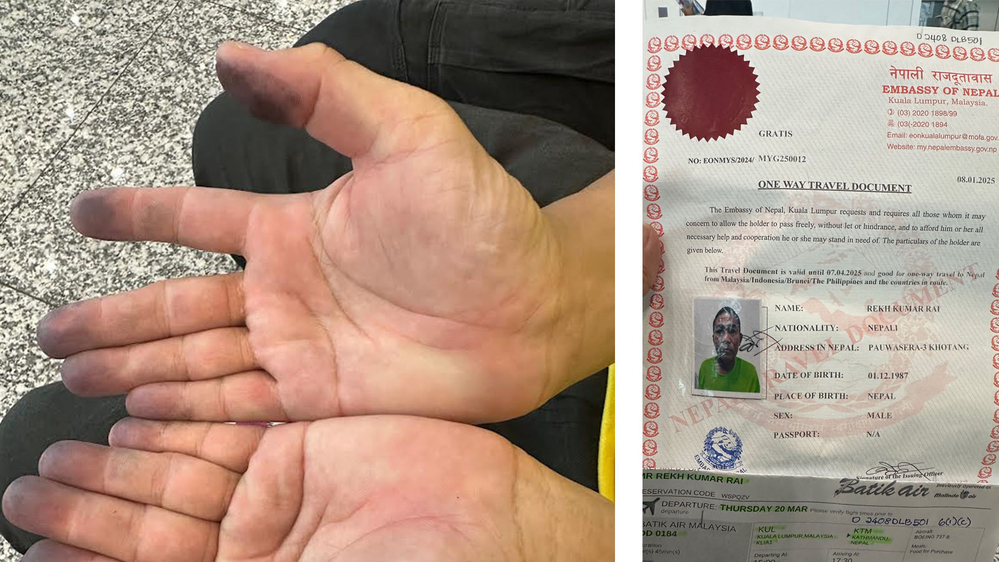
His crime was to work in Malaysia without documents. That is, he did not have a work visa to work and live in Malaysia. After returning from work in Qatar, he went to work at Kodak Company in Malaysia around 2011. To get a salary of 546 ringgit, he paid 85,000 rupees to the manpower company as a cost fee. After it took time to pay the loan, Rai went to work in another company without completing the contract period with the company. After leaving the company, he was running away from the police and working. That break took place last May 12th. "I was a security guard." He was arrested at one o'clock in the afternoon while working by the police stationed by immigration. I was always sneaking around. It was not successful this time, he said. The court sentenced him to four months in prison and fined him 5,000 ringgit and sentenced him to deportation for working as an undocumented worker.
Iron bed inside the prison, not even a bed to cover
He had to stay in jail for 6 months more than the sentence given by the court, i.e. for 10 months . That prison life was very difficult. There were itchy spots on the skin of his body . This stain is a disease caused by not bathing in clean water. Our shower is like a small swimming pool . Hundreds of people bathe in it daily. Soap is soap in that water . It seemed as if they did not go there to make life clean, but to cause disease,' Rai said.
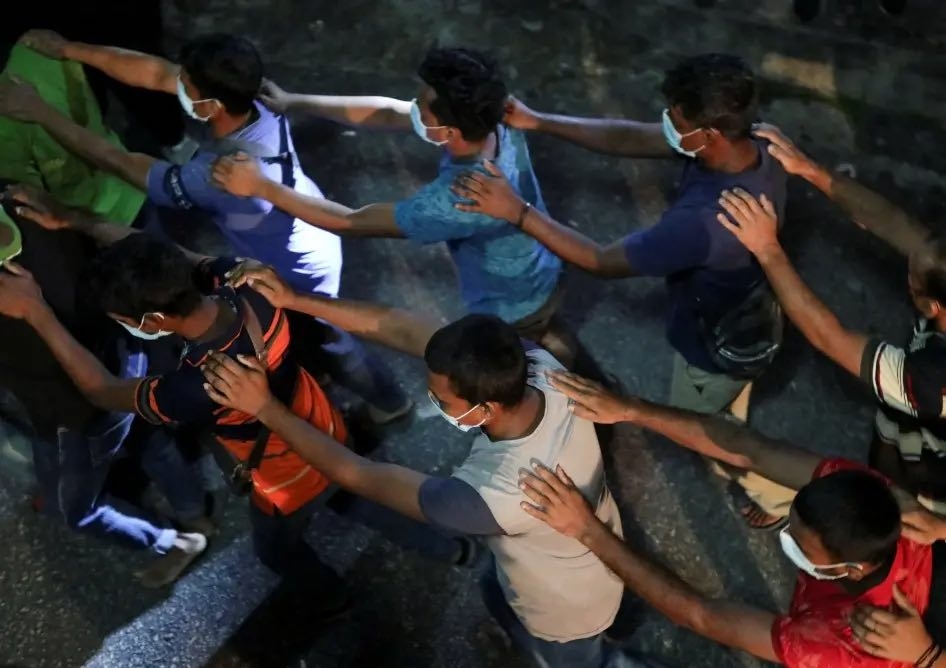
Ritesh Waiba, another undocumented worker who was next to him, was in half pants . They were kept in Kajang camp (deportation center) more than hundred people in one room . They don't even give us clothes to wear. It is only in the same clothes you wear . You have to sleep on the ground," he said, "You have to sleep on that ground in three lines. How many people walk on their heads. The fight is just that. Food is also dirty.' In the
prison, up to 12 people were kept in one room. There's no bed either. You have to sleep on the iron bed. "Sleep on the iron". The toilet is also inside. The room smells very bad. Prisoners are also the ones who cook rice in prison," he said. That too will not come in time . Sometimes he brings it at four o'clock. That's not good either . Mosquitoes come inside the prison like bees . You can never sleep well.'
In indefinite deportation
Undocumented workers are arrested and placed in deportation centers. There is no legal limit to such period . On March 4, Krishna Prasad of Butwal went to the Nepali Embassy saying that Dal Bahadur Mahat of Butwal, who was kept at the Kayamang Deport Center, was not sent to Nepal. Mahat, who was living without documents, was arrested by the police seven months ago while he was working in a restaurant. The court sentenced him to three months in prison and a fine of 10,000 ringgit. If he had not paid 10,000, he would have been in jail for five months. I went to court myself and paid the fine so that I wouldn't have to stay in jail for a long time,'' Nure told Kantipur, 'I have been in jail for seven months.' I don't know when I will be sent home . He has not even been able to get in touch with Mahat.' The embassy informed the police officer who was looking at the Nepali workers in Kayamang. Jail administration informed that the ticket was stopped and said, "Ticket's Make arrangements and inform. We will send the ticket to Nepal the day it arrives," said the official to the embassy. As soon as they got the news, Mahat's family sent the ticket.
If family or relatives do not search, the undocumented workers inside the prisons are inside . When the minimum basic human rights are not guaranteed inside the prison, there are frequent incidents of prisoners breaking out of the prison and escaping. On 1 February 2024, more than 100 people escaped from a deportation center. Two people were killed in a road accident while escaping. A similar incident happened in 2022. At that time, 528 Rohingya refugees escaped from the custody of Penang State . 6 people died while they were crossing the highway. They were arrested and re-detained. Most of those who fled were Rohingya refugees .
Malaysian immigration has kept Rohingya refugees in small groups at all deportation centres. Nepali workers have not taken it easy to stay in the same room with Rohingyas. "You have to endure a little more harassment from the Rohingya in the prison." They get aggressive on us even on small issues,' Rai said, 'Every day is turbulent.' Even a small mistake should be severely punished.'
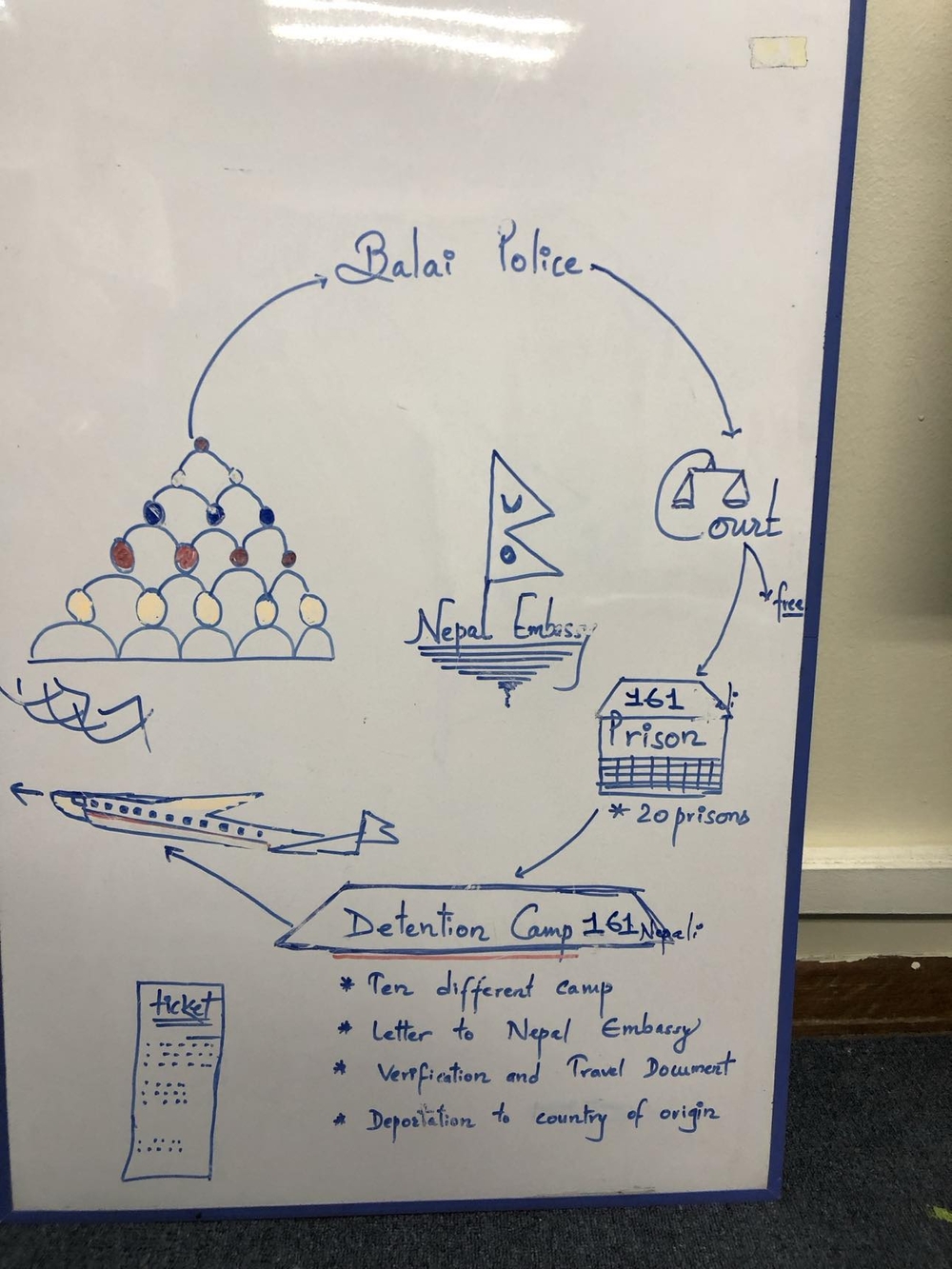
Malaysia's policy of being kept in deportation centers for an indefinite period of time is being criticized at the international level. Malaysia is not a signatory to the United Nations Convention on Refugees. Since 2019, the United Nations Human Rights Commission UNHCR has not been granted access to the deportation center.
According to a report released by Human Rights Watch (HRW) in March 2024, the Malaysian government is detaining approximately 12,000 undocumented migrants and refugees, including 1,400 children, at a serious risk of physical abuse and psychological harm.' It said that there was limited access to food and water, abusive behavior, repeated threats of severe punishment. "Malaysia's humiliating and abusive way of deporting "The system denies undocumented migrants and refugees their rights to liberty, health and due process," said Shayna Bauchner, Asia researcher at Human Rights Watch.
Another way for undocumented workers to return home - self-surrender
Malaysia has been conducting amnesty programs every year to send undocumented workers home. From March 1, 2024 A 10-month migrant return program was implemented until December 31. It has the facility for undocumented migrant workers to return home without going to jail after paying a fine of 500 ringgit. was . Malaysia expected 600,000 undocumented workers to participate in this program. However, only two lakh people participated. According to the Nepali Embassy, 8 thousand 973 people participated in this program and returned to Nepal. They had to pay 15 million 25 million rupees to the Malaysian government as a fine.
This facility is not used by many undocumented Nepalis . Shivraj Chaudhary of Dang was selling goods in a shop in Rawang, 25 kilometers from the capital Kuala Lumpur. When he came to Malaysia from Nepal, his son was two years old and his daughter was one year old. Now the son is 15 years old and the daughter is 13 years old. It has been 13 years since he returned home in an undocumented status. He is watching his children grow up through social media. "The life of a worker who does not have a visa is terrible. If found by the immigration police, the chick will be taken away as if it were a cover . If there is a death, the identity will not be revealed easily . It rots in a hospital in Malaysia . The dead body reaches home only if friends recognize it. There is no accident insurance. Legal facilities are not available. Others eat the fruits of our hard work," he said, "some friends I have to go home after suffering.'
And why do you have to take such a risk and live in Malaysia without documents? Why did you have to miss the amnesty opportunity to go home without going to jail? His answer was, "What will you do when you go home?" You don't get a salary of one lakh rupees every month like here. The money taken from abroad will only last for four to five months,'' he said. I have been able to deliver everything they want. I don't know what will happen when I go to other countries . He knows this place. Children are missed. Social media has made it closer.'
Undocumented workers do not have to go to jail if they surrender to immigration. 55-year-old Dhaneshwar Teli Shah of Siraha, who has been living in an undocumented status for 8 years, went to the immigration and surrendered himself to return home. After working in Qatar for three years and returning home, he reached Ipoh in Malaysia in 2016. After we came abroad, we were able to send our children to school according to their ability. I am happy about this. As much responsibility as I had, it was completed . After finishing their studies, my wife said to come back now . I am going back," Teli, who was found in a temporary shelter, told Kantipur, "I have surrendered to go home myself. So my fine was set at only 3100 ringgit . My fingerprints are also done . No cases have been reported. Now they call again . I will go with the ticket that day.'
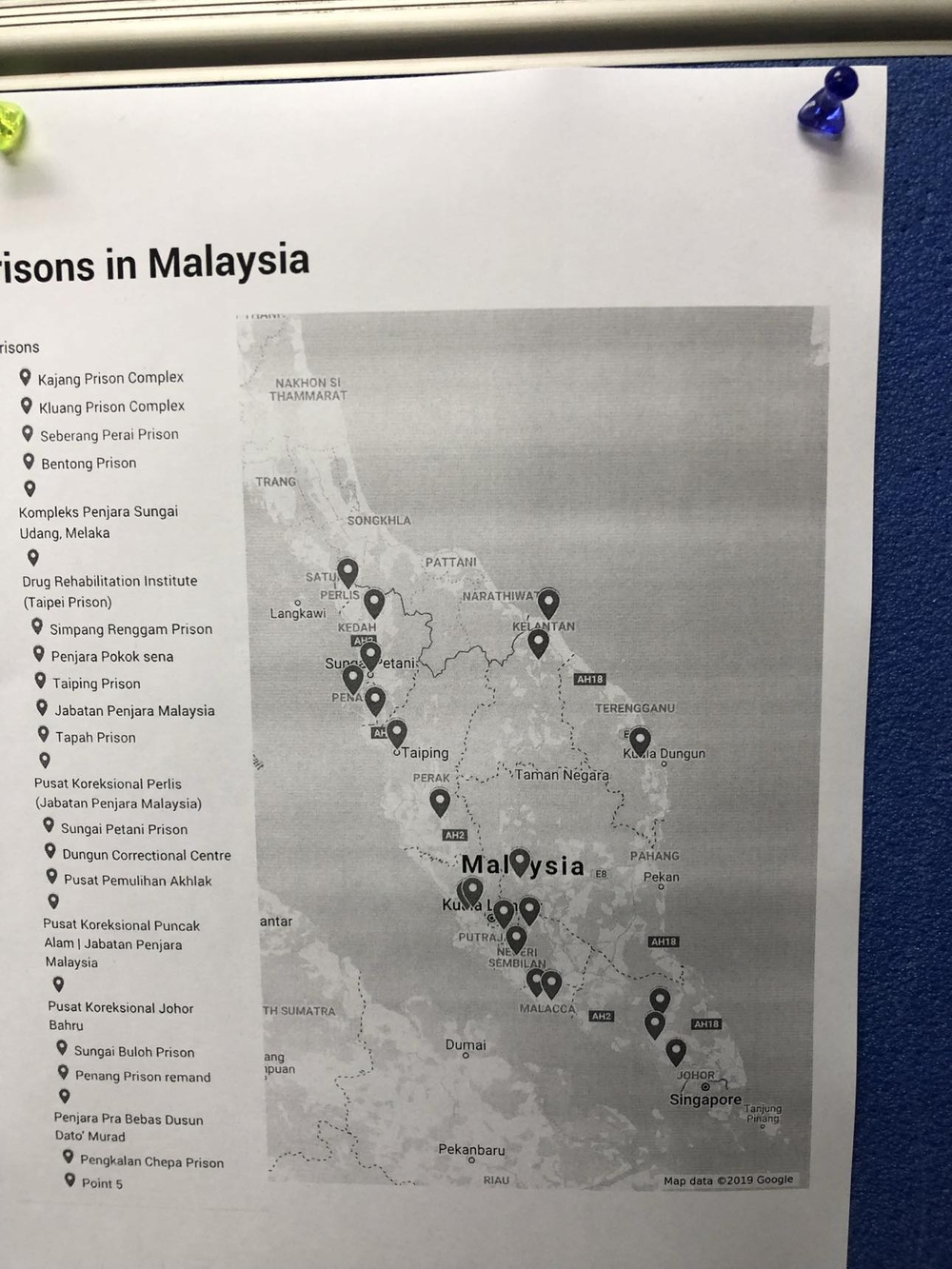
If you get caught by the immigration police in Malaysia, you will have to face the difficult conditions of jail. After the 10-month amnesty program ended, Malaysia intensified the arrest campaign again. Those caught in that way will be fined up to 10,000 ringgit and imprisoned for up to five years or both.
Malaysia pressured to provide alternative to detention
Lawmakers concerned with international human rights are pushing to repeal Malaysia's policy of indefinitely detaining undocumented workers, refugees and people who entered Malaysia illegally in deportation centers.
Last June, the United Nations Committee on the Elimination of Discrimination against Women (CEDAW) recommended reforming the legal and policy framework for regularization and management.
Human Rights Watch's latest report states, "Malaysia should implement new laws and policies on the practice of detention before deportation". Detention of health-impaired immigrants should be stopped immediately, the Watch report said, and secure screening procedures should be established to identify and release at-risk detainees. Deportation Center should be improved to meet international standards. In which prisoners should be treated humanely and with dignity, and adequate access to space, food, water, adequate medical treatment and sanitation should be ensured', the Watch report said, 'The law including the Immigration Act should be amended to abolish the use of judicial caning as a punishment in all cases.'
Watch said that it is necessary to implement a program to legalize the status of undocumented migrant workers and address the corruption and exploitation of workers by employers.
The Global Detention Project has also stated that it is necessary to provide legal aid to all detainees. Access to the domestic legal aid scheme should be extended to all non-citizens regardless of nationality or status, the project suggests, and non-detention options should be considered. Detained persons should be ensured the ability to challenge the grounds for detention before a court or other competent, independent and impartial authority.'

