Due to the lack of processing and storage centers, the herbs produced in the Himalayan districts of Mugu, Humla, Jumla and Kalikot have to be sold at the price of ``Kaudi''.
We use Google Cloud Translation Services. Google requires we provide the following disclaimer relating to use of this service:
This service may contain translations powered by Google. Google disclaims all warranties related to the translations, expressed or implied, including any warranties of accuracy, reliability, and any implied warranties of merchantability, fitness for a particular purpose, and noninfringement.
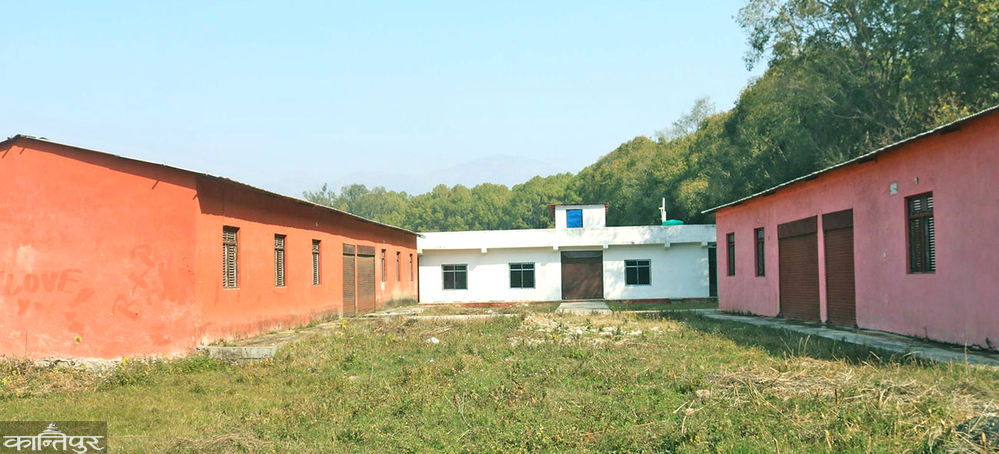
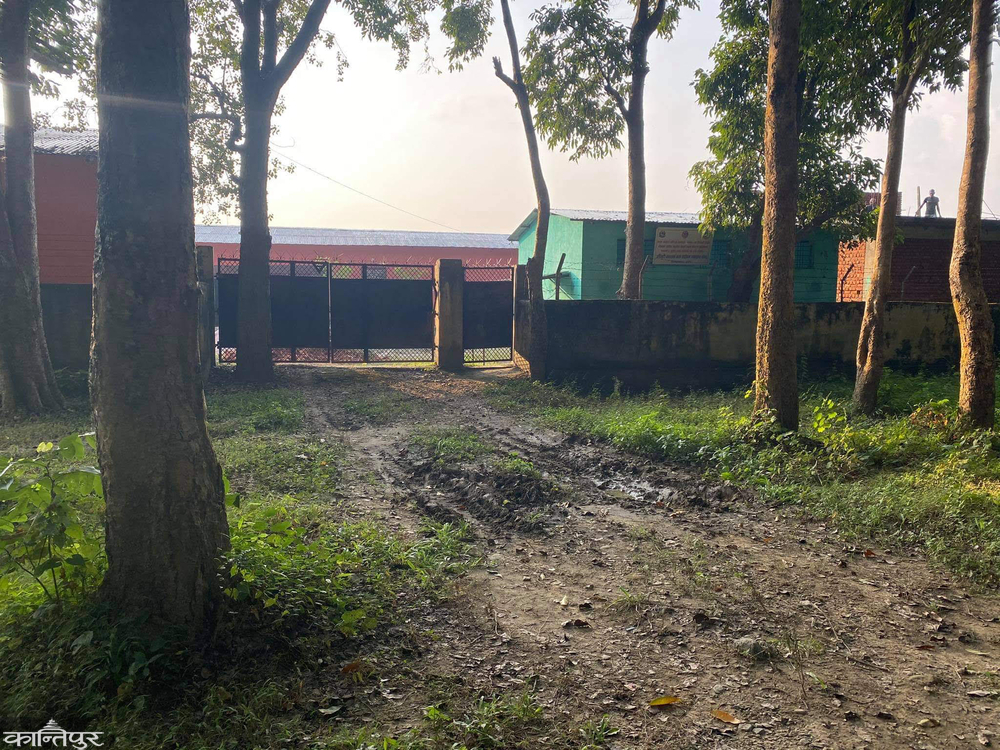
For the collection of herbs found in Karnali, the work of the herb collection and processing center was started in the year 2068 at Kankrevihar located in Birendra Nagar-9. Surkhet Industry and Commerce Association started the construction work according to the private partnership concept. For which buildings, compounds and other structures have been constructed and so far nearly 4 crore rupees have been spent.
"So many structures have been built, but they are becoming dilapidated because they are not operational," said local Balmukund Manandhar, "There is a waste of medicinal plants worth crores of rupees, and since then, government investment has become like water on sand."
The building has been constructed on about seven katta land of Kankrevihar Community Forest . Laxman Kandel, president of the Chamber of Commerce and Industry, said that the building was constructed to create a herb collection center with a capacity of 1,500 metric tons. "Only the building has been built, all the structures inside are left, if there is a budget, it can be put into operation in one year," he said, "about 80 percent of the work has been completed, due to the lack of budget for normal work, there is a risk of wasting the investment so far."
According to the state forest directorate, about 145 species of herbs are found in Karnali. 75 species of herbs collected in Karnali are exported to India and China. But due to the lack of a processing center in Karnali, the herbs go to the world market via Nepalgunj, Bahraich, New Delhi, Calcutta and Chinese border in India. In the last financial year alone, 11 thousand 700 metric tons of herbs have gone out from Karnali. According to the Ministry of Industry, Tourism, Forest and Environment of Karnali Province, about 3 crores of revenue has been collected. Danda Bahadur Budha, a herbalist from Dolpa, said that due to the lack of processing and storage centers, the herbs produced in the Himalayan districts of Mugu, Humla, Jumla and Kalikot have to be sold at the price of ``Kaudi''. "Indian traders buy herbs from here at a normal price," he said, "when they come from there after processing, they have to buy the same herbs at double the price." But the trader sells it at 950 rupees in Nepalgunj. Similarly, katuki bought from local for 1400 rupees is sold for 1650 rupees, kakadsilo bought for 500 rupees 800 and jatamsi bought for 600 rupees for 900 rupees . He says that there is a lot of difference in the price of the herbs purchased from the local due to transportation, processing and storage charges.
Abandoned herb collection and processing center at Virendra Nagar-9 Kankrevihar in Surkhet. Photo : Kantipur
 The herb collection center of Tripurasundari Municipality-1 Khatijyula in Dolpa has also been idle for a long time. To collect and process herbs, a collection center was established to collect and process jatamsi in the year 2055 with the financial support of World Wildlife Fund, New Era and Tripurakot Gavis of Savik with an investment of 19 lakh rupees. The center has been closed for a long time as the cost of processing herbs has been seen to be high, which is not enough for the collectors," said Mun Bahadur Rawat, head of Division Forest Office, Dolpa. "At present, all the herbs go to India through Nepalgunj. No .'According to him, for almost 4 years, the locals had brought herbs such as jatamsi, samayo, pire grass to the center and stored them and processed them.
According to the local Kamal Budha, the collection center is stuck even though there is no electricity facility. Industrial machines were operated for a few years through the local hydropower scheme. But he said that after the closure of the hydroelectric power station, there was more problem. "Currently, if the collected herbs are not sent out within 15/20 days, there is a risk of rotting and rotting," he said. The head of the division, Rawat, informed that Jatamsi oil costs up to 25,000 rupees per liter.
Although the building of the collection center built in Kankrevihar looks attractive from the outside, it has become a place for children to play and a place for animals to roam after being unused for a long time, said Naveen Mahat. "If the collection center was established, some young people of the village would get jobs, traffic would increase, small shops and hotels could be opened in the vicinity," he said.
Similarly, the herb collection center built in Tatopani Rural Municipality-8 Budhabada of Jumla in December 2078 has also been idle for a long time . In partnership with the Climate Adaptation Fund, the Ministry of Forests and Environment and the World Food Program, Nepal had established a collection center at a cost of 1 million 22 thousand rupees. "Due to the lack of a collection center, herbs are forced to be left in the market around the Karnali highway and Jumla airport," local Pushkar Neupane said, "Some herbs rot before reaching the market."
Chhiringkapne Lama, chairman of Mugum Karmarong rural municipality in Mugu, said that there should be at least one herb collection center in each district. "If there was a collection center, at least the herbs would have been prevented from rotting," he said, "Karnali's herbs would have been easily marketed, and the collectors would have got a good price."
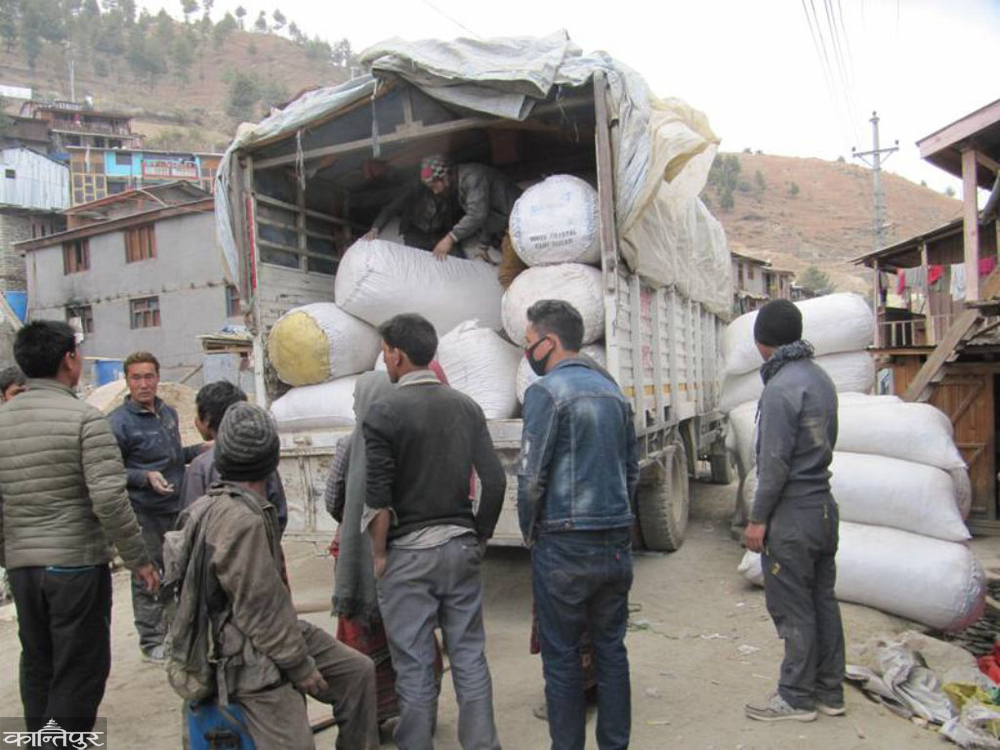 Ved Prasad Neupane, the herb collector of Tatopani Rural Municipality-3, said that the collectors started fleeing when the herbs picked at the cost of their lives did not get a price and a market. "We have to go to Ankantar places to pick herbs after spraying large weeds, some people die when they go to pick herbs," he said, "Our suffering is increasing as the production decreases, we cannot get a good price if we have to sell it immediately." If the collected herbs could be kept for at least 2/3 months, the price could be bargained with the traders.' He complained that because there is not a single storage center in Karnali province, he is forced to sell the herbs at the same price as the traders said.
Mahadev Herbs Processing Center located in Chankheli Rural Municipality-1 Rimi of Humla has also been idle for almost 11 years . In the year 2070, a center was established to collect and process the herbs collected in Sarkegad, Kharpunath and other rural villages including Chankheli. According to Sarjan Bahadur Budha, the president of the herb processing center, the various machines connected to the center with an investment of 22 lakh rupees have broken down. "The machine ran well for 3/4 years, after 3 machines broke down, they requested budget from the municipality and the state government. After being neglected, the structures have also become dilapidated," he said.
Another herbalist Karmapaljor Tamang said that the herbs brought from Humla have to be stored in Nepalgunj for at least 1/2 month. "We are only selling at a normal profit," he said, "Herbs bought by big traders are bound to rot."
Despite the lack of storage and processing, nearly 20 percent of Karnali's herbs are being wasted every year, said Surya Prasad Sharma, Information Officer of the Provincial Forest Directorate. "Opening a collection and processing center without a feasibility study has also created a problem," he said. According to him, some traders pay the cost of herb collection in advance to the collector and purchase herbs by setting their own price.
 Minister of Industry, Tourism, Forest and Environment of Karnali Province Suresh Adhikari said that although Karnali Province is a hub for herbs, there is a problem in marketing, processing, storage and industrialization due to insufficient budget. He said that during his tenure, priority was given to making laws necessary for the marketing of herbs, establishing herbs storage and processing centers and special subsidy programs to attract farmers for herb cultivation.
"In order to strengthen the regional economy and also for the prosperity of Karnali, the protection and marketing of the herbs here is necessary," he said, "through herbs and tourism, necessary initiatives are being taken to create jobs, increase economic activities and overall regional economic development and improvement."

