There is no internet facility in Dhorpatan. Locals have suffered more for education, health, transport and drinking water.
We use Google Cloud Translation Services. Google requires we provide the following disclaimer relating to use of this service:
This service may contain translations powered by Google. Google disclaims all warranties related to the translations, expressed or implied, including any warranties of accuracy, reliability, and any implied warranties of merchantability, fitness for a particular purpose, and noninfringement.
Greenery all around. field in the middle. A river flowing in a single stream. Not only this, during Chait-Baisakh the forest is full of colorful flowers such as red, pink and white. The geography and environment of Dhorpatan is very attractive. Horses and other livestock make a pleasant sight here. Although it seems like a small valley, it takes a lot of time to visit.
Potatoes and apples are the main products here. There are many examples of farmers becoming rich by selling potatoes. The process of becoming a comfortable hotel for tourists has started. Individual and community hotels can manage only about two hundred people arriving here daily.
The North Ganga Reservoir hydropower project in discussion is located here. A 130 km road track has been opened from Baglung, the headquarters, to reach Dhorpatan, which is a storehouse of herbs and looks even more attractive when Setamme is covered with snow in winter. Until a few years ago, Dhorpatan, which used to take three days to reach, can now be reached in one day by their own vehicles. Here wild animals like Naur, Ghoral, Jharal are open for hunting. But the red panda, which is considered rare in the world, is protected. It is also a suitable land for red pandas.
Attractions of Dhorpatan
Dhorpatan Game Reserve is 126 km west of Baglung headquarters. Dhorpatan, the only game reserve in Nepal, is also a destination for tourists from all over the world. Hunters from Europe, Australia and America come here for hunting after paying millions of rupees in revenue. It has also had a positive impact on Nepal's revenue collection and tourism promotion. 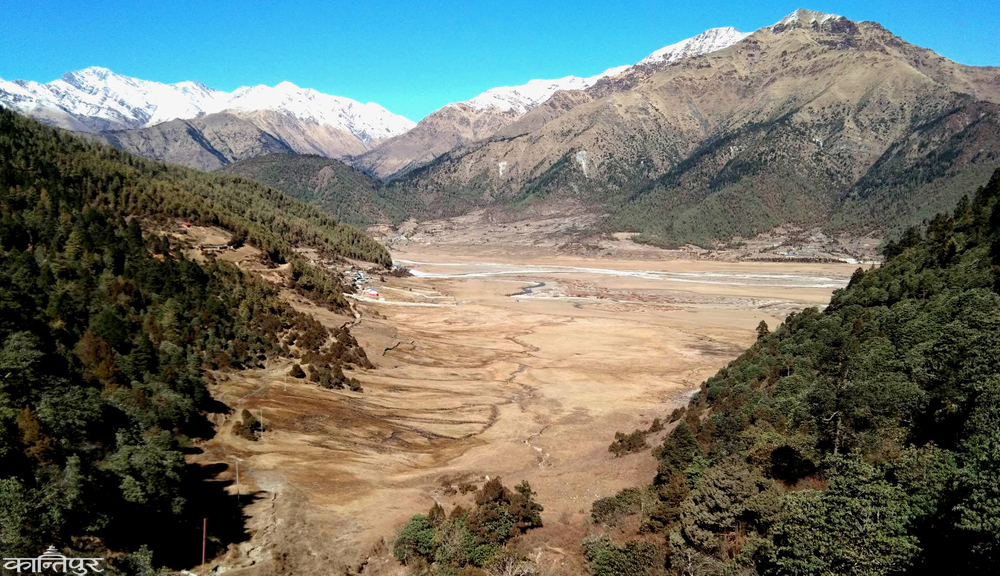 Patan here is at a height of three thousand meters. The other geography of the reserve is up to 4,500 meters. 32 species of mammals are found in the reserve. Naur, Jharal, Thar and Himalayan bears are special. There are 164 species of birds, such as Damphe, Munal, Chir. This area has been made a hunting reserve for the purpose of conservation as well as utilization of wildlife. The reserve has been divided into 7 blocks, Sundah, Seng, Dogadi, Barse, Fagune, Surtibang and Ghustung, and arrangements have been made to allow hunting.
Here there are not only hunting reserves but also many religious destinations. Uttarganga is the best religious pilgrimage site here. Those who reach Dhorpatan return after visiting here. Thousands of devotees come here on Janai Purnima, Baisakh Purnima etc. Chhentung Monastery, Tibetan Refugee Camp, Ayurveda Dispensary, Rudra Lake are religiously famous. Similarly, places like Nisel Dhor, Buki, Fagune, Makot and Hukam towards Rukum are tourist attractions. 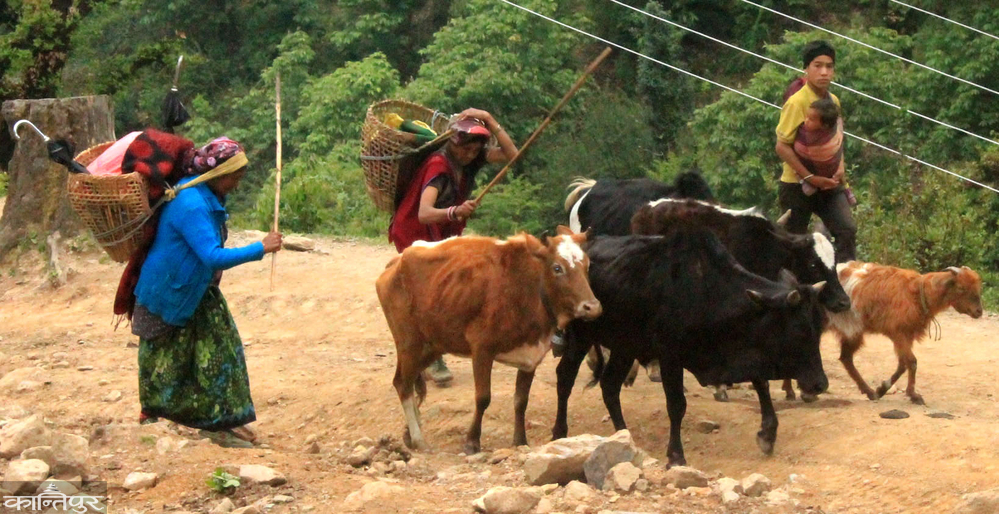
Many farmers move their barns to Nissel Dhor and Buki. When you reach Buki in June-July, you will see a green and beautiful scene with sheep. Farmers living in 7 wards of Dhorpatan municipality, 6 wards of Tamankhola rural municipality and 6 wards of Nisi rural municipality keep cattle in Buki for 8 months of the year except for 4 months of winter season. At that time they plant potatoes there. They have a custom of carrying house goods for animal husbandry.
Locals' health
Dhorpatan is easy and fun for the tourists, but it's a pain for the residents. Whether it is a foreigner who reserves a helicopter to go hunting or a Nepali tourist who travels for fun, they try to photograph the lifestyle of the locals. Some people go to Bhangro and take pictures, some take pictures with Kurua at home. Some take pictures with children who have not gone to school and are not dressed.
Hunters and foreign tourists come by helicopter, while domestic tourists come by jeep. But there is no means for the daily commuters. The road is dilapidated. From Bobang, most of the children, even the elderly, carry sticks and go to Dhorpatan, Buki and Jaljala on foot. The children's school here is dilapidated. They are forced to travel on foot as they move to Bensi in winter and lake in summer. Because the parents go to Buki to graze the animals, they spend their money every week to ten days, and when they reach Buki, they miss their studies. 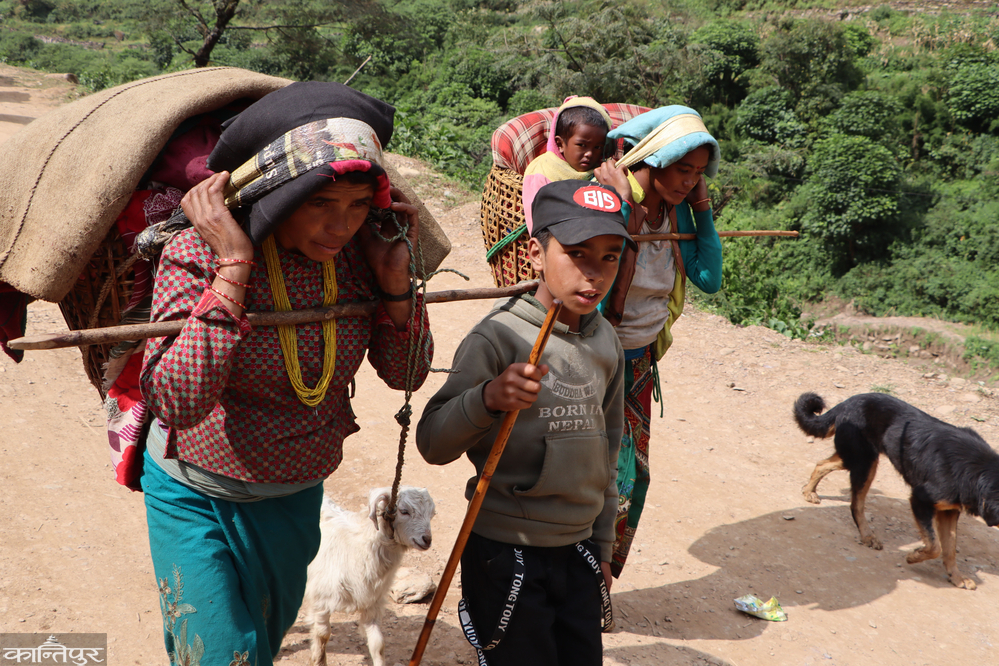
There is also a lack of posts in the schools here. Locals have suffered more for education, health, transport and drinking water. There is no health post here. The services provided by community health units are not enough. Due to the lack of medicine and manpower, patients go to the army barracks every day. The army treats up to 20 patients daily.
"Medicine comes to designated young men, how should we send the patient back, the medicine has not been delivered," said an army officer, "The residents here have suffered a lot of health problems." Uterine problems and disability Those who have are the most. Last year, the local Purnima Vick was rescued by an army vehicle and taken to Burtibang after they could not find a vehicle to take him to the hospital immediately. Many pregnant and sick people are at risk because of lack of access.
The stay of more than three thousand houses in Dhorpatan is temporary. When they go to Buki Lake for grazing, the children are stranded. Three years ago, a child who was found stranded was rescued by the army and looked for his parents and handed him over. Women and children found stranded are treated and sent to army and health units. The nearest treatment center is in Burtibang. To reach this center, which is 36 km away, one has to walk all day without a vehicle.
A pregnant woman should reach Burtibang and camp in order to have a safe delivery. "If I had not been rescued in time, I would have died," Vic said. "If not rescued in time, many people would have lost their lives."
There are 5 schools in Dhorpatan valley, about 2 thousand children study. But there is no facility here. No furniture, no water supply. Some children are not even able to wear warm clothes. Even if up to 50 children study in one class, there is not enough furniture. Dust makes children look dirty.
Dhorpatan Janwadi Basic School has even more problems. There are also those who read sitting on the cold floor. We found that some children come hungry, they have not been able to arrange lunch,' said local teacher Indrakumari Gharti Magar, 'How can hungry children study?'
Uttarganga lacks bridges. Some children drop out because they have to wade across the river to study in the rainy season. It will be slow when the detour comes.
Apart from the families who earn from potato farming, there is no income enough to eat two meals a day. Those who go to the lake for grazing live by eating potato dishes there. People here are often arrested for slaughtering cows. Some say that they are forced to do such things when there is nothing to eat.
Despite being an attractive valley, there is a problem of water supply in Dhorpatan. Those who live in Mul Chhevai drink pure water, but others drink water from Uttarganga, Dhor Khola and Garpakhola. In Navi, Syalpakhe, Bhandarigaon, there is no alternative to carrying river water in garri and drinking it. In the northern settlements, they drink water from Garpakhola. The water of this river is considered purer than others. But most of them are drinking river water. 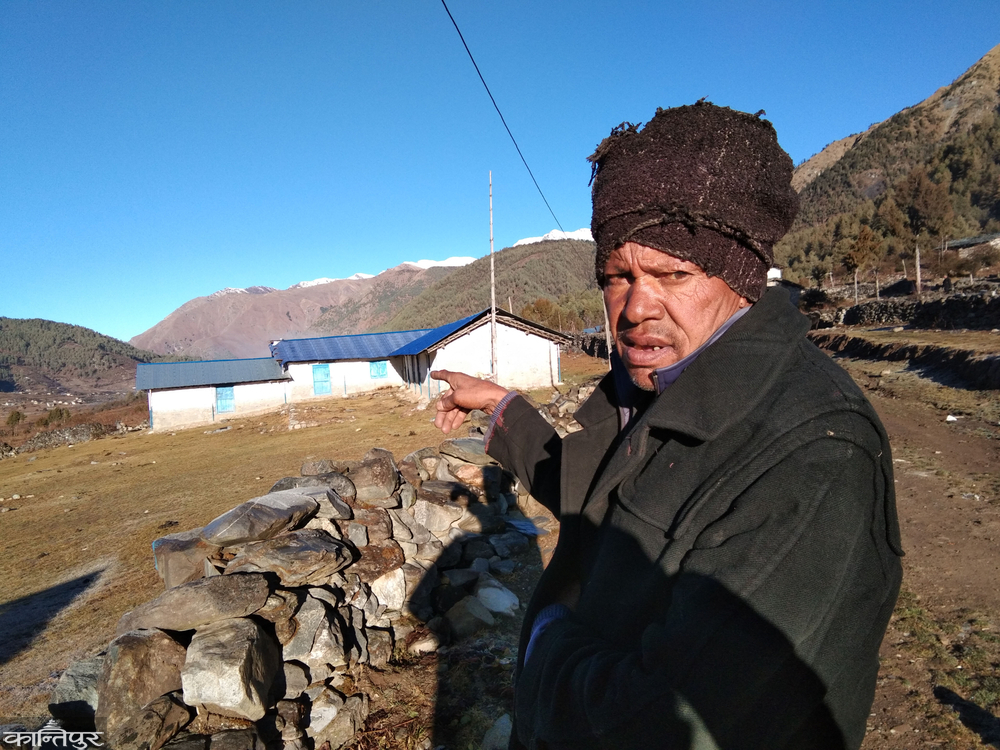
The municipality that spends crores on the management of Dhorbarah temple has not spent much on education and health here. Many people do not even know that they can go to the municipality and ask for plans for education, health and drinking water. "I have asked for a plan from time to time, but the work has not been done with a small budget," said the ward president, Bhadramani Sunar, "what to do with a better place, in any case, the people of Dhorpatan are only suffering."
Sushila Vick, a local, said that those who are forced to eat only two meals a day after working, do not even have the time to ask for a plan.
In the reserve, only certain animals are hunted by paying revenue. But the farmers are disappointed when the wild boar, which cannot be hunted, eats and destroys the potato crop. Farmers complained that they could not increase potato production after the wild animals that came at night ate all the crops.
Apples also grow in Dhorpatan. But it was not easily sold in the market. Golden apple of Jumla has also been planted here for three years, but the farmers are still confused about the marketing.
There is still no internet facility in Dhorpatan. 2-G service has been operational in Niseldhor only this year. Santosh Baral, head of Nepal Telecom Baglung, said that 4G could not be run from solar due to the lack of power lines of national broadcasting.
After 30 years of electricity being turned on in the capital, Burtibang market is barely getting light. Taman, Nisi and Dhorpatan, which are 30 to 40 km west of Burtibang, are still in doubt as to when electrification will happen. Due to the lack of internet, the Reserve Office and the security team of the Nepali Army have also suffered in exchanging information.
Due to lack of electricity, there is a problem in storing hundreds of quintals of potatoes grown by the farmers of Dhorpatan. Local Tek Bahadur Sunar said, "Potatoes rot because the natural storage does not last long," said, "If there was good storage, potatoes could be eaten all year round, and they could be sold after winter." 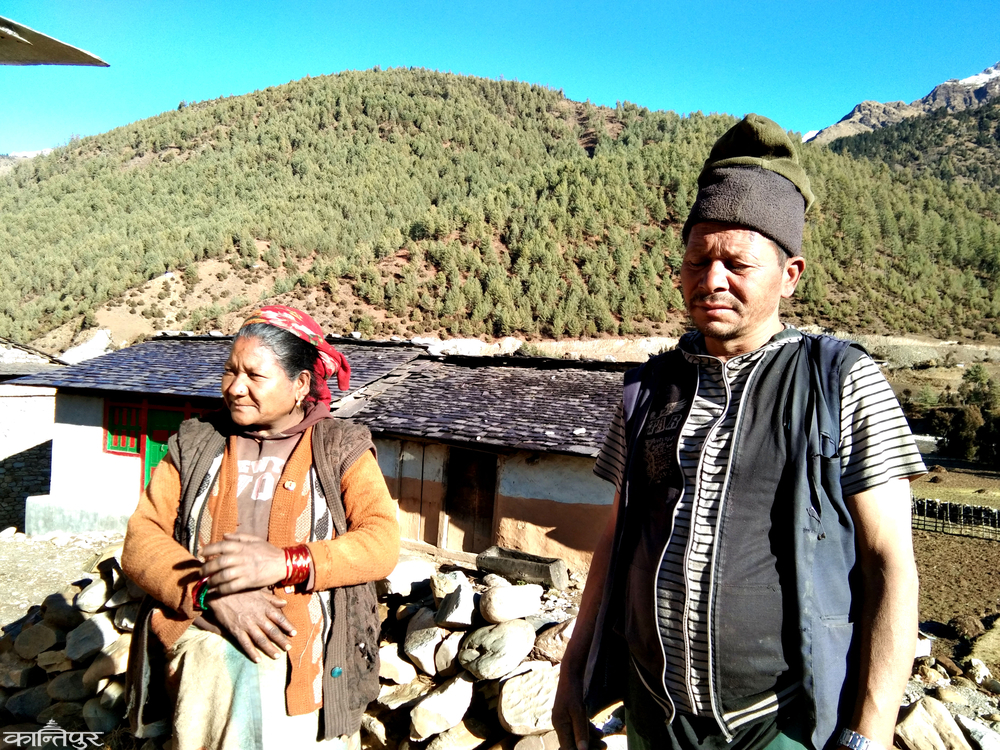
Baglung section of Dhorpatan-Saljhandi road under construction has been stalled for 16 years. As the roads are not leveled, the farmers are suffering in transportation and the tourists are not comfortable. Dhan Bahadur Kayat, Acting Head of Dhorpatan Municipality, said, "When the municipality invests in the field of national projects, it becomes ineffective. The project has not worked," said Dhan Bahadur Kayat.
To be intermediate
Even after 42 years of establishment of Dhorpatan Sikar Reserve, the intermediate area has not been declared. In 2074, the reserve submitted the file to the ministry to create an intermediate zone. It is also holding phased discussions with the local municipality, people's representatives, and locals around the reserve. Due to the delay in announcing the intermediate zone, the annual budget of crores has not been spent for the benefit of the local people.
According to the data of Arksha, revenue is collected here from 7 to 80 million annually from various sources. More than 20,000 tourists from outside the district visit here every year. Dhan Bahadur Kayat, Acting Head of Dhorpatan Municipality, said that if the road is smooth, 100,000 tourists can be brought in. For the announcement of the intermediate zone, the executive committee of Baglung's Dhorpatan Municipality, Tamankhola and Nisikhola Rural Municipality and Prithuttarganga of Rukum and Dhaulagiri Rural Municipality of Myagdi should decide.
This budget can be spent on the construction of roads, bridges and footpaths and community skill development in the Dhorpatan area. Locals have not been able to enjoy the revenue paid by the hunters who come to the reserve, the mining of river and river products including Uttar Ganga, the sale of timber and the money collected from fines.
Chief Conservation Officer Chandrasekhar Chaudhary said that this matter was raised in the warden's meeting held last month. "We are taking initiatives, but some locals are not positive," he said.

