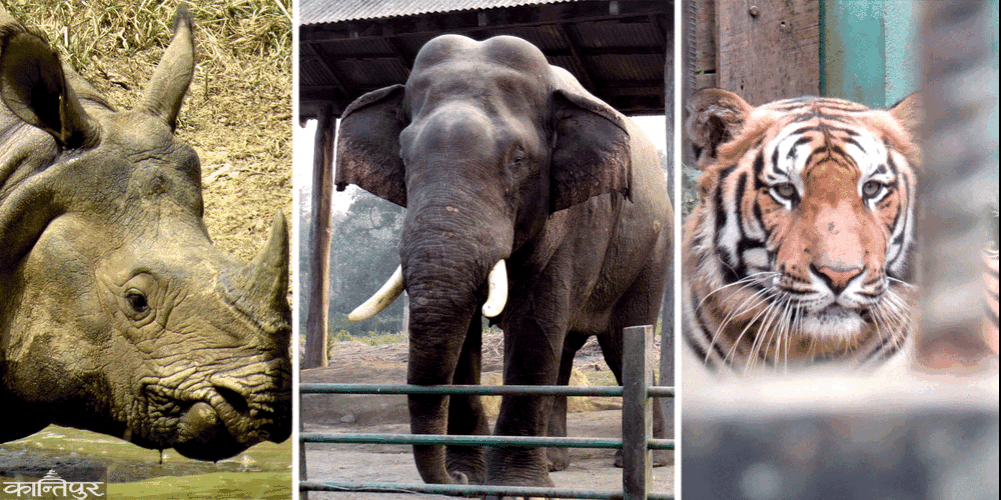
Rhinoceroses have claimed many lives, tigers and wild elephants are equally feared
We use Google Cloud Translation Services. Google requires we provide the following disclaimer relating to use of this service:
This service may contain translations powered by Google. Google disclaims all warranties related to the translations, expressed or implied, including any warranties of accuracy, reliability, and any implied warranties of merchantability, fitness for a particular purpose, and noninfringement.
There is a green forest where rhinos, elephants, peacocks grazeNarayani has a clear heart like waterDistrict Chitwan in the center of NepalJust live a younger life with me
This song sung by Milan Lama, a famous folk singer from Chitwan, describes the natural beauty of Chitwan. Surrounded by forests and large rivers, Chitwan is actually quite beautiful. Rhinoceros, elephants, tigers and peacocks roam in the world-famous Chitwan National Park here. Millions of tourists from all over the country come to see it. Due to tourism, the economic status of Chitwan has increased . Living in Chitwan is not difficult.
This is a pleasant part of Chitwan.
However, there is another part connected with the park. Which is sad .
When the wild animals of the park attack, the locals are injured and are losing their lives . Chitwan Park is the main habitat of the rare one-horned rhinoceros, the Patebagh . Most tigers and rhinos in Nepal are found in Chitwan National Park. Wild elephants are also here . These big wild animals are killing local people every year.
Roosters in Chitwan Park often come around the wild elephant settlement . Attracted to domesticated female elephants, these elephants do not leave the crops and the grain that the locals care for at home and the salt that is kept in the kitchen . A wild male elephant roaming around the park has been named 'Govinde' by the locals. On October 17, this elephant killed 40-year-old Jadu Singh, an employee of the center, at the Khorsor Elephant Breeding Center in Sauraha.
Chitwan National Park has the largest number of one-horned rhinos. The number of one-horned rhinoceros, which was once declining due to poaching, has increased in the last decade. Not only inside the park, the rhinoceros attacks the locals in the intermediate forest, fields and houses of the park. On December 16, when a rhinoceros escaped from the forest, it attacked 70-year-old Krishna Kumari Thapa of Ratnanagar-16.
Critically injured Krishna Kumari died during treatment. Five others were injured in that incident.
After Prime Minister KP Sharma Oli said that 'tiger cannot be tamed by feeding people', the message has been sent that tigers kill a lot of people . The suffering caused by tigers around Chitwan Park, which has the highest number of tigers in Nepal, is no less. Some years there are too many and some years there are zero deaths from tiger attacks .
According to the details of the park, 35-year-old Anil Tamang died on July 21, 2080, when a tiger attacked him in Kerabari of Khairhani Municipality-12. On November 8 of the same year, 43-year-old Hariprasad Paudel and 18-year-old Pushparaj Tamang of Chitwan Rapti Municipality-1 Dubichour, who went to the kharbari of Makwanpur Manhari Rural Municipality-6 Jogital to cut thatch for their house, died after being attacked by a tiger. 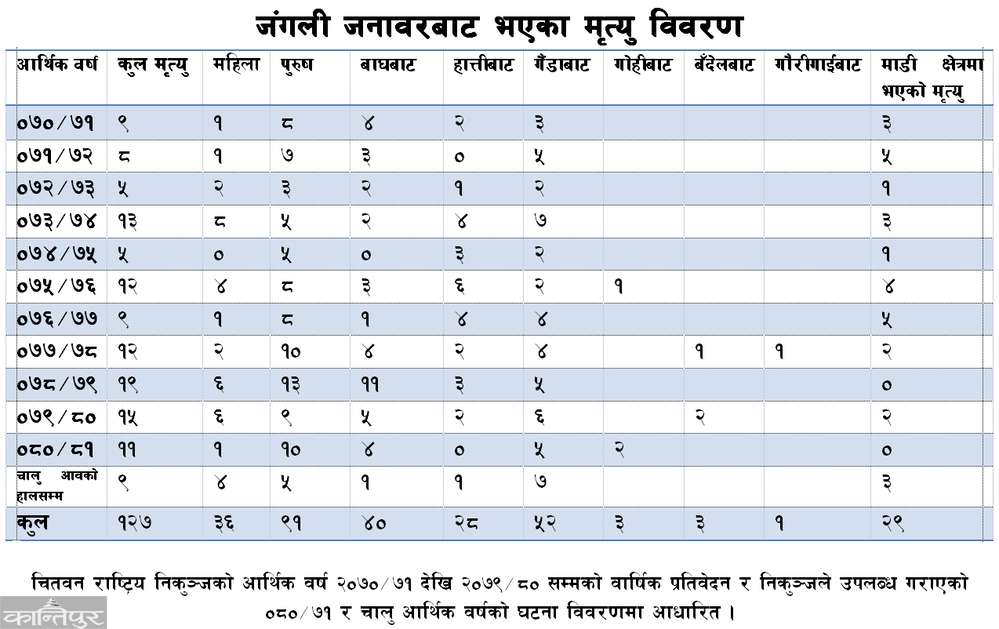
This representative incident shows that not only in the park or in the community forest area, but also around the house yard, farm and work area, the locals are not safe from wild animals . During the political instability and armed conflict, poaching was rampant inside and outside the park. As the 1970s progressed, the security of the park became stronger, and other activities became more wildlife-friendly.
It seems that the number of tigers and rhinoceros has increased continuously in the count or monitoring of the last 10 years. When considering the details of the annual report published by Chitwan Park since the financial year 070/71, since that financial year till February 18 of the current financial year, 127 people have died due to wild animals in Chitwan Park and its surrounding areas.
Rhinoceros killed many people
In the period of 11 and a half years, 127 people died and the most deaths were caused by rhinoceros. During this period, 52 people died due to rhinoceros. After rhinoceros, 40 people died due to tigers and 28 people died due to wild elephants, it is mentioned in the annual report of the park . During this period, Magar crocodile killed three, wild boar killed three and Gauri cow killed one.
The central area spread over the four districts of the park, as well as the intervening five years in the national forest of two districts and within the park, out of the total of 127 deaths, 91 were men and 36 were women .
park animals The government gives relief when it comes to the central area and attacks the locals. The annual report published by the park mentions the details of the deceased who have given relief to their families. There are also one case of death inside the park but not being relieved in this report. In the central area of Chitwan Park, including Chitwan, there are 12 municipalities of Nawalparasi (before Bardghat Susta), Parsa and Makwanpur districts.
outside the central area, the relief of the incidents that occurred within the national forest area of Chitwan and Nawalparasi from 2076 to 2080 has also been distributed through Chitwan Park. Those details are also included in it . Chitwan park office has distributed distribution to the families of 13 people who died during that period in the forest area of Chitwan and Nawalparasi, where the animals of the park roamed.
Park has been providing relief to the families of those who died in the central area since 2055. Most of all, in 078/79, relief was provided to the families of 19 deceased persons . This year, 11 people have died due to tigers.
Similarly, it seems that 7 people died in 073/74 due to rhinoceros. In other years, two, four, five and six people lost their lives . In this financial year, there are many incidents of rhinoceros. According to Avinash Thapa Magar, information officer of the park, conservation officer, 7 out of 9 people who died till February 18 of the current fiscal year have been killed by rhinos.
From 055/56 to 069/70, 144 people died in the 15-year period . The number of deaths in the 11-year period from 055/56 to 065/66 was 100 . Before the 70s, there were few animals in the park.
'There are many cases of death and injury. Earlier, incidents used to happen even when animals were less. Due to the implementation of various measures, we have not allowed the death rate to increase in proportion to the increase in the number of animals.
There were 544 rhinos in Chitwan National Park 25 years ago. After that, the number of rhinoceros decreased to 372, 408 after the census of 2071 and reached 694 after the census of 2071. There are 752 rhinos in Nepal. Similarly, according to the public census in July 2079, there were 355 tigers in the country and 128 in Chitwan. The number of tigers was also 91 16 years ago. Then it reached 128 through 120 and 93 .
'Increasing numbers will not increase incidents'
In recent years, the number of tigers and rhinos has increased significantly in Chitwan Park. "The human deaths caused by tigers, which once seemed terrible, have gradually decreased since then. While the number of tigers has increased," said Baburam Lamichhane, a wildlife expert who has studied the relationship between tigers, leopards and humans. He said that increasing awareness by adopting security arrangements will reduce the incidence.
His study showed that only about five percent of the total number of tigers can cause problems in human settlements. It would be better to get timely information about such tigers. If the tigers that can cause problems are identified and monitored properly, the accidents will be stopped," said Lamichhane.
Ganesh Pant, chief conservation officer of Chitwan Park, says that such tigers are identified and if necessary, they are kept under control and kept in cages. There are 7 such caged tigers in Chitwan. As there is a shortage of cages, one more has been sent to Parsa Park. Pant said that where 11 people died due to tigers last year, then five, four and one person died in six months of this year.
In the 50s and 60s, there were deaths due to tigers. At that time tigers were not as numerous as they are now. Therefore, awareness and management are more effective than numbers,' says expert Lamichhane. With the increase in the number of tigers, tigers have started living in the forest areas outside the park where tigers were not seen before. But experts say that if the locals do not take care that tigers live there, there will be a danger of encounters and accidents.
'It is necessary to make the locals aware of this danger. Be careful when going to the forest," said Lamichhane. The order of rhino settlements is also the same.
According to the information given by the park, rhinoceros come out of 127 places around the park and enter the settlement. The grasslands of the park are not good, and due to the lack of grazing, rhinoceros enter the village and live in the community forest where there is a lot of people.
At one time, about 20 percent of the park was grassland. It has decreased to five percent . In the meantime, due to various efforts, it has reached 10 percent, says Pant, the chief conservation officer of the park. Grassland improvement and management should be done every year. But the budget available for grasslands and slurry ponds has been very low in recent years.
Until 073/74, there was not much budget for grassland management. In 076/77, 3.5 million rupees came for the management of the old grass field and the construction of new ones. But the amount is decreasing rapidly and the budget for the current financial year is only 37 lakhs . It also seems likely to decrease . Of the 10,000 hectares of grassland to be managed in the park, around 500 hectares are managed.
There is a voice saying that tigers, rhinoceroses and elephants in the park should be kept inside the park. For this, the accommodation should be managed . But our resources are limited. It is not that habitat improvement work is not being done, but we have not been able to do as much as it should be done," said Ganesh Pant, chief conservation officer of the park. He said that the management of wild elephants is also becoming a challenge for the park.
Ashok Ram, who studied elephants and is currently the Chief Conservation Officer of Bardia National Park, says that there are as many as four herds of wild elephants in the Chitwan area. A herd consists of eight to 25 elephants . An elephant needs two hundred kilos of grass and two hundred liters of water a day. Therefore, elephants travel long distances in search of grass and water. The path once walked is not forgotten for a long time .
'But the herd of elephants in Chitwan has not caused problems. It is due to the male elephants being chased from the herd . A male elephant mates three times a year and once mates it lasts for three months . A pregnant female elephant is very excited and aggressive to interact with elephants," said Ram, an elephant expert. These elephants come to human settlements and eat food. He says that due to this, accidents happen when people misbehave.
It is necessary to manage the habitat for elephants by protecting not only the park but also the forest area connected to the park. Also, in order not to make the elephants coming to the settlement more aggressive, the locals should be made aware of how to deal with the elephants,' suggests Ashok Ram. He says regular monitoring and alerting the locals is a way to avoid elephants too.
Emphasis on secure fencing and walls
Ramlal Mahato of Bharatpur Pahitani was the chairman of the then Pahitani Village Development Committee in 2049. He was also the chairman of Chitwan National Park's Patihani Intermediate Consumer Committee from 2054 onwards. In the year 2074, he was elected as a member of the Bagmati Provincial Assembly. He is a resident of the National Park and has been involved in conservation work from public representative.
'It is not that there is no work in conservation, people are also dying . The way to stop this is to think in a new way in a new environment,' he says. He said that the injured could barely get 10,000 rupees for the treatment expenses when the intermediate started. The family of the deceased received a relief of Rs. 25,000. Now it is arranged that the treatment will be done completely. Rahat has also started getting Rs 10 lakh.
'Relief amount is increasing like this . Management also had to be done in the same way . As the number increased, the habitat did not seem to improve . The animal should be kept inside by improving the habitat,' he said. Mahato urges that the intermediate should invest in the infrastructure to prevent wild animals from coming to the village instead of any development work.
29 out of 127 people have died from wild animals in Madi municipality where there are 22 consumer committees of Chitwan Park and four consumer committees out of 12 municipalities.
It seems that 35 people died in five consumer committees and national forest area in Bharatpur metropolitan area during 11 and a half years . The geography and population of Madi is very less compared to Bharatpur, a densely populated area that occupies half the population and geography of Chitwan. But Prakash Dhungana, chairman of the intermediate zone management committee, says that Madi is a risk zone because the incident happens almost around Bharatpur.
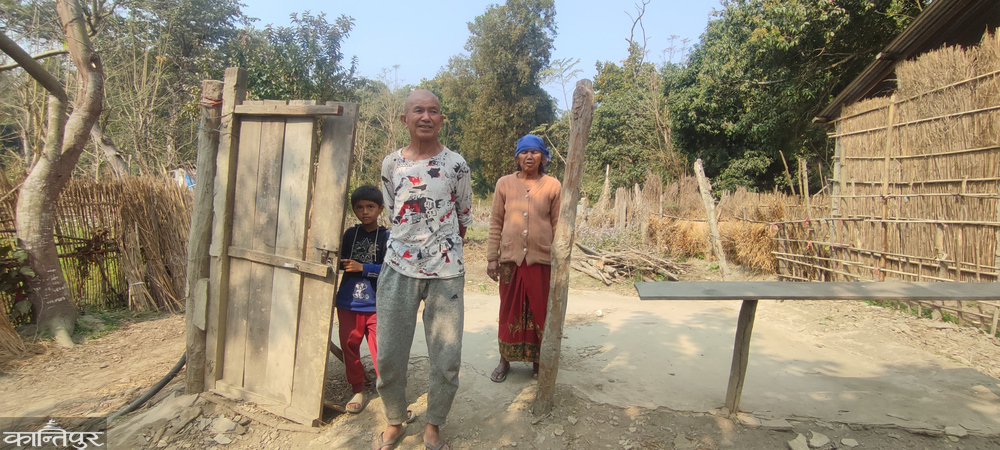
Narayan Sapkota Basu, Chairman of Madi Panchpandav Consumer Committee and Head of Madi Bagai Sector of Madi, says that incidents have been reduced in recent years due to fences, concrete walls and many measures to avoid wild animals. "Nowadays only people go to forest less". We have tried to stop animals as much as possible. But not enough . Sometimes the incidents increase, but it seems to be less than before, he said.
Chitwan Park has a policy of 30 to 50 percent of the income from tourism fees to go to the central budget area . But due to the fact that the budget going to intermediates has also been cut in recent years, Dhungana, the president of intermediates, said that the work could not be done effectively.
Park chief Ganesh Pant said that due to the limited budget in recent years, the local government and the state government also need to pay attention to wildlife management. "If we think that this is the work of the park and mostly the responsibility of the Ministry of Forestry, there may not be effective work in the coming days," he says, "Now everyone needs to think and work together."