Other than Chand, none other than Chand was indifferent to the proposal of Dahal, the chairman of the Maoist Center for mobilizing ex-Maoists
We use Google Cloud Translation Services. Google requires we provide the following disclaimer relating to use of this service:
This service may contain translations powered by Google. Google disclaims all warranties related to the translations, expressed or implied, including any warranties of accuracy, reliability, and any implied warranties of merchantability, fitness for a particular purpose, and noninfringement.
Embracing the philosophy that 'state power is born from the barrel of a gun', the Maoists started an armed struggle on February 1, 2052.
Before that, the name of the party was - CPN Ekta Kendra .
The central committee meeting held before the start of the struggle changed the name of the Unity Center to the name of the party after Mao, the founder of the Chinese Communist Party - Nepal Communist Party Maoist .
After the peace process of 2063, a series of divisions started in the Maoists who were united during the armed conflict.
During the armed war for 10 years, the party remained united despite the infighting within the Maoists. Now the original Maoist is fragmented and divided into 10 branches .
In December 2065, the party was united between CPN (Maoist) and CPN (Ekta Kendra Masal) under the leadership of Narayankaji Shrestha. The name of the party was changed to Unified CPN (Maoist).
The party led by Pushpa Kamal Dahal since 2045 was formally divided in 2069. Senior Vice President Mohan Vaidya's party rebelled against the creation of the constitution and the peace process. Vaidya, a Marxist aesthetician, had been following Dahal's leadership despite dozens of disagreements.
Under the leadership of Vaidya, in 2043, the police beat of Kathmandu was attacked, the poster was put up . After many workers were arrested and severely tortured by the police in this incident, Vaidya resigned as the General Minister and handed over the leadership to Dahal.
Since then Vaidya has been considering Dahal as the head of the party and in June 2069 he disagreed with the adjustment of the Maoist army and formed another Maoist.
That was the biggest division of the original Maoist .
About 30 percent of the central members including Vaidya, Ram Bahadur Thapa, Dev Gurung, Netravikram Chand, Pampha Bhusal rebelled and formed the revolutionary Maoist . President Dahal and the then Vice President and Prime Minister Baburam Bhattarai decided to proceed on the path of public revolt, saying that they had taken the 'right wing' course of action that had agreed on the adjustment of the army under the peace process .
President Dahal has been saying that former Maoists should meet when he is in a weak position. When other parties raised questions about the armed war of the Maoists, it is difficult to get along even if the former Maoists stood together and countered. The main reason for that seems to be a personal conflict rather than an ideological one.
In the run-up to the 2079 election, Dahal and Nepal Samajwadi Party (New Power) Chairman Baburam Bhattarai reached an informal agreement to unite. According to the same agreement, Dahal was made a candidate in Gorkha-2 and won. When Dahal was elected as a member of the House of Representatives from Gorkha-2. The leaders of the new power stood up on the Maoist election symbol and were elected to two Houses of Representatives and two State Houses.
But after the election result, personal confrontation started between Dahal and Bhattarai . Dahal adopted the proposal to form Samajwadi Front, which was put forward by Bhattarai himself, and declared a front with CPN Unified Samajwadi Party, Janata Samajwadi Party and Nepal Communist Party. The agreement between Dahal and Bhattarai to unite the party was broken . Recently, Bhattarai has been seen as Dahal's biggest critic. The 'enmity' between the two leaders has increased so much that even dialogue has not been possible.
Inter-conflict also started within the revolutionary Maoists who rebelled from the Maoists for taking the right wing parliamentary line . A dispute started between General Secretary Vaidya and senior leader Netra Vikram Chand about public revolt. After Vaidya said that the preparations for public uprising were not enough, a conflict broke out between Netravikram Chand and the party split. Then in November 2071, Vaidya and Chand separated. Chand formed a new party for a unified revolution and did armed activities for some time.
The then government under the leadership of KP Sharma Oli put Chand's CPN on the terrorist list and took security action. After that, Chand decided to advance his party in a peaceful political direction and agreed on three points with the government in February 2077. After that, he is doing political activities in connection with agricultural production targeting the upcoming elections.
Before Chand's separation, Ram Bahadur Thapa, Top Bahadur Rayamazhi, Pampha Bhusal, General Secretary Dev Gurung also separated from Vaidya in June 2073 . Currently, Thapa is the vice-president of UML while Rayamazhi is the suspended secretary. Rayamazhi has been arrested in the case of fake Bhutanese refugees and is in jail pending trial. Bhusal is the Maoist vice president and Gurung is the Maoist general secretary.
UML and Maoists united in May 2075 and formed CPN. Three years later, the Supreme Court decided the case and ordered the separation of UML and Maoists. Thapa, Rayamazhi and Lekhraj Bhatt (Secretary) remained in the UML while Bhusal and Gurung went to the Maoists .
Dhamendra Bastola and Vaidya, who are members of the revolutionary Maoist party, split in July 2081 after a dispute over whether the direction of the party should be scientific socialist or not.
CPN General Secretary Chand and Hemant Prakash Oli, who had armed activities under the name of unified revolution, also had a conflict. In May 2079, Oli separated from CPN. He formed the majority of the CPN and has now united with the revolutionary Maoists led by Vaidya.
Many fragments have been torn from the original Maoist . Pushpa Kamal Dahal is the president of the Maoist Center, Mohan Vaidya is the general secretary of the revolutionary Maoists, Netra Vikram Chand is the general secretary of the Communist Party of Nepal, and Baburam Bhattarai is the president of the Nepal Samajwadi Party (New Shakti). Nepal Communist Party (Majority) has Dharmendra Bastola as its general secretary, Nepal Samajwadi Party has Ganganarayan Shrestha as co-president, Scientific Socialist Communist Party has Ahuti as its general secretary, and Aam Janata Party has Prabhu Shah as its president. In the Maoist Communist Party, Ram Narayan Pal is the general secretary and Gopal Kiranti is the coordinator of the Third People's Movement in Nepal.
Communist polarization how easy ?
The political report passed by the Maoist Center Central Committee meeting that ended in the last week of December emphasized the unity of the former Maoists.
'The initiative of party unity should be increased with various communist and socialist parties who share the same views on the ideological and political direction of scientific socialism. The experience of the past few years has taught us that it is wrong to unite without having a sufficient debate on the background of ideas, politics, organizational methodology, schooling and creating common ideas, feelings and spirit," said the report of President Pushpa Kamal Dahal, "From this point of view, the party should take intensive initiatives among the Maoist revolutionary parties for the sake of unity. In today's concrete context, CPN led by Chand, Nepal Samajwadi The party, CPN (Majority), Aam Janata Party should take a serious initiative of unity. Also, other revolutionary The possibility of unity should also be explored with Ghatak.
Maoists have appointed General Secretary Dev Gurung as coordinator for party unity. For the above purposes of party unity, a high-level negotiation team will be formed and immediate initiatives will be taken. Party This policy of unity, united front and working unity will be effective and fruitful only to the extent to which we will continue to unite and strengthen our own party," the report said.
Likewise, the Central Committee of the CPN led by Chand has also emphasized on unity among the Communist Party. In the report passed by the Central Committee, it is mentioned in the report that polarization among the communists and the initiative of party unity. Although the discussions for unity between the Maoist Center and the CPN have been going on for a long time, no conclusion has been reached. The party believes that the issue of unity also depends on the decision of the Maoist center.
'We are in favor of unity, but what opinion the Maoist center makes is the main issue. When we raise the issue of unity, we have always kept the revolutionary party, its ideas, objectives and organization at the center,' the report says, 'It is not a way of giving only one slogan of unity but not caring or paying attention to matters like ideas, objectives and organization.' "Two-line struggle in the Communist Party saves the party, if there is an ideological struggle, the party will not break up," he said, "the theoretical and ideological debate is not very open with us." It seems that the inter-conflict has escalated towards division.
Mainly, the Maoists have blamed the Mohan Vaidya party for its separation. He believes that the main reason for embracing the parliamentary system is . "Maoist has gone to fight against the parliamentary system . The main leadership agreed to a slightly modified parliamentary system," he explained the reason for the split of Vaidya's party, "Vaidyaji brought old classical ideas. Everything is renewed, time is not renewed . Kiranji tried to go towards 052 . That's what happened.'
Karki says that Baburam Bhattarai tried to present a new idea but failed. "Baburamji has separated to give new ideas". A new idea could be given by grasping the fundamentals of Marxism . He said, "Now where is he going?" It is difficult to understand.' He said that there is a possibility that the Maoists who have taken the policy of contesting
elections will join forces.
The Acting General Secretary of the Revolutionary Communist Party CP Gujurel says that there is no possibility of unity as the Maoist Center, Nepal Communist Party has gone to the parliamentary system. "Now Prachanda are no longer Maoists, they are walking around singing parliamentary songs," he said, "Unity with them is not possible." The Congress has decided to proceed on the path of scientific socialism . "We must proceed in the direction of continuous revolution under the leadership and dictatorship of the proletariat from the middle of the people's struggle and the people's resistance," said the document passed in Vaidya's convention, "in that way, we will have to move on the path of establishing a new democratic state power." Deepak Chanane, a member of the standing committee, informed that the majority of the CPN has passed the policy of scientific socialist revolution at the National Conference.
000
conversation
'The main blame for the Maoist disintegration goes to Prachanda'
Mani Thapa, UML leader/former Maoist
What is the reason for the big Maoist power leading the war being divided into so many slits?
The purpose for which the Maoist had fought the people's war, he got away from it . Many questions arose. In answer to that question, I thought that the purpose would be achieved through this path. Some did not believe that . Trying to answer the new question in its own way . The main leadership of the Maoists fought a people's war, after which other uprisings came. The 12-point and Chunbang meeting with Congress, UML decided to leave the people's war. The original leadership left the Constituent Assembly, the Interim Government and Golmech and came to the path of restoring the Parliament. After that, there was ideological inconsistency in the Maoists . From there, a special agitation started . Since then, the question of thought and leadership has arisen. As part of the peace process, when the Jan Mukti Sena was merged into the Nepali Army, there was an even bigger uproar.
President Pushpa Kamal Dahal and Vice President Mohan Vaidya can be considered to be divided due to ideological debate rather than leadership. 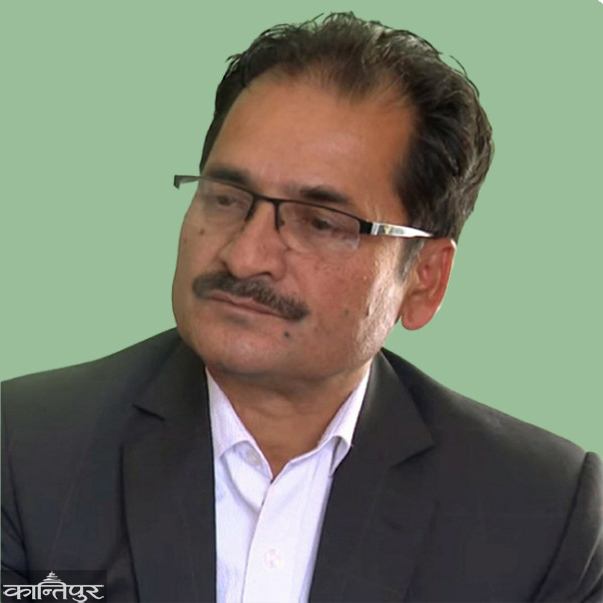
Maoist split for the first time after the ideological conflict between the main leadership reached its climax. During the people's war, Prachanda was the main person responsible for the insurrection within the party. It would not have been possible if Prachanda had refused to come to the peace process. All of the achievements go to him . The main blame for the Maoist disintegration also goes to him.
Even though Vaidya gave up power and took the policy of public revolt, what was the reason for Netravikram Chand's separation due to party split again?
After the split in the original party, the split in the movement cannot be stopped . Even now the dissolution cannot be stopped . Both formation and dissolution are taking place . Now there will be no reorganization of the Maoists in the old form . Within the Communist Party, the leadership continues to clash. Its influence also fell on the Maoists . In recent times, division seems to be more about personal egos than ideas and personal conflicts than ideas . As they have reached the level of prohibiting each other, the first, second and third ranking leaders in Maoist cannot stay together. While being in the same party, the insults that one did to the other came to the fore during the division.
What is the possibility of meeting the former Maoist power ?
Former Maoists can also meet in the same way . However, the process of merging and breaking up of Maoists continues .

