We use Google Cloud Translation Services. Google requires we provide the following disclaimer relating to use of this service:
This service may contain translations powered by Google. Google disclaims all warranties related to the translations, expressed or implied, including any warranties of accuracy, reliability, and any implied warranties of merchantability, fitness for a particular purpose, and noninfringement.
67-year-old Gauri Giri of Musikot Municipality-1 Gujoldhanga is surprised to see the change in weather over the past few years. No rain on time, no good farming. The fact that the infection of new diseases in crops is also increasing has worried him.
The rain that fell in August did not come back. The winter crops planted in November dried up in the fields. What to eat now? How to farm ?,' she laments looking at the sky and the field.
Such concern is not only of Gauri . Most of the farmers in the highlands are afraid of the change in weather. 71-year-old Tilak Bahadur Shahi, a farmer of Aathbiskot Municipality-10 Kot, says that he has left the plantation saprin due to lack of rain these days. "Since 8/10 years, there is no rain on time . There is nothing green, it was difficult to save the crops due to lack of water in agriculture,' he says.
Showing that the wheat plants are wilting at the moment when the buds begin to grow, he said, "This is the condition of the crops planted with blood and sweat". Now what, what should be done?' He said that it is not possible to predict the weather according to the season. 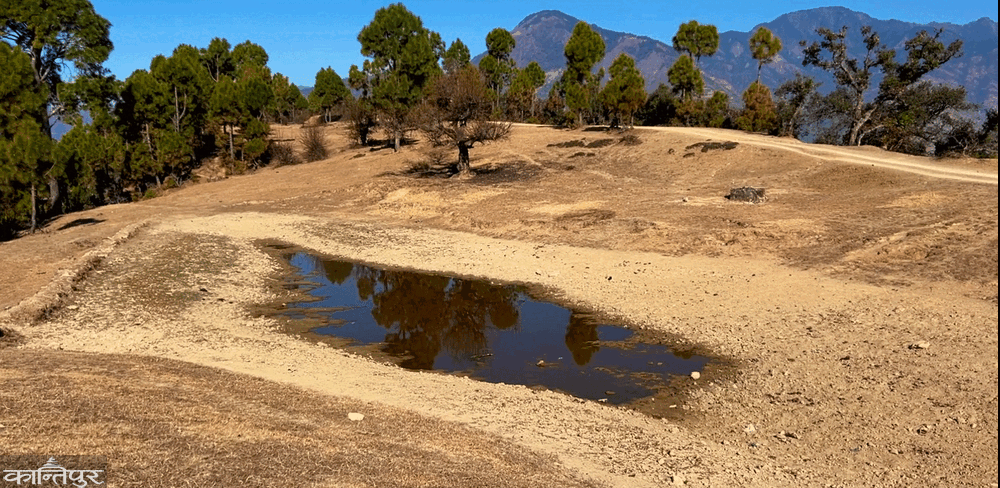 The latest example of this is not enough snow and winter rain this winter. Which is indicating that the daily life of common people will become difficult and it will also cause food crisis . This year, due to the lack of rain in the hilly areas this winter, the crops have been affected. This change in the rain cycle has increased the concern of the farmers .
According to Agricultural Development Office Rukum West, 35 thousand 460 hectares of the total area of the district is 121 thousand 200 hectares. Of this, 16 thousand 841 hectares are currently being cultivated. There is irrigation facility only in the area of 4 thousand 882 hectares. Farming of the rest of the land is being done by Akashepani. 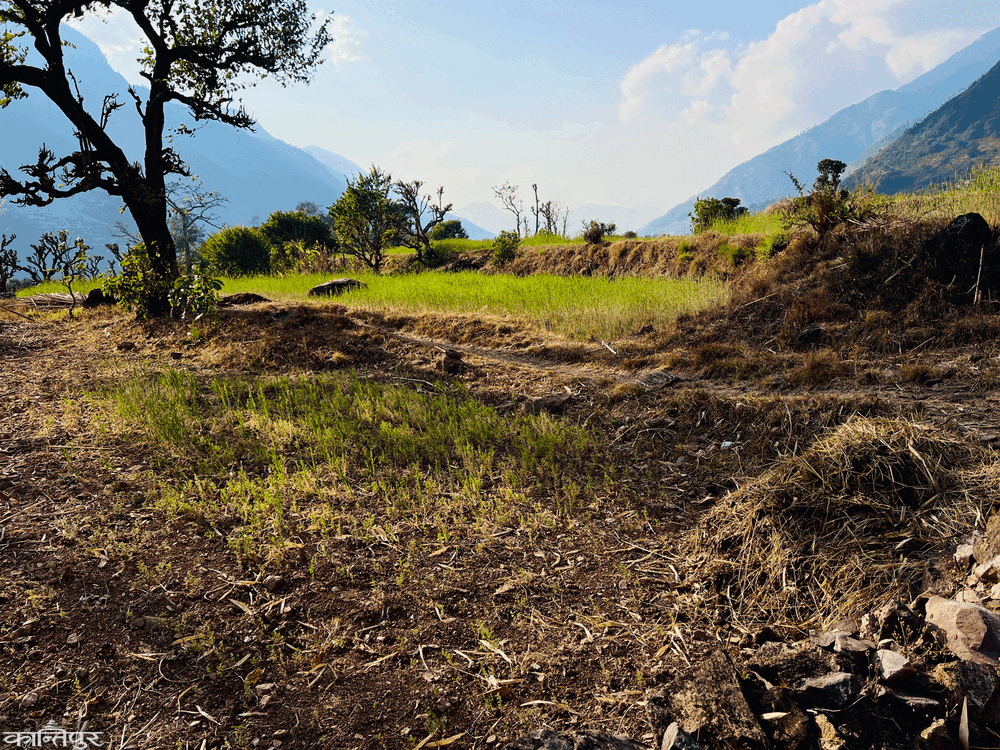 Acting Chief of Agriculture Development Office Bharat Bahadur Basnet said that there is a need for comprehensive planning and investment to increase irrigation facilities in Rukum West. We are working according to our budget. But this is not enough. There are many streams and springs here. There is a possibility that water can be delivered to places where there is none. But there is a situation where plans are being made and implementation is failing," he said. "Since the land is becoming dry due to lack of irrigation, the fertility of the soil is also decreasing.
Krishna Bahadur Khadka, a farmer of Musikot-2, says that there is a decrease in the production of various seasonal and non-seasonal vegetables as well as winter crops. "Pakha farming is not possible without rain". But even in vegetable crops that have irrigation facilities, production is decreasing year by year,' he adds, 'It is not only a matter of lack of water, many stoppages are also damaging our crops.' On the occasion of
, the head of the office, Basnet, said that as the negative effects of climate change increase, the agricultural sector is more affected. It has a direct impact on agriculture. If the product is not good, the psychology of the farmer is also affected. So it is causing one problem after another, he said. 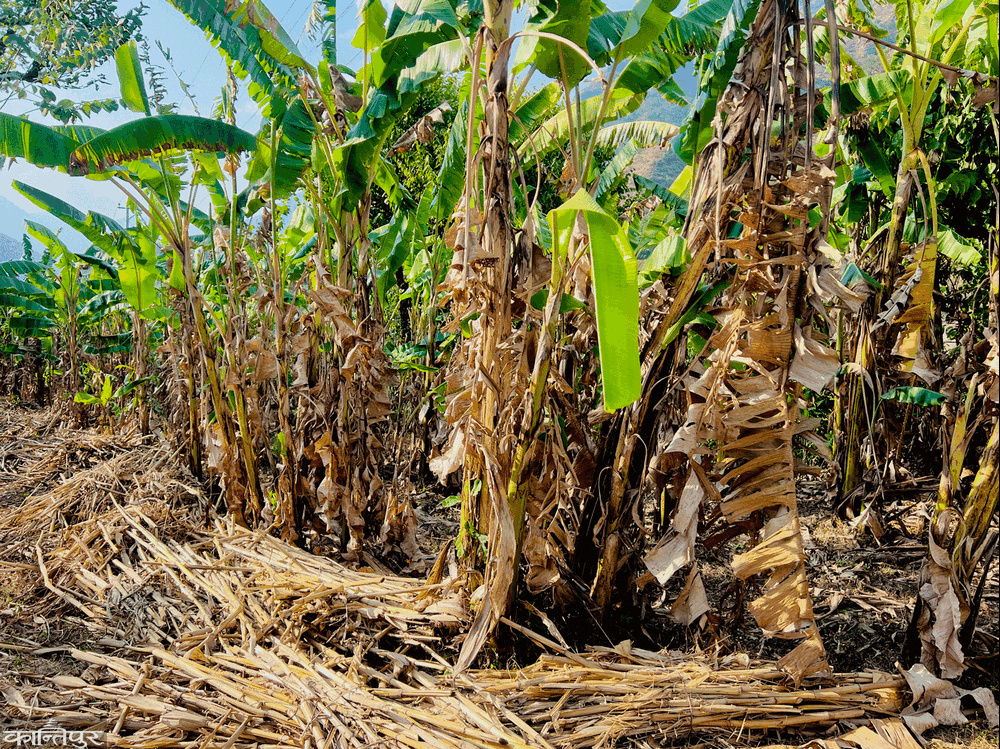 As the dry season increases, the water sources are also drying up. If rain water is stored, it will recharge the water to some extent and even if the land can be moistened, no one seems to be interested in this . As the effects of climate change increase, poor communities are hit the hardest. But the measures to adapt to climate change have not reached them .
Even though all the local levels of the district have started efforts for adaptation by creating a local friendly plan (LAPA), the implementation is being challenged due to lack of budget, said Mahendra KC, head of Musikot municipality. "We are doing the work that we have done through the relevant branch by making a Lapa". Our budget does not allow us to complete the work according to the plan,' he said.
Birkh Bahadur Bista, President of Saniveri Rural Municipality, also says that the state and federal governments should make a special plan and proceed in a coordinated manner to work according to the plans mentioned in the LAPA. ``We made Lapa two years ago . But you can't just make a plan. It is not possible to fully implement it with our strength," he said. But many plans need to be done separately. Which does not seem to be completed by our budget.'
Lapa is a plan to conduct daily activities adapting to the changes occurring due to the effects of climate change . But due to the indifference of the government and related agencies in its effective implementation, it seems that the common people and poor citizens will suffer a lot.
What measures can common people themselves take to avoid the effects of climate change?
Basnet, Acting Head of Agricultural Development Office, says, 'It is better to continue the traditional farming system and plant Raithane crops . Rather than keeping the land barren due to increased drought, it can be planted with various types of crops such as millet, fapar, barley, kaguno. They don't need a lot of water and can produce on dry land and in dry weather.' 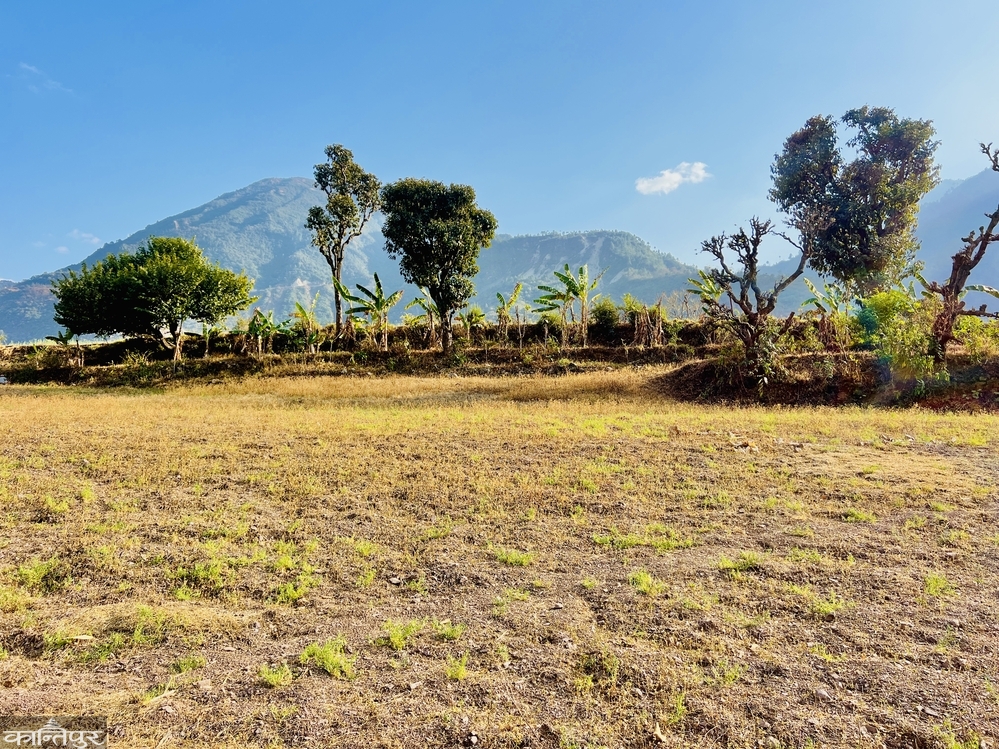 Recently, he said that due to the increase in carbon emissions, the effect of man-made activities has been added to the natural and natural climate change. "It doesn't depend only on the weather and the government." It is necessary for the farmer himself to inquire about what can be done to increase the production in our fields. We are also ready to help in this,' he says.
The experts say that the three levels of government should be proactive in making plans for adaptation and mitigation of possible damage by providing basic information to the general public about the technical aspects of climate change.

