Machhapuchhre rural municipality's letter to the provincial government for coordination
We use Google Cloud Translation Services. Google requires we provide the following disclaimer relating to use of this service:
This service may contain translations powered by Google. Google disclaims all warranties related to the translations, expressed or implied, including any warranties of accuracy, reliability, and any implied warranties of merchantability, fitness for a particular purpose, and noninfringement.
Machhapuchhre Rural Municipality of Kaski allocated a budget of 3 lakhs to build the stairs. The Kurli-Tilchi Stairway Construction Consumer Committee has handed over 23 thousand 100 rupees as revenue to the rural municipality.
Shiv Bhandari of Machhapuchhre-8 Kalimati vented his anger on social media saying that the rural municipality could not collect revenue from the crusher business, but even in the plan of 3 lakhs, the same amount of revenue should be paid. He asked, "Is the law made only for the people?" How long will the loopholes of the law be followed?'
The authority repeatedly asked to collect revenue from the crusher businessmen, but he expressed his displeasure with the silence of the village council. "Leaders of the political parties in the municipality and the village executive are also silent on this matter," he said, "It is as if the Kaleka told them to eat together."
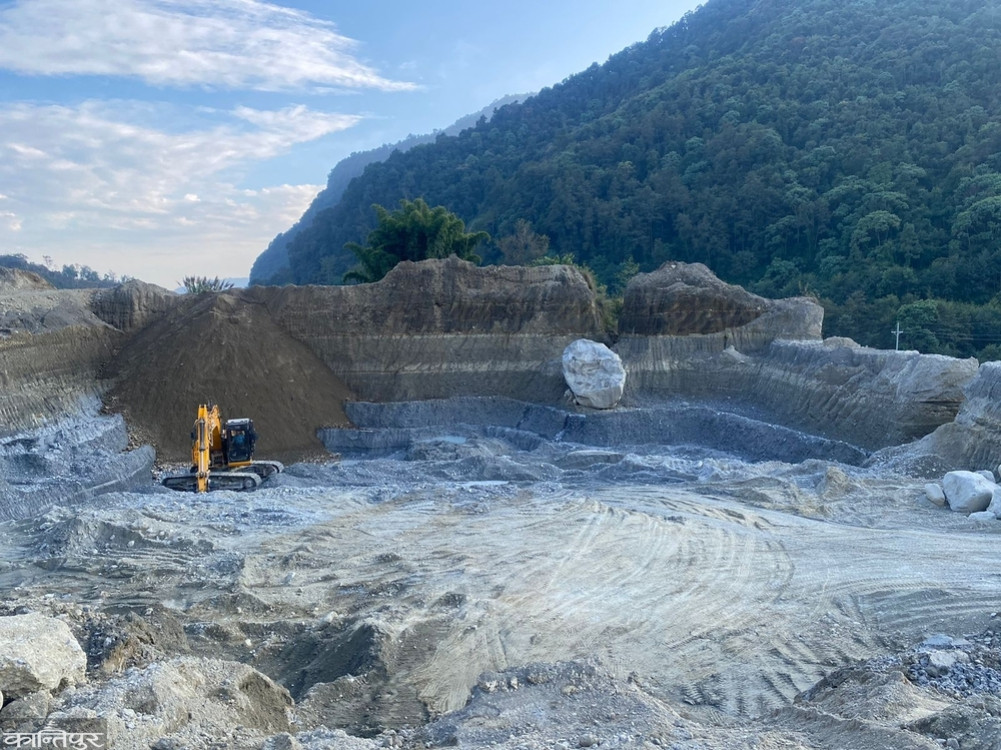
The municipality has not been able to collect revenue from the crusher industry as much as its annual budget. In the current financial year, the budget of the rural municipality is 65 million 65 million rupees. About 500 million rupees revenue is yet to be collected only from 3 crushers and one quarry site operating in the rural municipality.
Rural Municipality has Barah Crusher Industry in Ward No. 2 Bhurjungkhola, Gandaki Agrogate in Ward 4 Chorkholsa and Seti Gandaki Crusher Industry in Jalkuni. JK Crusher Industry in Pokhara Metropolitan City excavates stone and gravel from Ward 3 Kharibot. 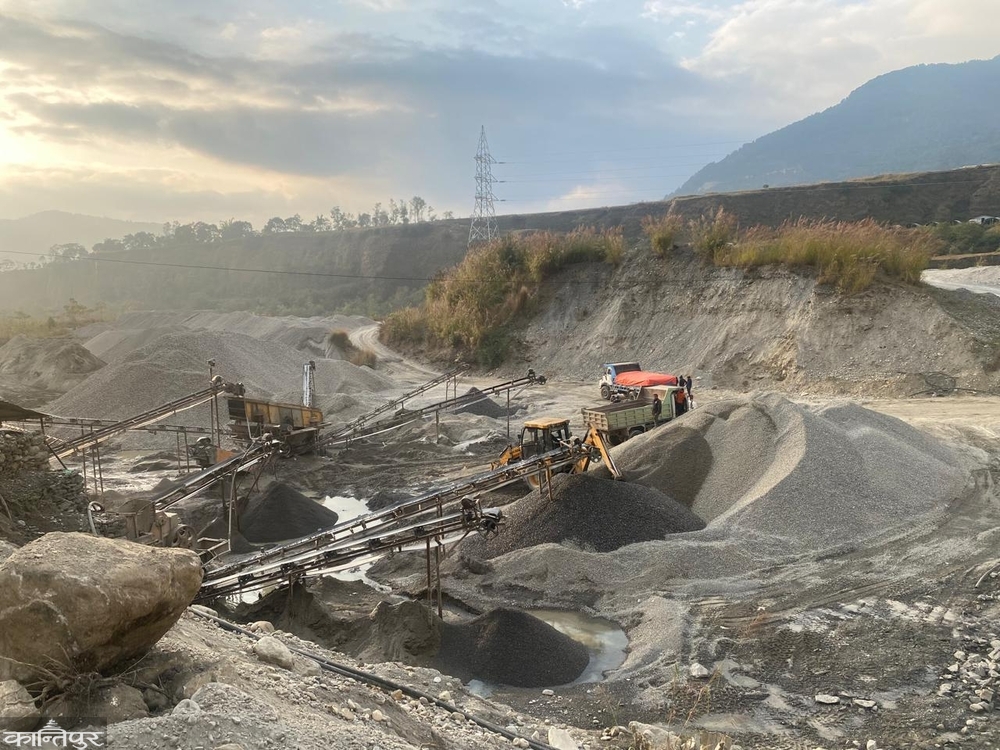 These crushers operating on private land have operated the industry only with mining permission from the municipality. Some have mined more than what was mentioned in the Preliminary Environmental Assessment (IEE) and some have operated crushers without IEE approval. The arrears of revenue to be paid to the rural municipality due to excavation by the crusher operated in this way is 49 million 14 million 31 thousand 297 rupees .
In the last fiscal year, after the crusher did not report the revenue, the rural municipality asked Pokhara's Institute of Engineering Studies Western Campus to determine the amount of excavation and submit a report. The expert team of the campus submitted a report that 180 thousand 209 cubic meters of soil excavated from 4 locations cost 222 million 77 thousand 419 rupees, stones, gravel, sand 12 million 98 thousand 35 cubic meters of 41 million 26 lakh 17 thousand 533 rupees and 49 million 14 lakh 31 thousand 297 rupees including VAT. The rate of said revenue is as prescribed by the Gandaki state government.
Last June 9, the meeting of the committee chaired by Sita Adhikari, the vice president of the rural municipality and coordinator of the revenue consultation committee, decided to collect the revenue and sent it to the executive. According to the report, the Barah Crusher Industry of Feuser has to pay 96 lakh 14 thousand 686 rupees for 77 thousand 776 cubic meters of soil, 542 thousand 3 hundred 7 cubic meters of stone, gravel and sand for 172 million 23 lakh 87 thousand 915 rupees including VAT and 20 million 56 lakh 62 thousand 939 rupees.
It is mentioned that Gandaki Agrogate has to pay Rs 13 crore 39 lakh 70 thousand 983 with VAT of Rs 11 crore 36 lakh 25 thousand 157 for the revenue of 39 thousand 96 cubic meters of soil, Rs 49 lakh 33 thousand 234, stone, gravel, sand of 3 lakh 57 thousand 448 cubic meters.
JK Crusher Industry has to pay 18 lakh 79 thousand 250 rupees for excavating 15 thousand 2 hundred 1 cubic meters of soil, 3 crore 67 lakh 16 thousand 83 rupees for stone, gravel, sand of 1 lakh 15 thousand 5 hundred 3 cubic meters including VAT and 4 crore 36 lakh 12 thousand 726 rupees.
Seti Gandaki crusher industry located in Jalkuni has to pay 58 lakh 50 thousand 248 rupees for excavating 47 thousand 324 cubic meters of soil, 8 crore 98 lakh 88 thousand 377 rupees for stone, gravel, sand of 2 lakh 82 thousand 775 cubic meters and 10 crore 81 lakh 84 thousand 647 rupees including VAT . Out of that, the amount for VAT should be paid to the Union Government, while the rural municipality should keep 60% of the remaining revenue and pay 40% to the State Government. 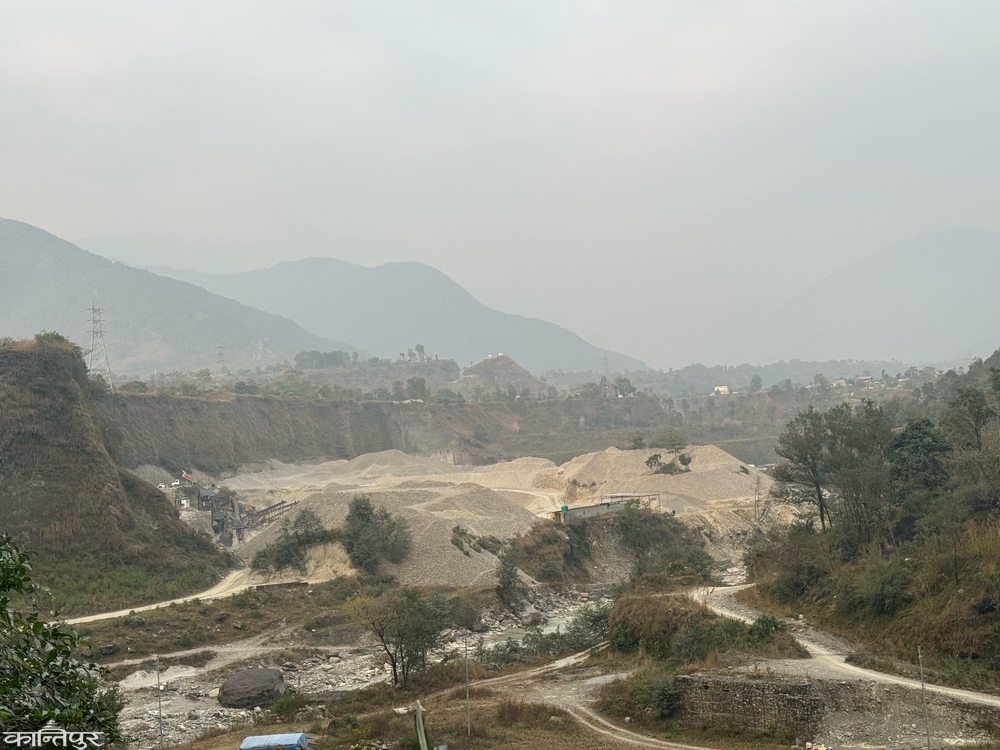 After the revenue was not raised, a complaint was filed with the National Vigilance Center and the authority. There are three crusher industries operating in the municipality, no revenue has been paid for mining till now, and while studying how much mining has been done by the Western Engineering Institute, the report of excavation worth about 50 million rupees has been submitted to the revenue committee, but the municipality head, deputy head and members of the executive have tried to settle it with the collusion of the staff.
Last August 2, the Complaint Management, Investigation and Monitoring Branch of the National Vigilance Center wrote a letter to Machhapuchhre Rural Municipality to provide an answer with the necessary documents. In the letter, it was requested to send a reply with the necessary documents within 15 days so as not to make a difference until later on issues such as how many crusher industries are operating in the rural municipality, whether they are registered and operating according to the rules, whether the executive has regulated and collected tax.
On August 9, the Pokhara office of the authority wrote a letter to the rural municipality to provide certified documents with feedback. What is the truth about such a complaint? In the letter, it was mentioned that the rural municipality should provide a clear opinion and response as well as a certified copy of the document confirming the matter within 15 days if the crusher industry has not paid the amount due to revenue.
Nepal Electricity Authority also filed a complaint against the rural municipality after the danger to the tower of the high-tension line due to the crusher. Chairman of Ward 9 Hari Bahadur Chhetri said that the executive committee members are not aware of what the municipality wrote in response to these letters. He told that although the issue of collecting revenue from the crusher was raised several times in the executive meeting, there was no solution. "We had to prove that report wrong, otherwise we had to implement it," he said, "The law only applies to small businessmen and big businessmen do not have peace." After the businessman said that he would be unable to pay the revenue because the report was not satisfactory, the executive meeting on February 4 decided to proceed with the necessary work in consultation with the provincial Ministry of Economic Affairs . According to the said decision, the municipality sent a letter to the ministry on February 6 requesting the necessary facilitation.
"The campus did not inform the businessmen, landowners and rural municipality during the assessment, they are not in touch now," President Gurung said. He claimed that he had written twice to close the illegally operated crusher. 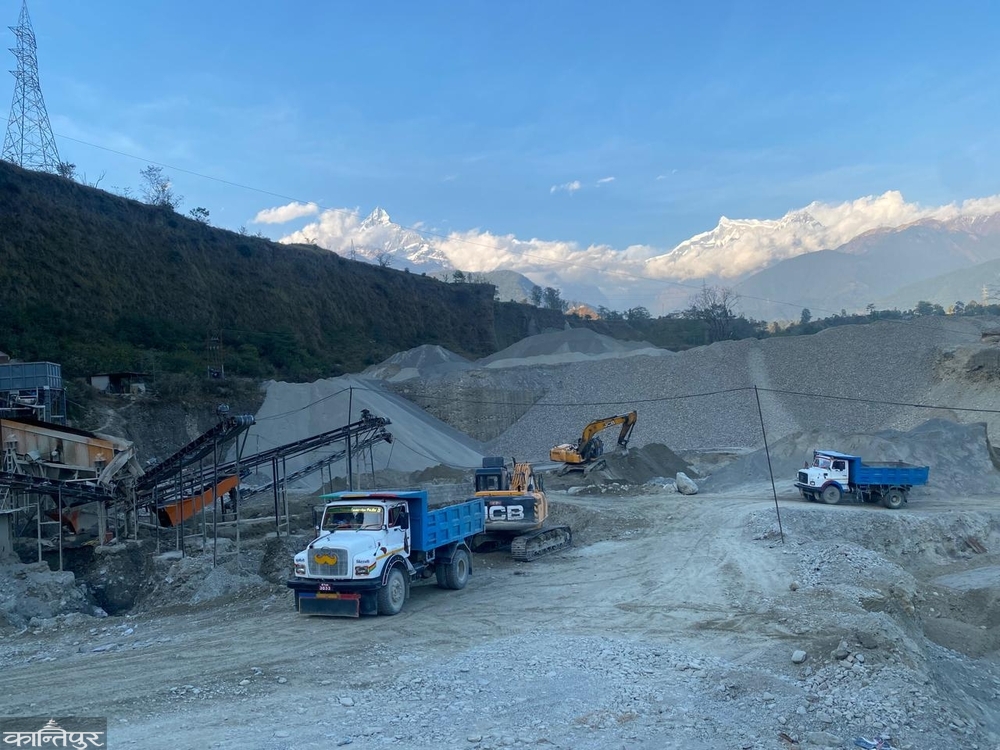 Bhojraj Poudel, the owner of Gandaki Agrogate, said that when the crusher was started, the revenue was set at 20 rupees per cubic meter, but it was increased to 80 in the financial year 077/078, but now the revenue is set at the rate of 317 rupees, so he cannot pay the amount. He also alleged that the excavation quantity was calculated based on estimates without the knowledge of the businessmen.
"We were paying revenue according to the first rule," he said, "5-6 crores were spent on buying land." We may have sold material worth 10-12 crores, but there is no possibility of paying the same amount of revenue . There is no option but to hand over the key of the house to the rural municipality.'
Rajesh Poudel, the owner of Seti Gandaki Crusher, admits that the crushers operating after 2070 are not permitted. He expressed his ignorance about the letter sent by the municipality saying that he had to pay so much revenue.
According to Chief Engineer Cholakant Regmi, Infrastructure Development and Environment Management Branch of the rural municipality, these crushers which have been started since 076/77 have not even met the standards. The municipality does not have the right to register crushers. According to the Industrial Business Act, the crushers, which should be registered by the Department of Industry, are currently operating only on the basis of stone, gravel and sand mining, sale and management standards, 2077 . These crushers are located on the banks of Seti River and Mardi River.
Gopikrishna Aryal, the chief administrative officer of the rural municipality, said that all the crushers have been operating the industry with mining permits. He says that although these crushers have submitted revenue in the beginning, they have not submitted it since the last financial year . "The amount in the report submitted by the Institute of Engineering Studies is from the start of the crusher until now," he said, "We have sent a letter to submit a separate report on how much excavation has been done annually, but we have not received a reply."
His experience is that regulation is difficult despite the lack of clear laws regarding crusher industry operations. "The first thing is that they are not registered, secondly, it is difficult to renew the registration," he said.