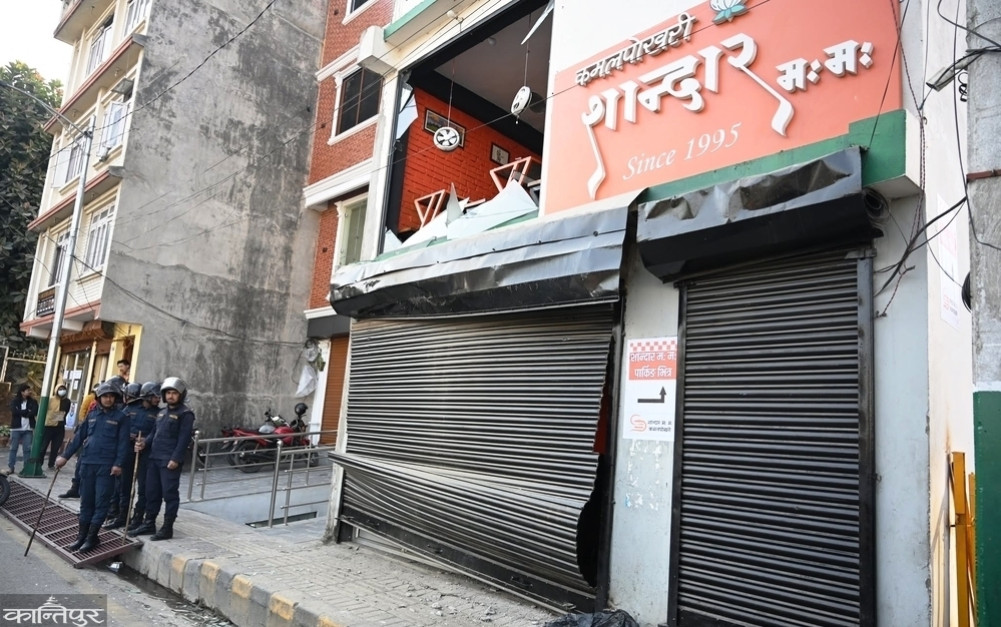
The government agency itself admits, ”small hotel-restaurants are very vulnerable, the monitoring is only to check the registration, cleanliness and the expiration date of the items used there”.
We use Google Cloud Translation Services. Google requires we provide the following disclaimer relating to use of this service:
This service may contain translations powered by Google. Google disclaims all warranties related to the translations, expressed or implied, including any warranties of accuracy, reliability, and any implied warranties of merchantability, fitness for a particular purpose, and noninfringement.
On January 24, a gas cylinder exploded at Sandar Masham shop in Kamalpokhri, Kathmandu. 11 people were injured in the incident which also involved fire. 4 people have died among the injured who are being treated at Jalan Hospital in Kirtipur.
After the incident of gas explosion, the joint team of Nepal Oil Corporation and the Department of Quality and Weights and Measures is studying the incident. According to the source, the preliminary study showed that the gas leaked and caused the fire.
'Gas did not leak, it was a situation where 3/4 of the gas cylinders were connected to the big gas stove. The gas cylinder leaked because it was not properly closed," said an official of the corporation. Non-compliance with the safety standards led to a major incident.'
President of Nepal LP Gas Industry Association Shiv Prasad Ghimire also agrees with the official's statement. "My shop kept the remaining gas cylinders underground. When closing the shop in the evening, they must have forgotten to close the regulator or forgot to close the gas leakage or high pressure stop,' Ghimire said, 'The cylinder itself does not burst under any circumstances, the fire started due to leakage . After that, the pressure will not hold and it will explode.
Experts say that there is a lack of awareness or negligence behind all these incidents.
Although there is no official data, the number of businessmen who shop in the market is increasing every year. But normal standards are not adopted during shop operation . It looks like the cylinder is cooking at the end. Not only the workers but also the customers in some shops. According to
experts, the distance between the stove and the cylinder should be at least one and a half meters away. The stove should be kept in a place with height . But Rajan Poudel, Director General of Commercial Supply and Consumer Protection Department, said that there is a risk if they are kept together.
He is the one who says, 'There is no standard for how to operate a fashion shop .' The price of one plate of masham ranges from 80 rupees to 1000 rupees. But the condition of the shop, the matter of weight is not disclosed,' Director General Paudel said. He says that even though the shop is registered at the local level to operate, there are no standards regarding how to operate. The businessmen have done arbitrariness while taking advantage of it. Safety standards are not adopted.
'The gas cylinder is kept close to the cooking pot . Hygiene is not paid attention to. Based on food hygiene, the shop does not fall within the standards, said Director General Poudel. During the monitoring, the commerce only looks at the registration, cleanliness and expiration of the items used there . According to
commerce, the task of making standards for food-related items is the responsibility of the Food Technology and Quality Control Department. Poudel, director general of food, says about quality.
In the case of big hotels and restaurants, the food department has also been classifying hotels on the basis of food hygiene. But Sanjeev Kumar Karna, director general of the food department, said that the standard has not been made in the case of meat shops. "We have made standards in terms of industry, we also provide stickers on the basis of food safety in order to make an orderly hotel," he said, "but this is not the case in the case of large shops and small shops". My shop is not organized, it is not within the standard. There is no standard for the shop itself.' Director General Karna claimed that small shops including Masham are in charge of the local level. He said that the right of monitoring also belongs to the local level. 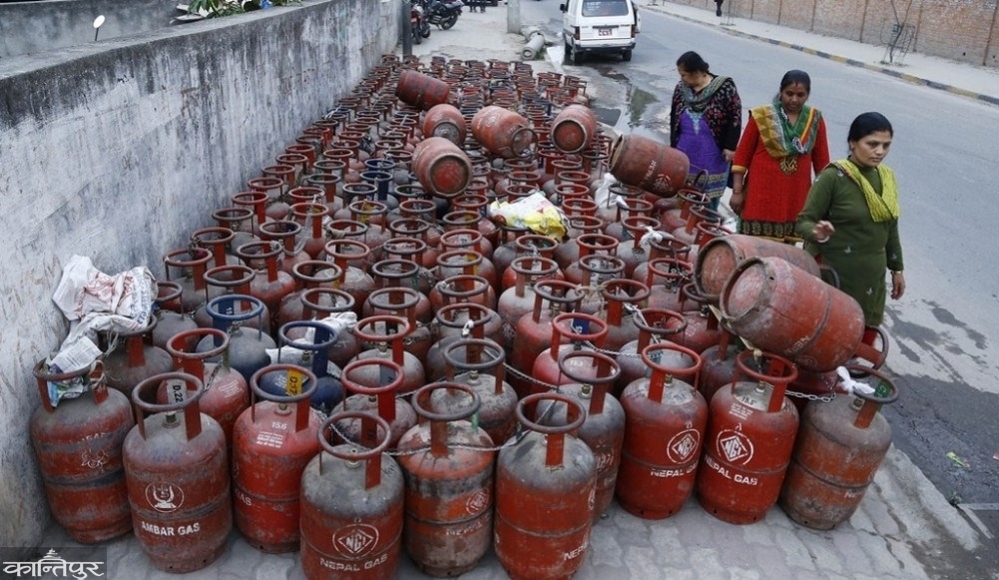
The Kathmandu Metropolitan City has informed that a disorderly situation was observed during the monitoring of the fashion shop. From November 29 to November 22, 85 hotels and restaurants were monitored in the valley. During that time, 75 of them had problems with cleanliness. In 66 shops, there was weakness in the cleanliness of the kitchen and workplace .
18 fashion shops are operating without registration, according to the metropolis. But regarding the standards, the Metropolitan Corporation also seems to be ignorant. Metropolitan Spokesperson Naveen Manandhar said that he was not aware of the standards regarding the operation of the liquor store and that the Deputy Mayor would be informed. Similarly, Basant Acharya, the information officer of the metropolis, also said that there is no standard for operating a shop (maham shop). During monitoring, food hygiene, cleanliness and quality are observed. The involvement of food experts is monitored, he said, but there is no standard. Krishna Prasad Bhandari, president of Nepal's Consumer Awareness Campaign, says that it is necessary to monitor and regulate the standards of every business. "Standards are mandatory to make businessmen responsible," he said, "Section 12 'd' of the Local Government Operation Act 2074 requires the ward president to register all businessmen. Regulation is also said along with registration. It is to regulate by making standards .
Not only in small shops but also in haat bazaars, food is cooked by placing random gas cylinders. Bhandari says that regulation and monitoring of that should be necessary. 'If there is an accident, who will take the responsibility ?' He questioned .
President of the Consumer Rights Research Forum Madhav Timalsina also said that some of the drug stores pose a risk to the consumers . He said that awareness should be spread regarding the use of gas during the operation of the shop. Gas cylinders are kept together and cooking is done. There is always a risk of highly sensitive gas, accidents are happening due to small negligence, he said, "All parties must be responsible for this." Such shops should be strictly regulated and brought under the legal framework.
Gas standards are monitored by the Quality and Weights and Measures Department. Prabhakar Singh, deputy director general of the department, said that the gas cylinder of the shop has industry standards. He said that the NS mark was given after monitoring the gas industry. He says that action was taken during the monitoring. "But after the gas cylinder goes to the shop, it does not fall under the responsibility of the department," he said. All concerned bodies should pay attention to this.
There are 59 gas industries across the country. The gas industry should conduct a hydrostatic test after 10 years of cylinder manufacture . Then every 5/5 years and 3/3 years should be done . Accidents happen due to lack of awareness along with hydraulic/hydrostatic pressure test of gas cylinder, regulator and common pipe.
Nepal LP Gas Industry Association President Shiv Ghimire said that common people should use regulator with NS mark, rubber pipe with wire and quality stove. 'The gas valve has a valve . A fire occurs due to gas leakage from the valve. It is necessary to make the general public aware of all these issues,' he said.