The outspoken Jagjit also proposed love to Chitra. But Chitra refused. Accepting and not accepting. With a bit of sadness and a bit too much 'hope', Jagjit tried to seduce Chitra by singing the song sung by Hemant Kumar in 'Pyasa'. Even so, when Chitra did not answer 'yes', the hockey-minded Jagjit approached Debo with a proposal - 'I want to marry your wife!'
We use Google Cloud Translation Services. Google requires we provide the following disclaimer relating to use of this service:
This service may contain translations powered by Google. Google disclaims all warranties related to the translations, expressed or implied, including any warranties of accuracy, reliability, and any implied warranties of merchantability, fitness for a particular purpose, and noninfringement.
Let me start with 'The Latest'. This is a 1982 album. In Sudarshan Fakir's words he sings-Dhal Gaya Aftab Ai SakiLa pila de wine ai sakiDrink today, and drink againCall Karenge Hisab Ai Saki.Could Jagjit Singh be as drunk as the character of this ghazal he sang? Let's take a look at his life today.
Born on February 8, 1941, Jagmohan Singh alias Jagjit Singh is considered by his fans to be the king of ghazals. It is said that when Jagjit started singing ghazals, then ghazals saw the world and the world recognized ghazals. What did he do so special, which made this ghazal's musical journey come to such a turn? Taking his own words, he put a new coat on the ghazal without bothering. In the world of ghazal where only classical instruments are used, he introduced modern technology like guitar, bass guitar, saxophone, rhythm machine etc.
He felt that the new generation of his time does not know how to say ghazal. In order to convey the literary quality of the ghazal to the new generation, he introduced these techniques in the ghazal, which the new generation was looking at with interest. He is adept at introducing new techniques to the music of ghazals and started using scissors in the technical language of writing ghazals. He felt that the juice of the ghazal should remain with the common people. Therefore, he started using common language as much as possible in Ghazal. Not only in language, in his ghazals, najms or songs, the theme is also very common. Everyone who listens thinks that this is my story . I think this might be a perfect example-
Ye daulat bhi lo, ye fame bhi lo lo
Bhe chin lo mujhse my youth
Magar muzko lauta do bachaban ka sawan
That paper of paper, that rain of water .
The oldest sign of the neighborhood
That old woman whom the children used to call Nani
That naani that talk of fairies camp
That look of wrinkles in centuries.
Bholae nahi bhoole mai koi
Woh Chhoti Si Raten, Woh Lambi Kahani ... .
The story of childhood came out. In fact, Jagjit used to go to watch Lukichori movies in his childhood. When his mother gave him money to buy some things and sent him to the shop, he used to keep the money himself and if he got a chance, he would go to the cinema . How many times his father would meet him inside the hall and take him by the ear and bring him back home . His father was worried that his son would get spoiled while watching the movie. The father wanted his son to grow up and become an engineer. Do something 'big'! Name it . He also thought that his father was right. As this song by Udit Narayan says-
papa kahete hai bada naam karega
beta hamara aisa kaam karega .
kas! If he had sung this song, it would have been more relevant. Well, he also wanted to have some big name . That 'something big' was initially 'doing engineering' and as it got bigger it started to be 'becoming an IAS officer' . He also learned classical music from a young age. But, he thought - 'I want to become an IAS officer, music is just my passion.' However, from a young age he sang so melodiously and so sweetly that even the vice chancellor of the college advised him to pursue music rather than IAS.
Khyal Khyalmai singing songs and bhajans at parties and kirtans, one day his passion for music took him to a serious stage. After that, he arrived in Bombay without telling anyone at home! He was only thinking about his love for music, then he suddenly realized - 'Hey! I'm going to see the movie Luki Luki because of the song!' However, most of the time what people are doing today, why they are doing it is not clear today . Rather, it is only after going a little further and looking back that the reason and significance of it can be understood .
Jagjit realized that music has become an important part of his life only after coming to Bombay with the excitement of doing something in music. 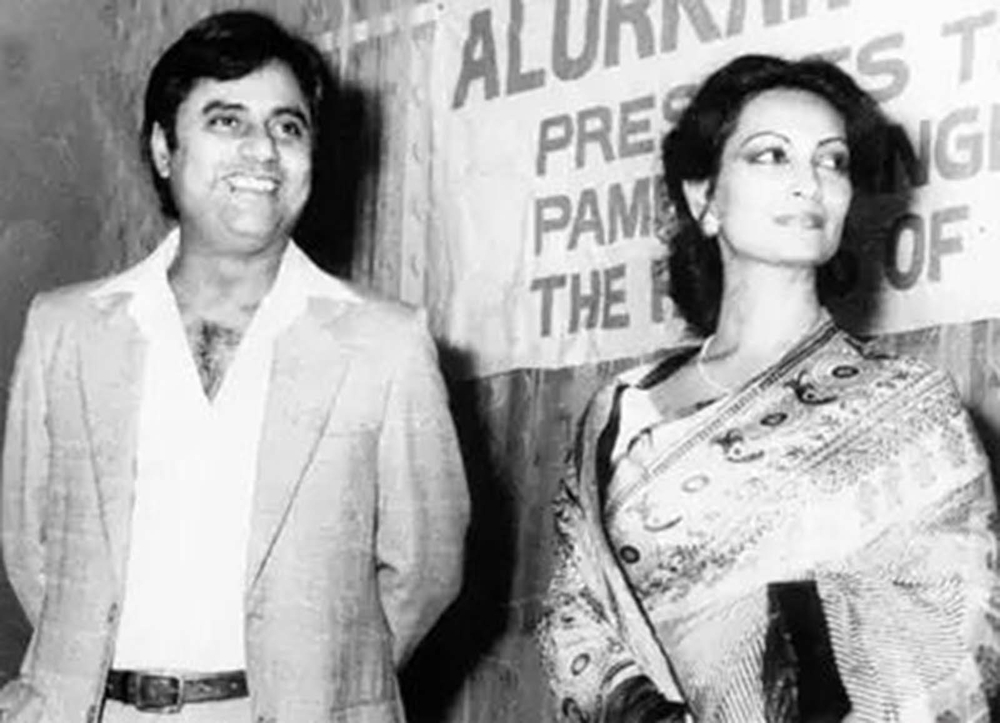
After coming to Bombay, Jagjit never looked back. Shah Rukh Khan from India and Rajesh Hamal from Nepal are also the faces of his song album . He also released a joint album with Lata Mangeshkar. He even sang poems of the then Prime Minister Atal Bihari Vajpayee and it was difficult to get a job in the beginning. Will the struggle come before the
music? Or let me say this, music was given to him by birth, struggle is the rule of life, which demands patience, attachment and persistence, and even the gift given by birth should be bought to be enjoyed in life - through struggle . During the days of struggle, Jagjit used to sing advertisement jingles. In the course of singing jingles, he met Chitra Singh, who was no longer Chitra Singh.
Deboprasad Dutt's wife, she was Chitra Dutt at that time . This was in 1967 . Although Chitra was married, she lived alone at that time. Her differences with Debo had already started. Chitra and Jagjit had started singing jingles together. However, Chitra did not like Jagjit's voice at all. Chitra, who has a thin voice, was not attracted by Jagjit's thick voice . Even Chitra did not understand the ghazal sung by Jagjit. He liked Talat Mehmood's ghazals. After knowing that, Jagjit tried to please Chitra by singing Mehmud's ghazal.
How many times has he fallen in love with Chitra? Outspoken Jagjit also made a love proposal to Chitra. But Chitra refused. Accepting and not agreeing . With a little bit of sadness and a little bit of 'hope', Jagjit Tried to seduce Chitra by singing a song sung by Hemant Kumar in 'Pyasa'-
जाने वो काई लोग जे जिनके प्राको प्राय मिला
हम ने जाब कलियान मंगी काटोका हॉर मला ... .
Even after doing this, after Chitra didn't answer 'yes', Jagjit approached Debo with a hockey nature and proposed - 'I want to marry your wife!'
After that, Jagjit and Chitra got married in 1969 . Debo sent her not only Chitra but also her daughter Monica. Jagjit liked the picture well. Now both of them started singing together, not a jingle but a ghazal . This ghazal duo got so much love from the audience that the ghazal, which was known as gharana music till now, started echoing not only across the country but also abroad. This couple started traveling around the country and abroad with ghazals. Jagjit's love and art were intertwined .
After all, the talk will go away again!
As this song from the 1976 album 'The Unforgettables' says, the sweet phase of Jagjit's life has reached far. An exciting turn was going on in his life! Like this other romantic ghazal sung by him!
It was the night of the fourteenth day yesterday, Shabhar Raha Charcha Tera
Kuch ne kahan e chand hai, kuch ne kahan chehra tera .
Hum bhi was present there, Hum se bhi sab sakhi kiye
Hum hans dei, Hum chup rahe, Manjur tha parda tera .
It was Jagjit who taught Chitra to sing ghazals. Chitra, who initially considered the ghazal genre awkward and strange, gradually started singing ghazals so softly that the listeners did not consider her thin voice at all next to Jagjit's thick voice. While making Jagjit the king of ghazals, he placed the crown of queen of ghazals on Chitra's head. It was not because of this incident that Jagjit sang - Mere Jeke Ban Jaoge, Jab Ishq Tume Hojaega! 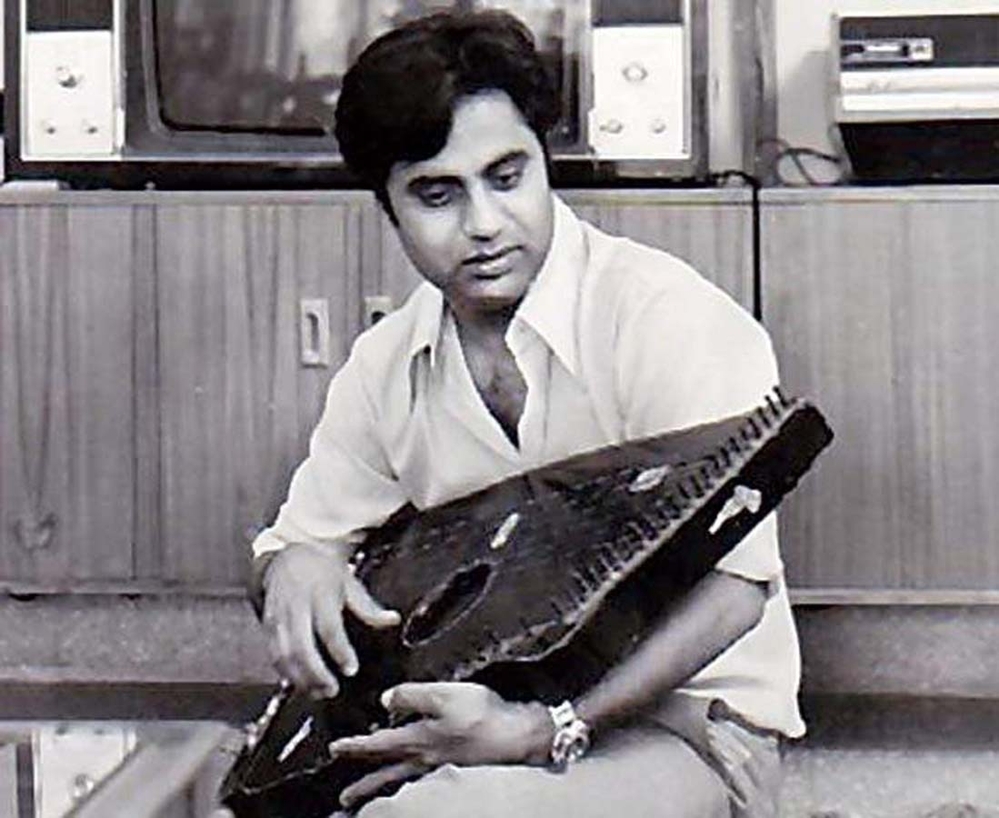
However, there was a deep love between the two. Perhaps, the same darkness was scattered in the music and singing and reached his fans . If we look at the words of the ghazals that Jagjit chose to sing, and his feelings, a deep pain is hidden even in love . The pain which is given a kind of pleasant pattern like this-
Agar hum kaheen aur wo musdurden
Hum अंशन ली जिंडगानी लुता देन
हर एक मोड पर हम गमोन को जाजा देन
Let's make the love of life.
Even in love, robbing life and losing oneself are recurring episodes in his ghazals . In yet another line he sings -
saja dein, sila dein, bana dein, mita dein
Magar wo koi fausla to suna dein
So these words are Sudarshan Fakir's but, Jagjit's choice . Similar words of Shahid Kabir have also been chosen by him .
Gamka Khazana, Tera Bhi Hai, Mera Bhi
Ye Nazrana, Tera Bhi Hai, Mera Bhi .
Apni Gamko Geet Banake Ga Lena
Rag Purana, Tera Bhi Hai, Mera Bhi .
Tu muzko aur me tujko explain kya
Dil Diwana, Tera bhi hai, Mera bhi ... .
Looking at Jagjit's choices, it seems that he did not consider love and pain synonymous with each other? Wasn't 'gum' his favorite word? Or did he enjoy self-torture? However, the current situation was going to give him deep pain not only in the words of Ghazal, but also in life. Such a pain that continued throughout his life in the evening, in the morning, daily and every moments.
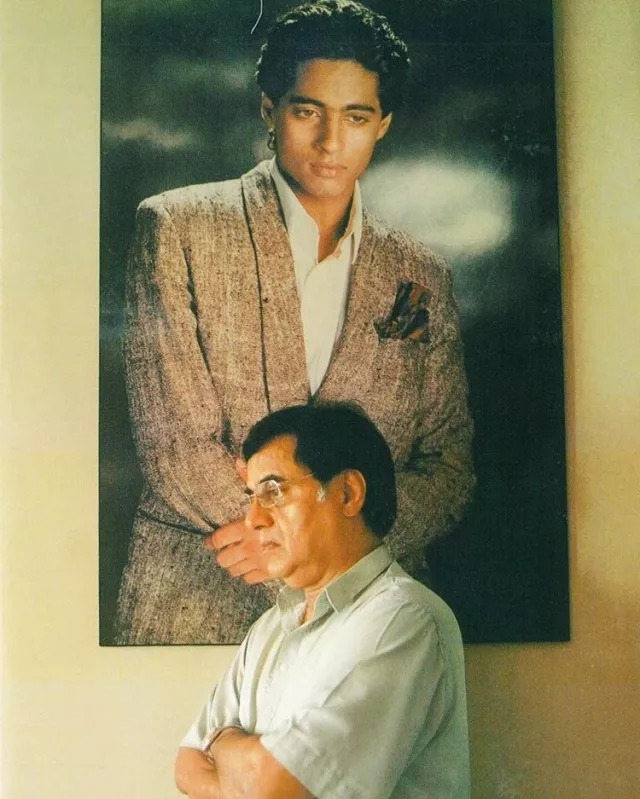
It's about 1990, a song he sang became the reality of his life . He lost his only child at a very young age - Vivek . Who was only 20 years old when he left this world in a car accident . However, 8 years before Vivek left, Jagjit had sung the same pain in the words of Anand Baksi-
chithi na koi sandesh,
jane which country
Jahan Tum Chale Gaye
Is Dil Pe Lagake Thes,
jane which country
Jahan Tum Chal Gaye .
will be a sigh,
Humne Na Suni Hogi
Jate Jate Tumane,
Awaz To Di Hogi
Har Wakt Yeh Hai Gham,
Where were we at that time
Where did you go... .
Really, where do people go after they die?
Jagjit must have been confused by many such questions. How can you not be angry? Only 20 years old, an only child on top of that. For a whole year he did not sing any new song, ghazal. After that, the pain in the songs and ghazals that were sung started to come more sharply. Whether it is a matter of happiness or not, he did not resort to alcohol to forget the pain.
However, he got drunk, drank alcohol . For him singing was intoxication and pain was alcohol. After all, this was not a pain to deal with. Let's say, that's why he adopted the pain . He spent the rest of his life in pain. In this regard, in 1998, he openly poured out . Be open and clear. Javed Akhtar supported in the words, composed the music himself and the album was ready - Silsile .
Zate Zate They gave me a good sign
I will repeat this story forever
উস্স্যান সাকা কাকা কাকুন আশি কান ক্র্তে ত্রি .
Gham also they probably increased the kindness and gave .
Well, I was thirsty, but he gave water to my eyelids... . There is another song in the
series which, it can be said, has been able to boil Jagjit's pain to the core, like a bucket with a long rope tied to draw water from a deep well.
I will forget you
now this is the way
but if I want to forget it then how can I forget
?
Are you still reality, no dream!
'Chithi Na Koi Sandesh', meeting Jagjit's reality was an obvious coincidence, but the words of this song seem to have been taken by Javed from Jagjit . It seems that Javed took the sentiments and words from Jagjit and weaved them into an empty thread. Before this song, Javed writes -
mujhe hai yaad wo sab
jo kabhi hua hi nahi
agar ye hal hai dilka to koi samhaye
tumen bhulana bhi chahun to kis taraha bhulaon?
Are you still reality, no dream!
Jagjit must have shared those dreams with his friend Javed, which he saw for his son Vivek. Those dreams that never got a chance to be marketed. Someone who has been knocking at the same door of the same house for 20 years suddenly stops seeing him, stops knocking, disappears forever, then why does anyone not think -
... There is no one there anymore, hum bhi
sir jukae huye shik gujar jate hai ... .
What father's heart does not break like this when he remembers his son who died without being able to grow a mustache? In the process of adopting
, Jagjit adopted the pain in such a way that by the time the pain comes to this moment, it is as if the idea of leaving him has started to be extinguished . Javed also at some point was probably sure that now he was not the pain but the pain itself had started to adopt him.
adopt pain, parae kaun!
Kaun sunta hai aur sunae kaun ?
And, till now, Jagjit has become friends with pain. It's not just appearance, let's say now tea-cigarettes are going on daily between Jagjit and pain. As if he turned the pain upside down, turned it over, and looked at it. Now pain doesn't come with impulse for him . A commonality has emerged between the two. However, sometimes laughter and sometimes tears are shared with friends.
Who repeated old things
Gum is sleeping now, who woke up?
ab sukun hai to bhulane me hai
Who forgot that person!
Aaj Phir Dil Hai Kuch Udas Udas
See Aaj Yaad Aye Kaun?
Anyway, by filling the cup of Ghazal with pain, right Jagjit continued to get drunk till his death and made the world drink wine. He also said - 'Me Nashe Me Hoon!'' But, he is a little wrong here. He may see himself drunk, but the world sees him as drunk. I am also a small part of that world. Dear Jagjit, Ever since I heard 'Hothon Se Chu Lo Tum' in school, I too am intoxicated .
Oh really, Happy Birthday!

