We use Google Cloud Translation Services. Google requires we provide the following disclaimer relating to use of this service:
This service may contain translations powered by Google. Google disclaims all warranties related to the translations, expressed or implied, including any warranties of accuracy, reliability, and any implied warranties of merchantability, fitness for a particular purpose, and noninfringement.
V.No. On January 2, 1990, an earthquake of magnitude 8.3 occurred in Chainpur of Sankhuwasabha, killing 16,000 people in Nepal and Bihar, India. In memory of that, the then government started celebrating 'National Earthquake Protection Day' from 2055. Similarly, in the year 2045, more than 700 people lost their lives in the Udaipur earthquake of 6.8 magnitude.
The reason for the 1990 and 2045 earthquakes was different. The 1990 earthquake was caused by the collision of the Indian Plate and the Eurasian Plate (Tibetan Plate). The Udaipur earthquake came from within the Indian plate.
According to seismologists, although the nature of the earthquakes in 1990 and 2045 are different, the risk is not less. Likewise, seismologist Shiv Subedi says that earthquakes like this are also likely to occur in the future.
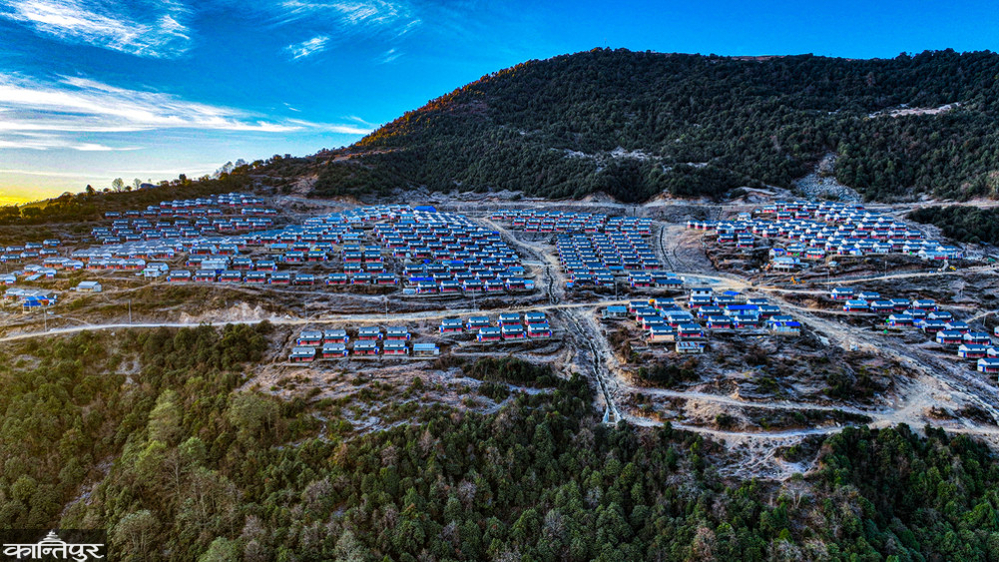
A powerful earthquake of 7.8 magnitude occurred on Saturday 12th of Baisakh 2072 . 17 days later, on May 29, an earthquake of 7.3 magnitude occurred with Dolakha as its epicenter. These four earthquakes in Nepal have now become history. In the earthquake of 2072, many families were separated. Houses and buildings still have supporting structures. Which is a reminder that we have not yet learned from the earthquake.
What did we learn from the earthquake ?
The similarity of the big earthquakes in 1990, 2045 and 2072 is the loss of people and money. Seismologist Amodmani Dixit says that this is a lesson we should learn. Dixit, who is also the president of National Society for Earthquake Technology-Nepal (NSET), said that the tendency to learn and forget for some time after the disaster caused repeated damage.
'The earthquake of 1990 was big and it taught a big lesson . At that time, it was written in the book of Major General Brahmashamsher Rana that the house should be strengthened. But we forgot," said Dixit, "we started making houses weak again." He said that the reconstruction after 1990 was also weak.
Likewise, Dixit, a seismologist, has taught that the earthquake of 2045 will destroy weak houses and structures. Also, he remembers that this earthquake taught him the lesson that such structures should be strengthened as the future of the school is .
Dixit says more about the earthquake of 045, "People's houses are collapsing". The house is collapsing because it is worse than why. Nepal taught that one should know how to build a house. Our schools are also weak. School is the future . It was taught that schools should also be protected from earthquakes.
He says that the building code has been started to build strong houses and structures to withstand the 2045 earthquake. He added, "What the code says is that if the house to be built from now on is built according to this code, the house will be strong and will not be destroyed by an earthquake." This was the great learning of 045 years.'
According to the code, the house built by the engineer is strong, so they were given training. But after this, he said that the experience was gathered that it was known that the carpenters in the village will build the house and the engineer will survey it.
"We learned that the role of carpenters is important when building houses not only in the village but also in the city," he says. Similarly, since Nepal has experienced many earthquakes, it had already learned a lot before the 2072 earthquake. But Dixit admits that many things are not enough.
'Before the earthquake of 2072, we had to train carpenters. How to train, that course is needed. We have learned what the municipality should do,' he said, narrating what he learned after the earthquake, 'This is the learning that enabled the Urban Development and Building Construction Department and the National Reconstruction Authority to work after the 2072 earthquake.' He also says that he has made it affordable. "Some mistakes were made in this, but Nepal has done a good job in reconstruction," he says, "but while saying these things, Nepal has missed many things that should be used."
According to Dixit, after the earthquake in 2007, Nepal has learned the lesson that it should prepare beforehand, people should seek facilitation in reconstruction, help the municipality and provide knowledge for post-disaster reconstruction . But it was delayed to convey to the locals how to protect them from earthquakes and other disasters.
Similarly, after the earthquake of 2072, even though the system of reconstruction and disaster policies is good, Nepal has failed in implementation. He said, "We have learned the skills and made a policy but we have not brought the mechanism to implement the policy to the municipality." We have learned some things and some things are yet to be learned.
What changes did the earthquake of 2072 bring?
According to Dilipshekhar Shrestha, former joint secretary of the Ministry of Urban Development, the government's policy also changed after the 2072 earthquake. Changed to "The Building Act, 2055". Now the concept of 'Strong Column with Vim' has been changed . In which it was made mandatory that a 14/14 inch column should be kept from the first 9/9 inch column . There has been such a standard that the feet should be strengthened to stand.
He says that people have become aware of the past earthquakes and the process has been started even when building a government building. "Now, even when building a government building, the process of obtaining a planning permit and building permit has been started," he said, "then everyone is adopting the practice of going to the local level to pass the map." He also suggests that it should be done. As he is an engineer by profession, he says that after the experience of the 2072 earthquake, he deeply felt that structures should be strengthened.
What structures were changed after the 2072 earthquake?
Dilipsekhar said that due to the earthquake of 2072, engineering design was not done, houses were built without soil testing and houses built with thin foundations were destroyed.
'The foundation must support the load of the entire building . Its poorly engineered houses were destroyed by the 2072 earthquake. It has been found that the buildings which were initially 3-storeyed and later reached 6-storeyed by adding more storeys, have collapsed,' he said, 'The characteristics of the soil towards Sitapaila are not good . The house was found to have collapsed while laying a small foundation there . A column has failed. Making columns smaller and slabs larger, which is contrary to engineering design, such houses are destroyed.'
In the same way, he suggests that it does not make a difference whether a tall building is earthquake resistant or not, but if the structure is made according to the soil test, it will be stronger.
'A house made of stone and clay is also strong . For example: There is not much damage in Sinha Durbar. As it became old, its lifespan ended," he clarified, adding, "But now the houses made of new crankkits have also been damaged. It seems that the houses built a hundred years ago were built to prevent earthquakes.'
He said that the houses made of good and efficient Kaligarh were not damaged by the earthquake and even the old stone houses with wide beams were less damaged by the earthquake.
In the same way, regarding the houses in the mountains, they are not made of efficient jammy, usually made of dry stone clay, the size of the stone is small, the size of the stone is not matched, the house is made with a lot of mud and small stones, the houses that are made of round stone only have been damaged by the earthquake.  ;.
As it is a lifetime income house, he suggests to build an earthquake resistant house by spending 15 percent more according to the current market price. He said, "Let the engineer design it". Get work done by skilled workers under the supervision of an engineer. It will not only last one generation, but the next generation.'
Better monitoring of earthquake measurement in Nepal
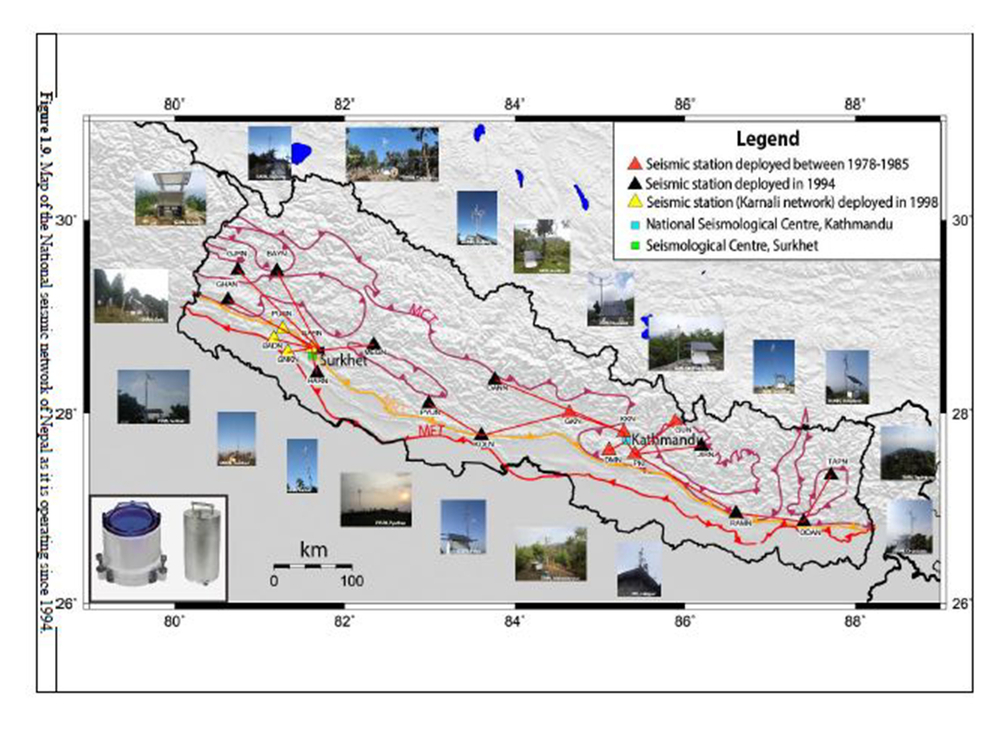
According to seismologists, after the destruction of the earthquake in 1990, there was a wide debate in Nepal. Not only that, it also attracted the attention of the government. 2029 An initiative was taken to have a seismic station network to measure permanent earthquakes in Nepal . In the year 2035 (year 1978), for the first time, a seismic station was placed on the hill of Phulchoki, southeast of Kathmandu, in Nepal with the help of a French seismologist. Since then, the National Earthquake Measurement and Research Center has informed that there are 41 such stations in Nepal.
These stations have been helping to measure the aftershocks of earthquakes in Nepal so far. Seismologist Shiv Subedi said that earthquake aftershocks are being monitored well from the seismic station operated with the help of foreign donors.
What's the way forward ?
"The way forward for safe housing is to follow the standards set by the government while using your land," says Dilipshekhar Shrestha, former secretary of the Ministry of Urban Development, who is also an engineer.
The seismologist and the engineer agree that the building standards brought by the government should be strictly followed . Similarly, seismologist Amodmani Dixit also says that because weak structures kill people, all concerned should be responsible.
'Nobody wants to weaken the house . Many people are responsible for building a house. A house owner, an engineer who designs the house, an overseer who implements it and a carpenter who actually implements it,'' he said. Authority, Council of Ministers, Prime Minister are responsible for all these. It has many stakeholders. All of these should strengthen the house that will be built now.' He argues that everyone should be determined. Similarly, he also suggested that a 10-year program should be made and implemented to make all carpenters in Nepal skilled.
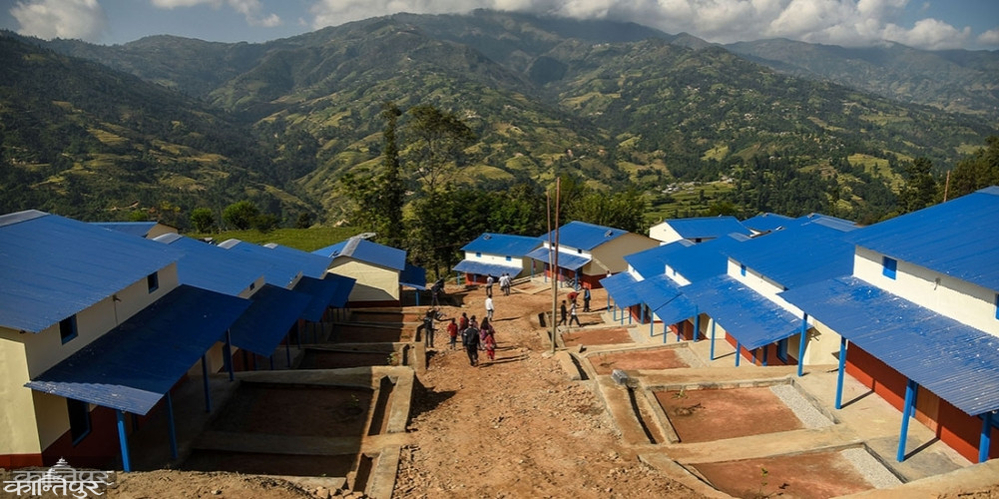
Also, not only houses, but also bridges, hospitals, municipal buildings, schools, telecommunication systems, electricity, all structures should be strong and if these are not strong, people will die more and suffer more. Dijan Bhattarai, spokesperson of the National Disaster Risk Reduction and Management Authority, said that after the 2072 earthquake, the government at that time established the National Reconstruction Authority and proceeded with the reconstruction work.
'Reconstruction work has progressed in partnership with various development organizations. I think more than 98 percent of the reconstruction work has been completed,' he said, 'the Central Project Implementation Unit under the Urban Development and Building Construction Department is working on the rest.' Tell .
Similarly, when building houses and residential settlements, open space should be kept, work should be done in a planned manner, and the roles of three levels of government should be clearly separated for disasters, he said.
There are three tiers of government. What is the role of the federal government in this? How to manage and share resources? There is no clear roadmap as to which level of government will be active in which disaster,' he said, 'the three levels of government should be clear on this matter . The federal and state governments should take more efforts to increase the capacity of the local level.
Similarly, he says that the government should invest in earthquake resistance while building development. He said that due to the lack of skilled manpower and the lack of preparedness for disasters, he said.
'Our preparedness for disaster is not enough . We don't have skilled manpower . It has not been possible to create volunteers to make the local community participate," he said, "training has not been given. We have not been able to use the technology . We have not been able to implement the information management system effectively.'
Need to invest in research and technology
Seismologist Shiv Subedi says that even though the monitoring of earthquake measurement technology in Nepal is good, Nepal is lagging behind in research. "We are strong in the field of earthquake monitoring technology, but we need to find an answer to the question of what we have done to reduce the risk of earthquakes," he explained, explaining the reason, "because the work done by the Nepalese government to prepare for earthquakes and minimize the damage that may occur in future earthquakes is insignificant. is .'
For this, in the first stage, the government has prepared earthquake-related information such as: What to do before an earthquake? What to do after leaving? What to do while going? How can the risk of future earthquakes be reduced? Or how can material and human damage be reduced from earthquakes? The seismologist suggests that a curriculum should be created at the national level keeping in mind many such things. He emphasizes that the university should also include the subject in order to produce skilled manpower related to earthquakes.
According to seismologist Dixit, natural disasters including earthquakes should be investigated in Nepal. He believes that this will help to avoid natural calamities. Says, "NBSP;" Subempt District Subedi Subjidden Anticipation Procession Subi District Subati-BREAP Anticipating system is working to start an earthquake-noticeable notice in Nepal and Nbsp ;. But for this, he said that it was not enough support from the government and nbsp;. If this system is implemented, it is a weed that you can save the citizens from earthquakes & nbsp;. & Nbsp;
'The technology adopted by the world's country is a saying that one is an' economic to Warning system 'and Nbsp ;. This is an earthquake in one place and its a technology to make the people there using Telmicumications by using Telmicumications by using Telmicumications by using Telmicuminacons. It can be brought in Nepal, "he said, 'This is notice to be given no part of the earthquake but Nbsp;. & NBSP; Since Nepal, China, China, China, Indonesia, Chile, Silly, Switzerland, also said and nbsp;..
'This information system can be saved people in Kathmandu,' in question, 'says to us why this system is required,' Today we started now six years later We can make the economic ordering system to reach the Public & Nbsp;. '
'for this to stay with the government and nbsp; 5 We had a meeting meeting from the ministers from PortFoliwins, "he said. That is why this work has not been able to move forward and nbsp;. '& Nbsp; He says he says to work 50 years and Nbsp for five years in an investment of 3-Break once and completed five years of age. 'For the test period, we should start this earthquake notice of the earthquake notice and Nbsp after the next five years after now. It costs Rs. 50/60 million for this, "he said. Such Seresmome we need and NBSP;. It is a budget in resentment in terms of Nepal, a lot of rupees are a lot of rupees & nbsp;. '