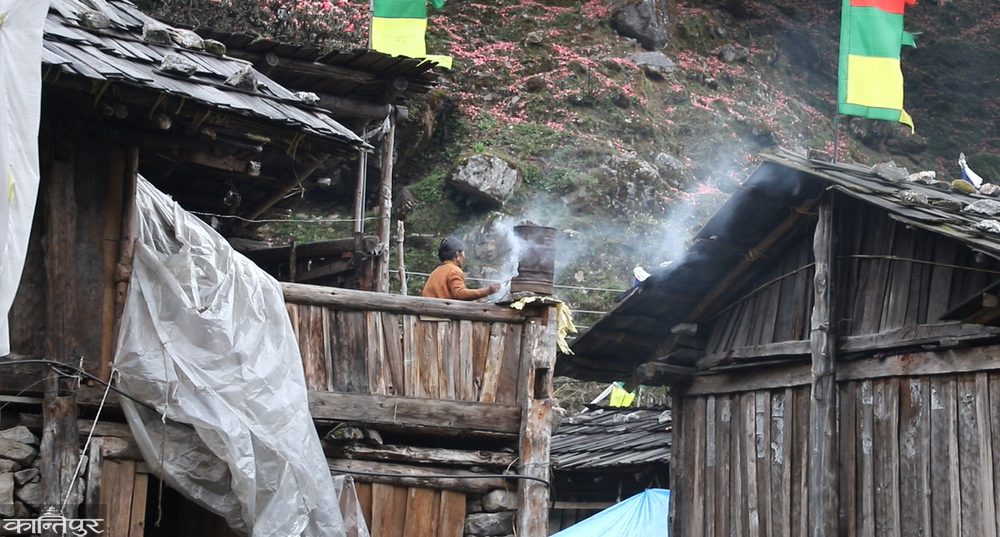
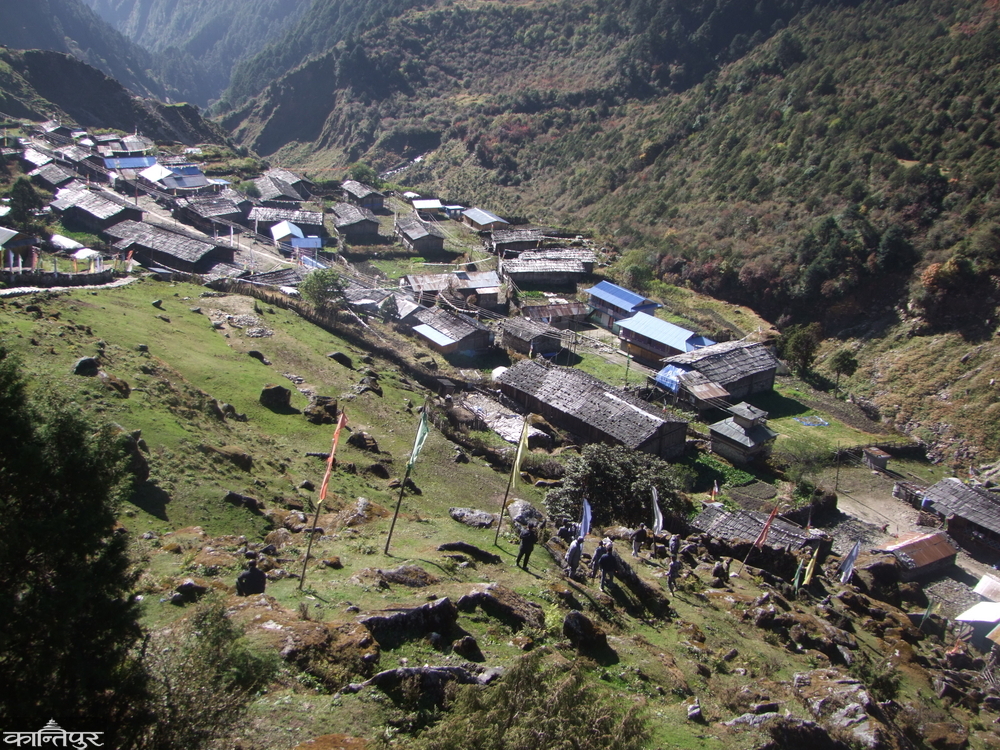
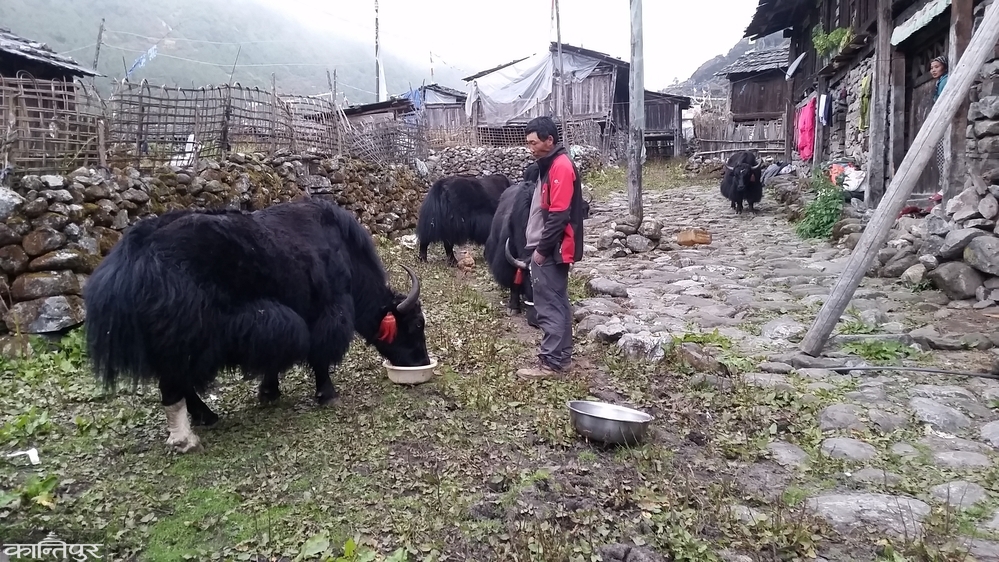
It was raining to cover the snow, but it did not snow
We use Google Cloud Translation Services. Google requires we provide the following disclaimer relating to use of this service:
This service may contain translations powered by Google. Google disclaims all warranties related to the translations, expressed or implied, including any warranties of accuracy, reliability, and any implied warranties of merchantability, fitness for a particular purpose, and noninfringement.
When it gets too cold, the government even arranges to light fires in the Terai. However, the residents of the Himalayan settlements, who are living in minus degrees for almost three months in winter, have to live on their own. To avoid the cold, the residents of Taplejung's Ghunsa, Khambachene's Falema and Yangma's Chenema and Tokpegola's Papung, which get sunburned relatively quickly, fall.
It is estimated that the temperature will be minus every night in Fale and Chene. For that, the residents of this place should arrange a good arrangement of clothes and clothes. In the morning and in the evening and even in the afternoon when the sun is not shining, it is necessary to light a fire to warm the house.
If it is very cold, you have to wake up at night and light the fire. Food is prepared for three months. Be mentally prepared as you may have to stay indoors when it starts snowing. Unfortunately, this year it has not snowed till the end of Pus . It is very cold.
Paktanglung rural municipality-6 Sherpas have arranged arrangements of lentil-rice, salt-oil, marmalade by carrying it from Tapethok to Chaunri and Khachchad for three months. For Duhuna Chaunri, they have managed the grass and opening from under the house . After heating the water, salt and chaff are ready to be mixed in it. Tharo chaunri and yak have been chased to the big khark and tar . As it is the snowy season, Mingma's attention is focused on the safety of herself, her family and herds. Even though the local residents have been preparing for winter since November, it has not snowed yet. "A few days ago, it turned a little white once or twice, but what happened is that it has not snowed," said Mingma . Residents of Ghunsa, Khambachen have come and stayed in their nearby houses to avoid snow and cold.
It's still very cold here. It's hard to go out until the sun shines . There is no alternative to sitting by the fire in the morning and evening. Water has started freezing in the spring. "It would have been better if it had snowed at this time," Mingma added, "After it snows, the wind doesn't blow as much, so it's warmer." The ground gets wet and the grass starts to grow.'
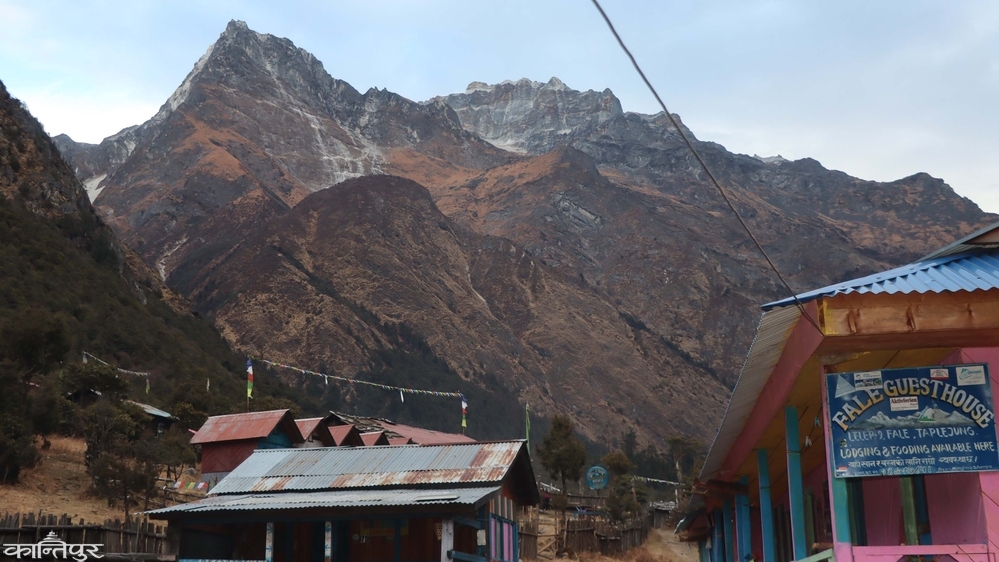
The change in the seasonal cycle has also affected the residents of the Himalayan region. They can neither work with a sustainable plan to ensure that there is no snow, nor can they operate according to the old seasonal cycle.
Fale location is an hour's walk from Ghunsa . This place is famous due to the migration of people from Ghunsa, Khambachene. Even on short days, the sun comes here around 11 am and stays till 4 pm. That is what has given relief.
The main occupation of the inhabitants of the Himalayan region is animal husbandry. Some people here have kept up to 2/3 dozen chaunri, yaks, while the few have up to 10/15, Fuchhiring Sherpa says. Apart from chaunri, yak, goats, chickens and chickens are also reared. It is a man's duty to protect himself in the cold by protecting him. Firewood is most useful for people to stay warm and to keep four-legged animals safe. Not only the forest trees, but also the dung of the four feet, the locals keep it dried to be used for burning.
Sikra (Msina) burns quickly and uses dung which stays hot for a long time. Fuchiring says that every house must do the harvesting of Annapat from November to February. 'When it starts snowing, the road cannot be moved,' she said, 'sometimes you have to stay indoors for a long time, it is difficult to move outside, so you have to be prepared.' They envision the place . Quadruped sheds and cages are made to be warm. Locals estimate that the temperature has started to drop as the water gets stuck in these areas where there is no temperature measuring device. After cold water freezes in springs and pipes, they take hot water and pour it there . If that doesn't work, they say that they should use force to open the jam and make the water flow.
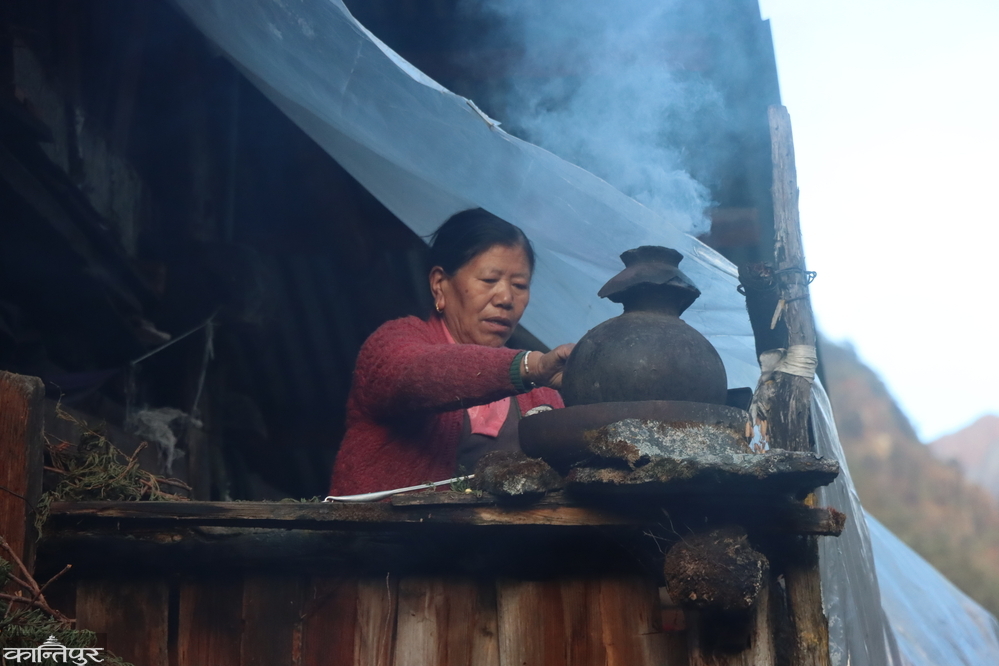
When it starts snowing, they pick up the same snow and heat it in a large tank to make water . According to Cheten Sherpa Lama, the ward president of Paktanglung-7, the president of Ghunsa Foundation, Yangjung Sherpa, provided a temperature measuring machine to Olangchungola and Ghunsa two years ago. According to the temperature shown by it, the temperature was often minus from November to February. Chheten claims to have measured up to minus 17 degrees . Cheten said that the machine could not be maintained regularly as it would go down even if a good battery was used.
Although it does not snow as fast as 6/7 years ago, the residents of the Himalayan region claim that it is still cold. In general, the residents above 3000 meters of Taplejung have to wait for the snow and face the cold . About 45 more families from Ghunsa, Fale, Gybla, Yangma, Gola, Topkegola are witnessing it.
Dandu says that even though the government does activities such as buying firewood in the lowlands, arranging fire, and distributing warm clothes, Dandu says that he has to face the cold in the Himalayan village where the temperature is minus. Nupu Sherpa of Olangchungola says that the cold starts and ends at the same time, but the change in the pattern of snowfall causes livestock and water problems . He said that if it snows, it can be melted and used.
The schools here are closed for three months in the cold. Studies are held here in June and July of Barkhayam. Leela Chakra Gurung, who has led Ghunsa Basic School for a decade, says that he has experienced a village covered in snow in November and has seen no snow till January. "We taught on snow in November," said Gurung, "we taught in spring and autumn without snow. He retired only two years ago and says that even if it doesn't snow, the cold can't last here from the end of November." ; "The sun wins in February-March and it can last," he added, "even if it doesn't snow, it is difficult to live from November to January." Locals say that apart from giving general treatment to Aheb/Anmi, there is a problem with complicated patients in winter.
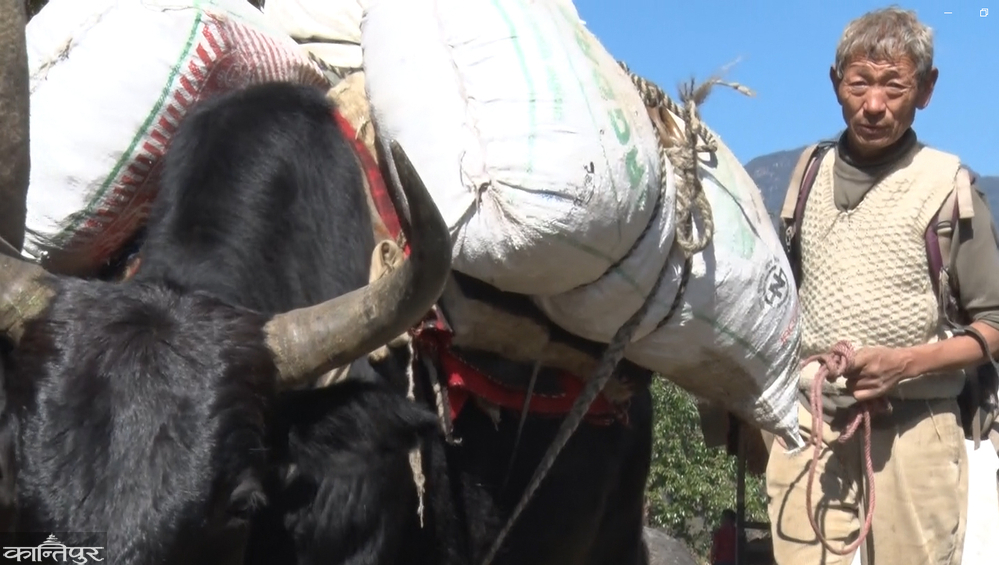
Other times, the locals who are engaged in farming, khark, and business say that now they can have fun with their families. "The cold is also an advantage," said Mingma, "we are mostly livestock keepers, we have to stay in the shed a lot, but this is the only time we can stay at home with our family." Mingma says that it has started raining in the last year. Earlier, the snowfall starting from the end of November and January lasted until February/April. When the heat started in February, the locals used to return to work regardless of the snow,' says Mingma, 'whether it is the seasonal cycle or the climate change, it has made us people who live in the mountains incomprehensible.'