We use Google Cloud Translation Services. Google requires we provide the following disclaimer relating to use of this service:
This service may contain translations powered by Google. Google disclaims all warranties related to the translations, expressed or implied, including any warranties of accuracy, reliability, and any implied warranties of merchantability, fitness for a particular purpose, and noninfringement.
For the past seven and a half decades, there are two major factions in Nepali politics in relation to competition and cooperation - Congress and Communist. In the election, the main competition is between these two forces. There is cooperation between these two forces to solve many problems of the country.
Communist parties themselves also have different colors and styles. But other forces except the Congress and the Communists have not been able to reach a leadership role in Nepali politics. For a long time, it can be predicted that the political journey of Nepal will continue through the competition and cooperation of these two sides.
It may seem strange to hear that among these two parties, which are currently in an ideal relationship of competition and cooperation, the Congress had banned the Communist Party when it was leading the government. This is an incident, in the year 2008 . In the second year of democracy in Nepal, the Congress government, which played a leading role in achieving democracy, banned the Communist Party.
The capture of the lions' palace
The ban on the Communist Party is linked to the fall of the 2007 revolution and the understanding and response to it.
An agreement was reached in Delhi under Indian leadership to end the 2007 protests . On February 7, 2007, a new government was formed under the leadership of Mohan Shamsher Jabara through a proclamation of the then King Tribhuvan Shah. BP Koirala was the home minister in that government. With this, the 104-year-old Rana rule came to an end. And the country was moving towards a new goreto.
The protest against the Rana regime was stopped in the middle by the Delhi Agreement. As a result, even after the end of Rana's rule, the country's situation was confused. The political and social situation was disturbed. During the transition period, the basis for more stealth was being prepared. Dissatisfaction with promises made during the revolution not being fulfilled and the new government not delivering is the common mood of the transitional period after every revolution. The same thing was happening in Nepal.
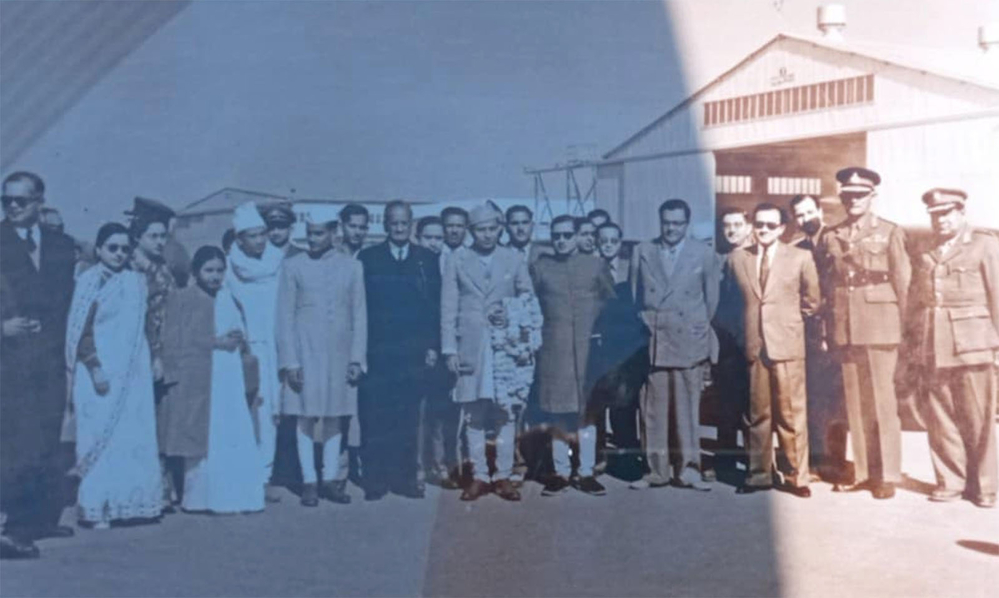 Nepal's Prime Minister Matruka Prasad Koirala, Minister Bhadrakali Mishra, Indian Government Minister Gopal Swami Ayankar, who visited India in 2008, were photographed at Palam Airport in Delhi.
Dr. who fought from the Bhairahawa area in the Congress-led revolution. KI Singh was also dissatisfied with the Delhi Agreement. He believed that the Delhi Agreement was a 'betrayal of the revolution'. That's why he continued the struggle . His influence was strong in the western region of Nepal.
As the struggle continued, Singh was arrested by Indian soldiers on Nepali soil. But he escaped from the prison . He was later arrested again. After that, he was kept as a prisoner in Singha Durbar .
Similarly, Ram Prasad Rai, who fought from the eastern region, was also dissatisfied with the agreement. He was organizing the scattered Raksha Dal (Liberation Army during the revolution) in preparation for the uprising. He was arrested by the government who gave a strong statement against that in Kathmandu. He was initially kept in Hanumandhoka and later in Bhadragol Jail.
After Ram Prasad Rai was kept in jail, he was freed by the party's defense team using the weapons he had. They also freed KI Singh who was imprisoned in Singha Darbar . This incident on the night of January 8, 2008 is known as the 'occupation' of Singha Darbar. After being liberated, Singh seems to be the political leader of it . But before the incident came to any conclusion, Singh fled to Tibet with some help on the afternoon of the 9th.
Mohan Shamsher was the Prime Minister when Singh was arrested, Matrikaprasad Koirala was the Prime Minister when Singh Darbar was 'captured'. He was appointed as the Prime Minister on November 1, 2008.
Prejudicial Ban
On the other hand, the Nepal Communist Party was also dissatisfied with the Delhi Agreement between Rana, Raja and the Congress. They raised the slogan 'Delhi Agreement is a fraud'. Also, various programs were scheduled in opposition to the agreement.
The first conference of the CPN held in October 2008 strongly opposed the Delhi Agreement and passed that it should be the main strategy to lead to the completion of the unfinished revolution.
At that time, CPN itself was also in the role of agitator. It was a situation that any powers that were dissatisfied with the Delhi Agreement would be friendly forces of the CPN . His kind of activity and favoritism irritated the Congress government.
In the situation where the atmosphere of confusion and insecurity is still there, the message of more confusion and insecurity was conveyed after the 'occupation' of the Singha Darbar. It was like adding ghee to the fire.
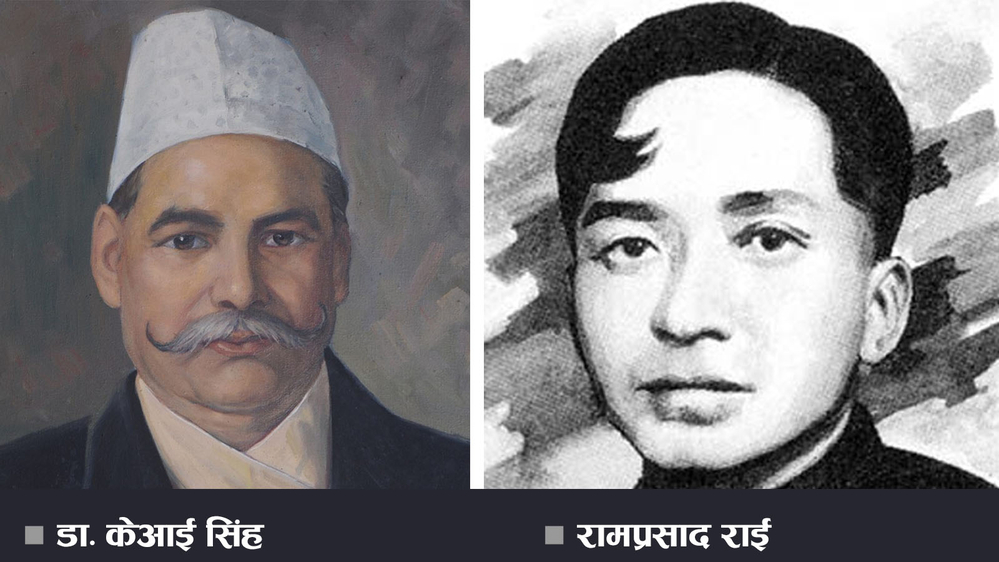
by showing the Singha Darbar "occupation" Dr. The political steps taken by the government towards KI Singh or Ram Prasad Rai could be considered relevant. But the ban on CPN cannot be considered relevant. It can be read that some of the leaders of CPN have personally adopted that rebellion. Manmohan Adhikari was such a leader. But the CPN itself had not officially taken any decision or was involved. Didn't even help or support . But Matrikaprasad Koirala used the incident as an opportunity to ban the CPN.
According to Pushpalal's statement, the government that was sitting saying 'Ke Nihun Paaon, Kanika Bukaon' banned the CPN after the capture of Singha Darbar . In a democracy, it is considered the primary responsibility of the ruling party to protect and protect its political opponents. But Matrika's government forgot its responsibility.
Matrika's government sent a notice through the Ministry of Home Affairs on January 11 and declared the Communist Party illegal on the charge of being related to the disturbances in the capital on the night of January 8. Along with the Communist Party, the All Nepal National Mahasabha headed by Agni Kharel was also declared unconstitutional on January 12.
What is strange is that the government announced that the defense forces soldiers who had surrendered with arms would be pardoned. But the CPN, which is not directly involved, was banned. Not only that, KI Singh and his friends, who were said to be the leaders of the rebellion, were pardoned by the then King Mahendra through a proclamation on August 20, 2012. However, the ban on the Communist Party remained. Mainly, the leader of the rebellion, KI Singh himself, gave a statement that the Nepal Communist Party had no hand in the Singh Darbar scandal. He said that if the party was made illegal, it would be unfair. However, the ban on that party remained .
Prime Minister Matrik Prasad Koirala presented the incident of suppression of Singh's rebellion and the ban imposed on the party as an indicator of his rule . He said that the opposing forces tried their best to disrupt the peace of the country but the government suppressed them all. When Dr KI Singh escaped from Singha Darbar, the opposition parties had an opportunity to create a ruckus, but they too were suppressed in a single day and an apprehensive country-wide ruckus was confined to Kathmandu for a few hours and then dissipated, a sign of great success and good governance of our government . After that, because the Communist Party had a hand in the KI Singh festival, their organization was declared illegal.
The government did not succeed in controlling the activities of the Communist Party by banning it. Because the Communist Party had started operating its activities underground. At the same time, the strike of low-wage employees mobilized by the Communist Party for 4 days from May 19, 2009 was a very important event. Which finally forced Matrikaprasad Koirala's government to step down from power. People's Rights Committee was formed in Kathmandu at the initiative of
party. Pushpalal believes that this has played a very important role in the country's politics.
At that time, Pushpa Lal said that since the Communist Party had exerted its influence on every part of the Nepali society, all parts of the people of the country expressed their opposition to the ban on the party.
It is also the local election of Kathmandu municipality where people's dissatisfaction with the ban has been revealed. At that time, the party was working under the name of 'Janadhikar Suraksha Samiti'. The Communist Party won 6 out of 18 wards in the election conducted by the Matrika government on 17 August 2010. Similarly, Praja Parishad won 6, Congress 3, Gorkha Parishad 2 and independent 1 wards. After that Janakman of CPN was elected as the first chairman of BA Municipality. Prime Minister Matrikaprasad Koirala was enraged by that kind of success of the party which had banned
itself. As a result, a deadlock started between the municipality and the government. By trying to paralyze the municipality in every way, not giving financial support, reducing its importance in the government agencies, interfering in the work area of the municipality and Prime Minister Matrik Prasad personally started disobeying the elected chairman of the municipality, Janakman.
In addition to that, every action taken by the municipality was viewed with suspicion. To some extent, the government demanded an explanation saying that the municipality has put a five-pointed star symbol on its signboard saying that it is a 'communist symbol'.
The internal activities of the party did not stop. The first National Convention was held underground in Patan on 13-17 January 2010 . Pushpalal raised flags in the convention. Similarly, Manmohan Adhikari presented a political report called 'Report of the Central Committee' and a party program called 'Programme of the Communist Party of Nepal'. The convention formed a central committee of 13 members, making Manmohan Adhikari the general secretary. Attempts to legalize
The ban on
has persisted for more than four years . In the meantime, various efforts were made to remove the ban on CPN. In the beginning, the political committee of the party had demanded that the government submit any evidence of the involvement of the CPN in the rebellion of KI Singh. But the government did not pay attention to that demand. Similarly, prominent citizens of Kathmandu sent a delegation under the leadership of Balkrishna Sam to the then Prime Minister Matrikaprasad with the demand to legitimize the party . At that time, Prime Minister Koirala said that the party had no hand in the Singh Darbar scandal. But they didn't lift the ban .
After the government did not lift the ban, the party considered taking its case to the Supreme Court. For that, a concrete decision was also made by the central committee and the extended meeting. But according to the statement on the Supreme Court published in the Gazette of 12th November, 2012, the Supreme Court no longer has the right to act on the fundamental rights of the people. As a result, the possibility of getting justice from the court also stopped .
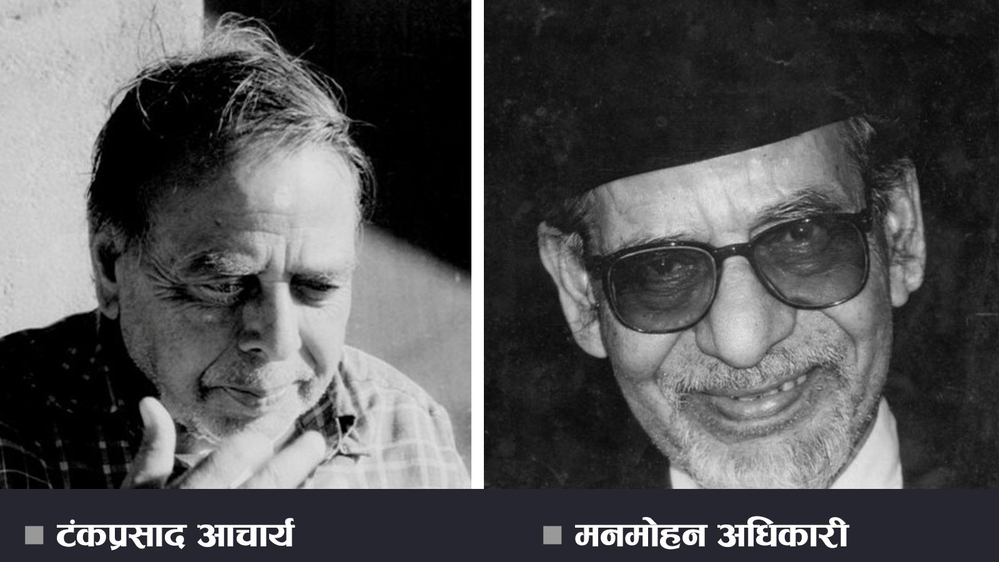
After Tank Prasad Acharya was appointed Prime Minister in January 2012, Prime Minister Manmohan Adhikari in CPN wrote an open letter to Prime Minister Acharya demanding that either the government remove the ban on the party itself, or the government should give the party the right to take its case to the Supreme Court. In the open letter, he also demanded that if any clarification is needed regarding the party, arrangements should be made to discuss it between the government and the party's representatives. But the Prime Minister did not care about it.
After there was no other way, the party decided to go to the public on 4th Baisakh, 2013, in different areas of the country.
Then the government felt the need to be clear about the policy of the CPN . For that, the party sent Shambhuram Shrestha and PN Rana as representatives. On May 3, 2013, CPN Prime Minister Manmohan Adhikari issued a press release informing them that he had sent them to negotiate with the government and also clarified the party's policy publicly. In the statement, it was expressed the belief that its objective can be achieved peacefully. It was also mentioned that the king was considered as the legitimate head and propagated socialist principles.
Prime Minister Acharya said in talks with the representatives of CPN that the ban will be lifted on 4th Baisakh. Accordingly, the ban on CPN, which has been going on for almost a year and a half, has been removed.
According to the Nepal Gazette published on May 11, 2013, the ban was lifted with effect from May 4, 2013. It was stated in the notice that the Nepal Communist Party has repeatedly appealed to the government to remove the ban on them and clarified its policy by sending representatives to the government.
000
Reference Materials:
History of Communist Movement in Nepal / Surendra KC
Brief History of Communist Movement in Nepal / Pushpalal
Manmohan Adhikari: 6 Decades in Nepalese Politics / Dhakaram Sapkota
Nepal's Political Mirror (Part 1) )/ Grisham Bahadur Devkota
Seven years after seven years/ DK Shahi
Various issues of Nepal Gazette