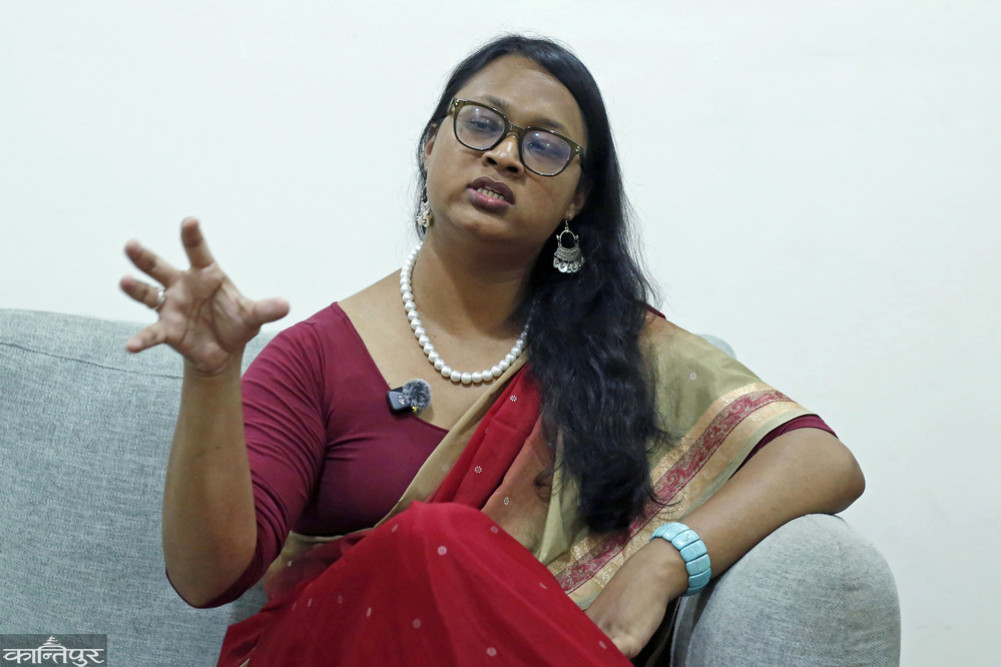
In an interview with The Kathmandu Post, LGBTQI+ rights activist Ruksana Kapali said that even to exercise the rights granted by law, one has to go to court, and that is very cumbersome.
We use Google Cloud Translation Services. Google requires we provide the following disclaimer relating to use of this service:
This service may contain translations powered by Google. Google disclaims all warranties related to the translations, expressed or implied, including any warranties of accuracy, reliability, and any implied warranties of merchantability, fitness for a particular purpose, and noninfringement.
Human rights organizations and the media have been praising Nepal's efforts to protect the rights of the LGBTQI+ community in South Asia. However, activists say that administrative obstacles have prevented them from exercising their constitutional rights in practice. Despite repeated rulings by the judiciary in favor of the rights of the queer community, government agencies such as the Ministry of Home Affairs are finding it difficult to accept the gender identity of transgender people. In this context, The Kathmandu Post's
Biken Ke Dawadi spoke to LGBTQI+ activist Ruksana Kapali about the gap between Nepal's international image and the legal weaknesses within the country: What is the current situation in Nepal in the field of queer rights? Nepal has long been seen as a beacon of hope for queer rights in South Asia. Human Rights Watch reports and local reporting have put us ahead of other countries (Bangladesh, India or Pakistan) in terms of gender identity.
But the Ministry of Home Affairs still blocks the recognition of transgender people without surgical documents. How to reconcile the dilemma between Nepal’s progressive international image and bureaucratic laxity is a big question.
I have been working on this issue for a long time. A lot has progressed in these 15 years, but a lot remains the same. People see Nepal as a country with many (LGBTQI plus) rights. Looking at Nepal’s own situation, it is difficult to simply call it ‘progressive’.
What does this mean in terms of the state’s legal obligations?
I always argue that the state is ‘permanently inactive’ in legal debates. This issue has been raised since the inception of the ‘Blue Diamond Society’ and was legally ordered to address it in a case filed by the society in 2007.
Since then, the state has done little except for the election of Bhumika Shrestha as an MP. For a long time, the parliament has not made any laws and the government has not planned to make any.
In terms of citizenship, seven precedents have been established in Nepal regarding queer rights. Article 12 of our constitution and the amended Citizenship Act ensure the right to obtain citizenship according to one’s wishes and gender identity. But the bureaucracy claims that there is no procedure or regulation for name and gender change. When there is no law, the court should order it.
This means that each person has to go to court individually. However, one cannot go to court directly. We know that the concerned body will reject the application, but the application should be made there in the first place. We have to go through the paperwork, otherwise the court will claim that we have not sought an alternative. We have to go to the ward, the Chief District Officer (CDO) and the National Examination Board.
Often they refuse to even register the application. If the application is not registered, we have to use the post office, which can take many days even in Kathmandu, or use the Right to Information, which is often silently ignored by the information officers.
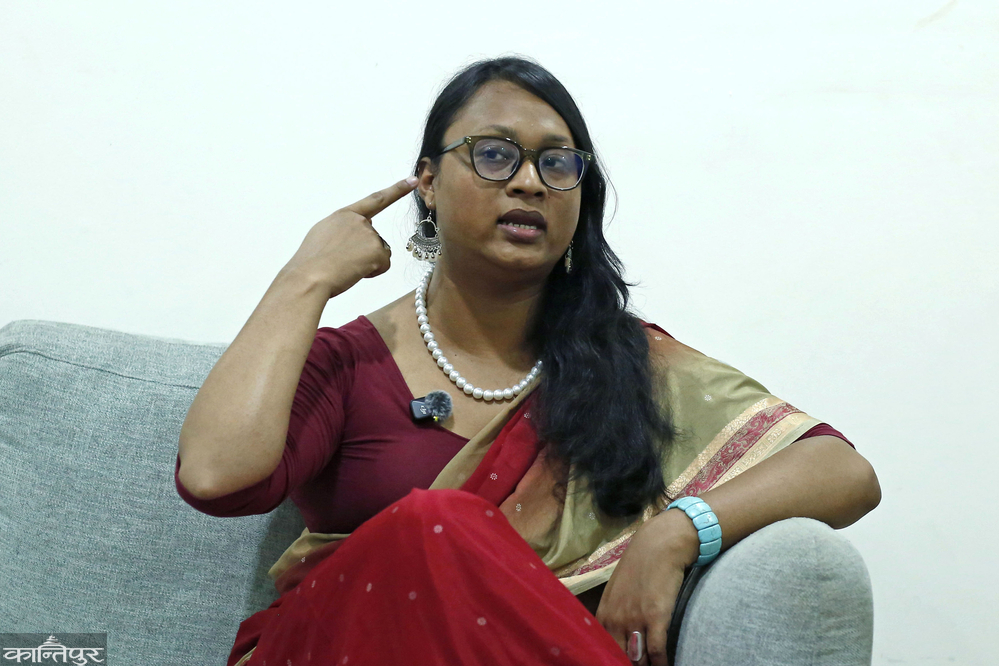
Recently, during the reshuffle and renaming of ministries, the Ministry of Women, Children, Gender and Sexual Minorities and Social Affairs was created. What is your opinion on this?
The change in the name of the ministry is a historic and symbolic achievement, but this is only the beginning. Earlier, the bureaucracy used to dismiss our case as not falling under its jurisdiction due to lack of clarity. We were forced to go around the CDO, the Ministry of Home Affairs and the Council of Ministers.
Even now, the cases are related to many areas. However, this ministry will lead the formulation of laws and programs. We are in discussions to create a separate division or branch within the ministry, which can work actively in coordination with the social development branches at each local level.
How can the political participation of queer people be transformed into meaningful policy impact?
There is a lack of willpower among the political leadership to debate such issues. Many do not even acknowledge the existence of this community. During my candidacy, I was on the party's statute drafting and manifesto committee and ensured the formation of a social justice and LGBTI department.
Although Bhumika Shrestha's presence in parliament is a matter of pride, sometimes it seems like only symbolic representation. In order to ensure that people from the LGBTQI+ community are seen as effective in lawmaking in the future, we have demanded that the Election Act of the National Assembly, the House of Representatives, and the local level be amended to provide for at least 1 percent reservation.
If we have representation in every provincial assembly and municipality, we will form a strong network. Also, if there is 1 percent reservation in the civil service, we will be able to voice our opinions from within the bureaucracy instead of shouting from outside.
In my understanding, the employees of the Ministry of Home Affairs are biased against transgender people. They are using regressive arguments such as the recognition of gender identity causing ‘negative social consequences’ and ‘distortion’.
How do you reconcile the struggle between international fame and the ground reality of Nepal?
To be recognized in Nepal, you first have to be recognized abroad. This is a bitter truth. Many people only recognized me after receiving international honors like BBC’s 100 Women and Forbes 30 Under 30. However, this honor has made it easier for me to work in Nepal.
For example, court staff in Baglung and Dipayal treated me with respect because they saw me on those lists. It is unfortunate that many Nepalis do not recognize our work until we receive international recognition. However, such recognition has become a powerful tool for progress.
How do you view corporate involvement in Pride Month (June)?
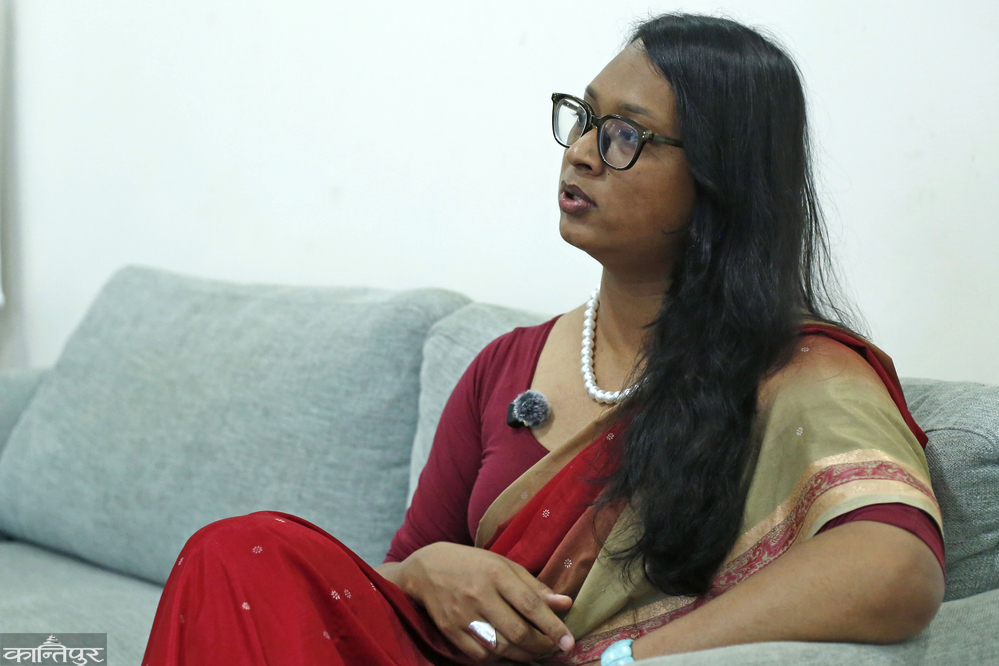
Most corporate participation in Pride Month seems like a show-off and an attempt to profit by using the name of the community. Our queer youth group organizes Pride on June 2nd every year with a ‘corporate-free’ policy. Putting rainbow colors on food packets is not support.
We ask: What is your company’s policy of inclusion? Is our community represented in your organization? Using rainbow colors is one thing and showing real support is another. Companies should focus on 'corporate social responsibility' and real representation throughout the year, not on promoting the benefits of Pride Month.