Nepali album 'Slip on the Grass' with multilingual songwriting, existential themes, and a path to reaching an international audience
We use Google Cloud Translation Services. Google requires we provide the following disclaimer relating to use of this service:
This service may contain translations powered by Google. Google disclaims all warranties related to the translations, expressed or implied, including any warranties of accuracy, reliability, and any implied warranties of merchantability, fitness for a particular purpose, and noninfringement.
'Get up slowly, don't run after the city lights,' begins Fosfense's upcoming song 'Slip on the Grass'.
Fosfense is one of Nepal's emerging bands. The band, which is trying to make its way onto the international stage, is releasing its song 'Get up slowly, don't run after the city lights' next week (along with 13 other new songs). Four years ago, the music video 'Yastai Nai Hola' became famous for attacking the country's lax bureaucracy. It not only introduced the song, but also the band.
In the music video, a cheerful young man goes to the local government office for work carrying a file. However, there he meets a lazy government employee. Instead of working quickly, he keeps indicating that he should come later. This reflects the laziness and negligence in the current Nepali civil service system.
The lyrics of this song got a lot of attention on social media. And made Fosfense known among the audience. Another song from this album, ‘Eklai Hunda Ta Zhan’, created a deep emotional wave in the minds of the youth.
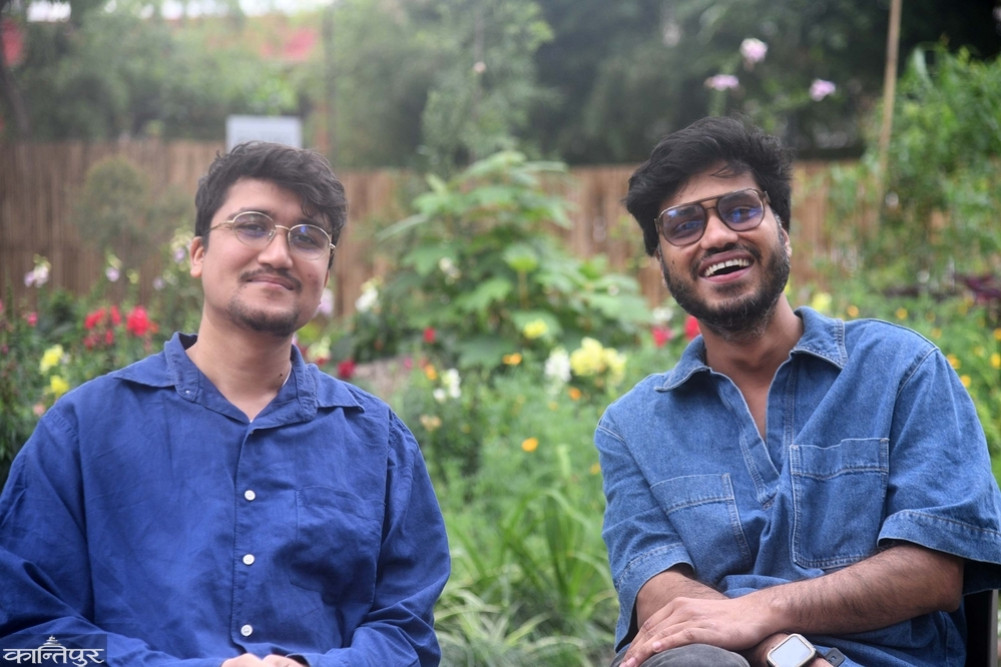
Fosfense has reached the 10th year of its establishment. Fosfense, which has been independently producing multilingual music, is coming out with a new album ‘Slip on the Grass’. The album includes 14 songs. ‘Pay the Bills’, ‘Forever June’, ‘Never Enough’, ‘I Know’, ‘Buzhnai Nakhozhne’ and others. The song was composed by the band’s Prajwal Aryal and Abhishek Pokharel. Aryal’s composition seems existential. Pokharel, on the other hand, uses ‘metaphor’ in songs that give a hint of the foreign band Radiohead. Pokharel, who started writing songs at the age of 17, is influenced by Radiohead and the Beatles. 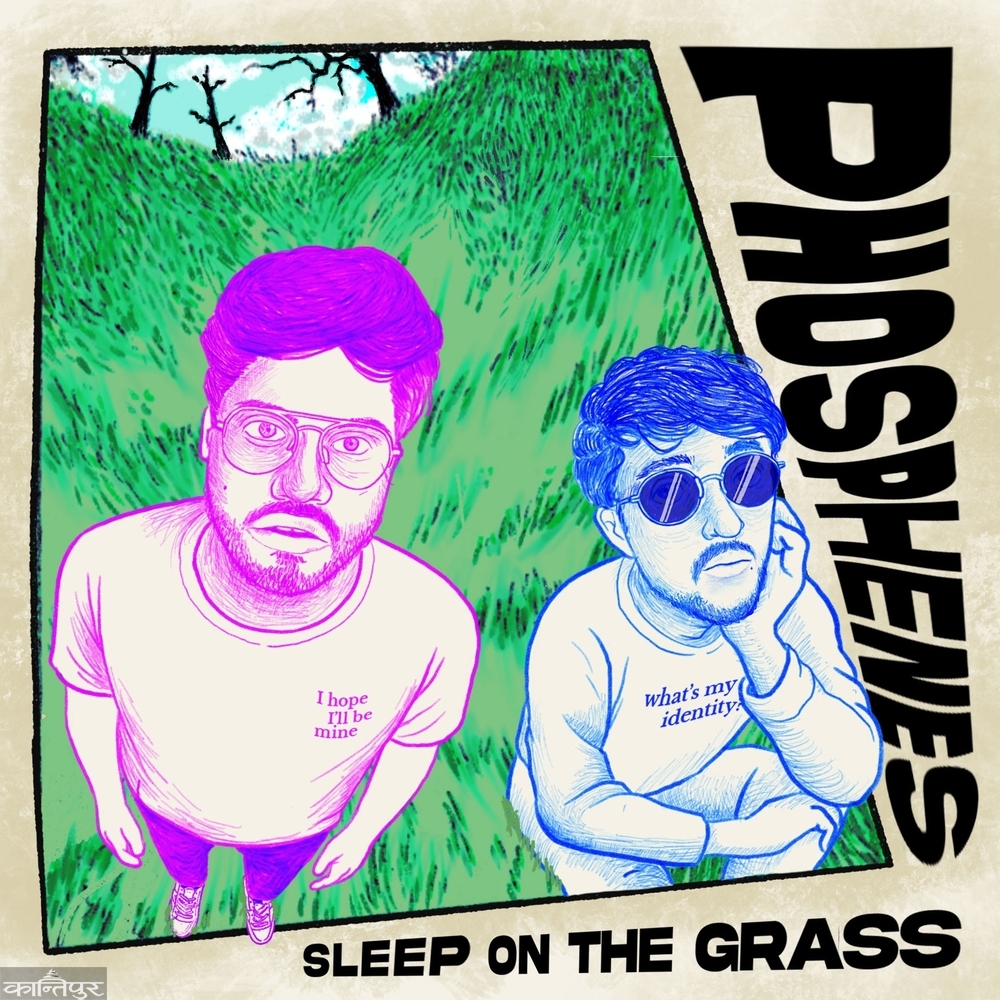
The synergy between the two is evident in all 14 songs - whether it's the soft build of 'Bujnai Nakhozhne' or the powerful opening of 'Nightmare', which sounds more like a beautiful dream than a nightmare in the true sense of the word.
'Pay the Bills' may sound like an order from Marx's corrupt society. But this song is magical. The depth and imagery of 'Back from the Dead' may surprise you. This song is not about the earthly death of someone, but about the pain of someone you love changing in a way you don't understand. The line 'What happened to you?' echoes that pain, while the melodious sound of the piano can bring tears to your eyes.
‘Existential Haze’ starts with English, but the strangeness of French in the middle excites everyone, which is a rare use in Nepali music. When talking about the album, Aryal and Pokharel seem steady in their expressions. Their words seem to be mixed with enthusiasm and energy. They are not at all indifferent towards their work, but rather lively, passionate and intense.
In this conversation with Anish Ghimire of The Kathmandu Post, Prajwal Aryal and Abhishek Pokharel, the two behind Phosphenes, discuss the new album, its creative process and the pros and cons of working ‘independently’. This album comes 10 years after your journey began. What makes it ‘complete’ compared to your previous work? Prajwal:
We initially experimented with an ‘indie folk’ sound. Later we went into dream pop and different genres. This album brings together everything we have explored over the years. It reflects our journey – not just musically, but emotionally and philosophically too.
Abhishek: Right now we can say this album is complete. But maybe three years from now we will feel differently. Because over time our sound and thinking can change and when our thinking changes, so does our artistic approach. So, this album feels more like a sonic metaphor than a complete one.
We have touched on topics like capitalism through songs like ‘Pay the Bills’ and songs like ‘Slip on the Grass’ question human existence. Along with this, the album also has existential themes, dark atmosphere and elements of ‘sci-fi rock’. How would you describe this as the most obvious step towards an international audience?
Abhishek:
We always aimed to reach the international level . But, we did not find the right medium to reach there . Now Reels and TikTok are two very important mediums to get known, so we are creating content to post there .
I agree, because 4 years ago many people like me first heard ‘Yastai Nai Hola’ on TikTok, then went to YouTube to find the full song .
How important do you think collaboration with international artists is ?
Abhishek:
Very much, we recently collaborated with Indian artist Janisht Joshi .
Prajwal: Along with social media reach and collaboration, music festivals can also give us a wider reach .
Abhishek: I think what we need now is the right audience . If we find that, our dream of taking it to the international level will be fulfilled . So we are trying to be more active on social media and collaborate with international artists, so that our reach can grow.
You have been completely independent for a decade. What has that freedom given and what has it taken away? Prajwal:
The biggest advantage is freedom. We can make the music we want without worrying about commercial pressure or trends. Let's say we have a blank canvas and we can draw whatever we want on it. But, at the same time, with freedom comes limitations. Big artists have marketing teams, industry support. And, they get big platforms. As underground artists, we have to manage everything ourselves, from recording to promotion. It's difficult, but it makes us honest about the music.
Talking about the new album, was there a common idea behind it or is it like a collection of moments from different stages of life? Prajwal:
The album is introspective and personal. Many of the songs explore themes like existence, capitalism, identity and the search for meaning in modern life.
Abhishek: Exactly. There is a sense of questioning capitalism throughout the album - there is also a pressure to climb the ladders created by society. We are not blindly following what everyone else is doing. It doesn't make sense. Songs like 'I Know' are about accepting yourself and understanding who you really are.
'Slip on the Grass' and 'Pay the Bills' seem like two polar opposites. Is this contrast intentional? Abhishek:
Yes, completely intentional. 'Slip on the Grass' and 'Pay the Bills' represent very different lifestyles and mindsets. One song leans towards freedom and simplicity, while the other reflects the pressures of survival, chaos and our newfound appetite for digital consumption. We are now hyper-informed. People follow trends – they watch the songs everyone else is listening to, the movies everyone else is watching. The message of ‘Slip on the Grass’ is to create your own identity and not to sell your soul so easily.
Prajwal: Talking about ‘Slip on the Grass’, I think it’s the best song I’ve written so far. It took a lot of time, Abhi and I worked on this song for two years.
Speaking of contradictions, how do you resolve creative differences? Abhishek:
We trust each other creatively. We’ve been making music for a long time. Often someone brings an idea or a song and we shape it together. We understand each other's strengths, so the process feels more natural than confrontational.
You write in both English and Nepali, but most of the songs are in English. Why did English become the dominant language? And if someone says that your music sounds less Nepali because of the language, what is your reaction? Abhishek:
The main reason we write in English is that we can't write in Nepali (laughter). It happens naturally. We don't sit around and decide which language to write in. 'Yastai Nai Hola' and 'Eklai Hunda Ta Zhan' are in Nepali and they came naturally. There are three Nepali songs in the new album too.
Prajwal: Honestly, we don't think language alone determines whether a piece of music is Nepali or not. We come from Nepal, our experience has been shaped by this place and that naturally reflects in our art.
Does the new album convey a message about who you are and where you come from? Abhishek:
Well, we are from Nepal (laughs). But beyond geography, we want this album to feel like a deep exploration of who we are as artists and individuals. A lot of its message is about not blindly following the crowd or superficial notions of success.
Prajwal: We want people to learn to look within themselves, to find themselves, rather than being constantly distracted by the outside world. That is probably the focus of our work. If this album can inspire someone to introspect, to find themselves, and to maintain their personal identity, then we will consider ourselves successful.