Studies have shown that despite efforts to understand the behavior of wild animals and raise awareness among locals, incidents of leopards entering villages are not uncommon.
We use Google Cloud Translation Services. Google requires we provide the following disclaimer relating to use of this service:
This service may contain translations powered by Google. Google disclaims all warranties related to the translations, expressed or implied, including any warranties of accuracy, reliability, and any implied warranties of merchantability, fitness for a particular purpose, and noninfringement.
In the Far West, a technical team of the National Trust for Nature Conservation has rescued 28 leopards trapped in various places over a decade. The team reached Kailali and Kanchanpur in the Tarai and the hilly districts to rescue them. In addition, some escaped from the traps and some died before the rescue team arrived.
This data clearly shows that human-wildlife conflict is increasing day by day. Whether in the Tarai or the hilly districts, incidents such as wild animals damaging crops and attacking humans have increased the conflict.
According to a study conducted by the Shuklaphanta Conservation Program of the National Trust for Nature Conservation in the hilly areas of the Far West, leopards have also been seen roaming alongside human settlements.
Be it the lower Swarad area of Baitadi or the Chaulani Corridor of Darchula, the Api Base Camp, and most of the Mahabharata Range of Doti, leopards have been seen roaming near human settlements. ‘For this, activities should be carried out to maintain human-wildlife coexistence,’ said program chief Laxmi Raj Joshi. ‘Human-wildlife conflict can be reduced only by providing information about the behavior of wild animals, connecting locals to livelihoods, and raising public awareness about conflict reduction.’
In the last decade, 3,300 incidents of human-wildlife conflict have reached the forest and park administration across the state. Most of these incidents are related to leopards. Then there are monkeys, wild boars, and elephants. Leopards have started moving towards settlements due to the lack of food species in the forest. Some such incidents have not reached the forest and park administration. ‘Now it is time for us to change our behavior,’ said Joshi, ‘we must develop coexistence between humans and wildlife.’ According to him, for this, we must also know the behavior of wildlife and change our habits. The
fund had reached various areas of Darchula, Baitadi and Dadeldhura as well as Doti, Achham, Bajhang and Bajura and studied the condition of wildlife, habitat, and relationship between humans and wildlife. The condition of wildlife was studied by installing automatic cameras in various areas. In addition, an occupancy survey was also conducted. During an occupancy survey, technicians study the condition of wildlife on foot. In this, the footprints of wildlife, other signs, and food species and habitat are studied.
The study was conducted by identifying various areas where wildlife roams more and installing cameras in the said area. The cameras were kept at one location for at least 15 days. The study covered most of Dadeldhura, while only partial areas of other districts were covered.
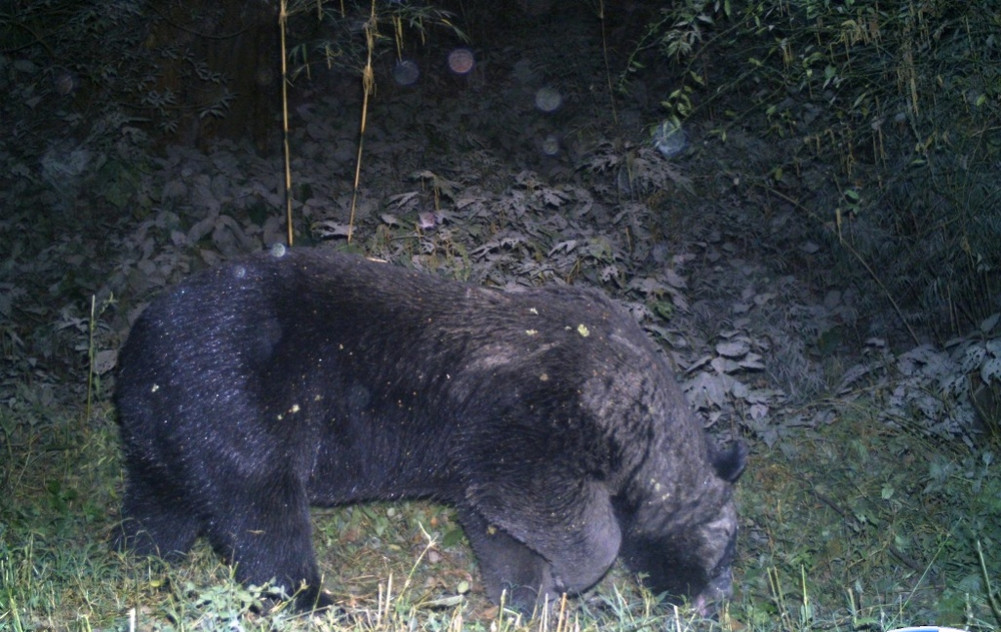
The study was conducted in Doti, Dadeldhura, Baitadi and Darchula from February 2024 for a year. 22 mammals have been found in the area. These include leopards, wild tigers and forest cats, as well as black bears and musk deer.
18 species of mammals have been found in Badimalika and Ramaroshan areas. The fund has studied not only the condition of wildlife but also the condition of herbs. The condition and quantity of herbs in those areas have also been studied.
There are 301 plants in the Ramaroshan area and 517 in Badimalika. The program head Joshi said that there are 128 species of butterflies and 190 species of birds in the area. The fund has prepared facilitators to reduce human-wildlife conflict. The facilitators are working to spread awareness about the behavior of wild animals and ways to avoid their attacks in the community, as well as for conservation. Joshi says that the facilitators are working in all districts of the Far West.