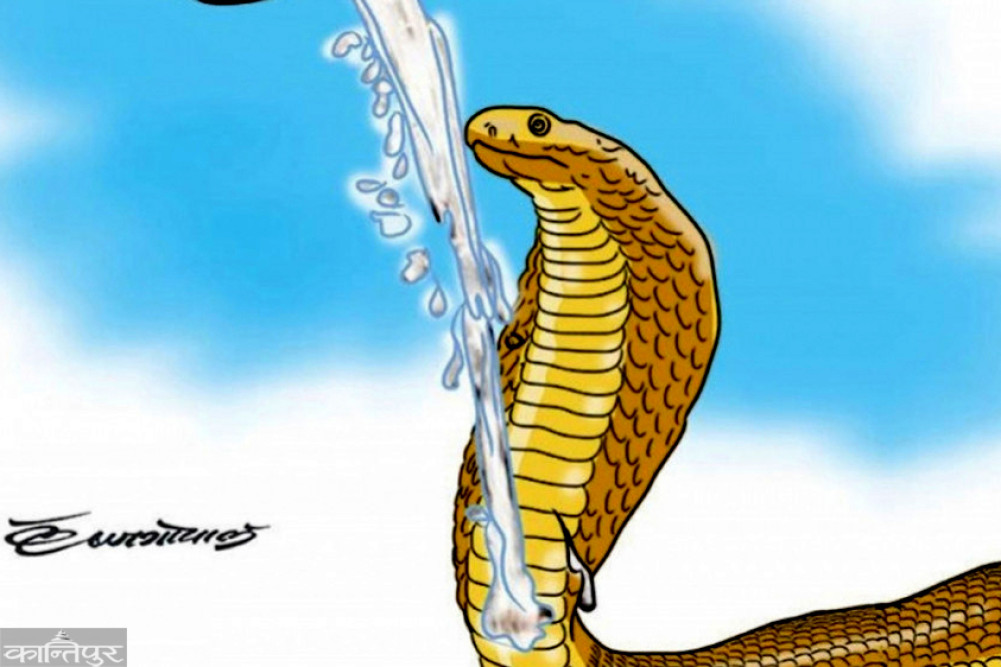
In the Far West, 1,926 people have been affected by snakebites in the last three years.
We use Google Cloud Translation Services. Google requires we provide the following disclaimer relating to use of this service:
This service may contain translations powered by Google. Google disclaims all warranties related to the translations, expressed or implied, including any warranties of accuracy, reliability, and any implied warranties of merchantability, fitness for a particular purpose, and noninfringement.
In the Far Western Province, 1,926 people have been affected by snakebites in the last three years. Of these, 154 were bitten by venomous snakes, according to the Health Directorate's data.
According to Hemraj Joshi, Insect Disease Officer of the Sudurpaschim Province Health Directorate, Doti Dipayal, 587 people have been affected by snakebites so far in the fiscal year 2082/83. Of these, 17 were bitten by venomous snakes and 570 by non-venomous snakes.
Similarly, in 2081/82, 827 people were bitten by snakebites. Of these, 46 were bitten by venomous snakes and 781 by non-venomous snakes. In 2080/81, 512 people were affected by snakebites. Of these, 91 were bitten by venomous snakes and 441 by non-venomous snakes.
Kailali and Kanchanpur districts of the province are at high risk of snakebites. Officer Joshi said that the movement of snakes is more in these districts due to the presence of dense settlements, farmlands, rivers and bushes in the Terai region.
According to him, the bites of poisonous snakes including Goman and Keret are more common in the Far West. He said that Keret snakes bite people while they are sleeping especially at night. Snake bites increase during the rainy season and during farming. From Jestha to Asoj, there is a high number of snake bite patients in hospitals during this period due to the problems of working in the fields, snakes entering homes at night, and snakes entering settlements due to floods and submersion.
According to health workers, even after being bitten by snakes, most patients rely on herbal remedies, herbal remedies and home remedies instead of going to the hospital. This creates a life-threatening situation. 'If a snakebite patient can be saved by reaching the hospital in time and getting an 'anti-snake venom' injection,' said Leelakant Jha, head of Dekhtabhuli Health Post in Kanchanpur. 'Delay increases the risk of death.'
Although primary treatment services for snakebites are currently available in all nine districts of the Far West, patients with complex conditions are forced to be referred to well-equipped hospitals. Health workers say that it is difficult to bring snakebite patients in rural and remote areas to the hospital on time due to road inconvenience and lack of transport services.
The Nepali Army has been operating snakebite treatment centers in the Terai districts in coordination with the local level. This has helped save the lives of patients in emergencies.