After worshiping the goddess in Surmasarovar, it is customary to return with mud from the pond as prasad.
We use Google Cloud Translation Services. Google requires we provide the following disclaimer relating to use of this service:
This service may contain translations powered by Google. Google disclaims all warranties related to the translations, expressed or implied, including any warranties of accuracy, reliability, and any implied warranties of merchantability, fitness for a particular purpose, and noninfringement.
The largest Jatra (Bire Jat) of the locals of Kshetti and Ghajir, the most difficult district of Apihimal Rural Municipality-3, has started. The Jatra starts from the 10th of July Shukla Dashami.
This jatra is not only religious and touristic but also culturally important in the district. Bire Jaat (Surma Devi Jatra) is celebrated for 17 days.
Apihimal Rural Municipality Chairman Bhagatsinh Bohra Thekere said that there is a custom of celebrating Jatra with special worship in Kshetti and Ghajir villages. The Jatra which takes place every two years and during the year is specially celebrated.
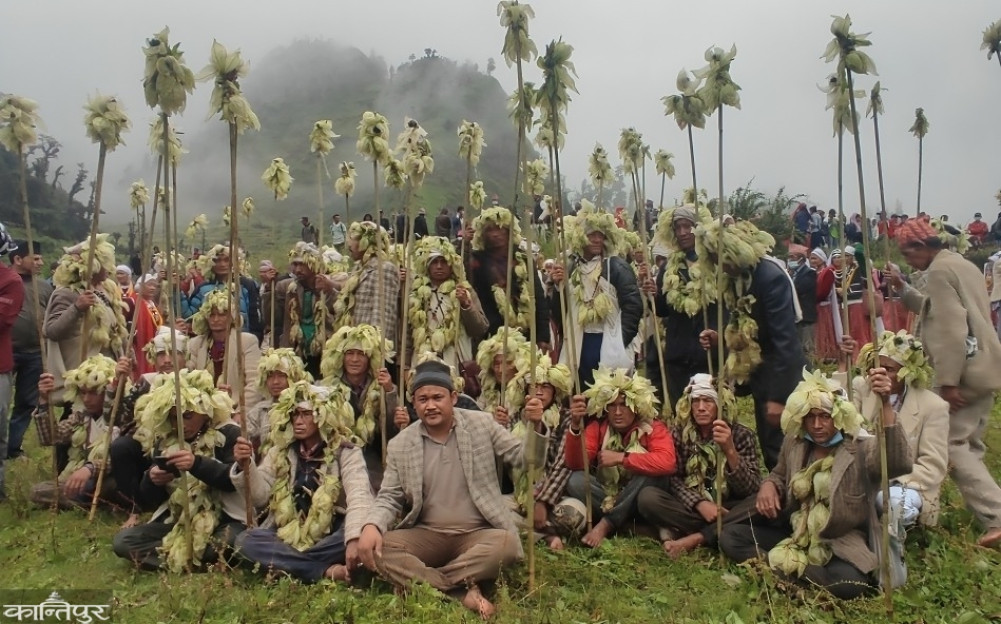
According to Ramsingh Bohra, a resident of Kshettika, a person who eats one cup a day for Jatra, bathes twice in spring water every day, walks barefoot, wears a rudraksha garland and worships with conch shells in the morning and evening is a 'Bire'.
The stories leading up to Surma are divided into two parts. Beeres who participate in the Surmasarovar journey for the first time are called Balobires. Children have to live in a very strict social discipline from the day of Aunsi. A bire who has gone on a previous pilgrimage is called an old bire.
In this Jatra, special disciples of Surma Bhavani, who are called Bire, go on a journey to Surma Sarovar in Bajhang as Bire. Bires, wearing local special clothes, reach Surmasarovar, the border of Bajhang, 24 and a half kilometers from the area of Apihimal Rural Municipality, barefoot. There is also a custom of devotees from Surma Rural Municipality of Bajhang to go on a journey to Surma Lake dressed as hunters. This Jatra is celebrated as a different and original Jatra of Nepal.
After worshiping the goddess in Surmasarovar, they return with the clay of the pond as prasad. It is customary for the devotees from Bajhang to worship Surma Devi only after the devotees from Darchula worship. When Bires go to Surma Sarovar, they walk through the base camp of Kapuchuli Himal at an altitude of 5,000 meters. After passing through Kaligad, you have to pass another five thousand meters Dubai pass and stay at Bire Odar. Local Narahari Thekere said that it is customary to reach Sarovar on the second day and return to Kshetti village on the next day.
According to him, when they return, they return with a garland of Brahma flowers. According to Bahadur Thekere, a senior citizen of Apihimal Rural Municipality-4, Khandeshwari, the caste of Surma Bhavani has been going on continuously since the 11th century. Religious rituals and worship are performed after returning from the fair to Kshetti and Ghajir villages. Ram Ramita is performed by Bire and Jattor (devotees) in the village, singing various songs and magals of Surma Devi and playing Deuda. It is called Ratedi.