We use Google Cloud Translation Services. Google requires we provide the following disclaimer relating to use of this service:
This service may contain translations powered by Google. Google disclaims all warranties related to the translations, expressed or implied, including any warranties of accuracy, reliability, and any implied warranties of merchantability, fitness for a particular purpose, and noninfringement.
Menstruation is like the blooming of a flower. If the flower does not bloom, there will be no fruit. Bhim Bahadur Thapa of Khaptadchanna Rural Municipality said, "If another flower is planted on the deity, how can the tree be impure?" This conservative tradition should be removed now.
68-year-old Thapa is neither an activist nor a human rights activist against menstrual discrimination, which is being practiced as a malpractice in the Far West and Karnali. He is one of the Dhamijankris who have been blamed for maintaining the practice for a long time.
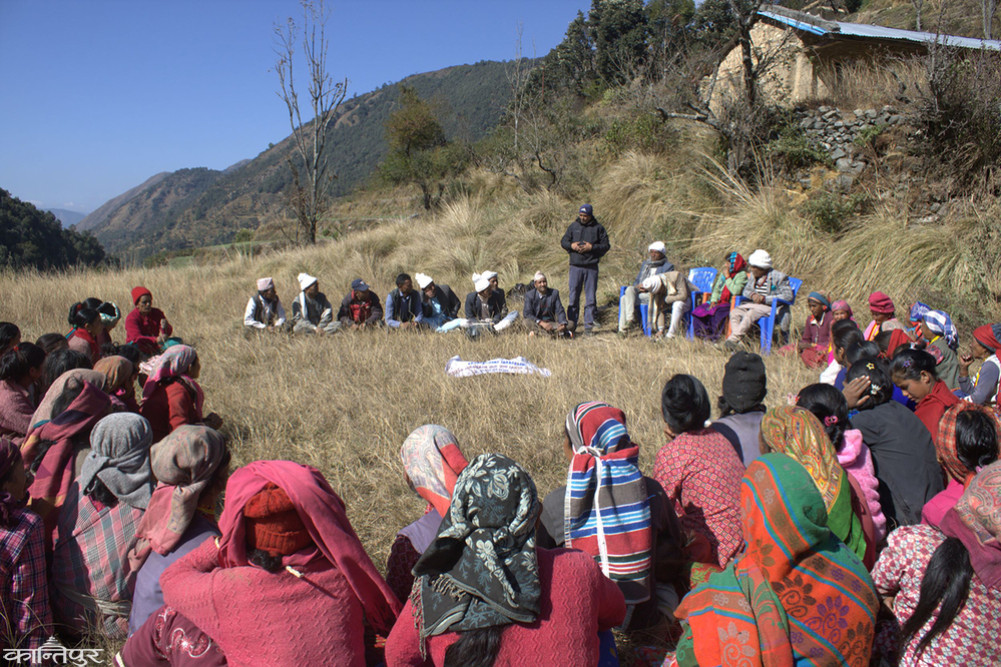
Dhami Thapa of Langa deity while encouraging local women and girls to remove superstitions and stigmas related to menstruation, said, "If you have the illusion that deities get angry if you don't touch them, you should remove them from today ." No deity can be against creation.' were . These dhamis and priests reached here while spreading awareness against menstruation in different wards of the municipality.
'You should pay attention to hygiene during menstruation. Deutas don't get angry if they clean and sit inside the house and eat sweet pojilo," Prem Rokaya, the priest of Mahaling Deuta said, "On the other hand, if you don't do that, women's health will be weak . If you live in a shelter at a young age, if you don't eat good food, you will suffer until old age.'' Shanti Rawat of Lamagda was listening as if it was strange.
'First, if something happened (to weed), the Dhami priests would say that it happened because the woman who was staying in your house had committed suicide.' It felt strange rather than nothing happening . I felt happy too.' She said that the women who were forced to stop menstruating due to the fear of Dhami Pujari now have the courage to break the bad culture. 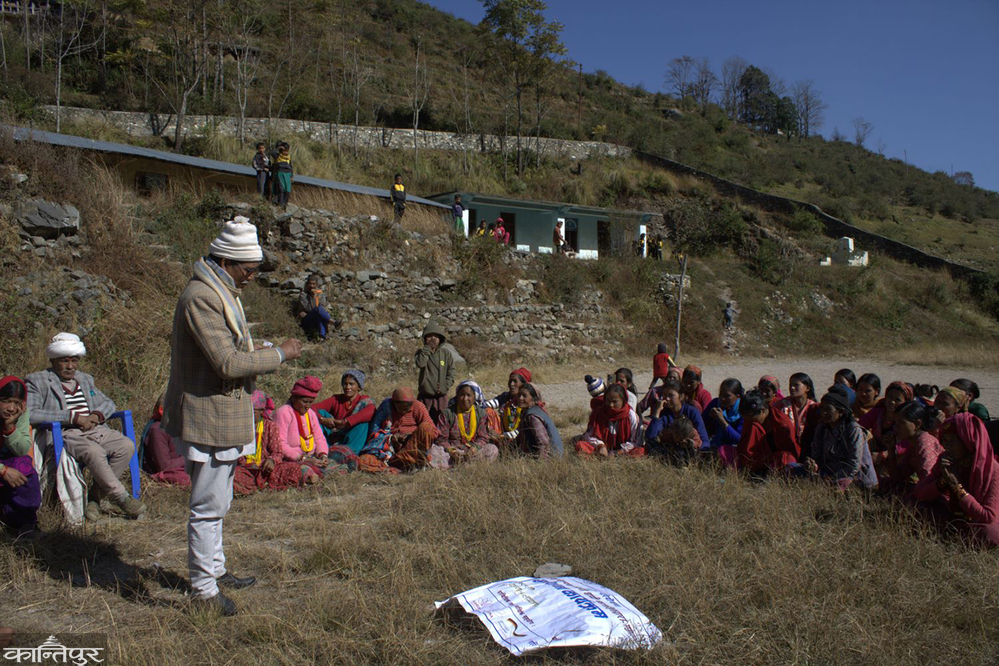
Women have to endure inhumane treatment due to different kinds of discrimination during menstruation and also create obstacles in social development. Organizations like Khaptadchanna Rural Municipality, Greentara Nepal, Rid Nepal and others have been sensitizing society leaders including Dhami Pujari here against discrimination related to menstruation discrimination.
After informing about the misconceptions about menstruation for a long time, Dhami priests are now engaged in a campaign against discrimination. They said that only after the discrimination of menstruation was removed from their own homes, they went to the society and explained about it.
'First we ourselves were also confused . We used to think that if we touch a menstruating woman, everything is corrupt," said Dhami Navraj Thapa of Banthpala Deuta, "We went to training seminars in many places. This is just an illusion. Even if we understand that we have committed crimes against our own daughters and sons in the name of angering God, I taught them that they should not be held in their own homes first. Now I am teaching others.' He said that since menstruation is a natural process, there is no reason to get angry about it.
Dhami Shamsher Rokaya of Banthpala Deuta, who is also a ward member, said that things like menstruating women should not eat curdled milk and should not touch cattle are just superstitions. It does not mean that the same person can eat milk curd when they are not menstruating and cannot eat it when they are menstruating . You should eat with confidence . A cow is milked by itself,' he said, 'If someone's cow is damaged by your touch, I will make up for it.' He said that he was afraid. "First Dhami said that the priest should make the tent. Now we go and say that this is a bad practice, don't stop it, but the fear of some women has not gone away.
Ramanand Joshi, spokesman of Khaptadchanna rural municipality, said that due to the activism of leaders from different sectors of the society, the practice of discriminating during menstruation is decreasing and Dhami Pujari has an important role in this.
"We are working with the help of various organizations to remove this bad culture from other areas as well, but the effect of this spontaneous campaign started by the Dhami priests has been seen better than others," he said, "It was done because of the fear of angering the deities." The confusion is disappearing after Deuta's Dhami Pujari said that this practice is wrong.'