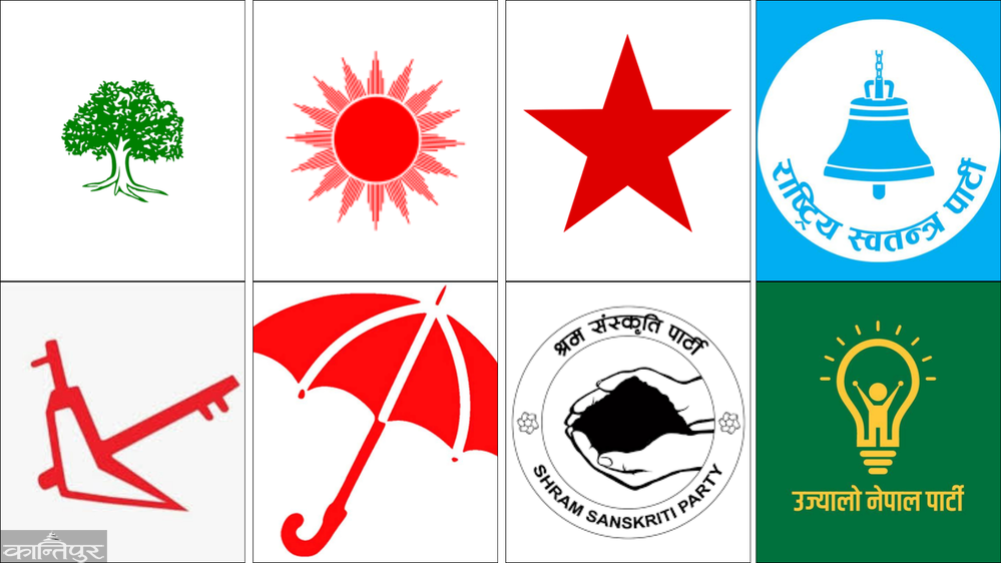
Compared to previous manifestos, this time the manifesto reflects the shadow of the Gen-G uprisings of Bhadra 23 and 24. The parties have tried to address the rebellious spirit of the younger generation, their anger against corruption, and their demand for political stability.
We use Google Cloud Translation Services. Google requires we provide the following disclaimer relating to use of this service:
This service may contain translations powered by Google. Google disclaims all warranties related to the translations, expressed or implied, including any warranties of accuracy, reliability, and any implied warranties of merchantability, fitness for a particular purpose, and noninfringement.
In the manifestos that political parties have made public and are yet to make public, they have prioritized corruption control, constitutional amendment, economic development, employment, and public service.
Compared to previous manifestos, this time, the shadow of the Gen-G uprising of Bhadra 23 and 24 is visible in the manifesto. The parties have tried to address the rebellious spirit of the young generation, anger against corruption, and demand for political stability. Although there is unity on common issues such as economic reform, development, and employment, the party-based interpretations on issues such as the governance model, restructuring of federalism, and corruption control under the constitutional amendment are different.
All parties have accepted the need to amend the constitution for political stability. The parties have their own views on what form of governance will be included in the constitutional amendment, what the electoral system will be, and what the revised restructuring in the provinces and the union will be.
The Congress is preparing to make public the detailed outline of the manifesto on Wednesday, while the UML and the Rashtriya Swayamsevak Sangh (RSS) are preparing to make public the detailed outline of the manifesto on Thursday. According to the Election Commission, only 38 parties out of the 68 parties that participated in the election have submitted their manifestos.
The RSS has already made public the main part of the manifesto, the Citizens' Agreement, covering five issues related to citizens. The party's Vice President Swarnim Wagle said that the party's manifesto will detail the issues of reforming the political, economic thinking, governance model, and federal structure.
The Congress has prepared the manifesto focusing on the political documents passed by the second special general assembly held at Bhrikutimandap on December 27-30. It is preparing to make the manifesto public from there, targeting the provincial-level election meeting organized in Janakpur on Wednesday.
However, President Gagan Thapa has been making its main parts public for a week through daily video messages. He has made public the party's views on issues related to education, health, infrastructure, public services and digital technology through a video message.
 In the manifesto to be made public on Wednesday, the Congress has highlighted the need for reform in the electoral system for political stability. As an alternative to the mixed electoral system, the Congress had passed the proportional representation model of inclusive representation through direct elections in the last special general convention. The same model is being brought into the manifesto. Pratap Poudel, legal advisor to President Thapa, who is active in the manifesto writing process, said that the manifesto is being prepared based on the documents submitted by the special general convention.
'A common view should be formed rather than the view of one party on the issue of constitutional amendment. The President has said that the Congress will hold a national dialogue to find consensus for that,' Poudel said. 'The constitution itself has also made provision for a review in ten years.' Since the Congress has also been talking about amendments at various times, the Congress's view on making the constitution more dynamic without implementing its basic features and achievements is reflected in the manifesto.'
The issue of the electoral system is the main priority of the Congress within the amendment. In order to make the principle of inclusiveness more effective and fair, the Congress has proposed the model of reserved constituencies. It has the option of practicing such reserved constituencies as 'single rotation reserve constituencies'.
The main emphasis of another party, UML, is also within the electoral system. UML is including the issue of amending the electoral system in the manifesto. Earlier, in the seven-point agreement of the two-party ruling coalition on 17 Ashad 081, the main agenda was the amendment of the constitution. The electoral system was the main one within that.
However, after the government was formed, without initiating formal discussions on the amendment, the Gen-G rebellion broke out during the 14-month term of the then Prime Minister KP Sharma Oli. The Gen-G rebellion displaced the government with close to two-thirds of the two parties. In the new political course of the election that began after that, these two parties have prioritized the issue of controlling corruption and amending the constitution.
These two parties are adamant that they will not use the parliamentary system in the governance model. After the change in leadership in the Congress, the issue of amending the constitution has begun to be viewed in a broader way, while the main priority of the UML is focused on the electoral system. The UML has already included the issue of reducing the proportional percentage in the House of Representatives, which it had been proposing.

The Rashtriya Swayamsevak Sangh (RSS) has come to the point of accepting the federal republican structure. Earlier, the RSS had different views on the issue of federalism. RSS Vice President Wagle had been making public statements that the federal structure would be abolished the day the party reached its number and strength. However, this time, it has emphasized restructuring in the manifesto instead of abolishing federalism.
‘We want a reformed provincial structure. We are debating its alternative form, but even to reform it radically, we need to reach 188.’ A few days ago, in an interview with Kantipur, Wagle said, ‘We have accepted the current federal democratic republic system, and our pledge comes from the fact that it should be reformed from within.’
The Rashtriya Swayamsevak Sangh (RSS) had raised the issue of a directly elected executive and a reformed electoral system for a stable government in an extended meeting of its central committee held in Chitwan on November 21-22. Wagle said that most of the issues passed by that meeting were included in the pledge.
The Nepali Communist Party has put forward a proposal to amend the form of governance, electoral system and federal structure with the sentiments of the young generation.
The JSP has emphasized federalism with a directly elected executive head with proportional representation and national identity. The RPP has proposed a two-tier governance structure. The abolition of the guardian monarchy, Hindu state and provinces is its main issue.
The Shram Sanskriti Party has envisioned a presidential system with a directly elected executive head and a fully proportional parliament.
Similarly, the Ujjaya Party has included the issue of reforming the current form of government and electoral system. It has put forward a governance model with reforms such as increasing the current number of MPs from 275 to 201, keeping the number of ministries to 15 in the union and a maximum of 7 in the provinces, and directly electing the Chief Minister.
Political parties have expressed commitments to control corruption such as the formation of a property investigation commission, expansion of the scope of authority, Lokpal/Jan Lokpal, and digital transparency.
Since the main demand of the Gen-G rebellion is corruption control, all parties have prioritized the issue of good governance. The Congress has committed to amending the Commission for the Investigation of Abuse of Authority Act to bring the decisions of the Council of Ministers under the purview of the Authority, declaring the mandatory assets of ministers and MPs, and forming a high-level commission to investigate the assets of all those who have held public positions since 2006.
Going further than the Congress, the Rashtriya Swayamsevak Sangh (RSS) has committed to launching a major anti-corruption campaign and forming a high-level commission to investigate assets since 2006. It has emphasized on digital services and transparency to end partisanship.
Chairman Oli's slogan of zero tolerance for corruption has been repeated in the UML this time too. While other parties are proposing to form a commission to investigate assets, the UML has said that the investigation will be carried out by the state machinery itself, and that the justification for such a commission is not considered necessary, said Publicity Department Coordinator Min Bahadur Shahi.
'The UML manifesto emphasizes strengthening the state bodies and mechanisms to provide political stability and good governance,' Shahi said.
 The NCP has demanded the formation of a commission within a year to investigate the assets of all those who have held public office so far and the formation of a powerful Lokpal. The JSP has also expressed its commitment to form a Jan Lokpal and investigate the assets.
The RPP has expressed its commitment to form a citizen commission to investigate the assets of high-ranking leaders and employees after 2046. The UML has also demanded an investigation into the assets. However, it has not said anything more clearly about this.
In principle, a manifesto is a promise of what to do when any political party forms a government with a majority. However, due to the current electoral system, the possibility of a single party getting a majority is low, so the manifesto is ignored when two or more parties form a government together.
Except for the situation when the then NCP ran a single government in 1974, no other party has had a majority. The two-thirds majority led by Oli A UML leader said that since the government has not been able to complete its full term, there is no rush for the parties to come up with manifestos because voters are not particularly interested in them. The UML leader said, “That is why the leaders are not in a hurry to come up with manifestos.”
Congress spokesperson Devraj Chalise said that this time, the Congress has tried to come up with shorter and more achievable agendas than last year. “We will not share the same crude and unachievable dreams as before,” he said. “This time, we will come up with manifestos that only include what can be done.”
Most political parties have common commitments on issues such as the effectiveness of constitutional bodies, improvement of the economic situation, health, education and social security, integrated social security, health, digital e-governance, and balanced foreign relations.
The Congress has prepared a manifesto by taking the Gen-G issue into its own hands. However, the UML has portrayed the Gen-G movement as a conspiracy to burn the palace and topple the government led by it. ‘Although the demands of the Gen-Gs are legitimate, we believe that the incidents of Bhadra 23 and 24 are a conspiracy to burn the palace and displace the UML-led government,’ the UML has said.
Everyone has a common focus on economic development and employment, a productive economy, high economic growth rate, creation of millions of jobs, electricity generation and infrastructure. The Congress has talked about a productive economy and equitable distribution. The UML has raised the issue of a developed nation and a digital economy within a decade. The Rashtriya Swayamsevak Sangh (RSS) has committed to creating 1.2 million new jobs, 15,000 megawatts of electricity and completing 10 ‘signature projects’ of national importance.
The NCP has set a target of 10 percent annual economic growth, reducing poverty to 10 percent, and creating 500,000 regular jobs. The JSP has practiced a poverty-free and social market economy within five years. The RPP has declared a decade of economic growth above 7 percent and energy production.
There seems to be unanimity among the parties in health, education, and social security. The RSP has proposed 100 percent insurance health care, the JSP has proposed free education up to grade 12, and the RPP has proposed free health care. The Congress has declared the insurance program a program of national pride.
 Digital governance and e-governance are common issues for all. The RSP has talked about digital delivery of government services, the RPP has talked about paperless offices, and the Congress has talked about freeing the economy from party influence.
What is in the Congress manifesto?
-जेनजी विद्रोहलाई आत्मसाथ गरी माग सम्वोधन गर्ने
-राज्यको संवैधानिक निकाय राजनीति प्रभावबबाट पूर्णरुपमा मुक्त । भ्रष्ट्राचार नियन्त्रण, वित्तिय अनुशासन र सुशासनका लागि प्रभाकारी कानून निर्माण र कार्यन्वयन ।
-मन्त्रिपरिषद्का निर्णयलाई पनि अख्तियारको छानविनको दायार माभित्र ल्याउनेगरि भ्रष्ट्राचार निवारण ऐन र अख्तियार ऐन संशोधन ।
-मन्त्री, सांसद र उच्च पदस्थ राजनीतिक व्यक्तिहरुले अनिवार्य रुपमा सपथ लिनुपूर्व आफ्नो सम्पति सार्वजनिक घोषणा गर्ने ।
-२०६३ पछि सार्वजनिक पदमा रहेका वा नरहेका हरेक व्यक्तिको सम्पति छानबिन गर्न उच्चस्तरीय सम्पति छानबिन आयोग गठन गर्ने ।
-आयोगले पूर्व न्यायाधीश, सेनाका पूर्व अधिकारीलगायतका सम्पूर्ण व्यक्तिको सम्पति छानबिनको समेत अधिकार प्रदान गर्ने।
-संविधान संशोधनका लागि सबै राजनीतिक पार्टी,सरोकारवालाहरुसंग राष्ट्रिय संवाद गर्ने ।
-निर्वाचन प्रणालीमा संशोधन गर्ने । आरक्षित निर्वाचन क्षेत्र समावेशितता सिद्धान्त अपनाउने ।
-सिंगल रोटेशन रिजम्भर्ड निर्वाचन क्षेत्र जस्ता नवीन अयासहरु कार्यन्वयनमा पहल गर्ने।
-उम्मेदवार चयनमा सदस्यतामा आधारित प्राइमेरी निर्वाचनमा जाने।
-अर्थतन्त्रका क्षेत्रलाई दलीय प्रभाव, दबाव र कव्जाबाट मुक्त पार्ने ।
-प्रधानमन्त्री दुई पटक मात्रै।
-सन्तुलित परराष्ट्र सम्वन्ध।
एमालेको घोषणापत्रमा के छ ?
-
राजनीतिक स्थायित्वका लागि संविधान संशोधन। -भदौ २४ मा भएको आगजनीबाट क्षति भएका संरचनाको पुनःनिर्माण।
-एक दशकभित्र समुन्नत राष्ट्र बनाइने।
-समृद्ध नेपाल, सुखी नेपाली।
-मैत्रीपूर्ण विदेश सम्बन्ध।
-सबै नागरिकलाई स्वास्थ्य, शिक्षा र आवासको ग्यारेन्टी।
-राष्ट्रियताको पक्षमा प्रतिवद्ध।
-डिजिटल अर्थतन्त्रमा जोड।
-जेनजीको माग जायज तर, भदौ २३ र २४ गतेको विद्रोह सिंहदरबार जलाउने र एमाले नेतृत्वको सरकार विस्थापित गर्ने षडयन्त्र।
-सामाजिक सुरक्षा कार्यक्रम प्रभावकारी बनाउने ।
नेपाली कम्युनिस्ट पार्टीकाे घाेषणापत्रमा के छ?
-शासकीय स्वरूप, निर्वाचन प्रणाली, संघीय संरचनामा युवा पुस्ताको भावना समेतका आधारमा संविधान संशोधन।
-पाँच वर्षभित्र वार्षिक १० प्रतिशत आर्थिक वृद्धिदर ।
-गरिबीको दर २०.१५ प्रतिशतबाट घटाएर १० प्रतिशतमा झार्ने।
-प्रतिवर्ष १ लाख ५० हजार थप रोजगारी।
-५ वर्षभित्र कम्तीमा ५ लाख नियमित रोजगारी।
-विदेशबाट फर्किएका कम्तीमा १ लाख व्यक्तिलाई उद्यमी बनाइने।
-प्रतिवर्ष १ लाख ५० हजार आत्मनिर्भर रोजगारी थप्ने।
-आगामी दशकलाई 'कृषि लगानी दशक' घोषणा गरिने।
-किसानलाई किसान परिचयपत्र वितरण गरिने।
-पाँच वर्षभित्र १० हजार मेगावाट थप विद्युत् उत्पादन।
-राष्ट्रिय ग्रिडको क्षमता १५,००० मेगावट पुर्याइने।
-२० वटा शहरलाई स्मार्ट सिटी बनाइने।
-१०० वटा ग्रामीण वस्तीलाई स्मार्ट भिलेज बनाइने।
-एक बर्षभित्र संपनी छानबिन गर्न उच्चस्तरीय स्वतन्त्र सम्पति छानबिन आयोग गठन।
-शक्तिशाली तथा स्वतन्त्र लोकपाल गठन।
-उच्चस्तरीय प्रशासन संरचना पुनरावलोकन आयोग।
-स्तन क्यान्सर, पाठेघर खस्ने, फिस्टुला, पिसाब चुहिने लगायत महिला विशेष रोगको निःशुल्क उपचार।
रास्वपा घोषणापत्रमा के छ?
-
संविधान संशोधन। -सामाजिक न्यायसहितको उदार अर्थ नीति।
-गणतन्त्रात्मक शासन व्यवस्था, सुधारिएको प्रदेश संरचना।
-सन्तुलित परराष्ट्र सम्वन्ध।
-भ्रष्टाचार विरोधी महाअभियान । सरकारी सेवाहरूको सर्वव्यापी डिजिटल डेलीभरी ।
-दलीयकरणको अन्त्य गर्न ०४६ देखिकै सम्पत्ति छानबिन गर्न उच्च स्तरीय आयोग गठन ।
-शत प्रतिशत बिमा गरिएको गुणस्तरीय स्वास्थ्य सेवा ।
-सार्वजनिक शिक्षाको आमूल सुधार ।
-मृत्युसम्म आवश्यकतामा आधारित 'एकीकृत सामाजिक सुरक्षा’ को ग्यारेन्टी ।
-नियमनभित्रको सहकारी र लघु वित्त, मिटर व्याज शोषणको अन्त्य ।
-१२ लाख नयाँ रोजगारी सिर्जना ।
-१५ हजार मेगावाट विद्युत् जडित क्षमता बृद्धि, ३० हजार कि.मि. राष्ट्रिय राजमार्ग थप निर्माण ।
-१० वटा राष्ट्रिय महत्वका सिग्नेचर आयोजा ।
जसपा नेपालको घोषणापत्रमा के छ?
-समानुपातिक प्रतिनिधित्व हुने संसद र प्रत्यक्ष निर्वाचित कार्यकारी प्रमुख भएको शासकीय स्वरुप ।
-राष्ट्रिय पहिचान सहितको संघीय ढाँचामा प्रदेश पुर्नसंरचना ।
-केन्द्रमा साझा राज्य र प्रदेशहरुमा स्वायत्तता राज्य ।
-शासकीय स्वरुप, संघीय संरचना, निर्वाचन प्रणाली, न्याय प्रणाली, संवैधानिक निकायको पुर्नसंरचना, जनलोकपालको गठन ।
-नागरिकताको विद्यमान लैगिक विभेद अन्त्यका लागि संविधान संशोधन, सामाजिक सुरक्षाको ग्यारेन्टी।
-पाँच बर्षभित्र गरिबीबाट मुक्त।
-राष्ट्रिय शिक्षा आयोगको गठन।
-१२ कक्षासम्मको शिक्षा निशुल्क।
राप्रपा घोषणापत्रमा के छ?
-अभिभावकीय राजसंस्था कायम।
-प्रदेशी खारेज, केन्द्र र बलियो स्थानीय तह भएको दुई तहको शासकीय संरचना।
-बैदिक सनात धर्म सापेक्ष हिन्दु राष्ट्र।
-गैरदलिय स्थानीय तह।
-२०४६ पछिका उच्चपदस्थ नेता तथा कर्मचारीको सम्पति छाबिनका लागि उच्चस्तरीय नागरिक आयोग गठन।
-पाँच बर्षभित्र आर्थिक बृद्धिदर ७ प्रतिशत माथि पुर्याइने।
-त्रिविविलाई राष्ट्रिय विश्वविद्यालय।
-क्याम्पसमा ट्रेड युनियनहरु खारेज।
-सबै विद्यालय १२ कक्षासम्म नि:शुल्क।
-सबै नागरिकलाई निशुक्लय स्वास्थ्य उपचार, स्वास्थ्य विमाको दायारा बढाउने र चाहेको अस्पतालमा उपचार गर्न पाउने व्यवस्था ।
-मेट्रो, पड वे, आकेश पुल, अण्डरपास, ओभरपास, रिङरोड विस्तार ।
-पाँच बर्षभित्र सम्पूर्ण उपत्यायकालाई मेट्रो रेल, पड वे लगायतका यातयात संञ्जालमा जोडिने।
श्रम संस्कृति पार्टीकाे घाेषणापत्रमा के छ?
-प्रत्यक्ष कार्यकारी राष्ट्रपति भएको शासकीय स्वरुप।
-सांसद मन्त्री हुन नपाउने
-राष्ट्रपति राष्ट्र र सरकार दुवैको प्रमुख
-पूर्ण समानुपातिक निर्वाचन प्रणाली ।
-प्रदेशमा आवश्यकता भन्दा बढी मन्त्रालय कटौति ।
-भ्रष्ट्राचार रोक्न नागरिक संञ्जाल खडा गरिने।
-जेनजीको सपनालाई योजनामा तर्जुमा गरेर नयाँ ढंगका राष्ट्रहितमा काम गर्ने।
-सबैलाई श्रम संस्कृतिसंग जोडेर अनिवार्य श्रम गराउने।
उज्यालो पार्टीकाे घाेषणापत्रमा के छ?
-
सांसद संख्या घटाएर २०१ कायम गर्ने -मन्त्रालयको संख्या संघमा १५, प्रदेशमा ५ देखि ७सम्म।
-प्रत्यक्ष निर्वाचित मुख्यमन्त्री।
-स्थानीय तह निर्दलीय।
-१००० कित्ता सेयर अभियान।
-जनताको जलविद्युत कोष स्थापना
-भ्रष्ट्राचारीलाई आजिवन सार्वजनिक पदमा प्रतिबन्ध।
-मोवाइल क्लिनिक र टेलिमेडिसनको व्यवस्था।
-रेलमार्ग निर्माण सुरु गरिने, जलमार्ग पहिचान एवं निर्माण
-पाँच बर्षभित्र बार्षिक ९ प्रतिशत आर्थिक बृद्धि।
-प्रतिवर्ष ९ लाख रोजगारी।
-जलविद्युत उत्पादनमा १२ हजार मेगावाट बढोत्तरी।