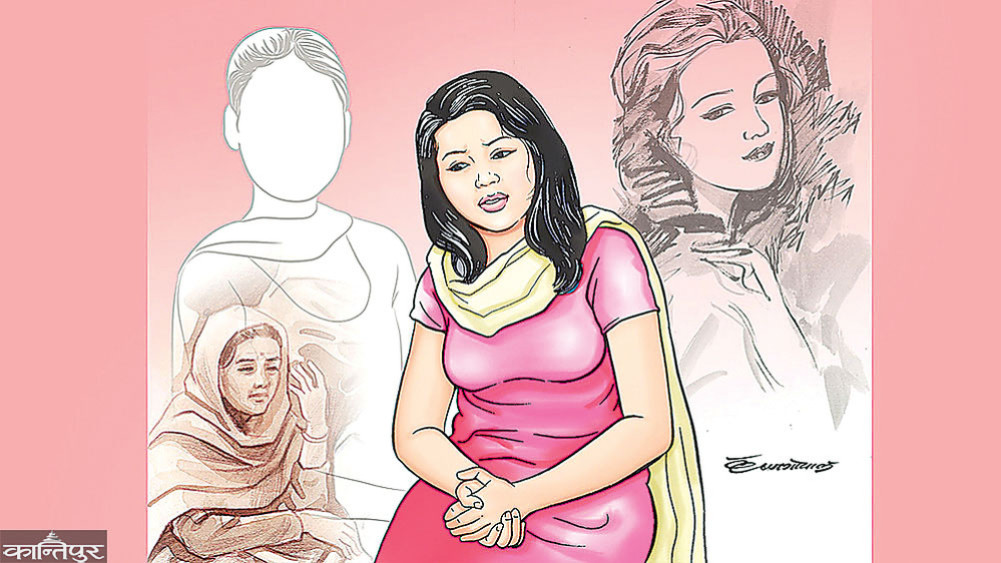
Many women have not been able to give time for themselves due to family responsibilities. Menopause is emerging as a very complicated problem for working women.
We use Google Cloud Translation Services. Google requires we provide the following disclaimer relating to use of this service:
This service may contain translations powered by Google. Google disclaims all warranties related to the translations, expressed or implied, including any warranties of accuracy, reliability, and any implied warranties of merchantability, fitness for a particular purpose, and noninfringement.
Heavy menstrual bleeding, irregularity and sleep disturbances are common problems for women. Not only that, no matter how cold it is, there are not a few women who suffer from problems such as sudden sweating, burning feet, irritability, shortness of breath and difficulty in breathing. Suffocation, heart palpitations, feeling scared, mood swings, sudden feelings of sadness or depression without any reason, so happy, obesity, forgetfulness are also problems faced by some women.
What is the number of women who experience this in our country? Usually, this problem is seen in common women after 40. Due to all these reasons, the song '40 Katesi Ramaonla' was not considered relevant for common women. 40 Katesi The main reason for not being happy is menopause, which is called 'menopause' in English.
According to the 2078 census, the total population of Nepal is 291 million 64 thousand 578, in which the number of women is 1 million 49 million 11 thousand 27 ie 51.1 percent. Among this number of women, the number of women in the age group of 40 to 54 years is 23 lakh 89 thousand 212 ie 8.13 percent of the total population and these women are going through such problems due to menopause. They are not discussed anywhere, nor are debates and complaints being heard.
All the mentioned problems are not seen in one woman but some of these problems are being experienced by this population. Is it possible to ignore and ignore the problems faced by so many people? Because, many Nepalese women are not aware that the problems that come from menopause can be reduced through healthy living. They do not talk about menopause even though there is a mechanism to inform about reproductive health. Experts say that women's menopause is as sensitive as puberty in girls and is still a serious condition.
Today's parents how to talk to their children after they reach 10 years old, how to remind him without feeling bad, about the physical and mental changes that are happening in his body due to hormonal development They are going through the problem of how to explain
. They are also worried about who will talk to their son and who will talk to their daughter. Because, at this age they are very sensitive and parents seem to be especially sensitive that they should be careful while talking. Similarly, education is taught in school as adolescent education. Curriculum is made.
A number of national and international organizations run projects on reproductive education and rights for adolescents. Safe motherhood is widely debated, policies are formulated, budgets are allocated for programs from the government and non-government sectors. But there is silence everywhere on the subject of the equally sensitive and more serious condition of menopause. There is no discussion or debate about the state of menopause of women.
Even though there are recent debates, discussions and some policies on the topic of menstruation, you can't read about menopause anywhere. In other words, this problem does not even seem to be considered as an important part of reproductive health. Neither the government, nor the projects and programs of any organization have spoken about it. No study has been done, nor the country's constitution and laws have spoken about it.
According to doctors, women have to suffer the physical and mental effects of menopause for about 12 years. Menopause starts at age 40 and lasts until age 52. The physical and mental effects of hormonal changes that start before menopause and the effects after menopause can last up to 15 years. However, experts say that after menstruation dries up, the problem of 'osteoporosis' i.e. the loss of bone density due to the lack of elasticity and other fertility problems come naturally. But this problem can be prevented with healthy food and regular exercise. Aruna Upreti thinks.
According to the doctors themselves, this is why problems related to the uterus and ovaries, back pain, bone pain, knee pain and the lack of micronutrients needed by the body come together in women of this age. So many and long-term problems are being endured and handled by women alone.
Women's gender roles and responsibilities have also increased more and more at this time. Such as the care of senior family members, their health treatment and supervision, children at this time when they are at puberty or when they go to higher education. Due to stress in the family for education expenses, women especially from middle class families do not get the environment to tell other family members about the problems and pains happening in their bodies. Even though the family members know about these things, there is a tendency to ignore them or take them as normal problems.
Women's mood swings and irritability are also getting angry, because the family, especially the husband, does not try to understand the reason for the reaction and pretends to make excuses rather than some problems. Menopause is being ignored. This situation is forcing women to feel more isolated and vulnerable. When senior members of the family are under stress due to their own health problems and children are under stress due to their studies and careers, the problem of women's menopause is getting more and more overshadowed.
Due to not taking this situation seriously or neglecting it so much, families do not understand, conflict occurs, women experience loneliness and remain under mental stress. Many women have not been able to give time for themselves due to family responsibilities. Menopause has emerged as a very complicated problem for working women. While urban women who have access to
technology are sensitive to this issue personally, women in rural areas are unaware of this situation that is happening to their bodies. Because, neither technology tells them about this topic in a way that they understand, nor is it discussed anywhere around them. Due to this ignorance, many women are physically, mentally and socially abused but are unable to speak openly about it. Reason - It is also made a matter of shame in the society. Therefore, this silence is sometimes due to shame. And there is no open discussion in the family and with the community or health workers.
The fragmentary discussion in the media has also been very limited considering the sensitivity of the problem. This subject has not yet entered the academic field. Therefore, there has been no study on this topic, nor has it become a thesis topic for students.
Even if you go to the hospital with problems coming from menopause, the health workers are not able to give information about why such a problem is happening. Apart from directly prescribing medicine and telling you to come back next time if it doesn't work, the doctor does not recommend counseling or counseling as to why this is happening. Perhaps even in the health sector there is a need for debate, discussion and training about the effects of menopause. Not only in hospitals and health institutions, strong advocacy is needed to include this problem in the country's policies, regulations, budgets and programs. There is an urgent need to collect data for such advocacy.
Especially the Women's Commission can do this work by collaborating with various agencies. It seems that it will be easier for law making if women's stories can be collected through discussions and debates nationwide. Let's start the menopause debate from where we are. Especially the young members of the house should try to pay attention to the problems and conditions of their mothers. Just as mothers are taking special care for your happiness, so you too ask 'Is mother okay?' Especially mothers are hiding many of their problems. Can't say. They are not getting their own people who can say that! Because they are not living for themselves.