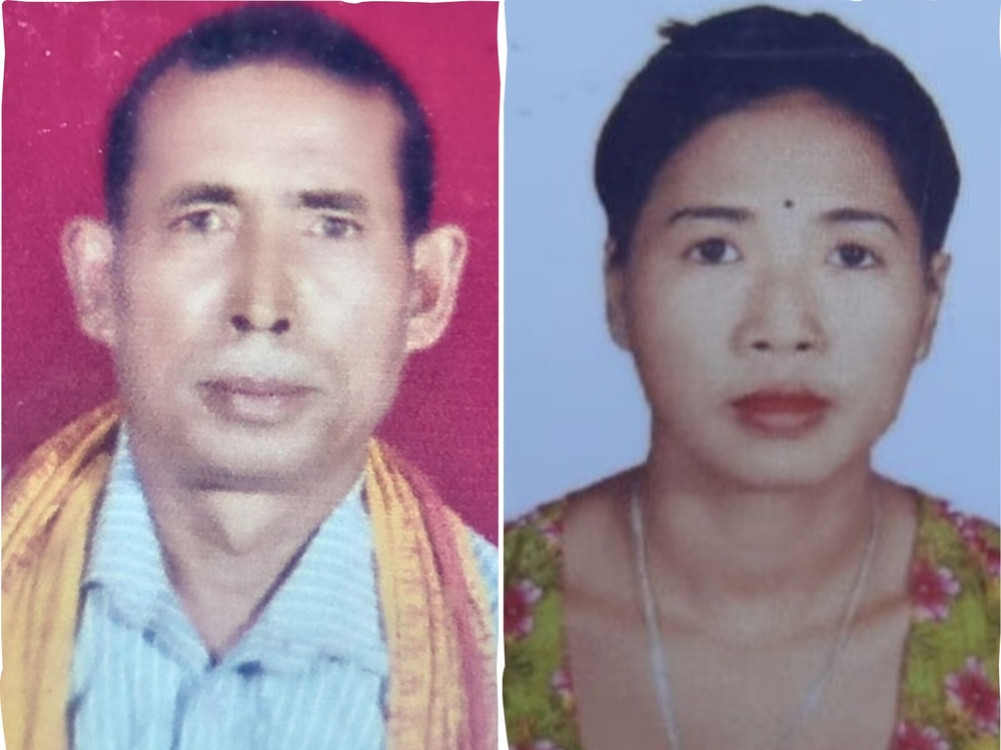
This incident was caused by a series of injustices committed by the state over many years. It is also a representative example of how poor and grassroots citizens end up giving up on their lives in their search for justice.
We use Google Cloud Translation Services. Google requires we provide the following disclaimer relating to use of this service:
This service may contain translations powered by Google. Google disclaims all warranties related to the translations, expressed or implied, including any warranties of accuracy, reliability, and any implied warranties of merchantability, fitness for a particular purpose, and noninfringement.
A Fulani Tharu from Dakshin Bhakari village of Badhaiyatal Rural Municipality-4 in Bardiya is in a state of double grief. Her 22-year-old daughter Anju committed suicide at home on 22 Kartik. On the fourth day, her husband, 61-year-old Kancha Tharu, also followed the same path in mourning the death of his daughter. Now, the Fulani is worried about how to handle the entire responsibility of Anju's 7-year-old daughter.
The suicide of the father and daughter was not an impulsive incident. Rather, this incident was caused by a series of injustices committed by the state over the years. This is also a representative example of how poor and lower-class citizens end up giving up on life while seeking justice.
To understand why Anju and Kanchha were forced to commit suicide, we need to go back 8 years. At that time, Anju was 15 years old. One day, the news that she was pregnant spread in the village. After inquiring, it was found that this pregnancy was the result of a love affair with Anil Tharu from a neighboring village. The Panchayat was convened. Then Anil took Anju to the temple, applied vermilion and brought her home. On 24 Mangsir 2075, Anju gave birth to a daughter.
After the birth of the daughter, a fight started between Anju and Anil. As the relationship deteriorated, Anju returned to her mother on 14 Poush 2076. After Anil ignored her, Anju went to the Bardiya District Court on 8 Magh 2076 demanding a share. But Anil claimed that the child born to Anju was not his daughter. The court did not annul the marriage, saying that although both of them were underage, there was no complaint from anyone.
Section 74 of the Civil Code 2074 states that if a woman conceives a child through physical contact with a man and gives birth to a child, such a woman and a man are considered to be married. Similarly, there is a legal provision that even if a woman and a man who are under 20 years of age have physical contact and give birth to a child, they are considered to be married.
The court said in the order, ‘Although there is a provision that marriage cannot take place if the couple has not completed 20 years of age, a minor daughter has been born to them, it is not seen that anyone has annulled the marriage, the defendants have accepted the partition order made by this court and it is seen that the plaintiff Anju has demanded a share from the defendant Anil for her livelihood, so it is seen that they have no other option for livelihood.’
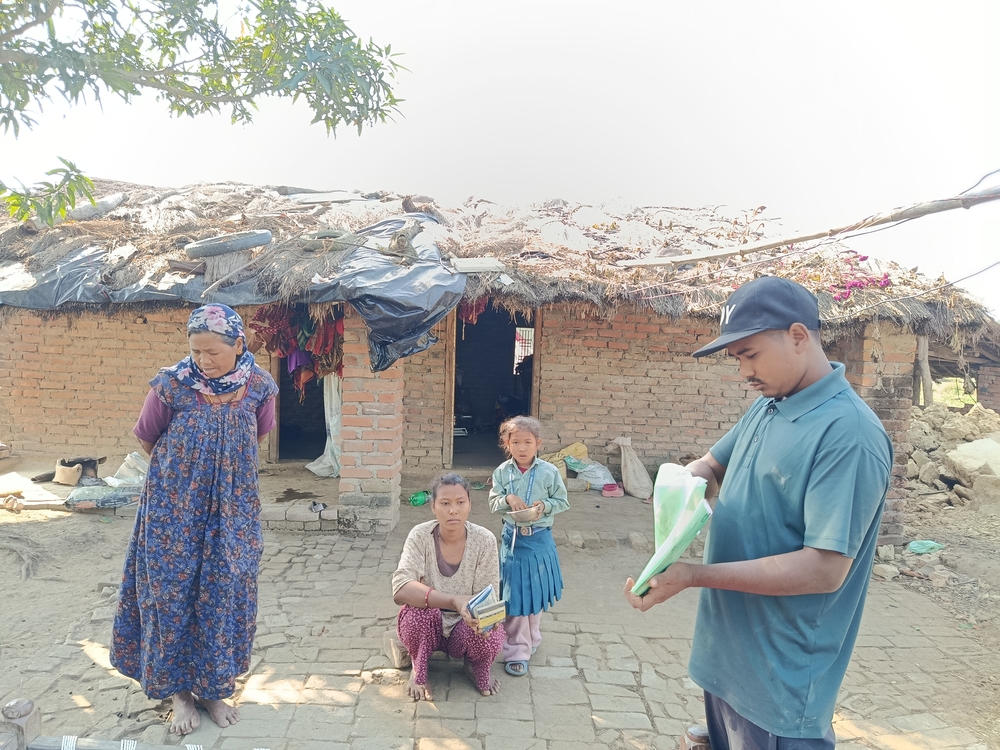
The court had ordered that a statement be made as per Section 171 of the Civil Procedure Code 2074 BS as there was a dispute over kinship between the two parties. The court fixed a date for the statement to be made for DNA testing on 29 Poush 2077 BS. But Anil missed that date. Then on 20 Kartik 2079 BS, the court decided that the share that Anil would get would be divided into three parts and Anju and her daughter Anita would get two parts.
After the court order, Anju could not get a share. Because Anju had neither citizenship nor a marriage registration certificate. The daughter's birth was also not registered. Anju reached the ward office with the court's decision. But the ward did not start the process of granting citizenship, and her daughter's birth certificate was also stuck. Anju and her father kept running to the ward office. 'My father and sister must have gone to the ward office 8 to 10 times for citizenship. They got tired of running,' said Anju's brother Arun.
Nare Thapa, ward chair of Badhaiyatal Rural Municipality-4, said that he came to the ward on 8 Magh 2081 with a letter from the court adjudicating that Anju would receive a share. He argued that the court had not clarified the issue of citizenship and birth registration. 'It seems that the court has only adjudicated a share,' said ward chair Thapa, 'They had not submitted a separate application for the recommendation of citizenship and the birth certificate of their daughter.' Thapa says that he was only trying to act according to the law, as the citizenship of both the husband and wife is required to register a child's birth.
Section 4 of the Children's Act 2075 states that every child shall have the right to a name and birth registration along with his or her identity. It is also mentioned that after the child is born, the father and mother must register the child's birth in accordance with the prevailing law.
There is a legal provision that children born of rape or incest must also have a birth registration. The mother of children born of rape or incest punishable by law can register the birth by mentioning only the mother's name. Similarly, in cases where there is no mother or father at birth, there is a legal provision that the family or guardian who takes care of the child must also register the birth by mentioning the name. But all these legal provisions were ignored by the ward office.
In fact, Anju had also tried to obtain citizenship through her relatives. She had registered an application for citizenship in the ward on 24 Poush 2081. The process also progressed and reached the district administration office. However, Ward Chairman Thapa said that he canceled the process after receiving information from the administration that the married person was trying to obtain citizenship through her relatives.
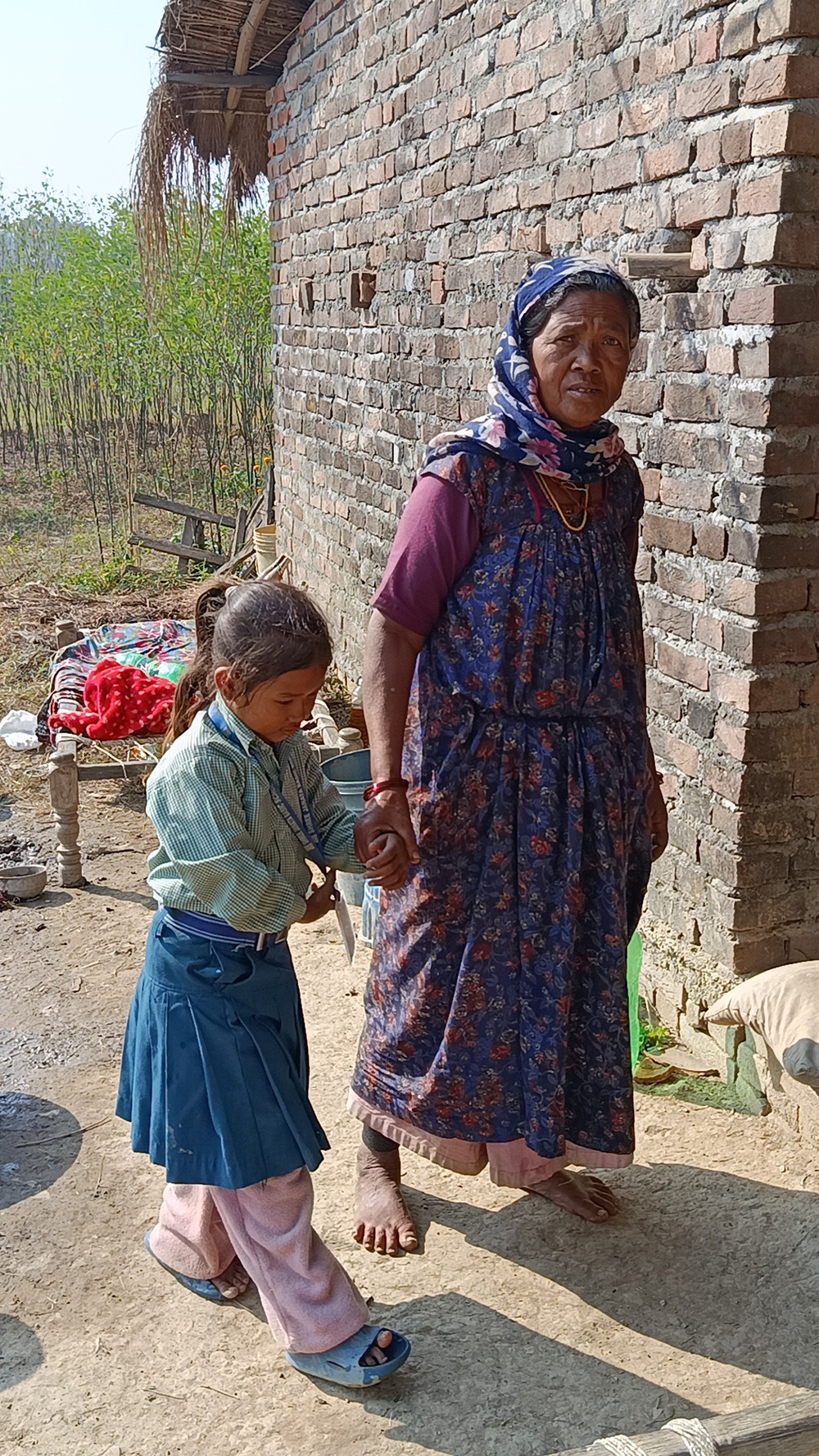 7-year-old granddaughter with grandmother
He said, ‘I mistakenly signed the recommendation brought by Anju. After she reached the administration for citizenship with the recommendation, I received a call from Assistant CDO Roshan Kathayat. When he asked me how I recommended a married woman to get citizenship, I withdrew the schedule form saying it was a mistake.’
Ward Chairman Thapa claimed that the accusation that he played a role in preventing Anju from being granted citizenship was wrong. Kantipur had contacted the then Assistant Chief District Officer of Bardiya Kathayat to find out about this matter. He, who is currently working at the Area Administration Office, Pharping, said, ‘I do not remember that incident. I do not even remember calling the ward chairman like that.’
After Anju’s suicide, the family has filed a complaint regarding abetment to suicide at the Area Police Office, Mainapokhar, making Anil Tharu the defendant. Superintendent of Police of the Area Police Office, Mainapokhar, Saroj Poudel said that they are closely monitoring the incident.
‘Anil is absconding, his search is on,’ he said. Hima Sunar, coordinator of the Civil Society Network Bardiya, said that Anju chose the path of suicide after not getting the rights provided for in the constitution. She said, ‘It is very sad that Anju committed suicide after being deprived of the right to identity.’ She said that this incident should be thoroughly investigated and strict action should be taken against the guilty.
Arun says that the boy’s side and the entire administration have done injustice to his sister. ‘Now the niece should get the rights according to the law,’ he said, ‘Even now, when I go to the ward office to get my niece’s birth certificate, they say that her father’s citizenship is required. We are in tension about how to get my niece an identity.’
Human rights activist and lawyer Mohana Ansari said that there were weaknesses in this incident from the ward to the District Administration Office. She said that the District Administration Office had to make the woman’s citizenship for the distribution of shares after the District Court’s decision, but that responsibility has not been fulfilled by the Chief District Officer.
‘The Chief District Officer can grant citizenship with or without the recommendation of the ward,’ Ansari said, ‘Citizenship should have been granted based on the court’s decision to distribute the property. Citizenship can also be granted in the name of the father or husband.’
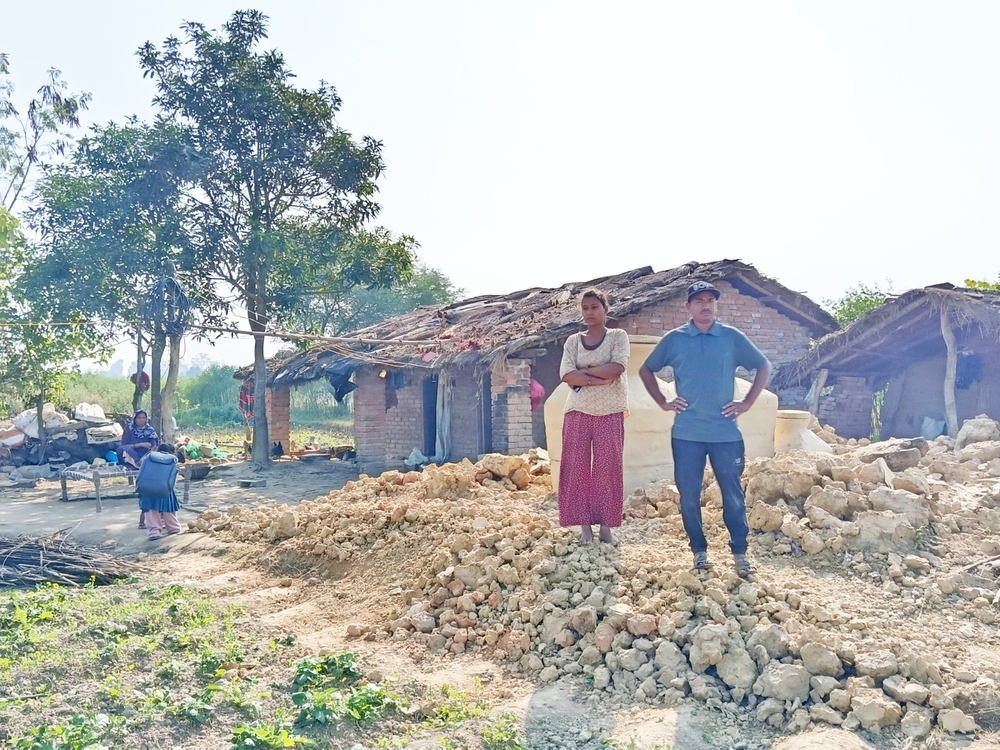
Ansari said that the central government should take action against the then officials of the District Administration Office and take responsibility for the care of the dependent family. She suggested that the Chief Justice should also take an interest in the non-implementation of the court’s decision and the rights granted by the constitution. When she reached Fulani’s house on Tuesday, the remains of a collapsed hut were visible nearby. When asked, Fulani said, ‘My daughter had been living there, and we demolished the hut after her appearance appeared repeatedly.’