We use Google Cloud Translation Services. Google requires we provide the following disclaimer relating to use of this service:
This service may contain translations powered by Google. Google disclaims all warranties related to the translations, expressed or implied, including any warranties of accuracy, reliability, and any implied warranties of merchantability, fitness for a particular purpose, and noninfringement.
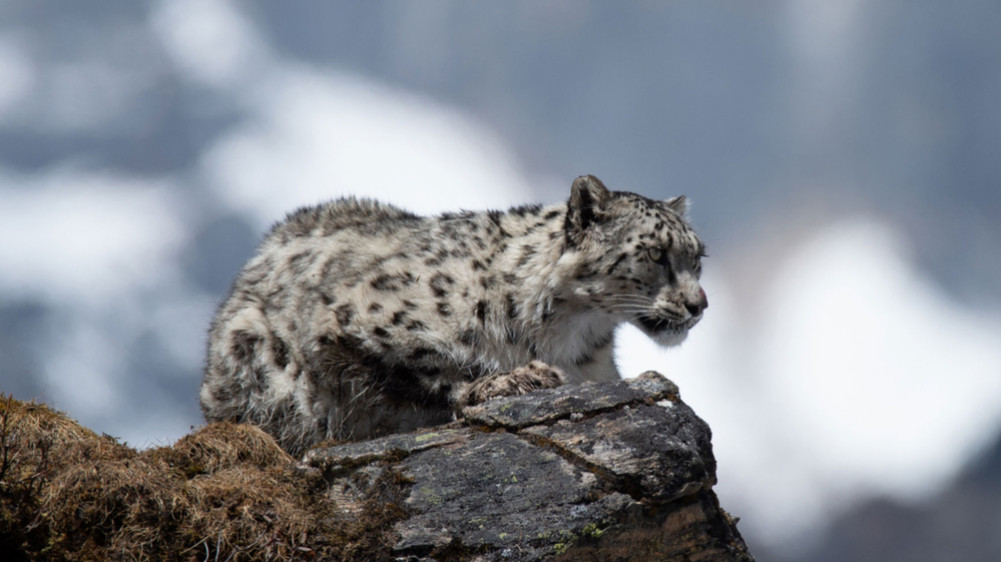
The new data of the snow leopard, which is considered to be rare in the world, has been released. According to the World Wildlife Fund (WWF), the number of snow leopards in Nepal is found to be 397.
According to IUCN, 10% of snow leopards have been found in Nepal, which is home to two percent of the world's snow leopards. Its habitat is in the area of 30,500 square kilometers in the high Himalayan region of Nepal.
According to the 'Snow Leopard Trust' in the US, it is estimated that there are between 3,200 and 5,390 snow leopards in an area of two million kilometers in the world. Snow leopards are mostly found in 12 countries including Nepal, China, Afghanistan, Bhutan, China, Kazakhstan, Kyrgyzstan, India, Mongolia, Russia, Pakistan, Tajikistan and Uzbekistan.
In recent times, along with Nepal, India, Mongolia and Bhutan have been publishing new and official snow leopard data through technology, research and data analysis. According to
statistics, at least two thousand to two thousand five hundred in China, nine hundred and fifty three in Mongolia, seven hundred and eighteen in India, three in Nepal. There are 197 and 134 snow leopards in Bhutan, World Wildlife Fund (WWF) Nepal mountain program manager Sarin Shrestha informed.
Under the Ministry of Forestry and Environment, the National Parks and Wildlife Conservation Department and the Forestry and Land Conservation Department led by the Foundation and other organizations have analyzed and evaluated the data, he said.
Snow leopard expert Shashank Poudel informed that data was extracted from various studies led by the government, conservation organizations and researchers from 2015 to 2024 in this assessment. He said that this data was collected using state-of-the-art technology, including camera traps and genetic analysis of direction samples, on the distribution and population density of snow leopards from different seven study areas.
This assessment achievement underscores the country's commitment to protecting snow leopards and their sensitive mountain ecosystems. The assessment was conducted by a technical team led by senior ecologists from the Parks Department in accordance with the Global Snow Leopard and Ecosystem Protection Program's 'Population Assessment of the World's Snow Leopards' guidelines.
which involved individual researchers and conservation organizations including funds.
The challenge of habitat encroachment
The snow leopard found only in 12 countries in the world is considered an indicator of clean mountain environment. Almost 60 percent of the snow leopard's habitat is outside the park and the fragmentation of such habitat has added to the challenge.
In addition to the conflict, there are challenges such as some people setting traps, adding poison to the diet, not being able to carry out effective monitoring due to lack of appropriate technology, manpower and budget.
Snow leopards are usually found at an altitude of 540 to 5000 meters above sea level. The snow leopard has been listed by the IUCN as a 'Red List' of global threat . The feline snow leopard balances its body with its long tail. According to statistics, there are more snow leopards in the west than in the east of Nepal. The number of snow leopards is 90.
Dr. Ghanshyam Gurung, national representative of WWF Nepal, mentioned that the latest snow leopard data is a historic step in Nepal's conservation journey and said that this data will not only provide a clear picture of the number of snow leopards but also inform future conservation strategies.
In addition, he stated that this result will serve as a basis for participatory conservation, and informed that the evaluation findings highlight the conservation priority that requires sophisticated security measures to ensure their long-term survival in the areas where snow leopards are found.
Six-year action plan for conservation
The Ministry of Forests has prepared and implemented the "Snow Leopard Conservation and Action Plan (2024-2030)" with priority given to snow leopard conservation. The Action Plan sets out various strategic goals and objectives to guide conservation efforts . The
action plan aims to improve habitats and corridors for snow leopard conservation, reduce human-snow leopard conflicts through community involvement, control poaching through effective law enforcement, and strengthen cross-border, regional, and international cooperation and support.
It is estimated that one billion 77 million 97 million rupees will be spent to implement this action plan for six years . In the plan, about 35 percent of the budget is estimated through community participation to reduce human-wildlife conflict and about 26 percent for wildlife crime management . However, in all strategies, the action plan mentions investment in partnership, capacity building and engagement of local communities and their leadership.
Snow leopards are among the least studied of the big cat species. According to a 2021 publication by the World Wildlife Fund, only about 23 percent of the snow leopard's global range has been systematically studied. Only less than three percent have available empirical data on numbers.