We use Google Cloud Translation Services. Google requires we provide the following disclaimer relating to use of this service:
This service may contain translations powered by Google. Google disclaims all warranties related to the translations, expressed or implied, including any warranties of accuracy, reliability, and any implied warranties of merchantability, fitness for a particular purpose, and noninfringement.
Although the constitution, laws and international treaties have clear provisions to ensure women's rights, stakeholders have pointed out that in practice it is very complicated and challenging for women affected by violence to get justice.
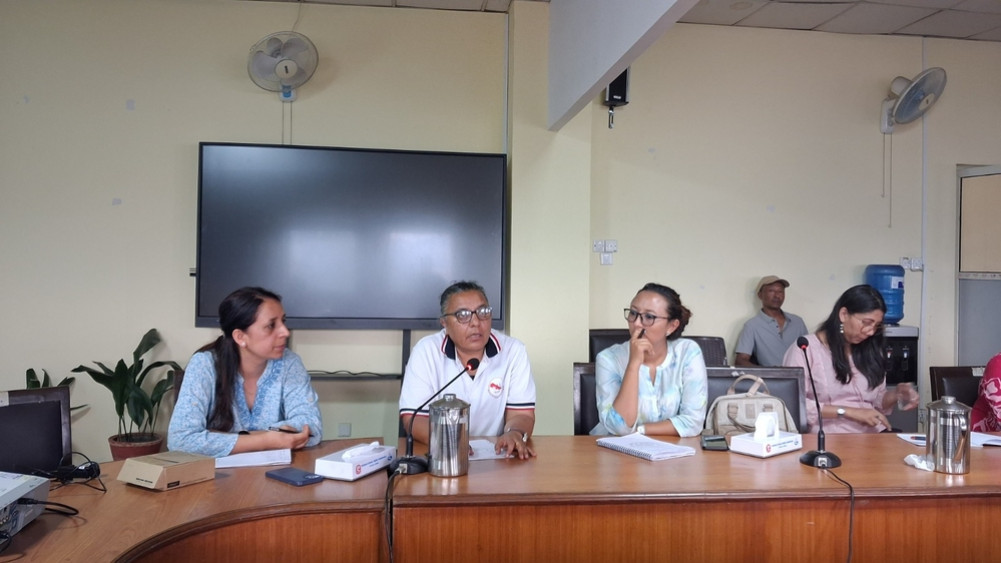
Speaking at an interaction program on "violence against women and challenges in access to justice for victims of violence" conducted by Orek Women's Rehabilitation Center, victims and women's rights activists said that although rights are guaranteed in law, in practice, the rate of violence against women is still high and there is no access to justice. National Human Rights Commission, National Women's Commission, Nepal Police, women human rights defenders of various districts, human rights workers, media workers and civil society representatives who participated in the
program have said that they are currently experiencing problems such as the increasing incidents of violence against women, the challenges faced by victims of violence in the justice process and the lack of victim-friendly service delivery in service providers. Participants highlighted the structural, behavioral and social challenges faced by violence-affected women in seeking justice. They said that violence against women is becoming worse due to patriarchal thinking, insensitivity of service providers, weak implementation of laws, political protection of perpetrators and the social stigma and non-cooperation faced by victims of violence. According to Sunita Mainali, executive director of
Orek, even in cases of heinous crimes, actions such as not proceeding with the investigation without identifying the crime scene, taking a decision from the court without informing the affected, giving unnecessary suffering in the complaint registration process and forcing reconciliation under pressure have become obstacles in the way of justice. Especially in cases of rape, the state mechanism's indifference, slowness and lack of victim-friendly approach during the registration of complaints, investigation and prosecution have not left the situation of victims becoming more victims.
Stakeholders have emphasized that these trends raise serious questions about the state's sense of responsibility and the need for an effective, inclusive and accountable justice system is still urgently needed.
participants have stressed the need to make the service provider agencies victim-friendly, make the judicial process transparent, accessible and participatory, and to end violence against women and girls, change in the discriminatory view of women, respect for women's self-determination, effective implementation of laws, transformation in thinking and behavior and structural reforms.