We use Google Cloud Translation Services. Google requires we provide the following disclaimer relating to use of this service:
This service may contain translations powered by Google. Google disclaims all warranties related to the translations, expressed or implied, including any warranties of accuracy, reliability, and any implied warranties of merchantability, fitness for a particular purpose, and noninfringement.
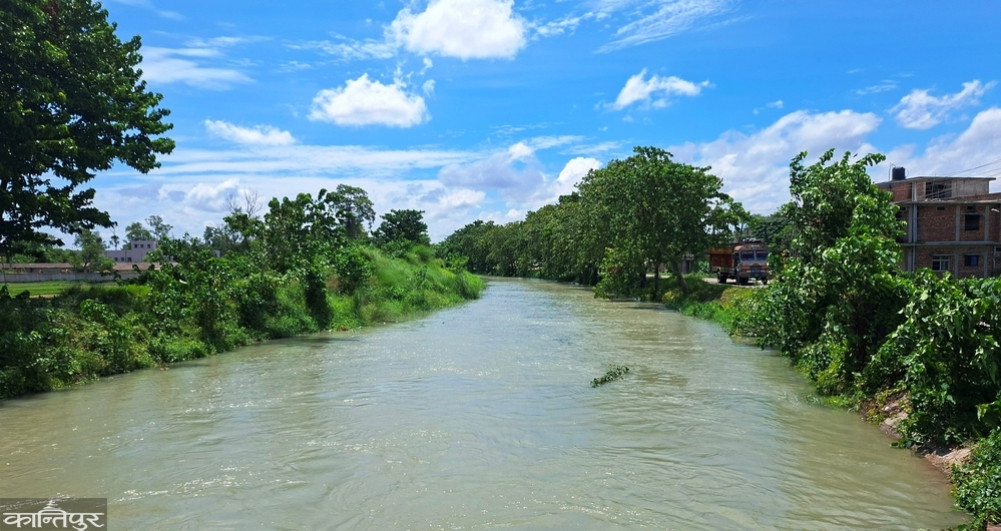
Farmers dependent on the Gandak canal system have faced problems in planting after India did not provide water in the quantity as per the agreement. Although the seeds are ready, the planting has been delayed due to lack of water in the canal.
Especially the farmers of Bara and Rautahat have faced problems in planting. According to the Gandak agreement between Nepal and India, the Indian side is supposed to give 850 cusecs of water to the canal, but currently it has given only 550 cusecs of water on an average.
According to Manoj Kumar Patel, head of Narayani Irrigation Management Office, this year the Indian side gave water at the scheduled time, but less water was given to the farmers when they needed it. "According to the agreement, from the beginning, India should have given 850 cusecs of water," he said, "but this year, from June 13 to 550 cusecs and from June 19 to 23, it gave 850 cusecs of water as per the agreement." From June 24, violating the agreement, India again gave only 550 cusecs of water on average, he said. According to information officer and engineer Suresh Sah of the
office, Mahendra Chaudhary, head of the Indian Two Branch Canal, has been formally informed over the phone about the water being given less than the contract and has been asked to follow the contract honestly. "We have asked the Indian side to implement the agreement honestly," he said, "due to the lack of water in the canal, the planting of farmers dependent on the canal system, especially in Bara and Rautahat, is delayed." He said that on Thursday, the entire technical team of the office inspected the canal from zero rd (Jagarnathpur in Parsa) to the Bagmati river area of Rautahat in Puthar and started to make the water flow in the canal as complete as possible.
According to the Gandak agreement with India, the Indian side should give 850 cusecs of water to the canal from June 15 for paddy crop and from January 10 for wheat crop. The Indian side releases water into the canal from the barrage built on the Nepal-India border at Bhainsalotan in Nawalparasi. After traveling 92 km in India, this canal enters Nepal from Jankitola in Jagarnathpur Rural Municipality of Parsa. The length of the Gandak Canal divided into 15 blocks of Parsa, Bara and Rautahat is 81 km towards Nepal.
Gandak Barrage was constructed by India itself and the operation is also done by the Indian side. He has built a canal structure to take more water from the barrage to Indian land than to Nepal. In 1975 and 1976, the Government of India handed over the Gandak Canal to the Government of Nepal. Despite the target of irrigating 37,400 hectares of land in three districts namely Parsa, Bara and Rautahat from the Gandak canal, India has not given 850 cusecs of water to Nepal as per the agreement due to some problem every year.
Kisan Hakhit Sangharsh Samiti, Secretary of Parsa Prithvi Shah Kanu says that the Gandak Canal has given relief to the farmers of all the three districts when there is no rain in the Madhesh province, but this year the farmers who depend on the canal system are having problems in planting because of the lack of water in the canal.