We use Google Cloud Translation Services. Google requires we provide the following disclaimer relating to use of this service:
This service may contain translations powered by Google. Google disclaims all warranties related to the translations, expressed or implied, including any warranties of accuracy, reliability, and any implied warranties of merchantability, fitness for a particular purpose, and noninfringement.
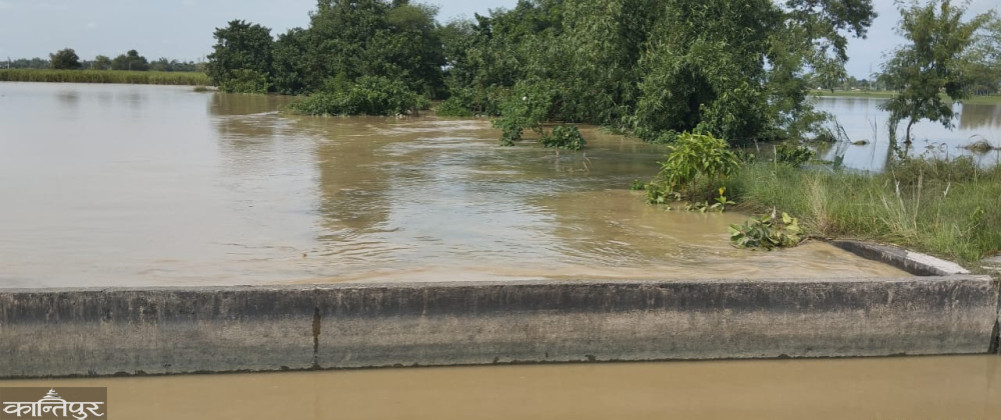
The rains and floods a week and a half ago caused more than 10 million rupees worth of damage to the Gandak canal and its supporting structures. In 3 districts namely Parsa, Bara and Rautahat, the canal structure has been damaged at different places.
According to Suresh Prasad Sah, Engineer and Information Officer of Narayani Irrigation Management Division Office, Birganj, the canal and its structures have been damaged the most in Parsa district. The structure of the Tilabe Barrage, which is a wake-up of the Gandak Canal in Parsa, has been damaged. In addition, the bridge along the barrage has also been damaged. In Parsa alone, there has been a loss worth about 5 crore rupees.
In Barama Feta Rural Municipality, about 350 meters length of the canal was washed away and the canal was completed. In Kalaiya sub-metropolitan city-22 Basatpur too, around 15 meters of canal dill has been washed away and there has been damage worth about 75 lakhs. In Barakai Adarsh Kotwal Rural Municipality, the canal gate has been broken due to the rapid flow of water in the canal. In Ganganagar of Barakai Simraungadh municipality, about 15 meters of the northern deal of the canal has washed away.
In Kopuwa of Rautahat's Rajpur rural municipality, the paved approach road of a 75-meter-long canal has washed away and created a hole of about 40 feet in the canal. "Overall, there has been a loss of nearly 100 million in all the three districts," he said, "The office does not have its own budget to repair the damaged structures immediately. The Federal Water Resources and Irrigation Department has to manage the budget.'
Sah says that it is not possible to flow water in the canal in the coming wheat crop season without maintenance and management of the main and auxiliary structures of the canal which are currently broken. "The time is very short, if the canal is not repaired and managed immediately, the farmers of all 3 districts will not be able to irrigate the wheat crop from the Gandak canal in winter," he said, "this may reduce the production of the wheat crop."
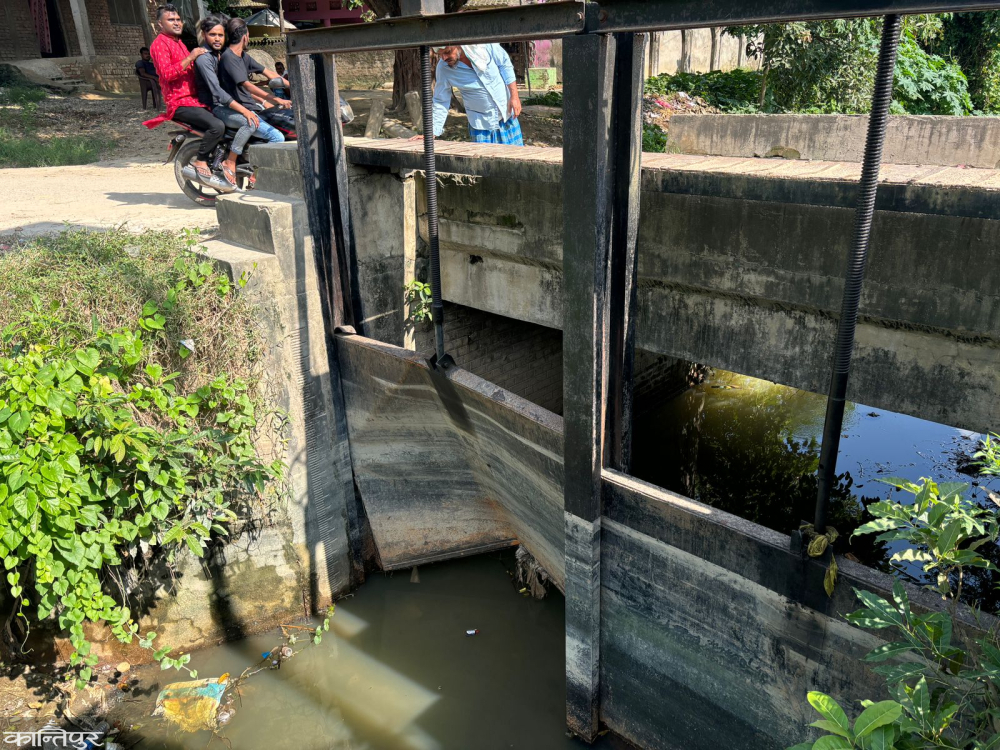
Water comes to this canal from the Gandak Barrage built on the Nepal-India border at Nawalparasi. 3 canals namely Doan, Triveni and Tirhut have emerged from the said barrage. Doan Nahar travels 92 km in India and enters Nepal from Janki Tola in Jagarnathpur Rural Municipality of Parsa. After entering Nepal, this canal is known as East Canal. The length of the Gandak Canal divided into 15 blocks in Parsa, Bara and Rautahat is 81 km towards Nepal.
In 1975 and 1976, the Government of India handed over the Gandak Canal to the Government of Nepal. Although the Gandak Canal aims to irrigate 37,400 hectares of land in three districts namely Parsa, Bara and Rautahat, the canal has not been able to provide the targeted irrigation facility in Rautahat.