We use Google Cloud Translation Services. Google requires we provide the following disclaimer relating to use of this service:
This service may contain translations powered by Google. Google disclaims all warranties related to the translations, expressed or implied, including any warranties of accuracy, reliability, and any implied warranties of merchantability, fitness for a particular purpose, and noninfringement.
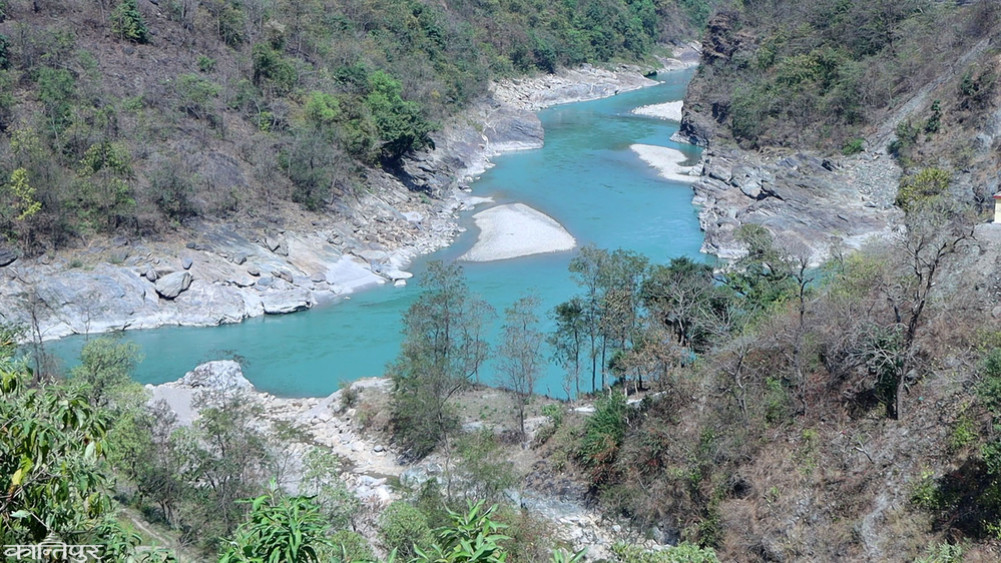
People's representatives and religious leaders from 10 local levels of four districts have committed to save the civilization of Gandaki. They insist on canceling the Kaligandaki Diversion Multi-Purpose Project and holding a Kaligandaki Pedayatra Festival by walking from Devghat, which has mythological and religious significance, to Ramdi, Muktinath, Damodarkund. The gathering also concluded that Sanatan religious people from all over the world and adventurers will be propagated.
The meeting held by Kaligand's Knowledge Institute at Rambha Rural Municipality-1, Uttarbahini Aserdi of Palpa came to this conclusion.
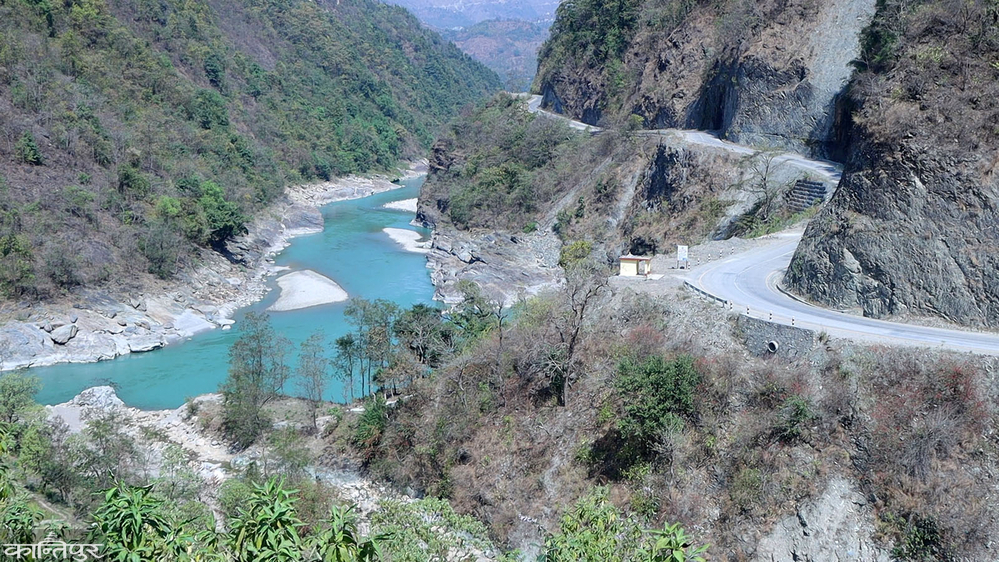
'Let's stop the diversion of Kaligand, save the civilization of Gand' People's representatives and religious leaders participating in the discussion program emphasized that the civilization of Gand should be saved. People's representatives of Palpa, Syangja, Tanahun and Nawalpur east of Nawalparasi in the Kaligandaki river coastal area participated in the meeting. They emphasized that everyone should be committed to stop the diversion. The government has concluded that the Kaligandaki Diversion Project, Kaligandaki Reservoir Hydropower Project, Upper Kaligandaki Project will lead to water crisis in the lower coastal areas and destruction of heritage areas.
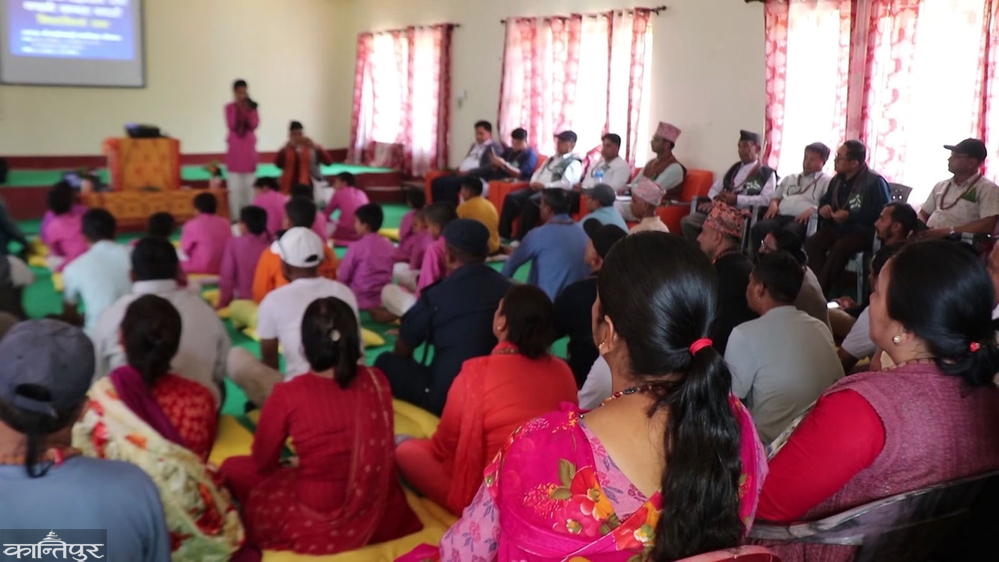
It is mentioned that the project initiated by the government will remove the Kaligandaki river from its own vibrant natural flow. All the people's representatives gathered have concluded that there is a risk of destroying its historical, cultural, and religious importance . All the representatives of the municipality said that in the near future it will cause water crisis, loss of biological diversity and geographical change. Their conclusion is that one-sided games are being played in the name of development by connecting the water of Kaligandaki river.
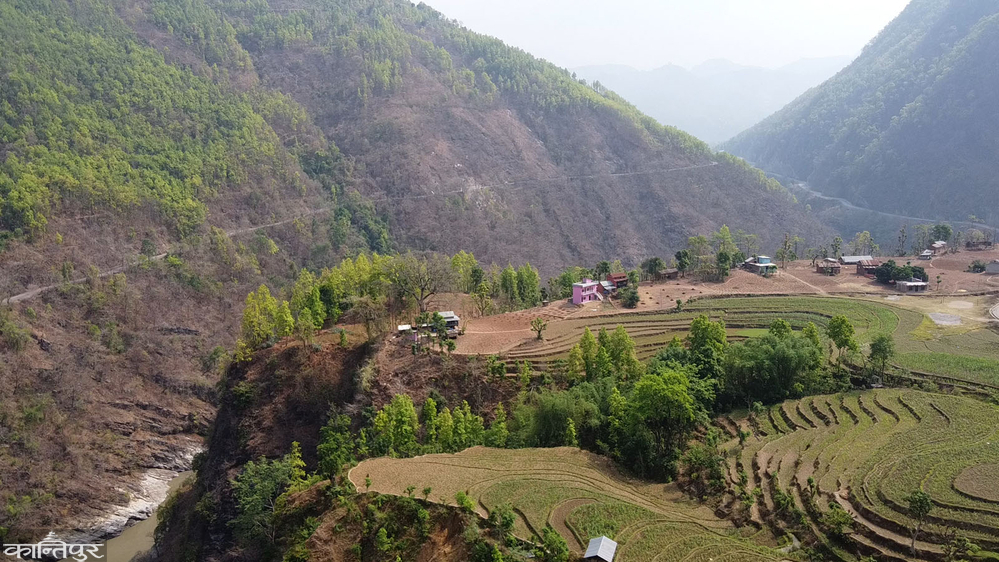
Til Bahadur Thapa, chairman of Tanahun-based Devghat Rural Municipality, said that there is a high risk of destroying the historical, religious and cultural importance of the people living in the upper area of Kaligandaki river as well as from Ramdi to Devghat. "Not only will there be dryness in the lower coastal area, there will be various problems starting from the death of plants," he said, "The lower coastal area is ready to do any kind of movement for this." That is why all the local levels in the affected areas of the four districts are standing against the project advanced by the federal government, Rampur Municipality Mayor Raman Bahadur Thapa said. "No matter what price I have to pay, I will always try to prevent diversion," he said, "I am ready to participate in any movement and all people's representatives should be ready."
There are various dhams, ghats and shrines in the coastal area of Kaligandaki river. Two of the sacred four dhams of Hindus, Ruru Kshetra Ridi and Muktinath Dham are located on this river. Bishnu Prasad Bhandari, chairman of Rambha Rural Municipality of Palpa, said that the river's environment, religious existence, tourism development, and civilization should be protected. "We have not only said that we will not allow diversion, we have also given meaning to its importance," he said, "The importance of Kaligandaki and what it is like to bathe in it." According to him, diversion will make this area like a desert. He said that it is certain that the water sources will dry up if the animals are destroyed.
Chairman Bhandari also said that he protested because the water sources in the coastal area would dry up and plants would also be affected. He said that the diversion of Kaligand had to be opposed because the lower coastal area would turn into a desert. Religious leader Chaitanya Krishna suggests to the government not to allocate the budget against the wishes of the people of the affected areas according to the opposition of the residents of the lower coastal areas.
He requested that this project should not be carried out in such a way that the civilization of Kaligandaki would be destroyed. According to him, as mentioned in various Puranas and scriptures, the sweat flowing from Lord Vishnu's Gandasthal (cheek) originated from Gandaki and the corner of Annapurna's mother Parvati's eyes, hence the name Kali. He said that Kali and Gandaki together form the mother Kaligandaki river and is the holy river of the world. "Kaligandaki river is not only our life, development, religion, culture, faith, salvation and savior," he said. It is believed that it can be found during bathing or irrigation.'
Srimad Devi Bhagwat Purana 9th Skandha says that by touching the Shaligram Sheela, the sins of birth will be destroyed and salvation will be attained. He said that this river is the main pilgrimage site, tapasthali, sadhana place and all wealth of Vedic Sanatani religious followers . Due to the importance of Kaligandaki, the religious leader says that the Sheela, which was taken from here to Ayodhya in India, has been worshiped and bowed by millions of people.
Although the discussion of diversion of Kaligand started in 2064, it was widely criticized after it was included in the policy and program of 2071. In 2078, a writ was filed in the Supreme Court against the diversion. After the writ was dismissed by the Supreme Court, the dispute started again. Kaligandaki-Tinau Diversion is the government's plan to divert water from Kaligandaki river to Tinau river in Butwal under the multi-purpose project . In the writ, it was claimed that the government's decision to divert the water of Kaligandaki to end the existence of the Gandaki river, which is connected with the civilization and culture of Nepal, has attacked the faith of Sanatan Hindus. Although the Supreme Court rejected the writ, the local government of this area has warned that they will protest to prevent the project from proceeding. What does a
diversion project do ? If the
project is to be built, 27 kilometers of tunnels will be dug after building the dam of the Kaligandaki-Tinau Diversion Multipurpose Project in Palpa's Rambha village-3, Pipaldanda's Nikichour area .
The tunnel is in the plan of the federal government to drop water in the valley of Tinau Rural Municipality-2 and 3 of Palpa. From there, another 7 km tunnel will be built and water will be taken to the arable land by making a canal. The initial estimate is that the government will spend 18.48 billion for the diversion of Kaligand in Ramdi area and 21.62 billion for hydropower.
The initial plan is to build the first power plant proposed in Dobhan in Palpa and the second power plant proposed in Belwas in Rupandehi . The government aims to generate a total of 126 megawatts of electricity from here. The main goal of the multipurpose project is to irrigate the land of Rupandehi, Kapilvastu. The goal of the project is to irrigate 1 lakh 7 thousand hectares of agricultural land in two districts.
It is said that Kaligandaki water is going to be taken to Tinau to irrigate 53,000 lands in Rupandehi and 54,000 in Kapilvastu during the dry season. A total of 85 thousand hectares will be irrigated, 36 thousand in Rupandehi and 49 thousand in Kapilvastu. The cost of the
project is estimated to be 1 trillion 38 billion with 64 billion in electricity generation and 74 billion in irrigation and irrigated area development. It is an ambitious plan that is estimated to cost 1 trillion 80 billion rupees to complete all the work of the project.
According to a preliminary study, the flow of water in Kaligandaki area is 102 cubic meters per second in winter. However, the project aims to 'divert' 82 cubic meters of water. In this way, the goal of the project is to return 80 percent of the water. It is said that the plan will be completed in 8 years with a detailed project report (DPR). The river Kaligand passes through Lomanthang of Mustang, Jomsom, Beni of Myagdi, Baglung, Kushma of Parbat, Phalebas, Setibeni, Mirmi of Syangja, Rudraveni of Gulmi, Reedy, Palpa and Syangja borders Ramdi, Keladi, Tanahun and Nawalpur and merges into Trishuli at Devghat . Supreme Court cleared the way for
diversion
The Supreme Court has cleared the way for the Kaligandaki-Tinau Diversion multi-purpose project. The Supreme Court mentioned that sustainable development target programs such as electricity and irrigation, Shaligram will not be destroyed when only water is diverted, and the criteria for extraction of river materials will be set.
In addition, the Supreme Court has ordered not to stop the construction of diversion based on the argument that more than 20 percent of water will be released to protect aquatic life, increase in agricultural production, internal return will be 15.5 percent, and the future generation will be able to see the Kaligandaki river.
According to the constitutional and legal arrangements related to river and environment protection and multi-use development of water resources, the preamble of the Constitution of Nepal mentions 'Aspiration for Development and Prosperity' in the full text of the Supreme Court. The explanation of the Supreme Court is that instead of promoting an unfavorable environment for development, environmental protection should be given high priority and the law should be made and implemented in a timely manner while being very sensitive to the demand for development. In the
verdict, it has been mentioned that a detailed survey of the dam area and the upper potential inundation area should be conducted, more core drilling (trenches) mining geological studies should be done in different places of the dam and tunnel, more studies should be done regarding the availability of water in Kaligandaki and for that, a gauging station should be kept in the dam area and data of at least 2 years should be collected, the data of the irrigation area should be updated. In the
verdict, it is mentioned that the negative impact and impact on the river coastal area, fauna, aquatic life and land should be properly evaluated while evaluating the environmental impact of the project. It is said not to adversely affect the fauna and flora dependent on the river. According to the decision, action should be taken so that even the surrounding land does not become dry, and if necessary, arrangements should be made to release 205 or more water from the Kaligandaki river to the Sabik river.
It is said that the Kaligandaki river should be constructed and operated so that the future generations can see and experience it. In order to manage the waste, it is mentioned that the necessary infrastructure and structures for the collection, processing and final disposal of waste including transfer center (transfer station), landfill site, processing plant, compost plant, bio gas plant etc. must be built and operated gradually.
It has been mentioned in the decision not to discharge the waste produced and collected in the Kaligandaki river in excess of its carrying capacity from a technical point of view and not to cause river pollution.