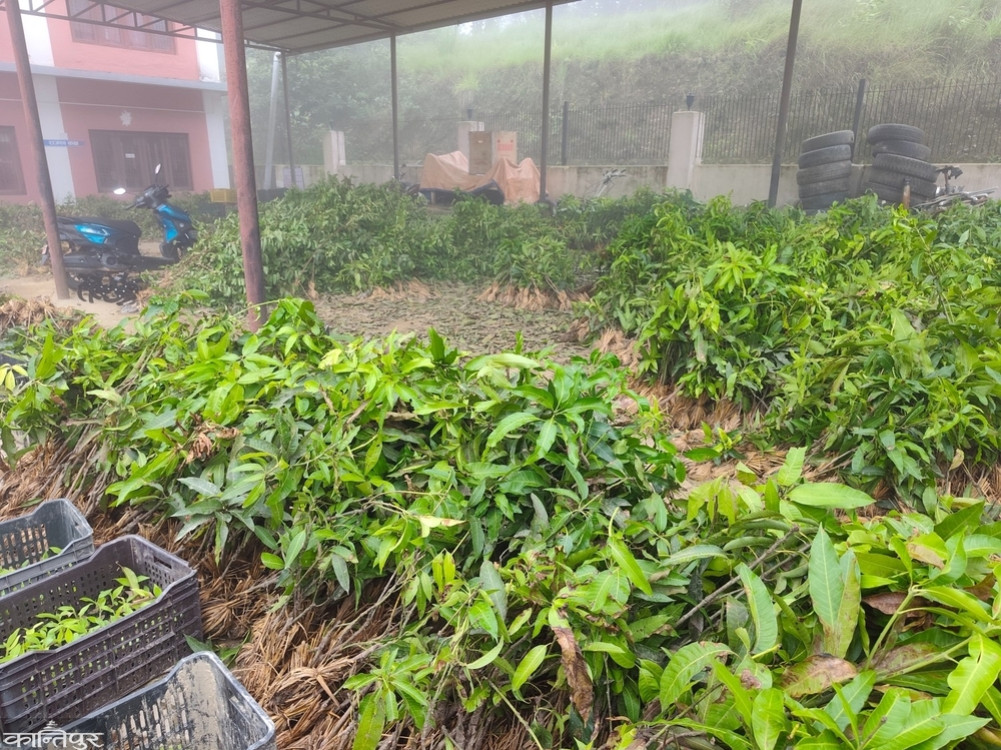
Supplier claims: Plants were destroyed when the municipality did not deliver them on time
We use Google Cloud Translation Services. Google requires we provide the following disclaimer relating to use of this service:
This service may contain translations powered by Google. Google disclaims all warranties related to the translations, expressed or implied, including any warranties of accuracy, reliability, and any implied warranties of merchantability, fitness for a particular purpose, and noninfringement.
Pakhribas Municipality in Dhankuta has canceled the fruit garden expansion program being run under the special grant of the federal government, citing that quality fruit seedlings as per the agreement were not provided within the stipulated time. On the other hand, the supplier company has claimed that the seedlings as per the agreement were supplied on time and that the seedlings withered and were destroyed due to the municipality's delay in distribution.
Pakhribas Municipality had signed an agreement with Hariom Hi-Tech Agriculture Nursery Farm located in Chandrapur-5, Rautahat on 21st Jestha with the aim of distributing fruit seedlings to all 10 wards based on the demand of farmers. The agreement was to supply 38,000 seedlings for Rs 1.4 million including VAT, said the municipality's Chief Administrative Officer Sunil Poudel. 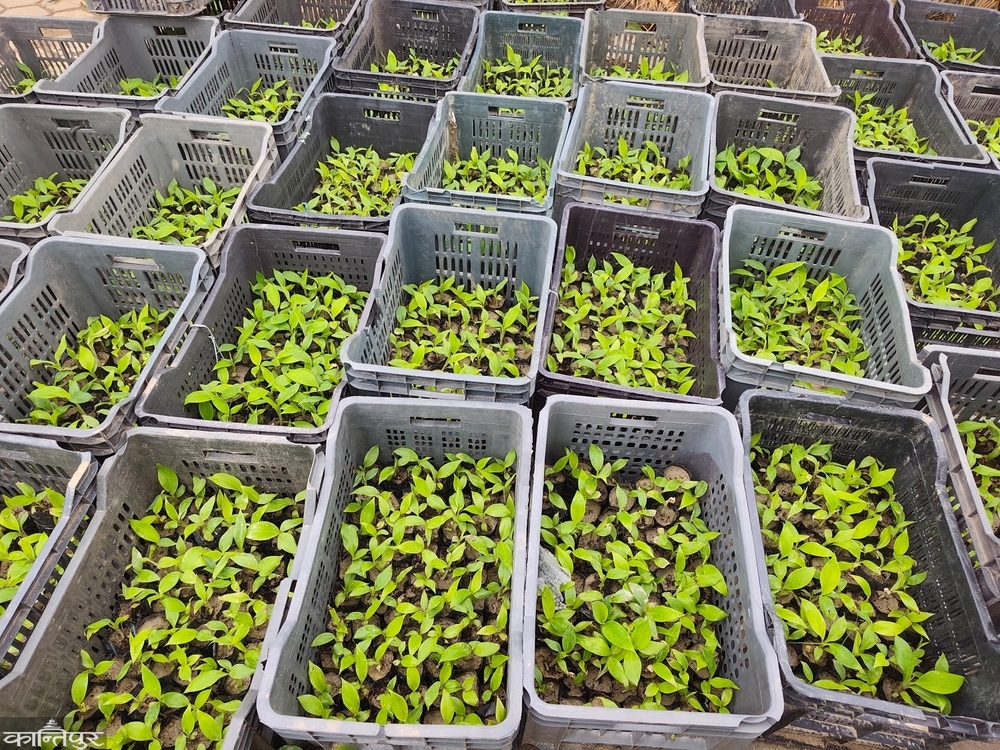
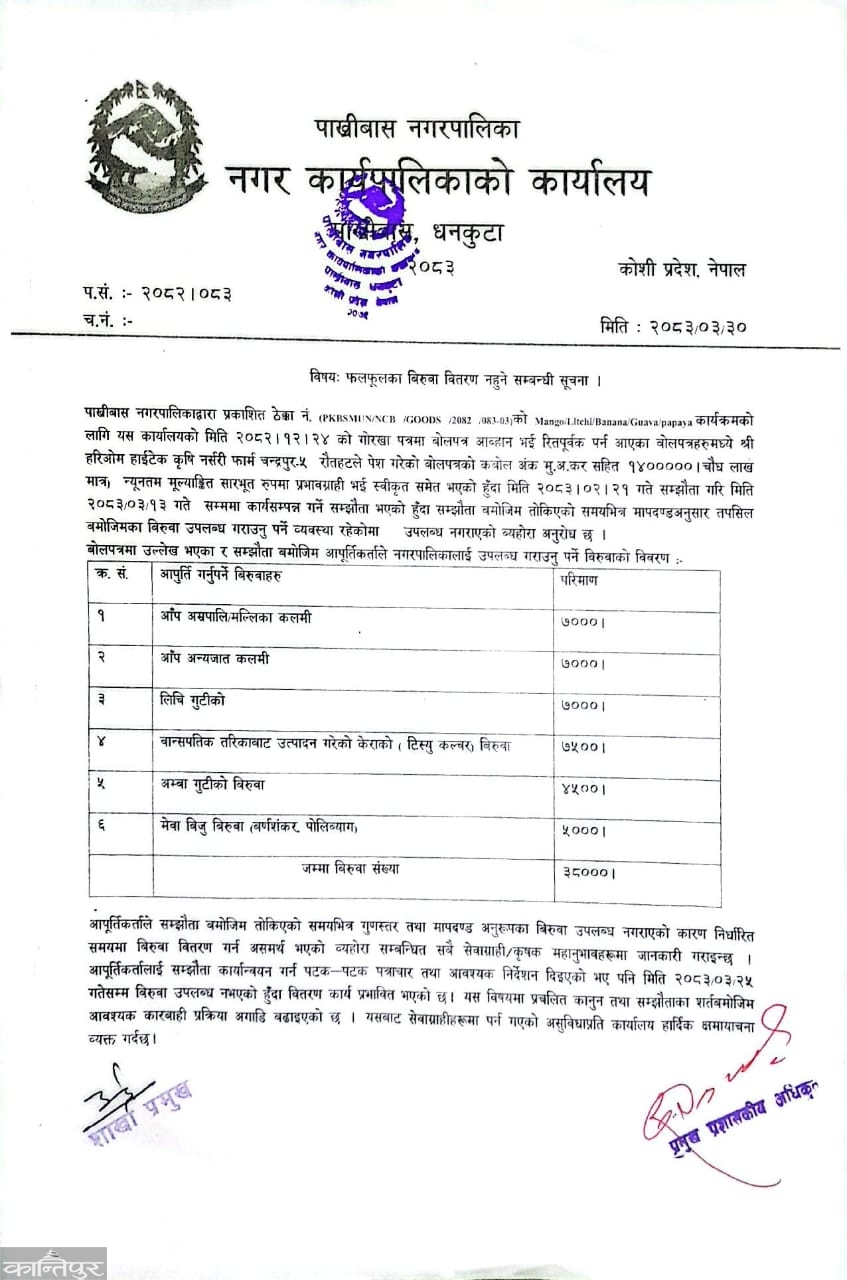
According to the agreement, an agreement was made to purchase 7,000 grafted mangoes of the Amrapali-Mallika variety, 7,000 grafted mangoes of other varieties, 7,000 guti litchis, 7,500 banana seedlings produced through vegetative methods, 4,500 guti mangoes and 5,000 Varnashankar fruit seedlings.
Indramaya Tamang, head of the municipality's agriculture department, said that the program was canceled after the company failed to provide the quantity and quality of seedlings mentioned in the agreement within the specified time. She said, "We had planned to bring all the seedlings at once and distribute them to the farmers. But the seedlings did not arrive on time as per the agreement and the seedlings that did arrive were of poor quality. We cannot pay for them." Chief Administrative Officer Poudel said that the program had to be canceled because the seedlings as per the agreement were not available despite repeated verbal and written requests to the supplier.
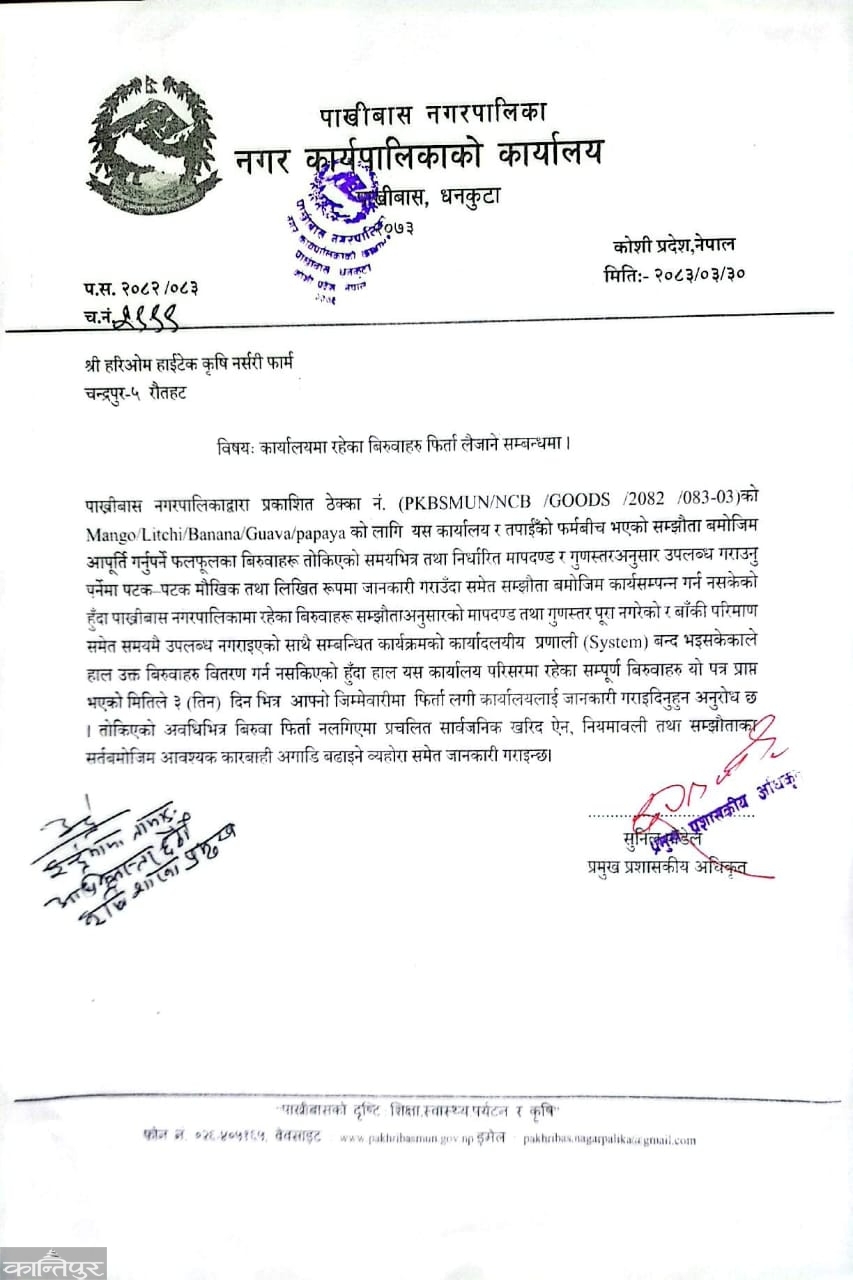
"The program was canceled because the terms of the agreement were not fulfilled. We have instructed the company to take back the seedlings that were brought earlier from the office premises within three days," Poudel said.
According to the municipality, the mango, litchi, mango, papaya and banana seedlings brought by the nursery are currently kept in the garage on the municipality premises. The agriculture department stated that it has been decided not to pay for the seedlings as the terms of the agreement were not fulfilled.
Under the special grant of Rs 75 lakh received from the federal government, there was a plan to run a program to purchase, produce and distribute plastic ponds, plastic tunnels and fruit seedlings. Under the same budget, a bid of Rs 2.8 lakh was invited for the purchase and distribution of fruit seedlings.
Although the contract for mango, litchi, banana, mango and papaya was canceled out of the three contracts, another contract for the purchase of avocado, lemon, orange and juniper seedlings estimated to cost around Rs 1.7 million was completed at Rs 1 million and the program was launched, informed Tamang, the head of the agriculture branch.
1,100 farmers had applied for fruit seedlings in Pakhribas Municipality. Under the special grant, a program to construct plastic tunnels and plastic ponds worth around Rs 2 million has already been launched.
Meanwhile, Hariom Hi-Tech Agriculture Nursery Farm has denied the municipality's allegations. Nursery manager Hariom Baniya claimed that healthy seedlings as per the standards mentioned in the agreement were supplied to the municipality on Asad 15 and 18.
'I have provided the plants to the municipality as per the terms. The plants should be paid in full,' said Baniya. The nursery had written to the municipality on Asad 20, informing it that the supply and transportation of the plants had been completed as per the agreement, and demanded payment.
Baniya alleged that the plants had withered and perished when the municipality did not distribute the plants on time and kept them in the garage without watering them for a long time.
'Many plants have withered and died because the supplied water was not kept for a long time. This problem has arisen because the municipality did not distribute them on time,' he said. He also alleged that the contract was cancelled by declaring the plants substandard without verifying them through technical tests or laboratories.
'The same hanging plants that the agriculture department said were substandard have been distributed to Pakhribas-3 and 8 wards. The plants that were transported at once were distributed to some wards, while the rest were kept in the garage and destroyed,' said Baniya. According to him, the company had also promised to return the plants that were deemed substandard and provide new plants in exchange.
Baniya claimed that he had sent 38,000 seedlings to Pakhribas on Ashad 15 and 18 and an additional 24,000 seedlings thereafter, but has not received a single rupee for the seedlings so far. Meanwhile, Saroj Rai, ward chairperson of Pakhribas Municipality-3, informed that about 1,700 seedlings of mango, litchi, banana and papaya have been distributed in his ward.
The municipality has concluded that the terms of the agreement have not been fulfilled by the supplier and has decided to cancel the program and not pay. The supplier's company manager, Hariom Baniya, has insisted that the seedlings have been provided as per the agreement, and that the municipality should be paid, saying that the damage has been caused due to the delay in distribution.