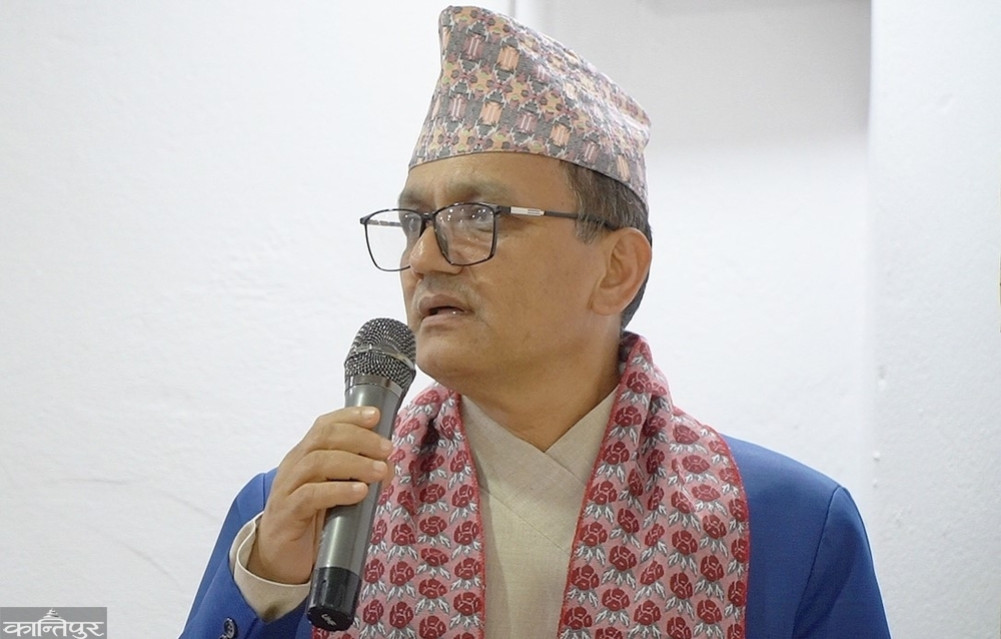
The program, organized with the slogan ”Let's end caste discrimination, let's build an egalitarian society,” highlighted the need for law enforcement, social awareness, and collective commitment to eradicate caste discrimination and untouchability.
We use Google Cloud Translation Services. Google requires we provide the following disclaimer relating to use of this service:
This service may contain translations powered by Google. Google disclaims all warranties related to the translations, expressed or implied, including any warranties of accuracy, reliability, and any implied warranties of merchantability, fitness for a particular purpose, and noninfringement.
Koshi Province's Minister for Internal Affairs and Law Indramani Parajuli has said that the provincial government will play an effective role in ending caste discrimination and untouchability. Speaking at an interaction program organized by the Ministry of Social Development, Koshi Province and Dhankuta Municipality in Dhankuta on the occasion of the 21st National Day for the Elimination of Caste Discrimination and Untouchability, Minister Parajuli mentioned that untouchability and caste discrimination still exist in society in various forms.
He stressed that everyone should start the change from their own homes, families and communities to end untouchability. 'Building an egalitarian society is not possible with just one person, collective efforts are necessary,' he said.
Minister Parajuli said that those involved in incidents of untouchability and caste discrimination should be brought to justice, and clarified that no one will be spared as such acts are punishable by law. In the
program, Koshi Province's Social Development Minister Ram Prasad Mahato said that his ministry is committed to ending caste-based untouchability. He informed that the state government is moving forward with the process of making the relevant law and urged stakeholders to provide necessary suggestions. In the
interaction, participants expressed the view that caste-based discrimination is not limited to the Dalit community but exists in various levels and strata of society. Participant Nain Bishwakarma said that although the Dalit community is prosperous in labor, skills and arts, social discrimination has not yet been eliminated. He said that despite increased access to education and opportunities, the expected change in the perspective of Dalits in society has not occurred.
Participants shared their experiences of facing discrimination based on caste while searching for a place to live from village to city and pointed out the need to conduct a comprehensive public awareness program to reduce untouchability. Rabindra Nepali expressed the view that continuous dialogue and awareness campaigns should be conducted through religious, social and community organizations.
The program, organized with the slogan 'Let's end caste discrimination, let's build an egalitarian society,' highlighted the need for law enforcement, social awareness, and collective commitment to eradicate caste discrimination and untouchability.