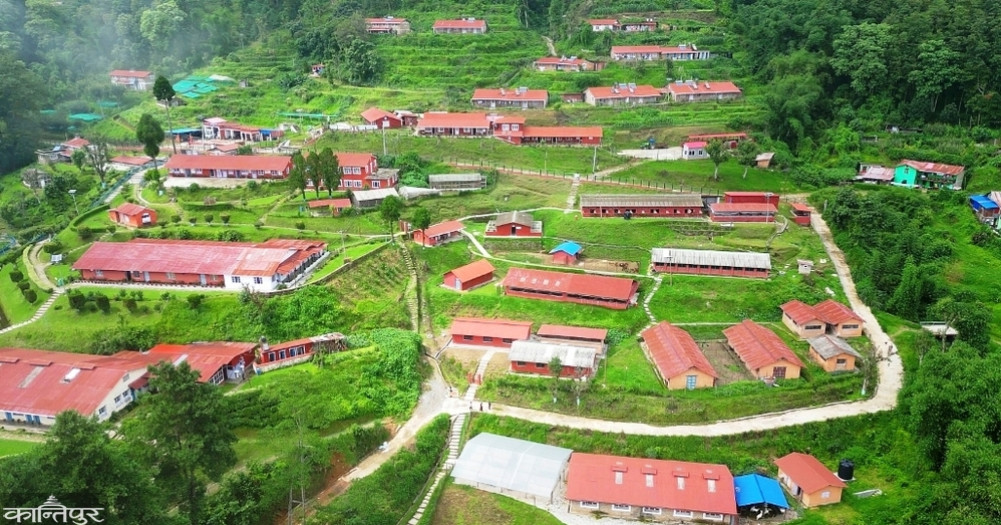
The program emphasizes the identification, conservation, and promotion of traditionally raised breeds, as the risk of extinction of local pig breeds increases due to the increasing use of imported breeds and strains.
We use Google Cloud Translation Services. Google requires we provide the following disclaimer relating to use of this service:
This service may contain translations powered by Google. Google disclaims all warranties related to the translations, expressed or implied, including any warranties of accuracy, reliability, and any implied warranties of merchantability, fitness for a particular purpose, and noninfringement.
The National Pig Research Program in Pakhribas, Dhankuta, has started the work of conservation, research and technology development of Nepal's indigenous pig breeds.
The program has emphasized the identification, conservation and promotion of traditionally reared breeds after the risk of extinction of local pig breeds increased due to the increased use of imported breeds and varieties in recent years.
According to the coordinator of the program, Dr. Manoj Kumar Sah, indigenous breeds like Bampudke, Hurra and Chwanche are currently facing extinction. 'These breeds are not only an economic resource, but are also linked to our biodiversity and cultural identity,' he said, 'Therefore, along with conservation, production increase and commercial expansion are our main goals.'
The National Pig Research Program under the Nepal Agricultural Research Council, Dhankuta has also paid special attention to the conservation and expansion of the 'Pakhribas Kalo' breed developed by Dhankuta. The program states that research is being conducted in areas such as protected breeding, balanced diet management, disease identification and treatment systems, and studies of adaptability to local environments.
The program has especially emphasized the revival of indigenous breeds that can be easily grown in domestic environments and have high disease resistance. According to program scientist Anjay Kumar Sah, although indigenous breeds have a slightly lower production rate compared to foreign breeds, they can become a sustainable and safe option for farmers in the long term.
Training, technical consultation, and expansion of improved farming systems targeting farmers have been taken forward for the conservation and technology development of indigenous breeds. Coordinator Sah said that a strategy has been adopted to reduce production costs and increase income through local resource-based diet management, cage improvement, and expanding access to health services.
Meanwhile, Rujan Rai, President of the Pig Business Association, Dhankuta, has said that the promotion of indigenous pig farming will have a positive impact on the national economy. According to him, it can make a significant contribution to import substitution, rural employment creation, improvement of nutritional security, and conservation of biodiversity. He pointed out the need to establish a 'seed bank' for artificial insemination along with research. 'If a seed bank is established, production can be increased through artificial insemination if necessary,' Rai said.
He mentioned that indigenous pigs also have religious, cultural and social importance in the eastern hilly districts. He said that by increasing the production of indigenous pigs, they can be sold at a slightly higher price than imported ones and that the indigenous breed is also superior in terms of meat quality and taste.
Chairman Rai says that the national pig research program should not limit the conservation of indigenous breeds to efforts to preserve traditions alone but should also link it with sustainable agricultural development, increasing farmers' income and strengthening the national economy.