Som Bahadur Nepali, son of martyr Dhanbir Darji, says, ”Democracy came about through the sacrifices of our fathers, neighbors, and villagers, but the state has rendered us identityless.”
We use Google Cloud Translation Services. Google requires we provide the following disclaimer relating to use of this service:
This service may contain translations powered by Google. Google disclaims all warranties related to the translations, expressed or implied, including any warranties of accuracy, reliability, and any implied warranties of merchantability, fitness for a particular purpose, and noninfringement.
Martyr families from Chhintang, Shahidbhumi Rural Municipality, Dhankuta have complained that the state itself has rendered them 'identified'.
They complained to the newly appointed Minister of Internal Affairs and Law of Koshi Province, Indramani Parajuli, who came to the village on Saturday, that the state itself had treated them in a way that erased their identity.
Minister Parajuli, who reached Chhintang on Saturday, had visited the Shaheed Park in Panchakanya and laid wreaths and flowers at the half-length statue of the martyrs kept in a coffin. After that, he met the martyrs' families, their relatives and party workers. During the meeting, the martyrs' families complained to the minister that the state itself had made them 'without identity and recognition'.
Som Bahadur Nepali, son of Dhanbir Darji, one of the 16 martyrs in the Chhintang massacre, requested the minister to arrange employment according to his ability and qualifications. He said, ‘Democracy came through the sacrifices of our fathers, neighbors and villagers, but the state made us identityless.’
The then government led by Sher Bahadur Deuba declared 16 people killed in the Chhintang massacre as national martyrs in two phases in 2074 BS. Although they were declared national martyrs, there is no official record of it, and the martyrs’ families have demanded to provide their identity cards.
Minister Parajuli assured the martyrs’ families that the provincial government is positive about making the martyrs’ dependent families self-reliant. The locals had also warned the minister not to forget the sacrifices made by Chhintang in the movement for democracy.
In an interview with Kantipur, Minister Parajuli said that he is committed to the livelihood, education and social security of the martyrs’ families. He said, ‘I will try my best to help the martyrs’ families in their livelihood. I will talk to the provincial and central governments to address the grievances of the families of those killed in the Chhintang massacre.’
The then government had carried out a special police operation in the then Khoku, Chhintang and Akhisalla VDCs from 22 to 29 Kartik 2036 to suppress the locals who had taken up the movement against hunger. During that time, they were arrested, tortured and killed on the charge of being involved in a campaign against the Panchayat system. In the incident, 13 farmers from Chhintang and three from Akhisalla, including two women and a minor, were killed.
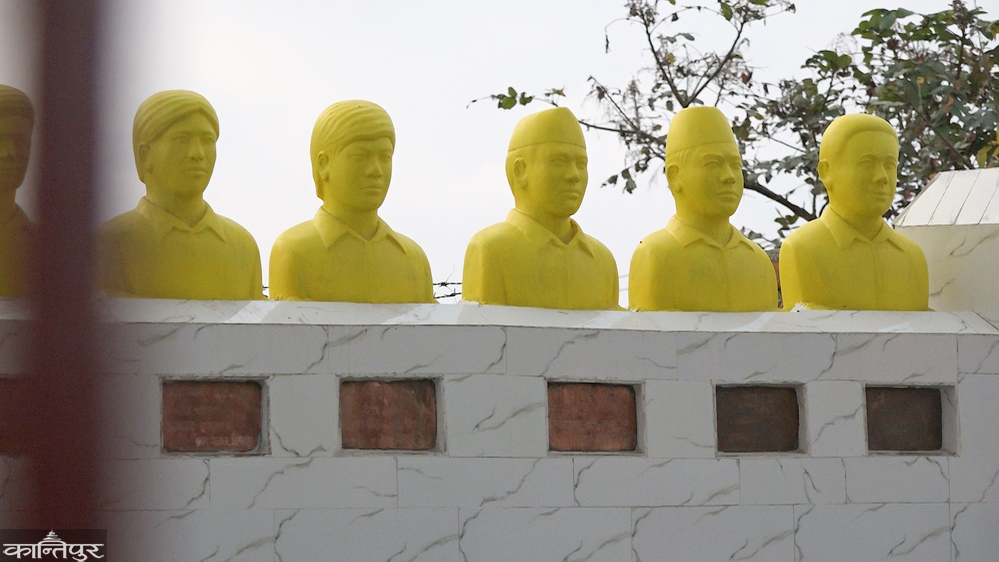
Those killed in this way were Jhagendra Rai, Ganesh Bahadur Bishwakarma of Akhisalla and student Kesharman Rai. Similarly, Gopal Anand Rai, Tanka Bahadur Bishwakarma, Dhanbir Darji, Lakhman Sadhu Rai, Randhwaj Puma Rai, Ganga Bahadur Tuprihang Rai, Gambhirman Darji, Chandra Bahadur Darji, Shree Maya Rai (Hangkhimasahili), Ram Kumari Rai, Bhairav Bahadur Khaling Rai, Bal Bahadur Khatri and Putra Man Rai of Chhintang were killed.
The federal government had declared all 16 of the killed as national martyrs and announced a relief of Rs 1 million per family to their dependent families. However, the families of the martyrs have complained that they have not received the relief money yet. Although the federal government has not provided the relief money, the Koshi State government has already provided Rs 500,000 each to the families of the martyrs.
UML leader and Chairman of Shahid Bhumi Rural Municipality Manoj Rai informed that they have been requested to take the initiative to get the relief money announced by the federal government. After meeting the martyr's family, Minister Parajuli reached the house of Som Bahadur Nepali, son of martyr Dhanbir Darji, who was killed in the Chhintang massacre.
After having breakfast with Som Bahadur Nepali, he returned to the district headquarters. On the way back, he laid a wreath at the statue of martyr Bhim Narayan Shrestha, who was taken to Koshitappu and executed in 2035 on charges of treason. After that, Minister Parajuli reached the house of martyr Bhim Narayan Shrestha and met with the martyr's wife and family.

