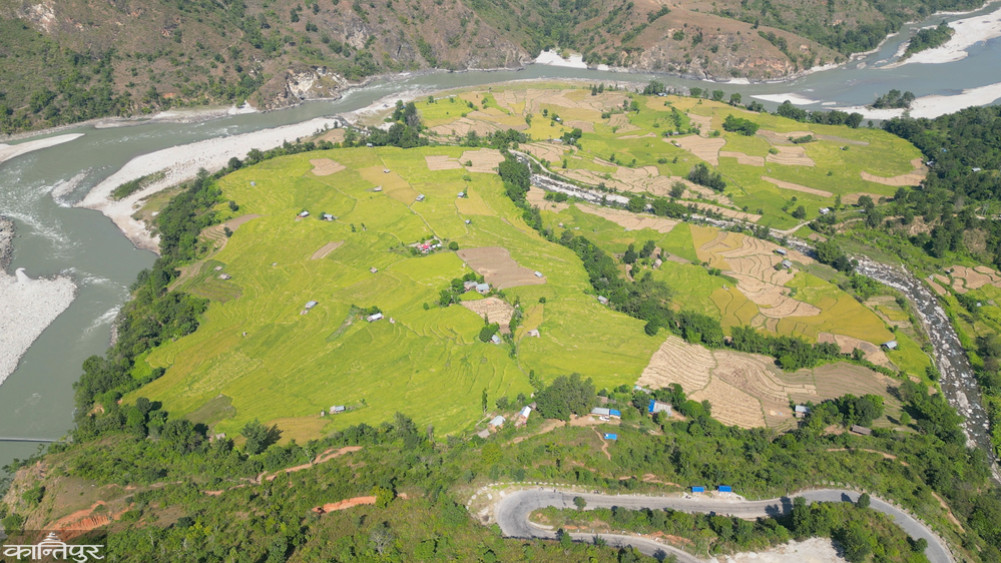
Diseases, insects and strong winds have also damaged the rice crop. Last year, 20,152 metric tons of rice were produced in Dhankuta from 4,832 hectares of land.
We use Google Cloud Translation Services. Google requires we provide the following disclaimer relating to use of this service:
This service may contain translations powered by Google. Google disclaims all warranties related to the translations, expressed or implied, including any warranties of accuracy, reliability, and any implied warranties of merchantability, fitness for a particular purpose, and noninfringement.
Rice production is set to decline in Dhankuta this year. The Krishi Gyan Kendra, Dhankuta, has stated that rice production will decrease by about 10 percent compared to last year due to prolonged drought during the planting season and unseasonal rains during the flowering and ripening of rice.
Diseases, insects and strong winds have also damaged the rice crop. Last year, 20,152 metric tons of rice were produced from 4,832 hectares of land in Dhankuta.
The main rice planting season, Asar and Shrawan, had reduced the area sown by 113 hectares this year compared to the previous year due to drought. Information Officer of the Agricultural Knowledge Center, Ratna Bahadur Magar, informed that about 12,444 metric tons of rice planted on 2,609 hectares in Dhankuta was affected due to rain, wind, floods and inundation.
The center has stated that the damage to the rice crop has caused a loss of about 415.299 million rupees. Among the seven local levels of Dhankuta, farmers of Pakhribas, Dhankuta Municipality and Chaubise Rural Municipality have suffered the most losses.
According to the data received from the local level, 4,530 metric tons of green paddy have been damaged, 7,793 metric tons of ripe paddy have been damaged, 4 metric tons of soft paddy have been damaged, and 86 metric tons of green paddy have been damaged, said Nagendra Rana, acting chief of the Agricultural Knowledge Center, Dhankuta.
Dhankuta's Bodhe, Leguwa, Belhara, Marekkatahare, Sane, Parewadin, Murtidhunga, and Jitpur have been designated for paddy production. Local and advanced varieties of paddy such as Ate, Manasaro, Dudhraj, Masino, Kalo Masino, and Belguti have been cultivated in these areas.