We use Google Cloud Translation Services. Google requires we provide the following disclaimer relating to use of this service:
This service may contain translations powered by Google. Google disclaims all warranties related to the translations, expressed or implied, including any warranties of accuracy, reliability, and any implied warranties of merchantability, fitness for a particular purpose, and noninfringement.
With the beginning of Baisakh, there should be a drive to enroll students in schools. However, teachers are protesting by closing schools across the country.
After the government responded to the demand, the teachers returned, schools were open and students were admitted. However, the parents of the northern part of Elam do not have that much hope. Since there is no school in their place, they are worried about where to educate their children rather than the interest of the movement.
'They say the teachers' movement, they say the Education Act. We have to go to India to educate the children", said Numa Sherpa of Maijogmai Rural Municipality-5 Megma, "There is no school in the village. No one understood the pain of sending a child to study in another country.
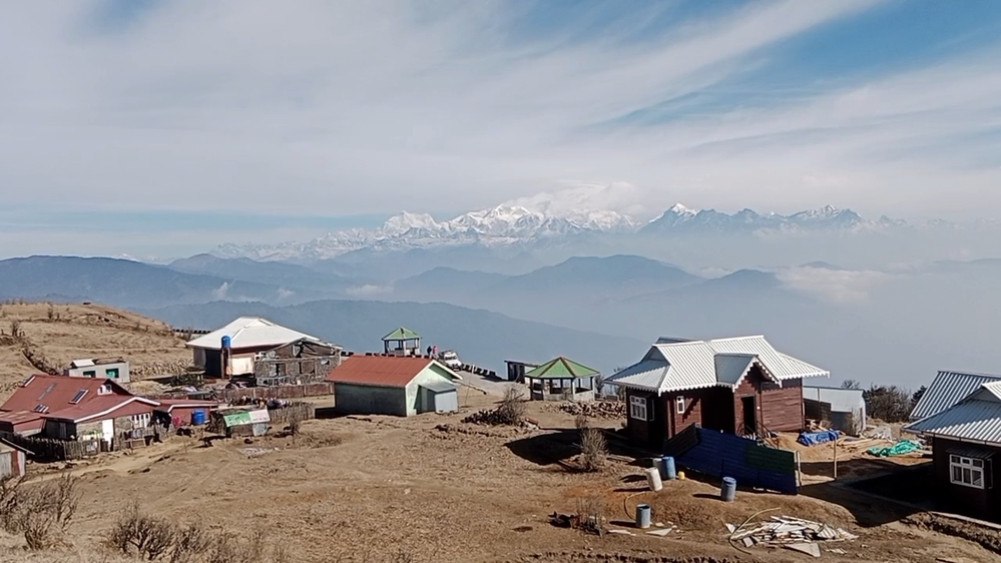
It is not only him but most of the parents of Lekali region of North Elam have to send their children to different schools in India. All the children of Joubari, Tumling, Megma, Alebhanjyang, Nunthala, Ingla, Garibas and other villages here have to be taken to Indian schools.
Children from Indian border areas are forced to study in India after community schools are closed due to lack of students. Sonam Sherpa of Joubari said that since the school has been closed for the past few years in these places where the population density is low, the parents have to go to the Indian region to teach their children from the primary level.
is far from home. Since last year, I have been sitting in that room and teaching my granddaughter," said 69-year-old Nim Lamu of Sandakpur Rural Municipality-5, Kalpokhari.
It has been eight years since the National Primary School of Joubari was closed. The school was closed in the year 2072 in the name of lack of students. When many children from the border area started to be sent to Indian schools to study, there was a shortage of students in the schools here. Since then, no initiative has been taken to establish the said school, he said.
Currently, about 15 children from this area are studying at Ribs School in Manebhanjyang. Doma Sherpa, who took a room to teach a nanny in Manebhanjyang, said that the monthly cost is between 18,000 and 20,000.
Not only in Joubari, Saraswati Primary School in Magma of Myzogmai-2, Primary School in Sandakpur-5 Kalpokhari, another primary school in Majuva of Sandakpur-5 has been closed, Pasang Chhiring Sherpa, the former principal of Rashtriya Pravi Joubari informed.
Thukten Lama of Joubari informed that after enrolling his grandparents in the Indian school, the schools on the Nepal side were closed due to lack of students. In this way, money is spent when students are taken to India. It is a long time ago that Nepali children do not know about Nepali nationality and self-respect.
The closed schools have become dilapidated. A year ago, the armed police were stationed in the National Province of Joubari. The armed forces have built their own building near the school. So far, the concerned authorities have not shown any interest in running schools in the border area.