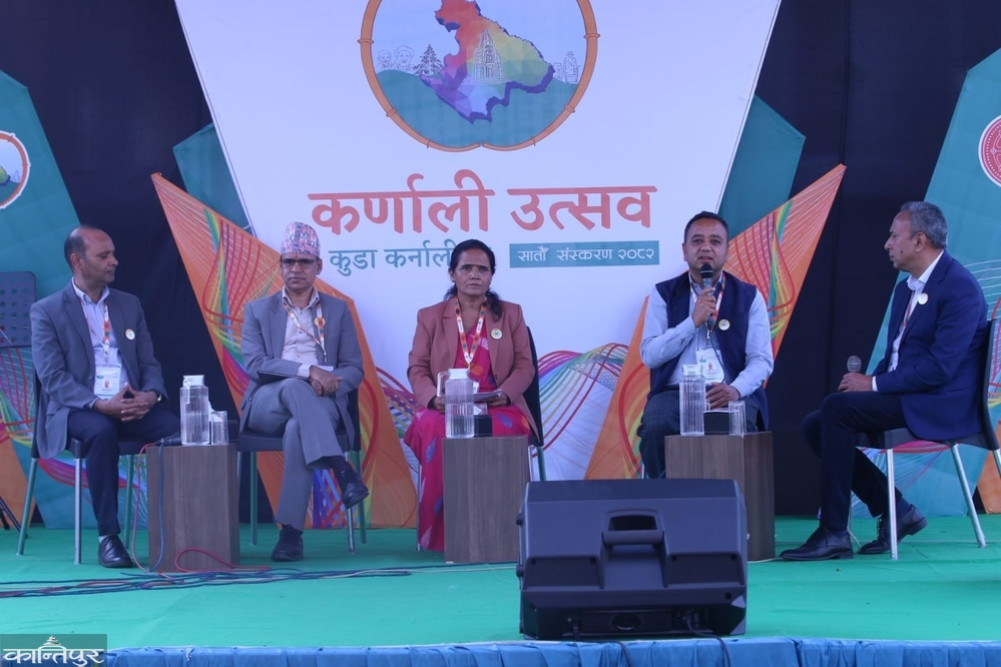
Prakash Bohara, an injured person in the Genji movement, said that it is important for the government to maintain permanent peace and focus on good governance, national security, and smooth service delivery.
We use Google Cloud Translation Services. Google requires we provide the following disclaimer relating to use of this service:
This service may contain translations powered by Google. Google disclaims all warranties related to the translations, expressed or implied, including any warranties of accuracy, reliability, and any implied warranties of merchantability, fitness for a particular purpose, and noninfringement.
The seventh edition of the Karnali festival 'Kuda Karnali' has begun in Birendranagar from Saturday. On the first day of the seventh edition, discussions were held on topics ranging from the Genji rebellion to Karnali prosperity.
Speaking at the first session on Saturday, 'Genji: From Road to Parliament', Genji leader Raksha Bamle said that the issues of the movement will not be fulfilled until the citizens experience good governance and change. 'The new generation has played a role in taking the country from instability to stability,' she said, 'Many of our friends have reached the parliament from the streets, they can never forget the issues of the streets.'
Another activist, Manish Khanal, said that the movement seeks to transfer leadership through generational transfer. ‘If there had been no rebellion, we would have had to wait a few more years for the current public opinion to come,’ he said, ‘The older generation was trapped in chaos due to traditional thinking and social structure, and our vigilance is still necessary to eradicate it.’ 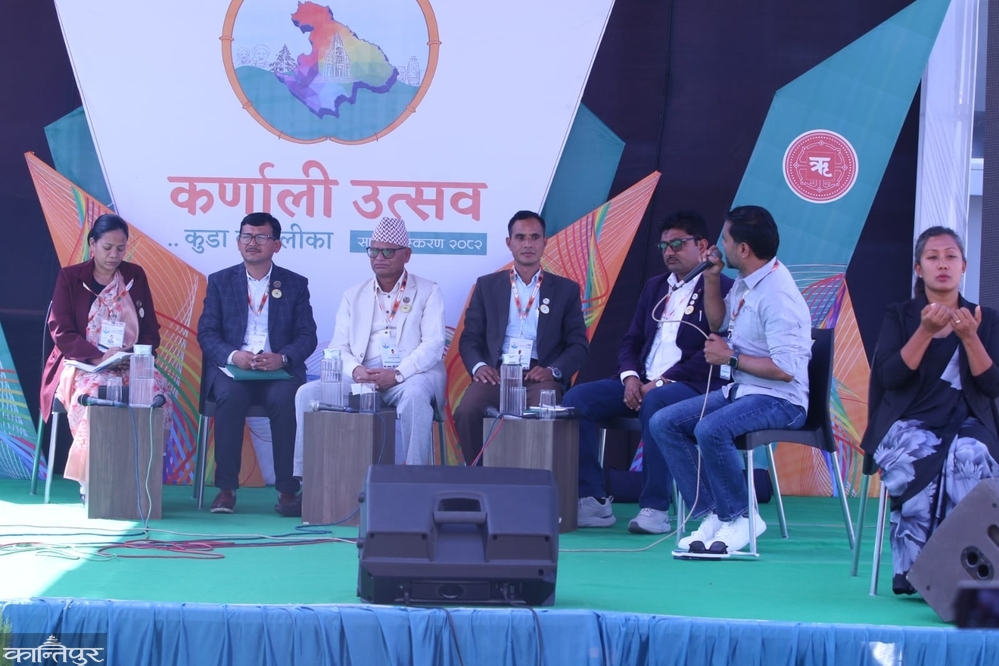
Prakash Bohara, an injured person in the Genji movement, said that the government needs to maintain permanent peace and focus on good governance, national security, and smooth service delivery. Activist Dheeraj Joshi said that they were also unaware of how a peaceful movement turned violent. He said that the Karki Commission report should be made public by the government and fully implemented. & ‘The citizens of this country have sacrificed themselves in various struggles because of political incompetence, but we are still suffering from poverty, illiteracy, disease and hunger,’ he said. ‘The state should lead Karnali on the journey of prosperity by giving political rights through positive discrimination.’
Another MP Khadka Bahadur Budha said, ‘Karnali is asking for salt on a golden plate.’ ‘Karnali has the potential to light up the entire country through hydropower and export electricity,’ he said. ‘We can become self-reliant only through local products including herbs, tourism and Chinese-Kaguno.’
MP Laxmi Prasad Pokharel said that for the prosperity of Karnali, it is necessary to leave political beliefs and unite. ‘At one time, salt and gold used to come from the salt region of Tibet to Hat Sinja, from there it reached all the way north and south,’ he said, ‘Karnali’s civilization was formed through the civilization of Sinja, Kailash and Jwala regions and developed as the civilization of Nepal.’
MP Radhika Ramtel said that the face of Karnali was brightened by the methane gas seen in the Jwala region alone. MP Ramesh Kumar Sapkota said that the citizens would be satisfied even if only education, health, roads and electricity, which are connected to the lives of the people, could be provided.
At the festival inaugurated with seven melodies, Birendranagar Municipality Mayor Mohan Maya Dhakal gave a speech on women’s leadership, while Devendra Raman Khanal explained banking investment in Karnali and Keshav Dahal explained about Mokshabhumi Karnali. The festival, which will run until Monday, will feature 15 main debates and 10 short sessions, and will feature nearly 80 speakers, according to the organizer, the Riti Foundation.