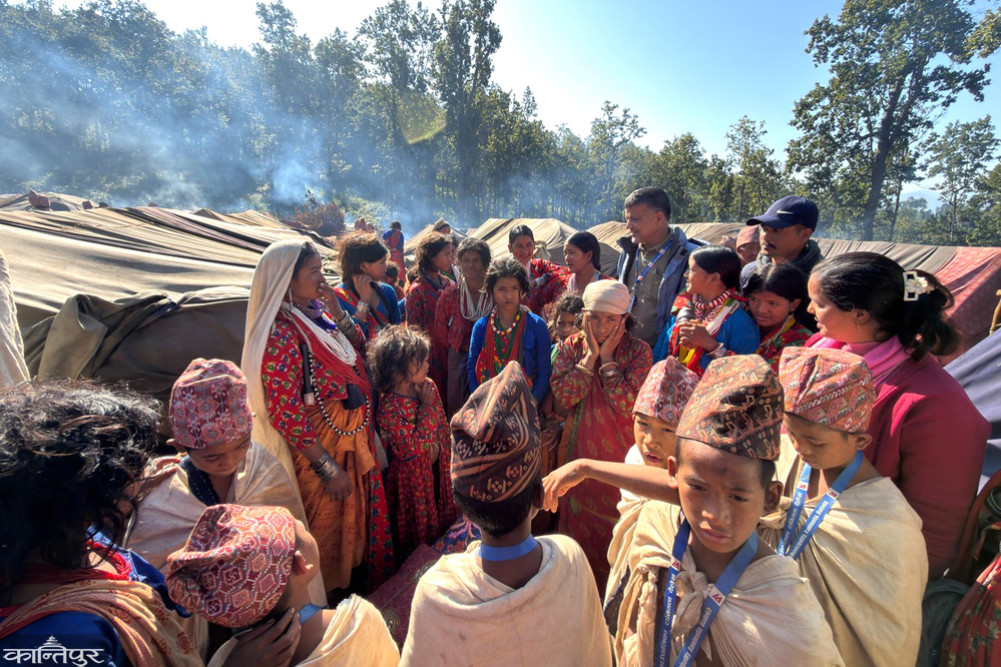
While the government is accused of making the Rautes dependent by providing allowances, documents confirm that there are irregularities in the distribution of the allowances. In the last 17 years, the state has spent 74.7 million rupees on social security allowances for the Raute community alone.
We use Google Cloud Translation Services. Google requires we provide the following disclaimer relating to use of this service:
This service may contain translations powered by Google. Google disclaims all warranties related to the translations, expressed or implied, including any warranties of accuracy, reliability, and any implied warranties of merchantability, fitness for a particular purpose, and noninfringement.
In 2065, when the then Dailekh District Development Committee first distributed social security allowance to the Raute community, their population was 165. 17 years later, on 13 Falgun 2082, according to the census conducted by the Social Service Center (SOSEC), this number has decreased to 133.
In the meantime, various programs have been organized by the government and non-government levels for the upliftment of the Raute community. However, according to researchers, if the situation continues like this, far from the upliftment of the Raute, the risk of the community itself disappearing has increased.
In the name of 'mainstreaming', the government distributes not only allowances to this nomadic community, which depends on nature and lives on minimum needs, but also everything from food to soap. Various organizations and individuals are reaching out to the Raute settlements to run health camps, from salt to oil. A study published in September 2025 in the 'KDCBAR Law Journal' has pointed out that the biggest threat to the isolated lifestyle of the Raute community lies in the government's policy of mainstreaming them. According to the study, the Nepalese government is gradually pressuring the Raute community to integrate into the mainstream, even though the Raute community itself feels that this process is rejecting its identity, values, and culture.
According to a report by the human rights organization ‘Survival International’, there are at least 196 such communities around the world that have little contact with the outside world. The Masco Piro of Peru are considered the largest of these communities. To protect them, the Peruvian government has prohibited local residents from not only approaching them, but also from talking to them. Peru has adopted this policy after a similar community in Brazil began to disappear due to illness, malnutrition, and addiction due to external contact. External contact and interference can seriously affect the social structure and health of such communities. The Raute of Nepal are currently at a similar risk.
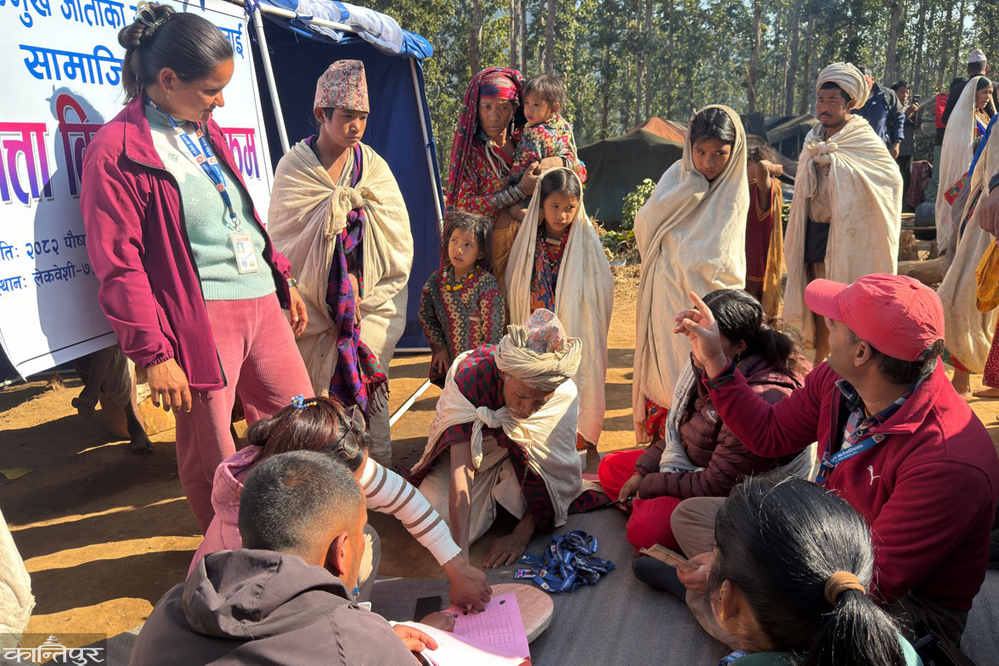
In the last 17 years, the state has spent 74.7 million rupees on social security allowances for the Raute community alone. Government and non-government organizations have spent at least Rs 150 million on income generation, mainstreaming, health, etc. There are no records of distribution-oriented programs of various organizations and individuals that take place daily in the Raute settlements. However, the number of Rautes is decreasing instead of increasing.
Irregularities in the distribution of allowances
While the government is being accused of making Rautes dependent by giving allowances, documents confirm that there are irregularities in the distribution of the same allowances. The government has made arrangements to distribute allowances to the nomadic Raute community wherever they go through Gurans Rural Municipality of Dailekh. Kashiram Shahi, 68, a member of the Raute community, died in Dullu, Dailekh on 25 Asad 2075. However, it has been found that social security allowances were not being received in his name even seven years after his death. As per the demand of Gurans Rural Municipality of Dailekh, the National Identity Card and Registration Department has sent Rs 336,000 in the name of Kashiram.
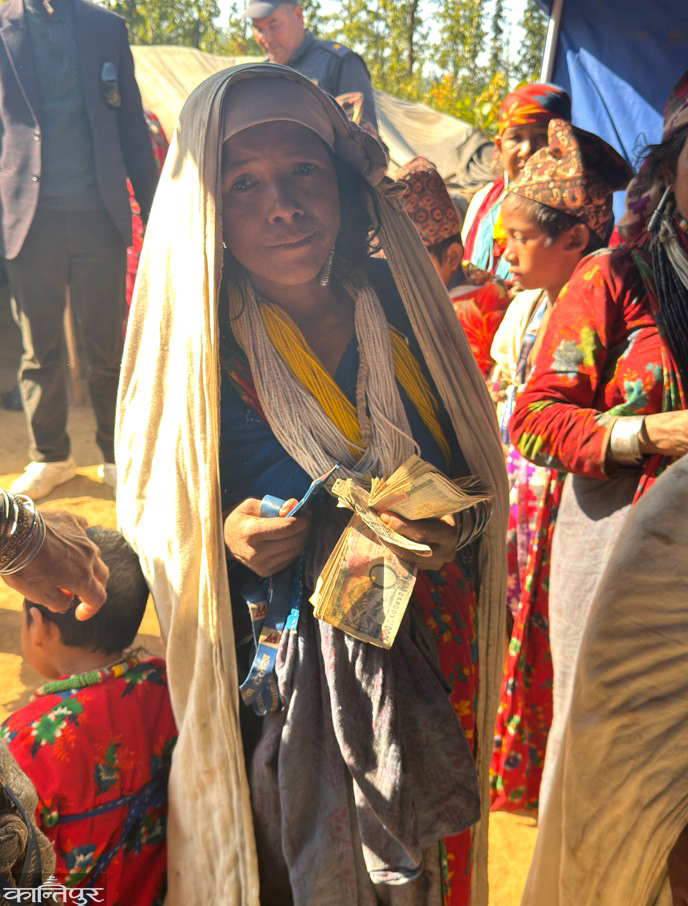
Similarly, there is a record that the rural municipality has been demanding allowance continuously for 6 years in the name of Shishu Topi Shahi, who died within seven days of birth. There is a record that the rural municipality has been demanding a total of 288,000 endangered allowance in his name, who died on 9 Asoj 2075. The documents show irregularities in the allowance distributed through the rural municipality, including retaining the names of deceased persons, showing those who were still in the community as dead in one year, distributing allowances in the next year, and giving two names to the same person.
While distributing the third installment of allowance on 1 Magh 2078, a cross was made in the name of Chaura Shahi in addition to the identity card number 2076122500869. However, in the first installment of 2081/82, allowances were distributed under the same number and name. Chaura is still in the community. After receiving information that irregularities were being made in the allowance distributed to members of the Raute community by adding the names of deceased persons who were not in the community, the rural municipality was asked for the allowance details document.
After the details of the document provided by the rural municipality on 4 Poush and the actual details of the people living in the Raute settlement differed, we contacted the rural municipality again. The rural municipality provided another detail on 25 Poush. This detail also does not match the details it had previously provided, nor does it match the reality. When we went to the rural municipality again and tried to verify it with the original documents in the office, we found out that allowances were being distributed even in the names of deceased people.
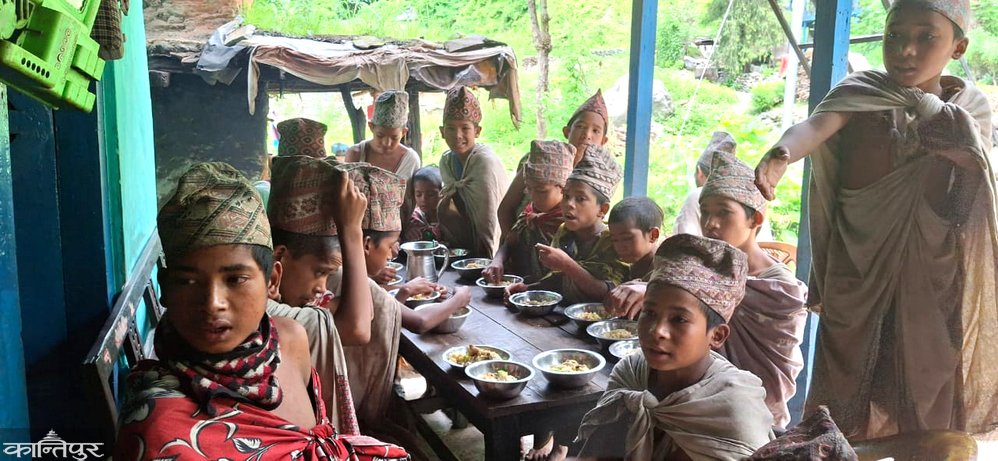
Pith Shahi, who was born on 5 Bhadra 2073, is still in the Raute community. The first detail provided by Gurans rural municipality shows him dead and shows that the amount for the endangered allowance was not paid in 2078. However, another detail provided by the rural municipality shows that Pith was given Rs. 96,000 as allowance in 2081 and 2082. According to Lal Bahadur Khatri, an employee of the Social Service Center (SOSEC) Nepal, who has been working in the Raute community, Pith Shahi is in the community.
The rural municipality sent the names of 151 people to the National Identity Card and Registration Department to distribute the second installment of the endangered allowance for the fiscal year 2080/81. However, according to the Social Service Center, Nepal (SOSEC), the actual number of them in Gurbhakot Municipality of Surkhet at that time was only 141. When we reached the Raute settlement and spoke to Raute youth Bandabir Shahi and others, it was confirmed that the number of Rautes at that time was 141. Looking at the details of the allowance distributed by Gurans Rural Municipality, it was found that the same name was given in both male and female genders to show a higher number.
In the details of the allowance distributed by the rural municipality in 2080/81, Okhar Shahi, who is mentioned in the second number, and Govinda Shahi, who is mentioned in the 22nd number, are the same person. Bandabir also confirmed that Okhar's name was changed to Govinda in recent times and that both names are the same person. That same Govinda died on 30 Bhadra 2082. After that, the allowance stopped coming in the names of both Okhar and Govinda. Looking at the details provided by the rural municipality, 10 such fake names were found, who were not in the settlement or were not there.
Ram Bahadur Budha, the then Chief Administrative Officer of the rural municipality, says that the allowance was distributed by taking the Peski and paying it on that basis after submitting the balance. ‘I do not know that the names were changed,’ he said, ‘The municipality will give it as per the demand of the ward, it is the responsibility of the ward.’ According to the data provided earlier by Gurans rural municipality, the details of the allowance distributed to the Raute community in 2081/82 mention the names of 137 people in the first installment, 138 in the second, 141 in the third, and 138 in the fourth installment. However, in the list provided by the same rural municipality for the second time, their number is 133 in the first installment, 134 in the second, 137 in the third, and 133 in the fourth installment.
The risk increased by the helmail
According to Nagendra Upadhyay, an expert member of the Raute Facilitation Committee, the increased contact with other communities and the cash coming through social security allowances have brought about a major change in the lifestyle of the Rautes. According to Upadhyay, after bombs and guns started exploding in the jungle during the 2062/63 armed conflict, the Rautes started living near markets. In this process, the entry of government and non-government organizations increased in the community. The Rautes, known as the kings of the jungle, began to become dependent. The Rautes, who believed that touching money was a sin, are now made to beg for money.
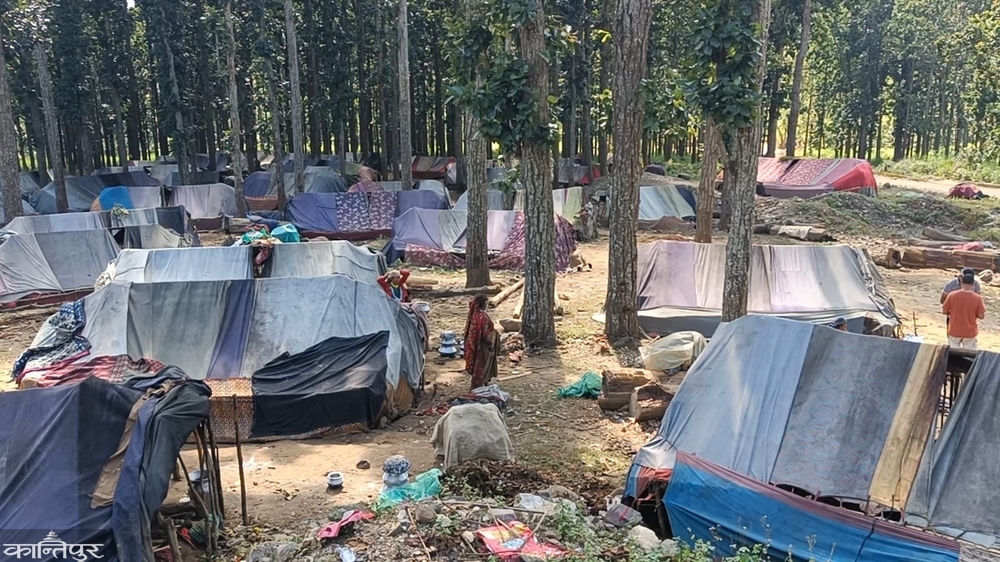
Various research has also pointed out that the changes seen in the lifestyle of the Rautes in recent years have raised concerns about their health and survival. A study published in the international journal 'BMJ Open' has stated that the changes in the lifestyle of the Raute community have started to emerge new health challenges. According to the study, as external contact through markets, local communities and government programs increases, the changes in their lifestyle have increased new diseases and health risks.
Researchers have said that alcohol, processed foods brought from the market and increased contact with the outside world can cause long-term health problems in the Raute community. A study conducted by Tribhuvan University has stated that the risk of maternal and child health is high in the Raute community. According to the study, even common infections can be life-threatening in communities that are out of contact with the outside world.
Addiction, malnutrition and infection
According to Nawaraj KC, a doctor working in the Raute community, cash allowances and excessive interference from the outside world have disrupted the Raute community. “It is wrong to give money to the Raute, the money coming from the allowance is not being used properly, which has put the community at risk,” he said. According to him, the main cause of death in the Raute community is unhealthy lifestyle.
According to Anuja Pant, a health worker who has been working in the Raute community for two years, there is a lot of malnutrition among children in the Raute community. "Children are born malnourished because their parents drink too much alcohol," she said. "In addition, children are also becoming malnourished when junk food like noodles and biscuits replaces the foods they used to eat, such as tubers, game, wild grains and fruits." According to her, pregnant women also drink alcohol, which leads to miscarriages, malnourished babies and inadequate care after birth. She said that 27 children aged 9 days to 10 years have died since 2075.
Bir Bahadur Shahi, the former chief of the Raute community, has a family of 11 people. His family receives an annual allowance of Rs 44,000 per person from the government. In addition, various NGOs and individuals also provide clothing, food and cash assistance. However, most of his family members appear to be sick. According to health workers, alcohol addiction and lack of nutritious food have complicated their health conditions, from children to the elderly.
Bandabir, a 17-year-old youth from the Raute community, also says that the allowance has increased the problem. ‘As soon as they get the allowance, they buy alcohol,’ he said. ‘When they are in the forest, the Rautes used to be busy with their work, but the allowance has made them accustomed to living near the market. They get sick from the food in the market.’ He said that if the Raute community is to be protected, they should be allowed to live in the big forest. ‘We will follow the path taught by our ancestors, but the Rautes have been lured by various temptations. If this continues, this community will disappear in a decade.’
Challenges in conservation
In December 2075, the Karnali Province Ministry of Social Development spent 800,000 rupees to distribute clothes to members of the Raute community. The Rautes sold the coats distributed by the ministry to locals for cheap money. Since 2076, the Provincial Ministry of Social Development has spent 4.123 million rupees on programs including mainstreaming and income generation for the Raute community. However, the Office of the Commission for the Investigation of Abuse of Authority is also investigating after complaints were received that such work by the provincial ministry and subordinate bodies was widely irregular and of no benefit to the community.
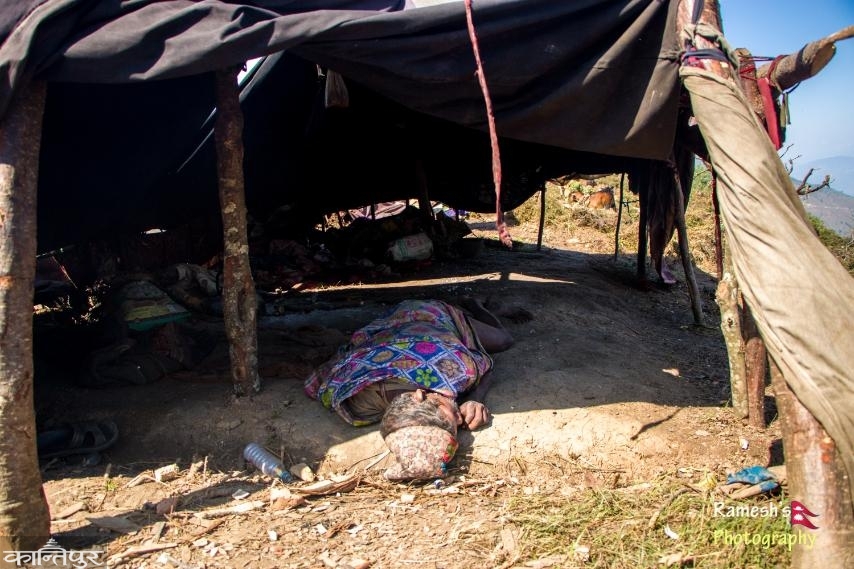
Amit Poudel, an assistant professor at Johns Hopkins University in the US, who has been closely studying the Raute community for two years, says, "The government, NGOs and society have trapped this community in a quagmire of dependency. Similarly, if the Raute are only made into entertainment characters, it will not take long for this community to be destroyed."
He said that the Rautes are forgetting their traditional skills as the state has started going to the settlements to pay monthly allowances to the Rautes, telling them to live comfortably. According to experts, when designing programs for the protection and development of small indigenous communities like the Rautes, it is necessary to maintain a balance between their culture, lifestyle and health risks. Researchers have warned that any intervention that changes their lifestyle may have unexpected effects on the social and health sectors. The development programs implemented while ignoring the traditional nomadic lifestyle of the Raute community, its economy dependent on forest resources, and cultural norms are weakening their social security and cultural existence. The irregularities in the allowance given to this endangered community have added a bigger challenge.
I will take action : Top Bahadur BC, Chairman, Gurans Rural Municipality
Gurans Rural Municipality Chairman Top Bahadur BC said that when he tried to see the documents related to the distribution of Raute allowances after he was elected in 2079 BS, he could not find them in the office.
‘I was also suspicious at first and tried to see the documents, but the staff hesitated,’ he said, ‘I had bought and sent a finger device so that there would be no confusion in the Raute allowances, but the staff has not used it. अहिले गाउँपालिकाले सामाजिक सुरक्षा भत्ता दिन थालेदेखिका कागजपत्र जम्मा पारेर हेरिरहेको छु, केही गडबड भए म कारबाही गर्न तयार छु ।’
गाउँपालिकाका प्रमुख प्रशासकीय अधिकृत डिनायट घर्तीले राउटे परियोजनामार्फत काम गरेको सामाजिक सेवा केन्द्र (सोसेक) का कर्मचारीले दिएको सूचनाका आधारमा राउटेलाई भत्ता वितरण गर्दै आएको दाबी गरे । यद्यपि, सोसेकले उपलब्ध गराएको तथ्याङ्क र गाउँपालिकाको तथ्याङ्कमा फरक–फरक विवरण छन् । घर्ती भन्छन्, ‘हामीले भन्दा पनि सामाजिक सेवा केन्द्रका कर्मचारी राउटे समुदायसँग निरन्तर सम्पर्कमै हुन्छन्, त्यहीं बस्छन् । केही प्राविधिक त्रुटि भएको रहेछ भने म कागजपत्र हेर्छु ।’
- ज्योति कटुवाल (खोजपत्रकारिता केन्द्रका लागि)