Bill to Regulate and Manage Cannabis Cultivation Passed: What Are the Standards?
We use Google Cloud Translation Services. Google requires we provide the following disclaimer relating to use of this service:
This service may contain translations powered by Google. Google disclaims all warranties related to the translations, expressed or implied, including any warranties of accuracy, reliability, and any implied warranties of merchantability, fitness for a particular purpose, and noninfringement.
A legal pathway has opened for the cultivation of cannabis for medicinal and industrial purposes in Gandaki Province.
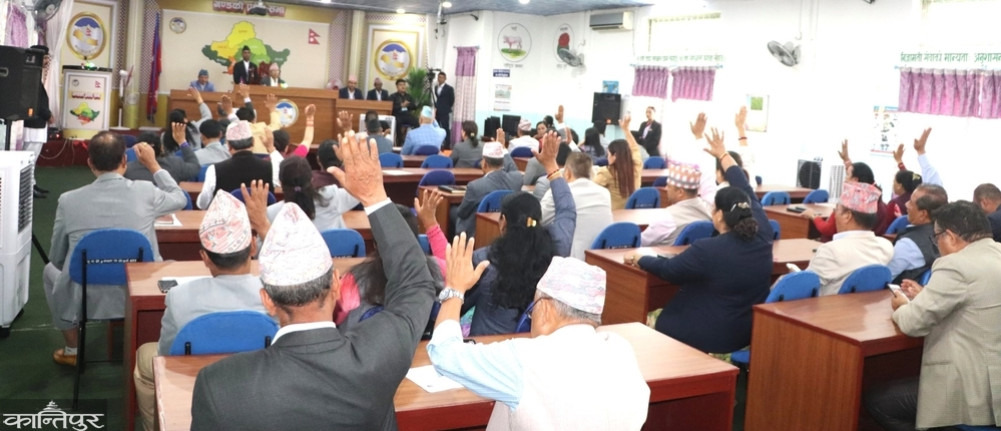
With the unanimous passage of the “Bill to Regulate and Manage Cannabis Cultivation” by Thursday’s meeting of the Gandaki Provincial Assembly, a legal basis has been established for its commercial production and use. However, Section 3 of the Narcotic Drugs (Control) Act, 1976 includes cannabis and medicinal cannabis within the definition of narcotic drugs. Section 4 of the Act prohibits the cultivation, production, preparation, purchase, sale, distribution, export or import, transportation, storage, or consumption of cannabis.
Minister for Industry and Tourism, Yashoda Rimal, had presented the proposal for a clause-wise discussion on the bill. During the discussion, Provincial Assembly members Ashok Shrestha, Ganeshman Gurung, Sushila Sinkhada, and Bindu Paudel expressed their views on the strengths and weaknesses of the bill. After Minister Rimal clarified the questions and concerns raised by the lawmakers, Speaker Krishna Prasad Dhital announced the unanimous passage of the bill.
Earlier, on Wednesday, Bhojraj Aryal, Chairperson of the Provincial Assembly’s Finance and Development Committee, had presented the revised report of the bill to the House. Chairperson Aryal said that with the passage of the bill, it is being viewed as a “game changer” plan for the province’s prosperity.
He stated that the draft was prepared by commissioning the Nepal Law Society, and the bill was finalized after discussions among experts and joint secretaries of the federal government. “The federal government is also preparing to make a law on this matter. Even now, there is an industry in Budhanilkantha that produces medicine from cannabis,” he said. “The Supreme Court’s precedent has not prohibited cannabis cultivation either. We believe we can proceed in coordination with the federal government. If the federal government itself opposes, implementation will be difficult.”
The passed bill sets strict international standards to prevent the misuse and to regulate cannabis cultivation. It mandates that the amount of the intoxicating substance ‘tetrahydrocannabinol’ (THC) in cannabis plants produced for industrial purposes must be less than 0.3 percent. Such cultivation for medicinal production, research, and export will be under the direct supervision and control of the provincial government. The roots, stalks, and bark of cannabis are to be used for industrial purposes. The bill stipulates that cultivation will only be permitted with a license, based on the designated area set by the government and the area of land with prior approval.
Similarly, the bill requires mandatory chemical testing before the harvested cannabis plants can be cut and distributed for sale. For this purpose, the provincial government will establish laboratories either on its own or in partnership with the private sector, and established educational and research institutions may also be assigned the responsibility for testing.
The bill includes special provisions to prevent the potential misuse and abuse of cannabis. To mitigate risks from medicinal use, the government is tasked with operating treatment centers with medical services and rehabilitation centers, as well as taking legal action against abusers.
The parliamentary committee had conducted extensive groundwork to finalize this bill. After being referred to the Finance and Development Committee on 28 Kartik 2082, the bill underwent eleven meetings and extensive revisions. From 25 Magh 2082 to 12 Asar, consultations were held with stakeholders, ministry secretaries, and rural municipality chairpersons from Baglung and Myagdi.
The committee stated that the opinions of experts including Prof. Dr. Panna Thapa, Dr. Ganesh Airi, and Dr. Nirmal Lamichhane were incorporated to make the bill practical and scientific. “We have made a law that neither any province nor the federal government has made. We have done so with the intention that others can learn from it in the future,” said Committee Chairperson Aryal. “By binding it with all procedures, we believe there will be no negative impact on society.”