We use Google Cloud Translation Services. Google requires we provide the following disclaimer relating to use of this service:
This service may contain translations powered by Google. Google disclaims all warranties related to the translations, expressed or implied, including any warranties of accuracy, reliability, and any implied warranties of merchantability, fitness for a particular purpose, and noninfringement.
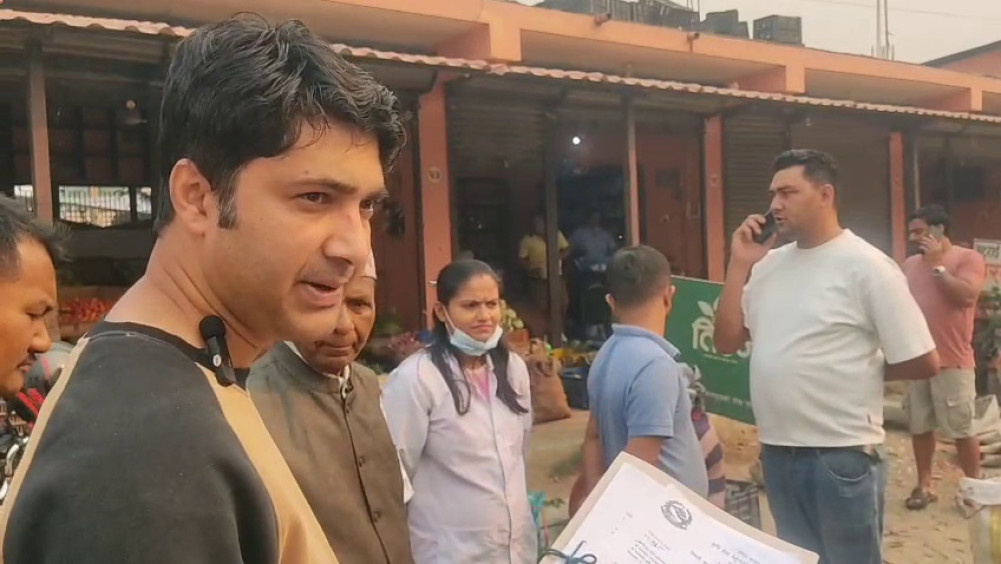
High levels of pesticides have been found in radish greens kept for sale in the hot market and vegetable shop at Kawasoti in East Navalparasi. Greens brought from Chitwan and Palung were tested and found to be unfit for human consumption.
During the pesticide testing of vegetables and fruits coming to the vegetable market, up to 99 percent of pesticides were found on Saturday, according to Deputy Technical Assistant of the Rapid Analysis Laboratory Unit, Kawasoti, Birendra Bhandari. Greens found to be highly toxic have been confiscated and destroyed.
Carbamate and organophosphate in fruits and vegetables are considered edible if they are less than 35 percent, but because they were found to be more than that, they were confiscated, said Dr. Tekraj Poudel, Head of Animal Development Branch of Kawasoti Municipality.
According to the technicians, because of the off-season vegetables, more pesticides were used and they were sent to the market immediately after the use of pesticides.
In Kawasoti, the headquarters of East Nawalparasi, the pesticide testing center for vegetables and fruits has been being tested regularly. Under the Ministry of Agriculture and Livestock Development of the Government of Nepal, the Agricultural Laboratory has launched a Pesticide Residue Rapid Analysis Laboratory Unit.
Various pesticides belonging to carbamate and organophosphate groups are being tested by regularly collecting samples from the wholesale market.