The Bagmati clean-up campaign is in its 13th year, but the trend of mixing sewage in the river has not stopped
We use Google Cloud Translation Services. Google requires we provide the following disclaimer relating to use of this service:
This service may contain translations powered by Google. Google disclaims all warranties related to the translations, expressed or implied, including any warranties of accuracy, reliability, and any implied warranties of merchantability, fitness for a particular purpose, and noninfringement.
The Bagmati and its tributaries within the Kathmandu valley have not been cleaned after 32 years since the establishment of the government body with the aim of making them clean, tidy and green.
The Pashupati area environmental improvement implementation and monitoring committee was formed by the then government on Chait 28, 2051 to restore the religious, cultural and archaeological heritage of the river by making it clean. Even though the government has built such a structure for more than three decades, the process of mixing sewage on the Bagmati banks has not stopped . Even though Bagmati is black due to sewage, it has not been noticed by the concerned bodies.
Committee's authority and field of work were limited, less than a year later, on November 6, 2052, its area was expanded as the empowered Bagmati Sewerage Construction Improvement Project Implementation and Monitoring Committee . After 16 years of its formation, on 26th June 2065, its name was changed to the Empowered Bagmati Civilization Integrated Development Committee.
Committee's information officer Uddhav Nepal said that the purpose of the committee is to maintain the flow area on the banks of the Bagmati river, such as construction of infrastructure works such as sewers, roads, green areas, embankments and check dams, and the construction and operation of sewage treatment centers. He said that the purpose of the committee is to arouse interest and concern about the increasing pollution of the river among the general stakeholders through the awareness program.
The Bagmati river, which is a holy place of pilgrimage for Hindus and a symbol of civilization, has come under the grip of pollution due to human encroachment in the last four decades. After the existence of the precious fund of the country is in crisis, the information officer Nepal says that the cornerstone of the existence of the current committee is to start the work of decontamination of the river with high priority from the government sector as well as the intense pressure of the conscious civil society.
The increasing population of the capital, uncontrolled urbanization, unorganized sewage disposal and industrial and other waste disposal have forced the Committee to clean the Bagmati River for three decades, but the target has not yet been found, said Ramkumar KC, president of Kathmandu Metropolitan City-10. He says that even though the Metropolitan Corporation is trying to help in making the river clean, the related agencies are showing little interest.
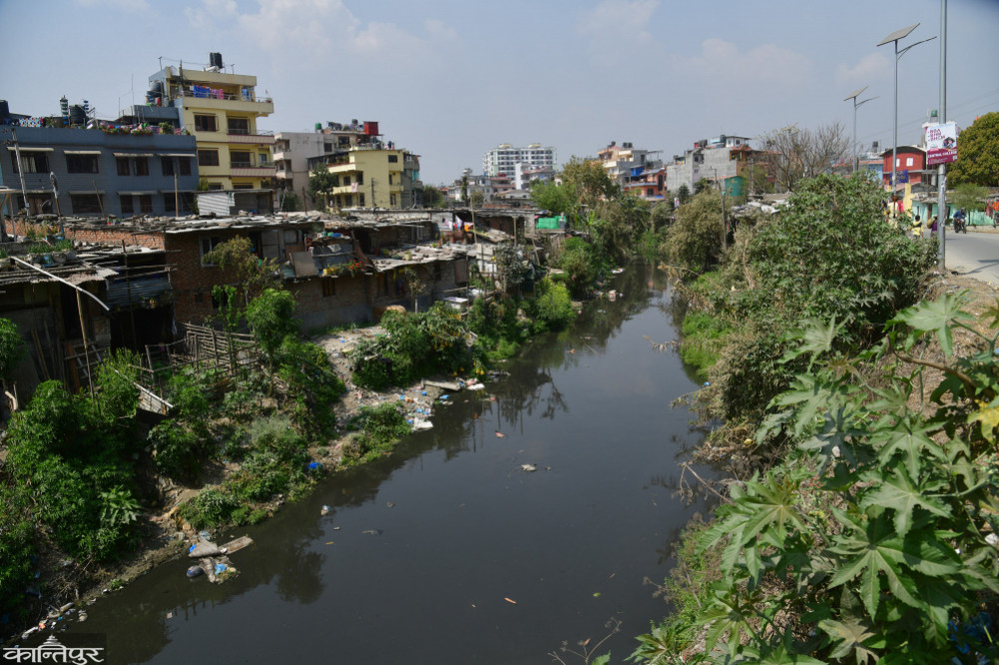
Along with the name change of the committee, the area of work has also been added to keep the river clean and clean from Shivpuri watershed, the source of Bagmati river to Chobhar. The committee has also been given the responsibility of constructing sewers on the banks of the river in order to ensure that no type of contaminated material (solid or liquid) can be mixed in the Bagmati river and if any liquid must be mixed, it can only be mixed after treating the water. But the committee has become a silent spectator even when the sewage is mixed in Gaurighat, which is 50 meters away from where the office of the committee is located.
The committee has also been given the responsibility of constructing, operating and maintaining waste water treatment centers in the rivers of Kathmandu Valley, building embankments to control river erosion, building roads and planting trees as needed on the river banks, but the leadership of the committee has been vacant since the past one year, said Information Officer Nepal.
As the flow areas and green areas of other rivers in Kathmandu Valley are being encroached upon, the responsibility of controlling them has also been given to the committee along with the name changes made on various dates. But the work started by the committee has not been completed and voices are being raised in the parliament.
In the meeting of the House of Representatives on Monday, the MP Rama Koirala Paudel drew the attention of the government agencies to complete it as soon as possible, saying that even though they had started laying sewage on the banks of the Hanumante river in Bhaktapur, it was left behind.
sewage directly into Bagmati
The Bagmati Cleanup Campaign has entered its 13th year. The clean-up campaign is going on - as if it is erasing the steps, no matter how much it is cleaned, it has reached a state. Sewage discharged from Chabahil Peepalboat is directly mixed with sewage in Gaurighat in Pashupati area .
The clean-up campaign, which started on 5th June 2070, entered its 13th year from Monday. Even after cleaning for twelve years, Bagmati still looks black. Even when the sewage is mixed in the Gaurighat above the Pashupatinath temple, the concerned authorities have not been able to pay attention. The office of the empowered Bagmati Committee is only about 50 meters away from here .
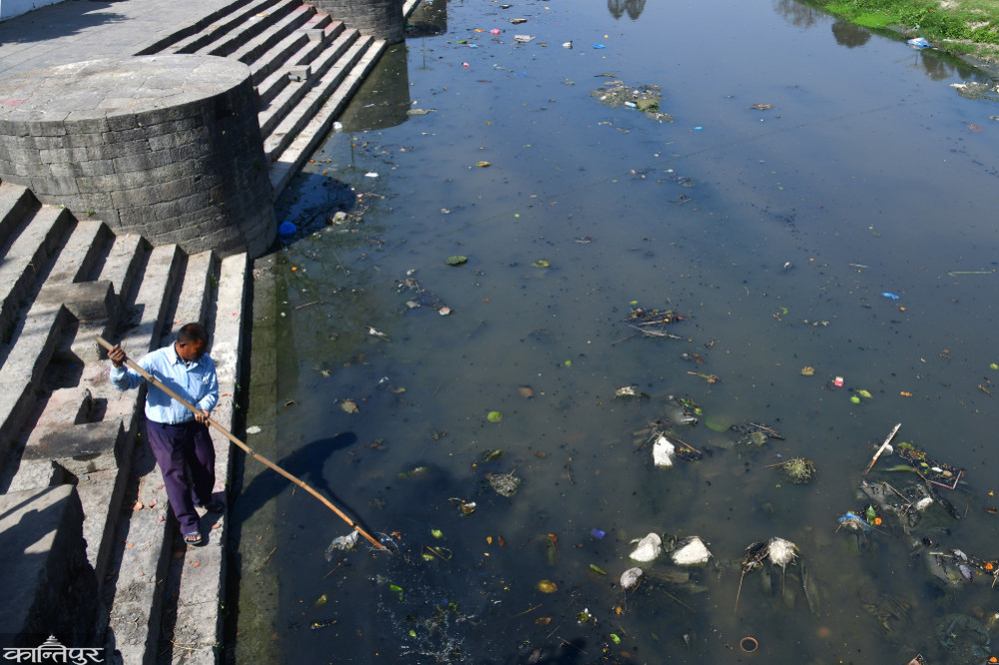
Arjun Lamichhane, the editor of the spiritual monthly magazine Gauri, said that sewage was mixed directly into the Bagmati River along the Gourighat, the penance place of Mother Parvati. He said that when low-capacity sewage was laid by Kathmandu Metropolitan City-7 along the slope of Pipalbot road through Chabahil Gourighat, the overflow of sewage was connected to the side drain and sent directly to Bagmati.
After mixing sewage in the Bagmati river above the Pashupatinath temple, the stakeholders of the Bagmati clean-up campaigners have protested. Due to the small size of the sewer and lack of regular cleaning, the sewage water sent from Gaurighat Chowk to Guhyeshwari sewage treatment plant has started falling directly into Gaurighat.
Earlier, the ward president of Mahanagar-7, Bimal Kumar Hoda, had submitted a request to the office of the empowered Bagmati Civilization Integrated Development Committee demanding the laying of 72-inch sewer. Heritage lovers have objected to the fact that the sewage was mixed without taking care to implement it. Ward president Hoda admits that the sewage got mixed in the Bagmati due to the overflow in the sewer and the excess of sky water. He said that this situation has come about because the Bagmati Committee, which has been assigned responsibility for this, did nothing.

