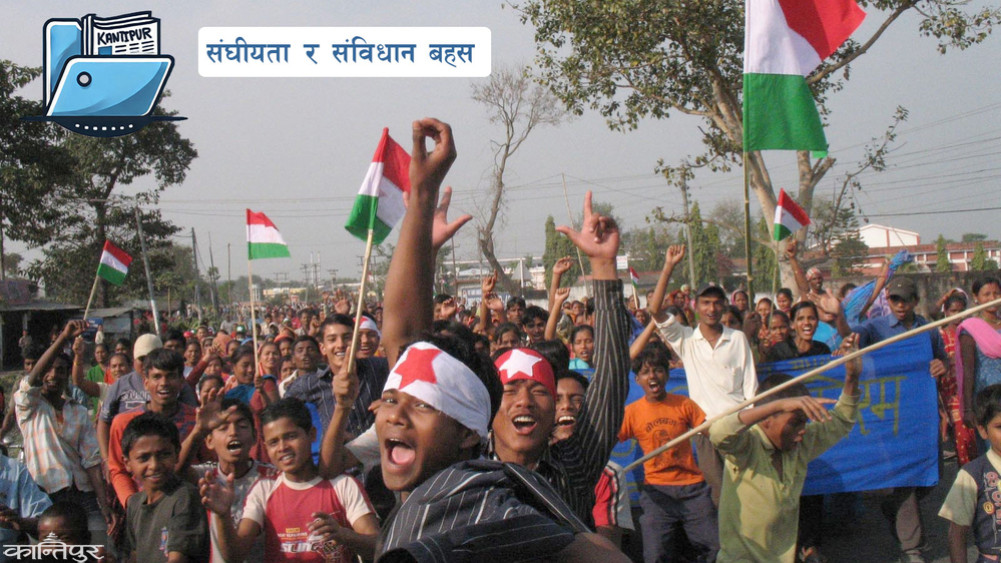
The special foundation of federalism in Nepal was dug by the Madhesh movement 18 years ago. The federal structure has been prepared on the strength of that movement. But the finishing of the said structure has not been done yet. Even though the state government has been practicing autonomy for 7 years, Madhesh is still in an agitated state of mind.
We use Google Cloud Translation Services. Google requires we provide the following disclaimer relating to use of this service:
This service may contain translations powered by Google. Google disclaims all warranties related to the translations, expressed or implied, including any warranties of accuracy, reliability, and any implied warranties of merchantability, fitness for a particular purpose, and noninfringement.
Through the king, the army and the administrative services, the Pahades, who are in the majority, have gained political power in both the hills and Madhesh. In order for Nepal to become a more complete nation than now, the people of the plains must be brought into the national framework' - these are the sentences written by the American writer Frederick H. Gage 50 years ago today.
In the book "Regionalism and National Unity in Nepal" written by him in 1975, he said - "It is not possible to transform the Terai into a national framework with the power of the Nepalese government". It seems more practical to draw the people of Terai towards the national structure by making them participate in the politics of the country and by encouraging them to voluntarily accept the national political and cultural values . The topic written by Gage half a century ago seems equally relevant now. Writing about the Nepalization of the Terai through the migration process, the current status of the mountain community, he has indicated that the people of the Terai can revolt for their identity at any time. As
Gage said, 18 years ago today in 063 Magh, the Raithane Madheshis of Terai rebelled for rights and identity . Within a year after the 062/063 mass movement was stopped, the movement rose in Madhesh . The 24-day continuous movement succeeded in giving constitutional identity to Madhesh and Madheshi for the first time. The cause of the movement was the neglect of the demands raised by Madhesh in the interim constitution.
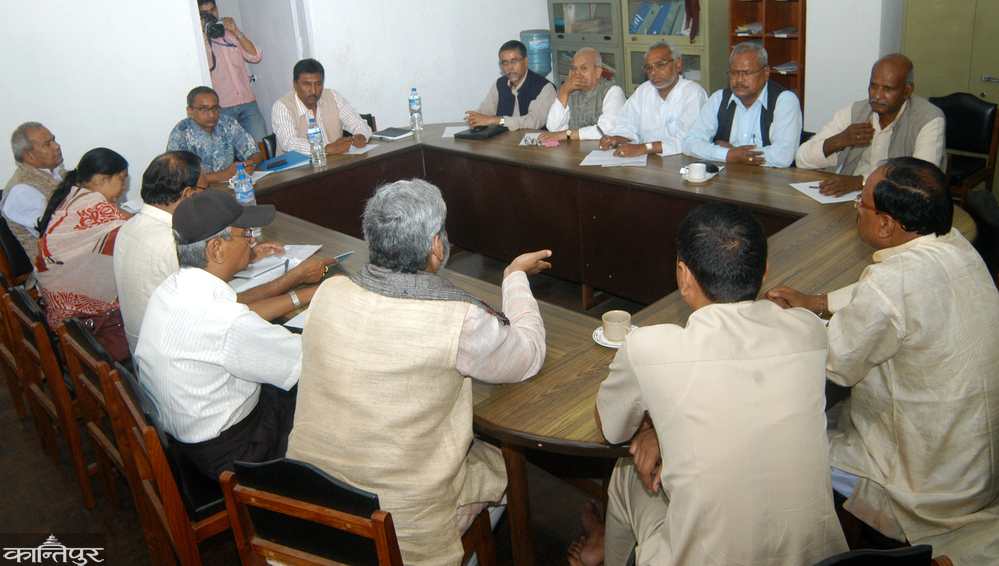 Madhesh-centric party leaders at the meeting. File photo: Kantipur
The interim constitution was brought on 1 January 2063 with the consensus of eight parties including the then rebel Maoists who came to the peace process. An interim constitution was issued for the period until the constitution was promulgated by the Constituent Assembly. The Interim Constitution was the foundation stone for the Constitution to be issued by the Constituent Assembly.
However, the same interim constitution ignored the demand for proportional representation raised by the Madhesi people years ago. On the other hand, there was silence regarding the restructuring of the state with the federal government. It increased the discontent among Madhesi people.
The Madhesi Janadhikhar Forum, which had not taken the form of a political party at that time, opposed the said constitution. The day after the interim constitution was issued, copies of the constitution were burned at the funeral home in Kathadoun under the leadership of Upendra Yadav, the coordinator of the Madhesi Janadhikhar Forum. The government arrested 28 leaders and activists including Yadav and filed a sedition case.
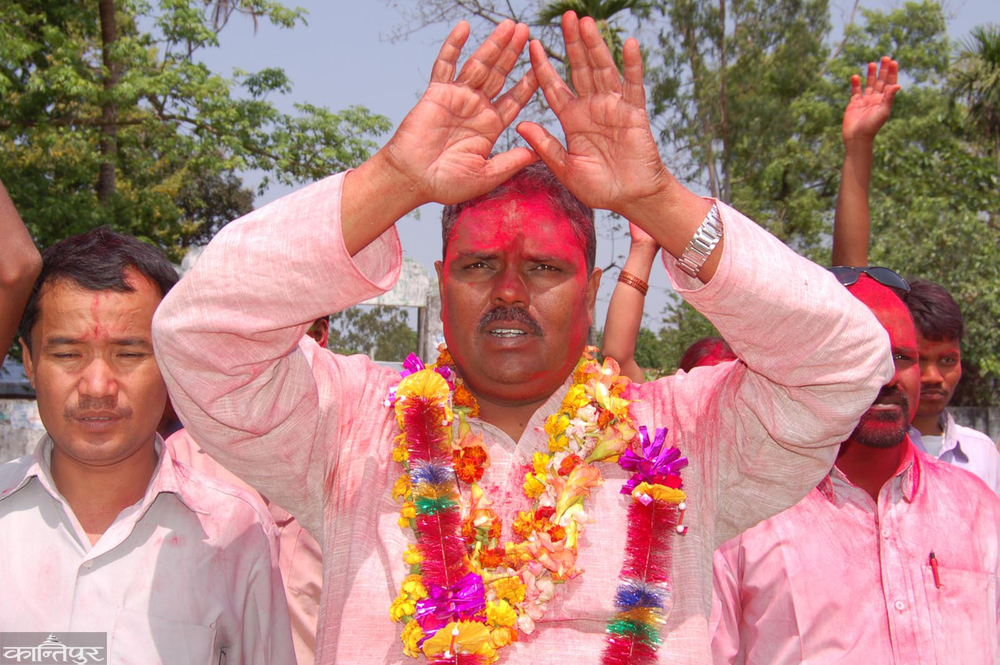 file photo: Kantipur
The sporadic movement started in the districts of Madhesh from the next day demanding the release of the leaders and workers including Yadav. 5th January 2063 became a decisive moment for the movement. In Lahan, there was a clash between Madhesh protesters and Maoist activists. Ramesh Mahato, a local youth involved in the Madhesh movement, was killed by a bullet fired by Maoist activists. Because of that incident, the movement in the headquarters of 10 districts from Morang to Parsa grew so much that it was not under anyone's control. The
movement had taken the form of a rebellion. Even the forum that initiated the movement had no idea that the movement would take that form. The government machinery was also unaware of the rise of the movement. Day by day the movement was taking a violent form . Slogans like 'Jago Madhesh, Mago Madhesh' and 'Samagr Madhesh Ek Pradesh' united Madhesh emotionally. On the sign board of the government offices, Nepal government was erased and Madhesh government was written. Jitendra Sonal, the former secretariat member of
forum and in-charge of the youth committee, comments that Madhesh woke up for their rights for the first time. All the villages and hamlets of Madhesh had become agitators, the Forum had not even become a political party. There were nominal organizations in the districts," he recalled. "Even though the call was made by the Forum, it had become a movement of the common Madhesi people. The pain that had been lost for years was poured out on the streets. The country was only stopped by taking it to the federal system. Sonal is now the senior vice president of the Democratic Socialist Party. The state's discriminatory behavior towards the Madhesh for hundreds of years became the main reason for the Madhesh revolt. The forum had called for a movement to say
. However, due to the weak organizational structure of the forum, the movement did not get leadership everywhere. It was recognized as the first 'Madhesh Rebellion'. The Madhesh movement revolved around these three demands that the state system should be based on federalism, constituent assembly constituencies should be formed on the basis of equal population, and proportional representation of the Madhesi community in every body of the state. 22 districts of Terai Madhesh were continuously protesting for that. 43 people took part in the movement, which lasted longer than the second Janandon. Hundreds of people were dismembered.
Even from the speech given by the then Prime Minister Girija Prasad Koirala on January 17, 2063, the movement did not stop and took a more violent form. After that, Koirala made a second speech on January 24 saying that the government is committed to meet the demands of the Madhesh movement with the consent of eight political parties. In that speech, it was promised that the constituency will be increased based on the population percentage of Madhesh and the number of representation through the proportional election system will also be increased by the same number. Apart from that, the federal state system was accepted .
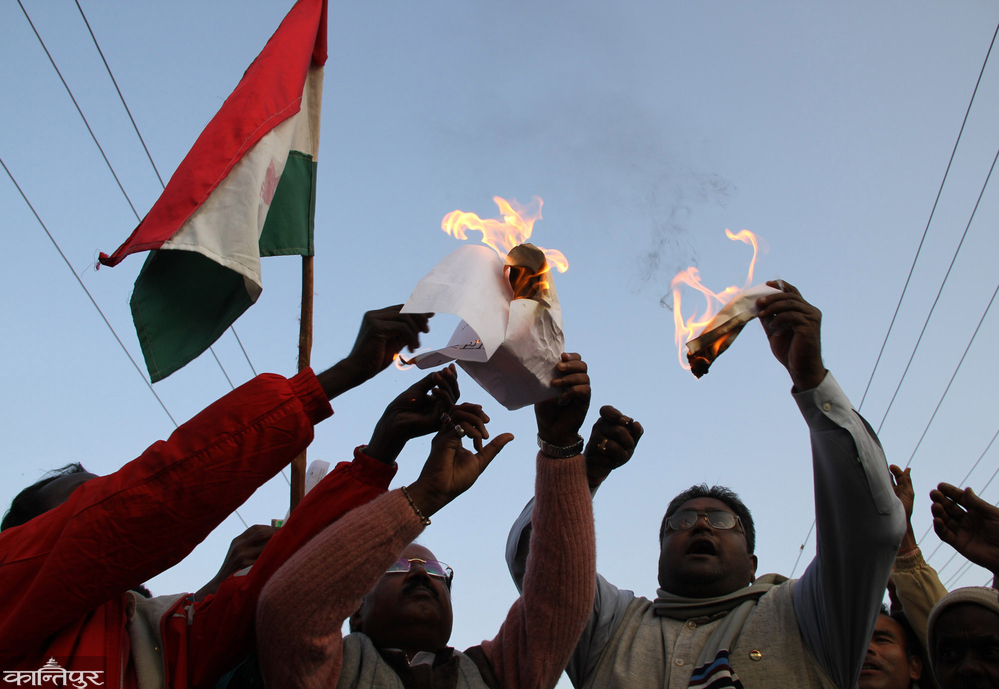 file photo
The movement that took the form of rebellion was stopped after Koirala promised that all people, including Madheshi, Dalit, tribal, tribal, women, backward areas and classes, would participate in the governance system. The same movement led to the rise of Upendra Yadav in Madhesh and national politics. With the 22-point agreement with the government on August 13, 2064, the Yadav-led Madhesi People's Rights Forum entered into electoral politics.
'Federalism' was added to the interim constitution
After the success of the people's movement, a draft committee was formed to prepare a draft of the interim constitution under the coordination of former Supreme Court judge Laxman Prasad Aryal, according to the agreement reached between the government of Nepal and the CPN-Maoist on 2 June 2063. The interim draft prepared by the Aryal-led committee was signed by 8 political parties including the Maoists on 1 January 2063. And agreed to release one month after signing. One of the 8 parties Nepal Sadbhavana Party (Anandi Devi) signed the interim constitution with its dissent.
The resolution of progressive restructuring of the state to solve the existing class, ethnic, regional, gender problems of the country was made in the preamble of the interim constitution. Despite the commitment to a competitive multi-party democratic governance system, there was no mention of federalism.
The Constituent Assembly was said to have 425 members. A mixed election system was adopted for that. On the direct side, the 205 constituencies that existed until the House of Representatives elections of 2056 were kept as they are. 204 seats were allocated towards the proportional election system . Provision was made to nominate 16 members by the government. Dissatisfaction in Madhesh had started to appear even before the issuance of the interim constitution against the fact that federalism was not guaranteed and constituencies were not arranged in proportion to the population.
Nepal Sadbhavna Party (Anandi Devi) had announced various pressure movements from 3rd to 10th of December saying that the upcoming interim constitution ignored the issue of Madhesh. NESP was a constituent of 8 parties and a participating party in the government . The said party called for a Madhesh bandh on 10th of January saying that the interim constitution is anti-Madhesi. During the bandh, violence spread in Nepalgunj. It had taken a communal form. The movement of Pus had already prepared the ground for Magh.
The rebellion of Magh forced to accept federalism by revising the interim constitution. The first amendment to the interim constitution was made by the Legislature Parliament on 25th February 2016. It was approved by the President on February 30. Through the
amendment, the subject of 'federal governance system' got a place in the interim constitution . In the preamble of the constitution, Nepal was declared to be a federal, democratic republican state. It was said that the centralized and unitary structure of the state will be ended and the progressive restructuring of the state will be done with an inclusive, democratic federal governance system. agreed to review the
constituencies . Based on the population determined from the national census, the provision of constituencies was placed in the interim constitution to maintain constituencies in such a way that the ratio between the districts and the number of members is as equal as possible. The assurance of representation in the Constituent Assembly on the basis of equal population and geographic compatibility and specificity and on the basis of population percentage in Madhesh was done by the first amendment of the interim constitution.
Likewise, the provision to make Madhesi, Dalit, tribal, tribal, women, workers, farmers, disabled, backward classes and regions participate in all parts of the country's state structure on the basis of proportional inclusion was added to the interim constitution on the strength of the Madhesh uprising. After the first amendment, the Interim Constitution, 2063 gave recognition to Madhesh and Madheshi.
In the movement of 2062/063, 'federalism' was not heard anywhere in the demand or slogan. Slogans like full democracy, saameli/inclusive democracy were chanted . However, the Madhesh rebellion had a single demand - federalism. Gajendra Narayan Singh and his Sadbhavana Party have been demanding federalism in Madhesh due to lack of participation in the central government. Similarly, during the armed conflict, the Maoists gave the slogan of 'Federal Province with the right of self-determination and autonomy'. However, after the interim constitution with the participation of Maoists did not say anything about federalism, Madhesh protested on that issue.
After the restoration of democracy in 2046, Singh made the representation of Madhesh in the House of Representatives in proportion to the population and the idea of the provincial government his main political issue. Singh and the Sadbhavna Party led by him prepared Madhesh for rebellion for two decades by awakening to their rights in Madhesh.
The first general election of 2015, the elections for the national panchayat or the three elections held in 048, 051 and 056 after the restoration of democracy, Madhesh was never represented in the parliament in proportion to the population. Madhesh's representation did not exceed 21 percent in any election. Sadbhavana Party was constantly raising the issue of representation in proportion to the population. With the strength of the Madhesh movement, the previous 88 constituencies were increased to 116 areas in the districts of Madhesh. For the first time in the Constituent Assembly of 2064, the representation of Madhesh reached 34 percent.
Madhesi people had a long movement for rights, identity and federalism after 2063 and also in 064 and 072 . A year after the first movement, another movement took place . Mahanth Thakur, an old leader in the Congress, left his post as a minister and joined the Madhesh movement. Leaders who left various parties united under the leadership of Thakur and announced the Terai Madhesh Democratic Party on 13th December 2016. By then the forum had also taken the form of a political party. The Madhesh-centric Old Sadbhavana Party was going on. The United Democratic Madhesi Front, which includes all the three parties, had protested with the Madhesh bandh from February 1, 2016. On February 16, the agreement reached between the then Prime Minister Koirala and the leaders of the Morcha ensured the autonomous Madhesh province, the collective entry of Madheshis into the Nepali Army. Constituent Assembly election was possible only after agreement with the front.
The fight for federalism in the Constituent Assembly
2064 Constituent Assembly election held on 28 Chaitra, Madheshi Janadhikhar Forum led by Upendra Yadav, Terai Madhesh Democratic Party led by Mahanth Thakur and Sadbhavana Party led by Rajendra Mahato won a total of 81 seats and made a decisive presence in the Constituent Assembly. Forum 52, Tamalopa 20 and Sadhavana Party won 9 seats . The presence of the Madhesi party was strong in the first Constituent Assembly. Madhesi representation from other parties also increased. Madheshi was elected as the first president and vice president of the country.
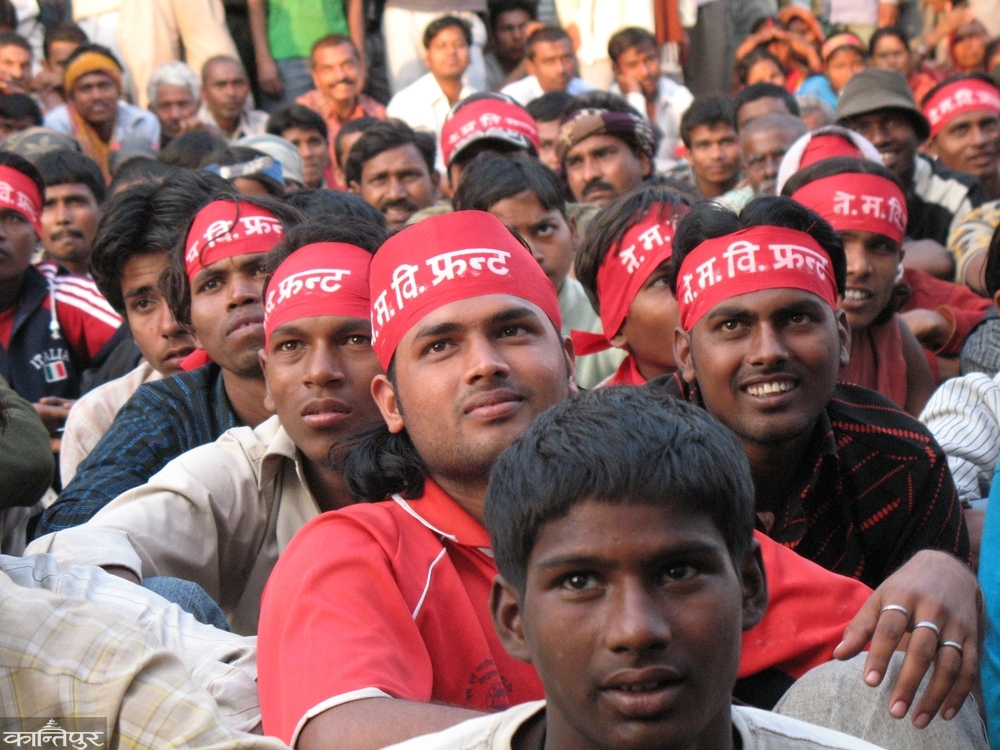 File Photo
After entering the Constituent Assembly, the United Democratic Madhesi Front increased pressure to write the agreement made with them into the interim constitution. Within a month and a half of the first meeting, some of the demands of the front were included in the constitution in the fifth amendment to the interim constitution. After the Morcha blocked the Constituent Assembly for 14 consecutive days, the government led by Girija Prasad Koirala and the main political party were forced to accommodate the demands of the Madhesi party in the amendment.
In the interim constitution amendment on 28 June 2065, the issue of Madhesh was included in articles 138 and 144 of the constitution. In the progressive restructuring of the state in Article 138, (1a) was added and written - "Nepal will be a federal democratic republican state by accepting the wishes of the Madheshi people and the tribal tribes and the people of backward and other regions for an autonomous province". Keeping the sovereignty, unity and integrity of Nepal intact, in addition to the boundaries, number, names and structure of the autonomous provinces, the full details of the list of centers and provinces, distribution of resources and rights will be determined by the Constituent Assembly.'
Similarly, Article 144 of the Constitution was amended to address the demand for entry into the Nepali Army. In Article 144, (4A) was added - 'In order to make the Nepalese army national and inclusive, the entry of people including Madhesi, tribal tribes, women, and backward areas will be ensured by arranging in the law based on the principles of equality and inclusiveness.' The achievement of -2 was .
The two main issues of the 8-point agreement between the government and the United Democratic Madhesi Front on February 16, 2064 were federalism and the entry of Madhesi into the army. In the agreement, it was as follows: Nepal will be a federal democratic republic state by accepting the desire of the Madhesi people for an autonomous Madhesh province and the aspirations of the people of other regions for a federal structure with autonomous provinces. In the federal structure, the power will be clearly divided between the center and the provinces on the basis of the list. The provinces will be fully autonomous and empowered. Keeping the universality, unity and integrity of Nepal intact, the structure of the autonomous provinces, the complete details of the lists of the center and the provinces and the distribution of powers will be determined by the Constituent Assembly. Likewise, proportional inclusion and group entry of Madheshi and other communities will be ensured to give the Nepali Army a national character and make it inclusive.
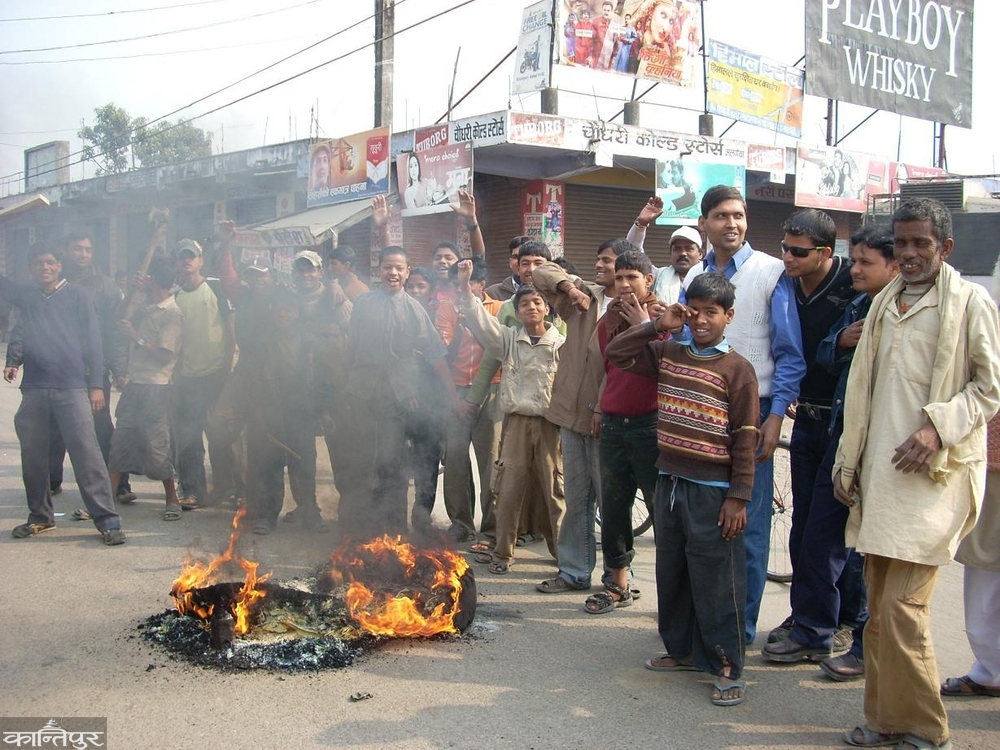 Among the points of agreement between the government and the front, the interim constitution was amended to include these two issues. However, the parties affiliated to the front did not participate in the amendment process, saying that the matter according to the agreement was not included in the amendment of the constitution. However, the obstacle of the Constituent Assembly which has been continuously removed.
After that, due to the strength of numbers, the role of Madhesi parties increased in the game of making and overthrowing the government. Throughout the first term of the Constituent Assembly, the Madhesi party participated in one government after another. It increased the representation of Madhesh people in the cabinet.
It strengthened the voice within the government and the Constituent Assembly regarding federalism, inclusiveness, and proportional representation. However, due to the lust for power, the Madhesh-centric parties were fragmented during that period. Madhesi parties also became weak as the party split, leaders moved from one party to another.
Constituent Assembly-1 had a good presence of supporters who wanted change including Madhesi and tribes. Unfortunately, the first Constituent Assembly was dissolved on May 14, 2069 due to disagreement between the major political forces regarding the number and demarcation of provinces in federalism.
The presence of Madhesi parties in the Constituent Assembly-2 has weakened . The Madhesi party did not bring the expected results in the elections due to frequent divisions and power struggles. The number of all the parties centered on Madhesh was reduced to 40 seats. At the beginning of the Second Constituent Assembly, Congress formed the government with the support of UML, so the role of small parties in the game of government formation became zero . The 'bargaining' power of Madhesh was weakened after the numerical strength itself. Maoist, who positioned himself in the pro-change section, was also weakened in the Constituent Assembly-2 . The presence of Congress and UML came stronger than last time.
When the Madhesi party was weak, Congress, UML and Maoist main three parties tried to issue a constitution with a federal structure without borders. Madheshi People's Rights Forum led by Vijay Gachchdar along with the main three parties agreed on 16 points for the constitution on May 25, 2072. There was a matter of promulgating the constitution without the demarcation of provinces. The United Democratic Madhesi Morcha protested against the agreement by expelling him from the front saying that Gachchdar had worked against Madhesh by signing it. The pressure of the front and the order of the Supreme Court forced the parties to issue a constitution with the boundaries of the provinces.
In the Constituent Assembly-1, some agreements on provincial structure, inclusiveness, constituency determination etc. were overturned in the Constituent Assembly-2. The front was not satisfied with the demarcation of the proposed province. The Madhesi parties were retreating from the slogan of one Madhesh province and were ready for at least two provinces. Their position was that the districts of Madhesh should be divided into two provinces, one in the east and the other in the west.
However, after the constitution with a provincial structure was made to merge all the remaining districts of Madhesh with the hills, except for the 8 districts from Saptari to Parsa, the Morcha started protesting . Opposing the mapping of the proposed province, the front announced a general strike in Madhesh for 31st and 32nd of July 2072. Looking at the support received in the district of Madhesh during the general strike, it was extended indefinitely. In 9 years Madhesh was involved in the third movement for federalism. The movement started in western Terai and spread throughout Madhesh. In Tikapur of Kailali, the center of the Tharuhat movement, on August 7, 7 policemen including SSP Laxman Neupane and a minor lost their lives.
The districts of Madhesh were closed, while violent incidents were happening, the Constituent Assembly brought the constitution on May 3. Province-2 was announced by keeping only 8 districts from Saptari to Parsa under the name of autonomous Madhesh province. Dissatisfied with that, Madhesi Morcha protested for 6 consecutive months . 54 people died in that movement. Hundreds of people were injured. India was also dissatisfied with the constitution. Showing the movement of Morcha, India blockaded Nepal.
First Amendment to the Constitution
To address the Madhesh movement, the first amendment was made within four months without implementing the new constitution. It should be remembered here that the first amendment of the interim constitution was made 9 years ago due to the Madhesh movement. Among the major demands raised by the Madhesi Morcha, the issue of including proportional representation in the state bodies and the determination of constituencies based on population was included in the first amendment of the constitution . The Morcha continued the general strike in Madhesh from July 31 and sit-in at the border post from October 6 with the demand that there should be 2 provinces in Madhesh, proportional inclusive representation in every body of the state, and determination of constituencies based on population.
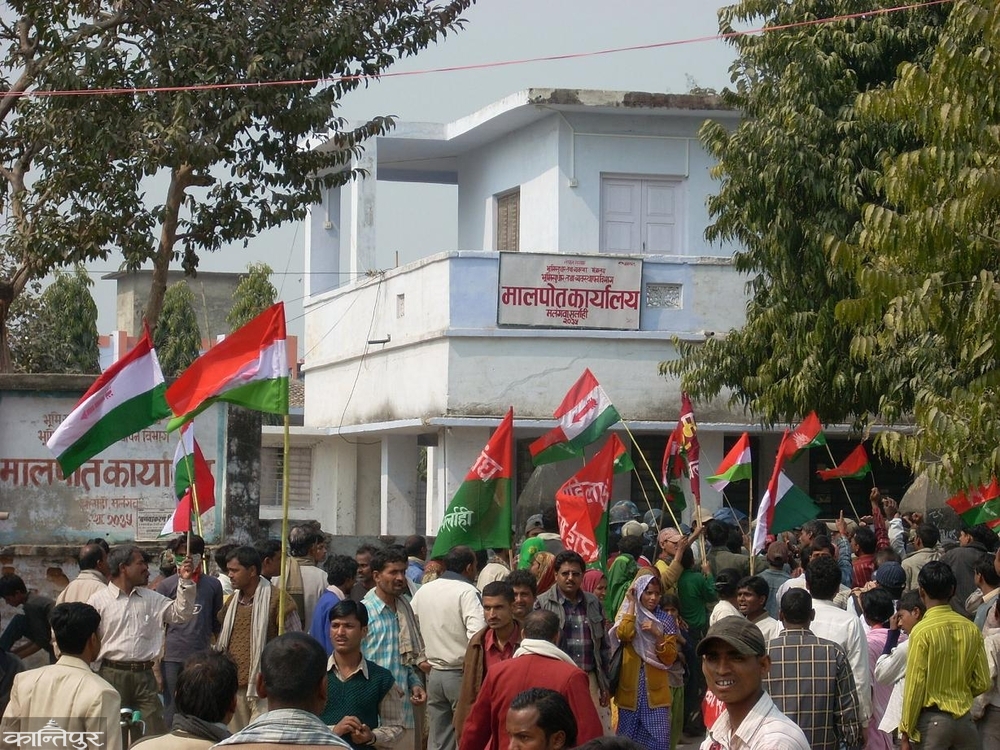 The front was not satisfied with the amendment of the constitution on January 9, which did not address the demand for demarcation of the province. So far, the Madhesh-centric parties have been keeping the demand for demarcation of the province on their agenda. Articles 42, 84 and 286 of the Constitution were amended. Similarly, it was written that the determination of the House of Representatives constituencies in Article 84 will be made "on the basis of population and geographical suitability and specificity". Likewise, by amending Article 286, it was written in the Constitution that the Constituency Determining Commission should consider population as the main basis and geography as the second basis while determining the constituencies . The amendment did not satisfy the front . However, the movement gradually weakened. Finally, the front withdrew the movement from 25 Jan 2072.
Madhesh in the fight to strengthen the province
The constitution of 2072 took the country to a federal structure with seven provinces. After the 2074 Masinar election, it has been 7 years since the provincial structures went into practice. Even in 2079, after the new constitution, there have been two elections of the Provincial Assembly along with the House of Representatives. However, it has been seen that federalism has become powerless in practice. Proponents of federalism say that the issue of making the provinces autonomous is still pending. The Madhesh government has been fighting a legal and political battle for the rights of the province.
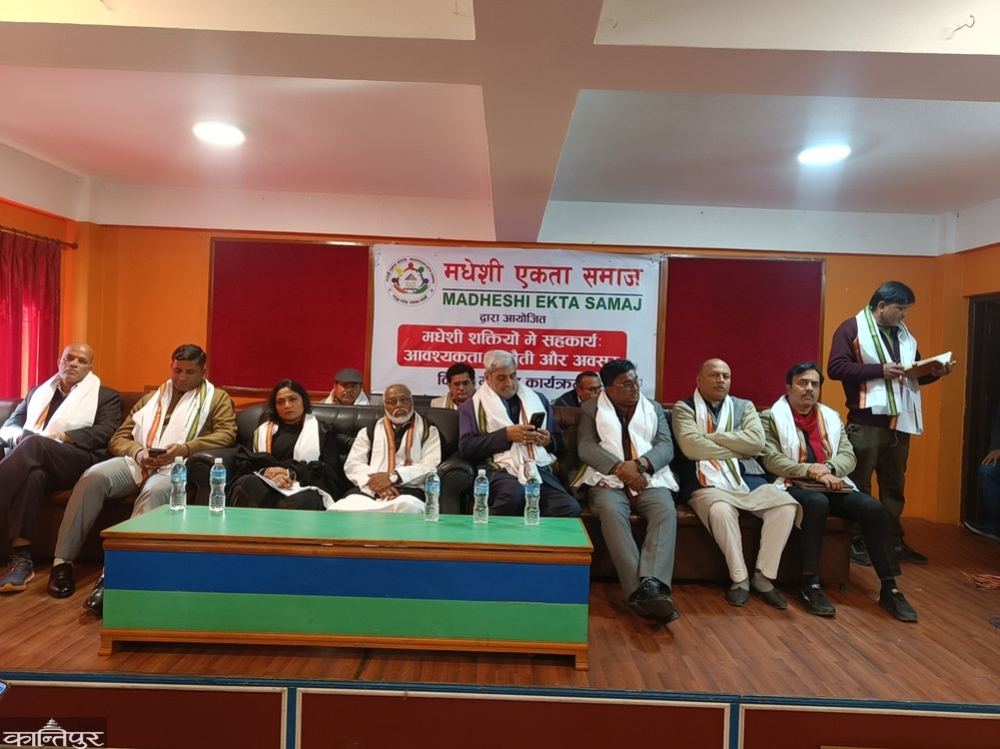 : Madhesh-centric parties in an attempt to regroup.
has become the only Madhesh province to name the province based on identity. Similarly, the Madhesh government has filed more than half a dozen cases in the constitutional bench of the Supreme Court regarding the issue of rights. Leader of Janata Samajwadi Party Nepal and former Chief Minister of Madhesh Province, Lal Babu Raut says that the issue of the rights of the province has become a burning issue now.
"Federalism was introduced like an unwanted baby, as a result of which no attention is paid to its care and protection". On the contrary, efforts have been made to discredit it," he said, "The center is not trying to hand over the insufficient, incomplete and weak rights given by the constitution to the provinces. There is no option to fight continuously for rights.' He said that because federalism was tried to be built only as a unit of development without police administration, it was an unfortunate situation to have to fight for the rights given by the constitution.
Those who have fought for federalism saying that a weak and powerless provincial structure has been introduced, believe that they should fight again for its reform. Leader Hridayesh Tripathi does not consider the federalism given by the constitution to be real federalism. "Parties forced to accept federalism due to the Madhesh movement imposed a distorted federalism without rights," he said. According to global values, Nepal does not have federalism. So it is not working .' He said that federalism needs a lot of reforms.