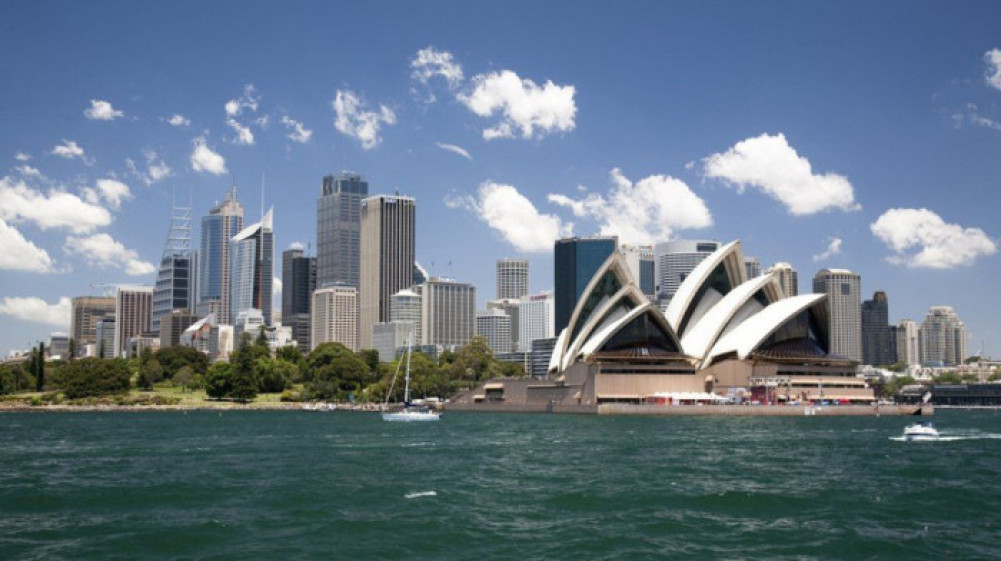
In Australia, many Nepalis live such a life, where they have all the facilities, but less 'satisfaction'. Where you have your family but the 'identity' is disappearing.
We use Google Cloud Translation Services. Google requires we provide the following disclaimer relating to use of this service:
This service may contain translations powered by Google. Google disclaims all warranties related to the translations, expressed or implied, including any warranties of accuracy, reliability, and any implied warranties of merchantability, fitness for a particular purpose, and noninfringement.
Humans are naturally looking for possibilities. If you look at the history of human development, wandering the earth in search of possibilities was like destiny. In today's modern age, it is going on in a different way.
Nepal is not exempted from that and we Nepali communities abroad are a part of it . We are scattered all over the world looking for a country of possibility. Safe governance, good governance, quality education, reliable health system, and professional opportunities . This is the reason why many Nepalis are attracted to Australia. Some are living here on student visas, some as workers, and some with their families with permanent residence permits.
Everyone has the same dream . The dream of brightening the future of yourself and your children by reaching a place where labor is valued. But it is not easy to fulfill the dream . Where is it so easy to adapt to a different language, different culture, law and environment?
Some who came here with dreams have done well financially . They have made life easier by easily buying houses and cars. But mostly in installments They are about to fulfill their dreams. And these installments are becoming a trap sometimes. House in installments, car in installments, from mobile to furniture in all installments . Life seems to be trapped in a maze of banks and bills. This is normal for Australia. which does not appear on the wall of social networks including Facebook.
The first generation of Nepalis who came and settled in Australia are still struggling. Most Nepalis are working in labor intensive fields like health care, age care, cleaning, traffic control, construction. There is a situation where you have to work double shift, 6-7 days in a week and save the monthly expenses . Many people dream of buying a house, but this dream is not easy. Even after buying a house in the Australian housing market, monthly installments of $3,000 to $4,000 add to the financial burden. Car loans, credit cards, children's school expenses, insurance and taxes are all added to it, and life really becomes 'installment life'. In this way, although it seems that there is material progress, spiritual fatigue, lack of time, and social isolation are making life monotonous.
Growing up in a conflict of identity Nepali children who were born in Australia or came at a young age are growing up in a different culture and environment. Their language is English, but they are forced to understand and speak Nepali at home. Socially they enjoy the 'Australian' lifestyle. Their days are spent in school, sports, digital platforms . But the parents want them not to forget the Nepali language, religion, and culture.
In the chaos of education, career and culture, their identity is in dilemma 'Am I Nepali or Australian?' It also carries the danger of widening the gap between generations in the house . Although the parents have worked very hard in transferring the rites, deep communication has become difficult due to the differences in the child's psychology and social environment.
Many of the first generation seem to want to return to Nepal. But to return or not to return? Many have built houses in Nepal, some have acquired land, and have the dream of 'going to Nepal after retirement'. But even that dream is not easy. Children are studying here, they are used to the education and lifestyle here . The question of what will happen to their future after returning is in the mind of the parents . Apart from that, the reality of Nepal is also challenging. When one imagines returning to Nepal for a permanent stay, then the wall of reality collides with political instability, unemployment, poor quality healthcare, high cost and uncertainty of education . Although the dream of returning is emotional, it seems that it is not practical .
On the surface, Nepalis have made economic progress in Australia. They have bought a car, bought a house, and have developed the ability to travel abroad on vacation. But that 'success' also has a price, time, complacency and culture-dialogue . In Australia, many Nepalis live such a life, where they have all the facilities, but less 'satisfaction'. Where your family is, but the 'identity' is disappearing . Where money is earned, but culture and intimacy and identity are suffering drought.
Nepalis in Australia are not just on an economic journey, they are also on a social, cultural and emotional engagement. We have not left the love of our country, the village yard, the smoke of the stove, the joy of Dasain Tihar, food from mother's hand, childhood days are all still alive in our inner world . But the reality is that we have woven a vast web of life in Australia today, which cannot easily be broken. We've built a house here, but it still doesn't feel like 'home'. After all, life in Australia is not just about jobs. It is a story of self-identity, transmission, cultural awakening and balance. The main message of that story is that no matter where we are, 'Country' is always in our heart .