Manthali Municipality to set up one yoga center in every ward of the municipality starting from the 'Door-to-Door Health Workers' campaign; Ramechhap Municipality's main priorities are social inclusion, disaster management, and sports development
We use Google Cloud Translation Services. Google requires we provide the following disclaimer relating to use of this service:
This service may contain translations powered by Google. Google disclaims all warranties related to the translations, expressed or implied, including any warranties of accuracy, reliability, and any implied warranties of merchantability, fitness for a particular purpose, and noninfringement.
Two municipalities and six rural municipalities in Ramechhap have made their policies, programs and budgets public for the coming fiscal year. Most local levels have prioritized education, health, agriculture, infrastructure development, tourism promotion and employment creation.
Manthali Municipality had already presented its policies, programs and budgets on June 8 and Khandadevi Rural Municipality on June 9. One municipality and five rural municipalities have made their policies and budgets public for the coming fiscal year on Wednesday.
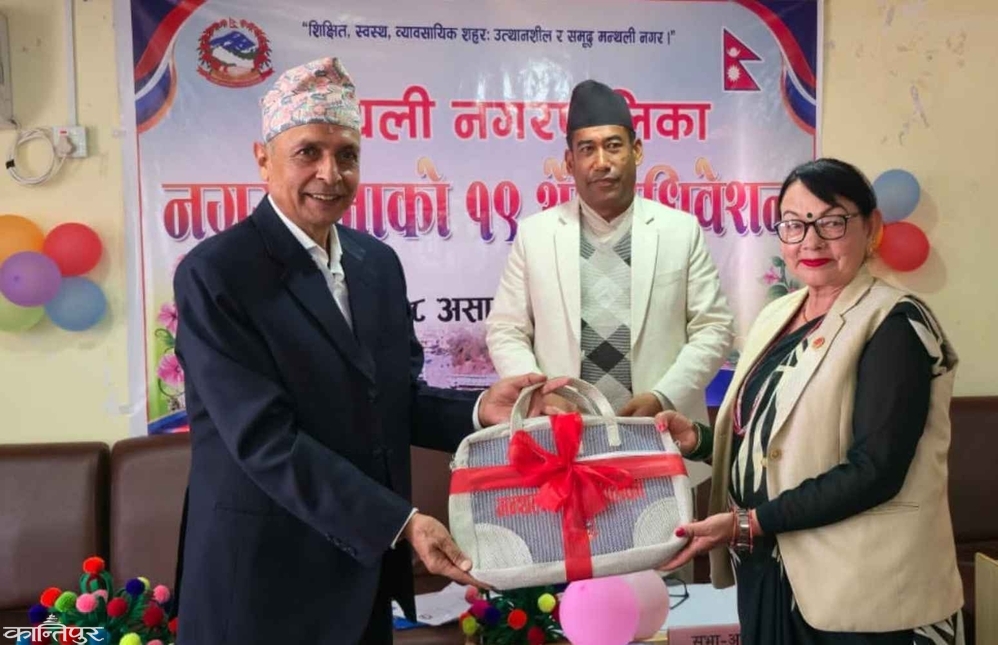
Manthali Municipality, which has 14 wards, has brought a budget of Rs 1.32 billion for the coming fiscal year 2083/084. Presenting the budget and programs at the municipal meeting held last Monday, Deputy Mayor Ishwori Basnet said that education, health, agriculture, tourism, enterprise development and infrastructure have been prioritized.
The municipality has estimated that it will mobilize about Rs 97 million from internal resources in the coming fiscal year, including internal income and accumulated funds. The budget has made expansion of basic services, growth in production, job creation and inclusive development the main goals. Presenting the progress report of the current fiscal year 2082/083 in the municipal assembly, Deputy Mayor Basnet informed that out of the budget of Rs 1.465 billion, Rs 597 million has been spent till mid-Jeshtha. She said that Rs 479.3 million has been spent on current expenditure and Rs 111.3 million on capital expenditure. This is about 60 percent of the total budget and it is estimated that the expenditure will reach 88 percent by the end of the fiscal year. Presenting the policies and programs, Mayor Love Shrestha has put forward quality education, easy health services, agricultural modernization, youth entrepreneurship and tourism promotion as the main priorities for the coming year.
A 'Door-to-Door Health Worker' campaign will be launched in the health sector. The civic health program including yoga education will be made more effective and a plan to establish one yoga center in each of the 14 wards of the municipality has also been included in the budget.
The municipality has stated that a special program will be launched to increase agricultural production and protect indigenous crops. The distribution of farmer identity cards will be started, arrangements will be made to market local agricultural produce up to Kathmandu, and the subsidies given to milk producers will be continued.
Ramechhap Municipality has made public a budget of Rs 808.65 million for the upcoming fiscal year. Presenting the budget and program at the 19th session of the municipal assembly held on Wednesday, Deputy Mayor Bal Kumari Karki Thapa said that education, health, agriculture, drinking water, roads, tourism and infrastructure development have been prioritized.
Of the presented budget, Rs 514.20 million has been allocated for current expenditure and Rs 298.23 million for capital expenditure. The municipality has projected an internal income of Rs 12.363 million for the upcoming fiscal year.
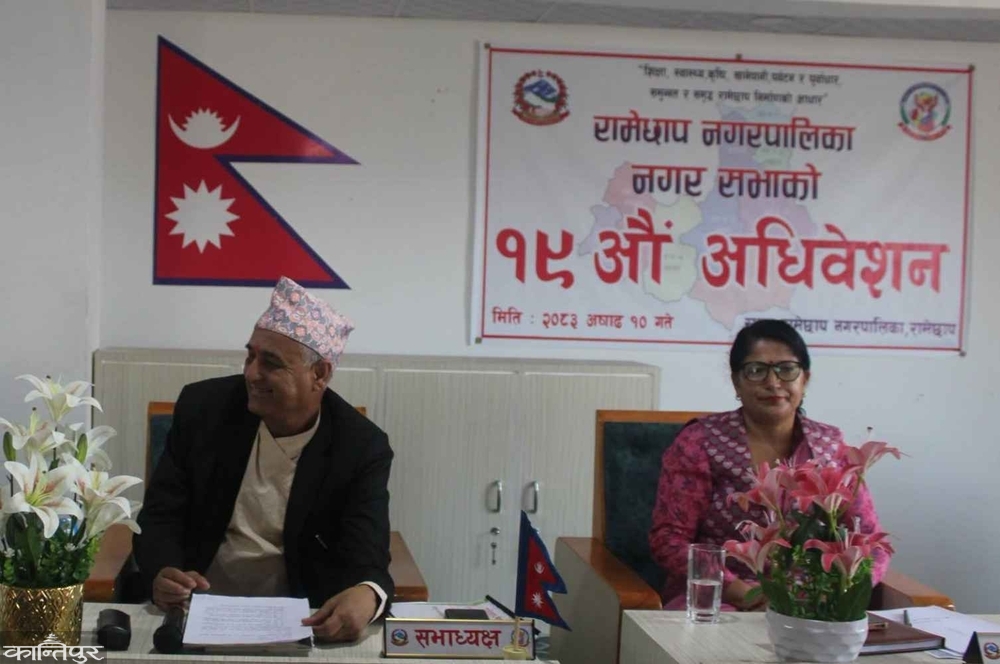
The policy and program presented by Mayor Love Shree Neupane has prioritized quality education, easy health services, respect for senior citizens, social inclusion, disaster management, sports development and infrastructure expansion. The municipality has set a goal to make service delivery more effective by creating employment through maximum utilization of local resources.
According to the policy and program, the work of the judicial committee will be made technology-friendly, paved drains will be constructed on the roads, and major infrastructure projects will be taken forward in coordination with the federal and provincial governments. Plans to systematize the disaster management fund, prepare a 'town profile' containing the overall statistics of the city, and form a task force for the settlement of Beruj and complete the work within the specified time have also been included.
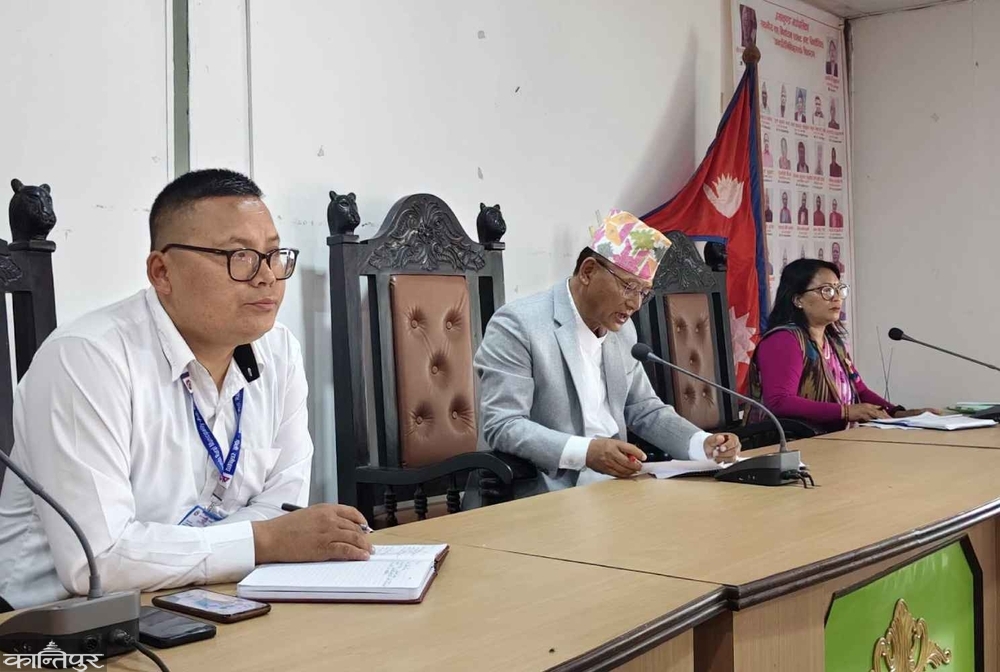
Umakunda Rural Municipality has made public a budget of Rs. 635.196 crore. Presenting the budget and program at the 20th session of the village assembly held on Wednesday, Rural Municipality Vice-Chairperson Savitri Sunuwar informed that the budget has been allocated with the aim of maintaining education, health, agriculture and animal husbandry, development of domestic and small enterprises, promotion of tourism, maintaining social and economic equality and effectively implementing the rural municipality as a child-friendly local level.
In the policy and program for the upcoming fiscal year presented by Rural Municipality Chairman Sher Bahadur Sunuwar, quality education, easy health services, agricultural modernization, youth entrepreneurship development, infrastructure construction and tourism promotion have been given top priority. Chairman Sunuwar said that the program has been put forward with the aim of making maximum use of local resources and making employment creation and service delivery more effective.
According to the policy and program, a modern covered hall will be constructed for the development of the sports sector, emerging players will be honored and programs will be launched to attract youth to sports. Similarly, it is mentioned that practical and life-useful education programs will be conducted, student leadership development programs and entrepreneurship development training will be conducted in all secondary schools.
Similarly, a policy has been adopted to run employment creation and self-employment programs targeting youth who have returned from foreign employment. In the health sector, plans have been included to provide health services to all citizens at every corner, ensure quality health services by making hospital and health institution services more effective, and prioritize yoga and meditation programs.
Gokulganga Rural Municipality has made public a budget of Rs 635 million. At the village assembly session held on Wednesday, the village council vice-chairwoman Usha Devi Karki presented the budget and programs and informed that rural infrastructure development, continuation of unfinished projects, drinking water and sanitation, education, health, disaster management, information and digital technology development, entrepreneurship promotion, social inclusion, and collaboration with the private sector have been given top priority. Presenting the progress report of the current fiscal year at the convention, Vice President Karki said that 57 percent or 327.653.294 rupees have been spent out of the 529.711.917 rupees budget received so far. According to her, 63 percent or 245.391.483 rupees have been spent out of the 391.174.17 rupees allocated for current expenditure. Similarly, 45 percent or 82.261.811 rupees have been spent out of the 181.126 million rupees allocated for capital expenditure. In the policy and program for the coming fiscal year presented by Rural Municipality Chairman Kazi Bahadur Khadka, special priority has been given to quality education, easy health services, agricultural modernization, youth entrepreneurship development, expansion of drinking water supply, construction of rural infrastructure and promotion of tourism. Khadka said that the rural municipality has formulated the budget and program for the coming year keeping in mind the goals of increasing production and employment, expanding access to basic services and sustainable development. He said that the rural municipality has prioritized unfinished projects for the coming year.
Khandadevi rural municipality has made public a budget of Rs 605.721,235 crore. Presenting the budget and programs at the village assembly held on Tuesday, Vice-Chairwoman Rama Ghising said that education, health, agriculture, drinking water, tourism, enterprise development and infrastructure development have been prioritized. The rural municipality has allocated Rs 5.5 million for the under-construction Khandadevi Hospital.
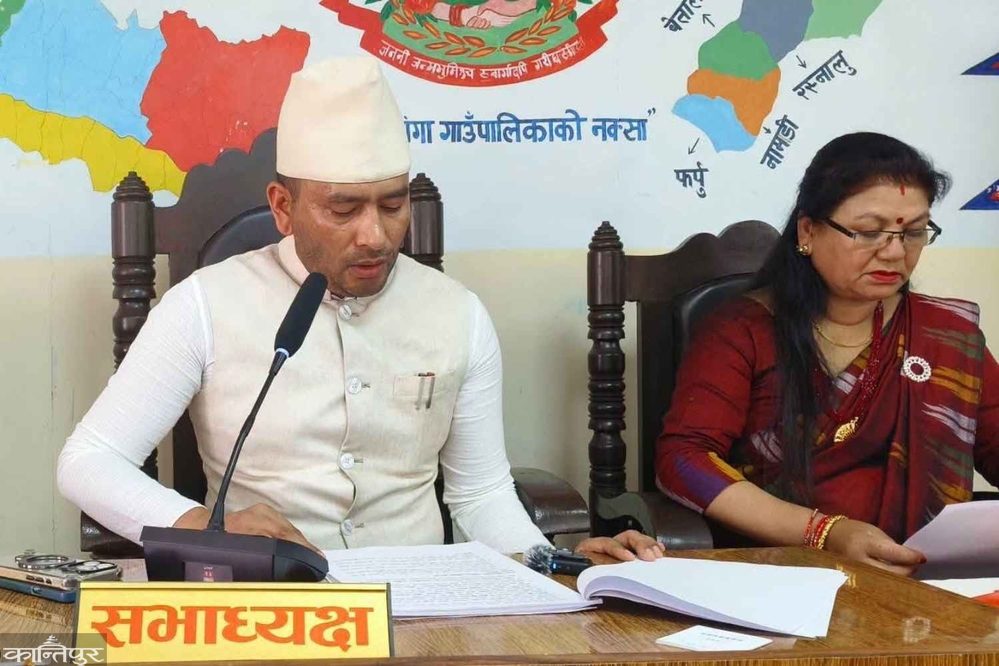
Similarly, Rs 2.5 million has been allocated for electricity subsidy for the lift drinking water project, Rs 2 million for the construction of 100 goat pens, Rs 4 million for ambulance service and Rs 2 million for the tank distribution program for water storage.
Towards religious and tourism infrastructure, Rs 5 million has been allocated for the construction of a road leading to Khandadevi Temple. The rural municipality has also stated that a budget of Rs 5 million has been allocated for the under-construction monastery. Similarly, Rs 5 million has been allocated for the construction of periodic plans and Rs 7 million for the construction of the office building of Ward 2.
Presenting the progress report for the current fiscal year at the village assembly, Vice President Ghising informed that out of the total budget of Rs 598.820,840, 60.98 percent has been spent on current and 26.38 percent on capital expenditures by the end of Jestha.
Ghising said that the overall financial progress of the rural municipality is 49.03 percent so far. In the policy and program for the upcoming fiscal year presented by Rural Municipality Chairman Gyan Kumar Shrestha, quality education, easy health services, agricultural modernization, youth entrepreneurship development, expansion of drinking water, infrastructure construction and tourism promotion have been given top priority. Chairman Shrestha said that the program has been taken forward with the goal of making maximum use of local resources and making employment creation and service delivery effective.
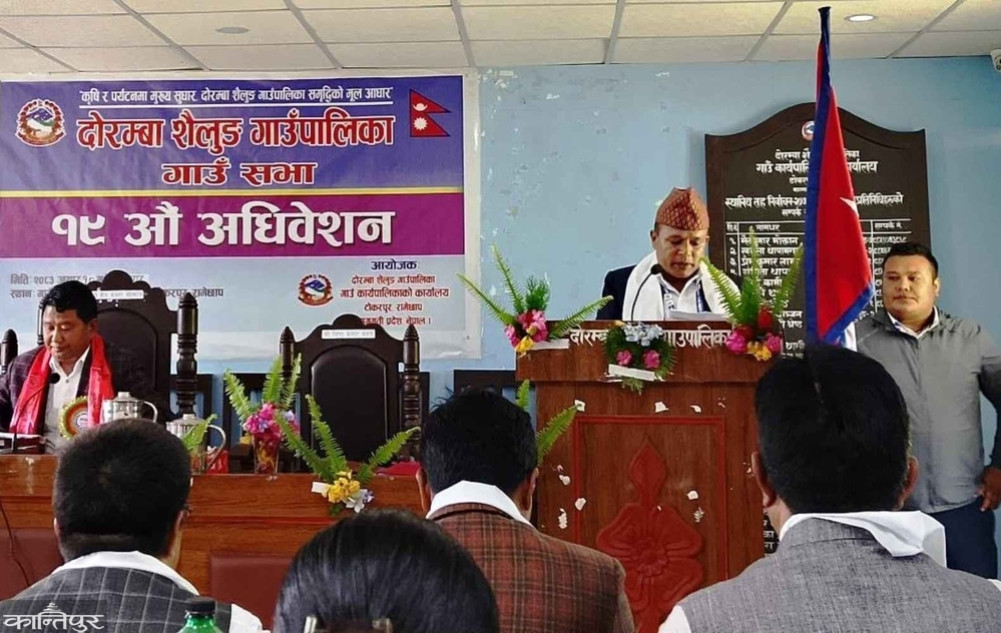
Doramba Shailung Rural Municipality has made public a budget of Rs 601.483,550. Presenting the budget and program, Rural Municipality Vice President Khamla Thapa Magar said that education, health, agriculture, tourism, enterprise development, infrastructure construction, disaster management, capacity development and technology-friendly service expansion have been given priority.
Of the presented budget, Rs 347.24 million has been allocated for current and Rs 254.24 million for capital. Vice President Thapa Magar informed that the internal income of the rural municipality is estimated to reach Rs 10 million in the coming fiscal year.
Rural municipality Chairman Main Kumar Moktan said that the policy, program and budget have been prepared keeping local needs in mind. He mentioned that special priority has been given to upgrading road infrastructure, quality education, improving health services, increasing agricultural production and promoting tourism. According to Chairman Moktan, the rural municipality has set a goal to make the development and construction work more effective in the coming year and make the service delivery technology-friendly and citizen-friendly.
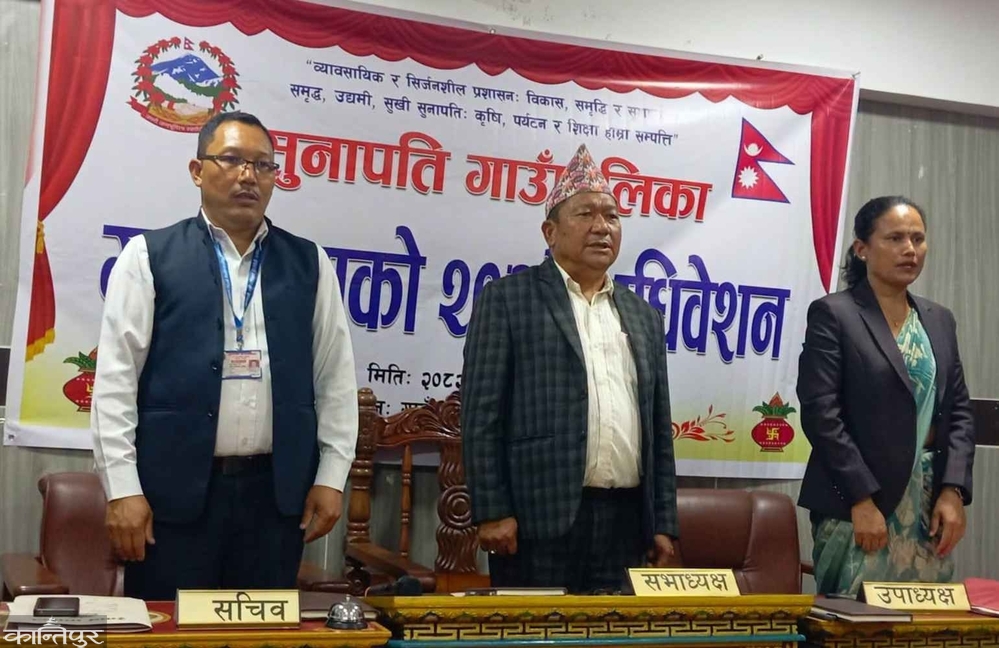
Similarly, Sunapati Rural Municipality has made public a budget of Rs 547.03 million. At the 20th session of the Village Assembly, Vice President Geeta Bista presented a budget of Rs 386.64 million for current and Rs 158.56 million for capital.
According to Vice Chairman Bista, the total budget of the rural municipality in the current fiscal year is 617.932 million rupees, and the income so far is 486.49 million rupees. Out of this, 331.15 million rupees have been spent, which is 67.89 percent of the total budget.
The policy and program presented by Rural Municipality Chairman Thulo Kanchha Tamang prioritizes good governance, infrastructure development, disaster management, health service expansion, and development activities based on local needs. The policy program mentions that the service delivery will be made more citizen-friendly by effectively implementing development programs in the coming year.
Chairman Tamang said that most of the plans have been implemented in the current fiscal year through the budget and partnership programs received from the federal and provincial governments, giving priority to roads and health infrastructure.
The issue of increasing disaster risk due to the geographical sensitivity of the rural municipality and recurring floods and landslides has been specifically raised in the policy program. In particular, it is said that 77 households in the Saune-Keureni settlement of Ward 3 are at high risk of landslides and the settlement itself needs to be relocated to a safer place.
The rural municipality has provided financial assistance of Rs 15,000 per family to 65 households for relief and temporary housing management for the disaster-affected families.
Similarly, Likhutamakoshi rural municipality has made public a budget of Rs 706.428 million. The rural municipality has brought a budget and programs by prioritizing education, health, agriculture, drinking water, tourism, employment and infrastructure development. Presenting the budget at the 17th session of the village assembly, Vice-Chairperson Deepa Pakhrin informed that the highest allocation of Rs 173.8 million has been allocated for the infrastructure development sector.
According to Pakhrin, Rs 12.55 million has been allocated for economic development, Rs 45.398 million for social development, Rs 5.2 million for forest, environment and disaster management, and Rs 12.6 million for good governance and institutional development.
गाउँपालिका अध्यक्ष केशव महतले प्रस्तुत गरेको नीति तथा कार्यक्रममा गुणस्तरीय शिक्षा र स्वास्थ्य सेवा विस्तार, कृषि क्षेत्रको आधुनिकीकरण, सुरक्षित खानेपानी, पर्यटन प्रवद्र्धन, स्थानीय रोजगारी सिर्जना तथा पूर्वाधार विकासलाई मुख्य प्राथमिकतामा राखिएको छ। पालिकाले आगामी वर्ष उत्पादन र रोजगारमुखी कार्यक्रममार्फत स्थानीय अर्थतन्त्रलाई चलायमान बनाउने, आधारभूत सेवा प्रवाहलाई प्रभावकारी बनाउने तथा विकास निर्माणका योजनालाई तीव्रता दिने लक्ष्य लिएको अध्यक्ष महतले बताए ।