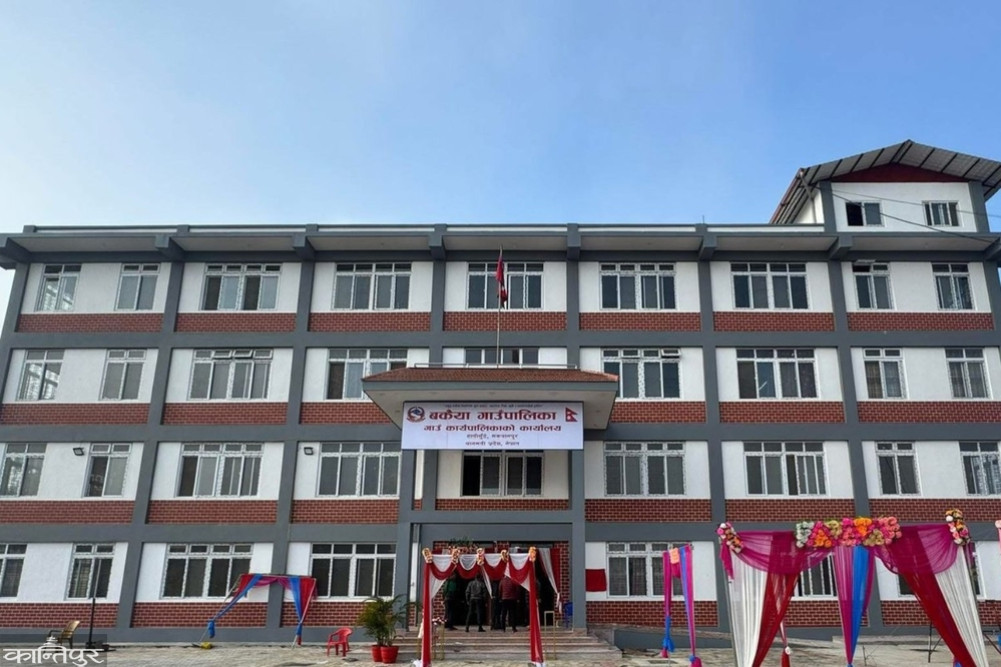
The municipality has set the support price for locally produced corn at Rs 35 per kilogram.
We use Google Cloud Translation Services. Google requires we provide the following disclaimer relating to use of this service:
This service may contain translations powered by Google. Google disclaims all warranties related to the translations, expressed or implied, including any warranties of accuracy, reliability, and any implied warranties of merchantability, fitness for a particular purpose, and noninfringement.
Makawanpur's Bakaiya Rural Municipality has set a minimum support price for maize. The municipality has set a support price of Rs 35 per kilogram for locally produced maize. Arrangements have been made to allow farmers to sell maize in the agro-industrial village run by the municipality.
'If farmers get a price lower than the support price in the market, the municipality itself will also purchase maize at the specified support price,' said Bakaiya Rural Municipality Chairman Dharmaraj Lamichhane. He said that the municipality has set the support price for maize with the aim of providing relief to local farmers after complaints started coming in that they were not getting a fair price according to cost.
Although Bhimphedi and Makawanpur Gadhi Rural Municipality have set a minimum support price for millet, phapar and juneelo, no municipality in the district has set a support price for maize. Bakaiya has started setting a support price for maize from the current fiscal year.
The municipality has established an agro-industrial village in Hattikhola, Bakaiya-7. Where the feed required for livestock, from hay (silage) to organic fertilizer, has been produced. For that, the municipality has been purchasing corn from local farmers, from husks to grains.
Most of the people of Bakaiya, which is also the largest rural municipality in Makawanpur in terms of area, cultivate corn. According to the Bakaiya Rural Municipality Agricultural Development Branch, corn is cultivated on 140 bighas.
Chairman Lamichhane said that the municipality has been producing silage and grains from the agricultural industrial village with its own investment and providing them to local farmers at subsidized rates. A cold storage is also in operation in the village.