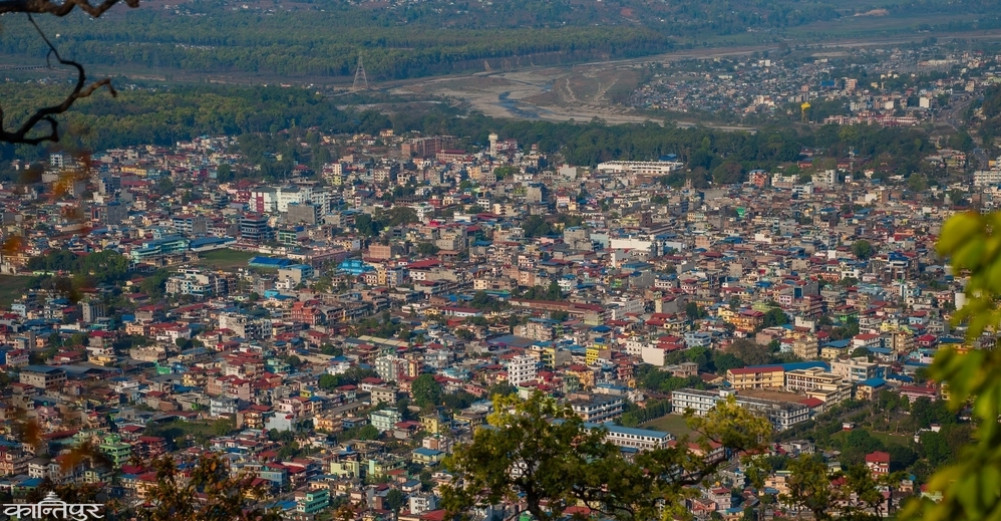
The number of families migrating to Hetauda from districts including Bara, Parsa, Rautahat, and others has increased rapidly due to the attractiveness of education, health, employment, and business.
We use Google Cloud Translation Services. Google requires we provide the following disclaimer relating to use of this service:
This service may contain translations powered by Google. Google disclaims all warranties related to the translations, expressed or implied, including any warranties of accuracy, reliability, and any implied warranties of merchantability, fitness for a particular purpose, and noninfringement.
Hetauda, the capital of Bagmati Province, has been established as a center for residence, education, employment, trade and health services in recent years. For this reason, the number of people migrating to Hetauda from various districts of the country has been continuously increasing. The data of the Social Security and Registration Branch of Hetauda Sub-metropolitan City shows that the population growth in the sub-metropolitan area is accelerating through migration. According to the
branch, 1,24 families migrated to Hetauda in the fiscal year 2079/80, 959 families in 2080/81, 819 families in 2081/82 and 593 families have migrated to Hetauda by the end of Baisakh of the current fiscal year 2082/83. A total of 3,395 families have migrated to Hetauda in a period of four years.
In the same period, 566 families have migrated elsewhere in 2079/80, 586 families in 2080/81, 480 families in 2081/82 and 353 families have migrated elsewhere by the end of the current fiscal year. Thus, even though 1,985 families have migrated in four years, the number of people coming has increased significantly.
According to the sub-metropolitan city, the number of people migrating from the districts of the Tarai including Bara, Parsa, Rautahat, Sarlahi and Mahottari is the highest. Most of the families who come for residence have made ward numbers 4, 5, 7 and 8 of the sub-metropolitan city their primary destination.
Balkrishna Neupane, who migrated from Nijgadh in Bara to Hetauda-8 in Kamane, said that he chose Hetauda for his studies. Later, after getting employment opportunities, he said that he started living in Hetauda with his family as the health, education and other facilities were better than in his district.
Similarly, Sita Karki Shrestha, who migrated to Hetauda-7 Hariyali from Parsa, said that she came to Hetauda four years ago to facilitate her children's education and her husband's employment. She said that the favorable climate of Hetauda and easy availability of drinking water also inspired her to stay here.
According to Umesh Aryal, Head of the Department of Health, Population and Education at Makawanpur Multiple Campus, there are social, economic and geographical reasons behind the increase in migration to Hetauda. According to him, although the migration to Hetauda increased after the Terai/Madhesh movement, considering it a relatively safe place, the number of people coming in search of education, health, employment, business and opportunities has increased significantly in recent times.
'Recently, the number of people looking for opportunities has increased after the municipality became a sub-metropolitan city and the capital of Bagmati Province,' he said. 'Population density is also increasing due to students coming from the Terai districts to study at school and higher education, businessmen coming for business purposes, and families looking for a safe and orderly residence.'
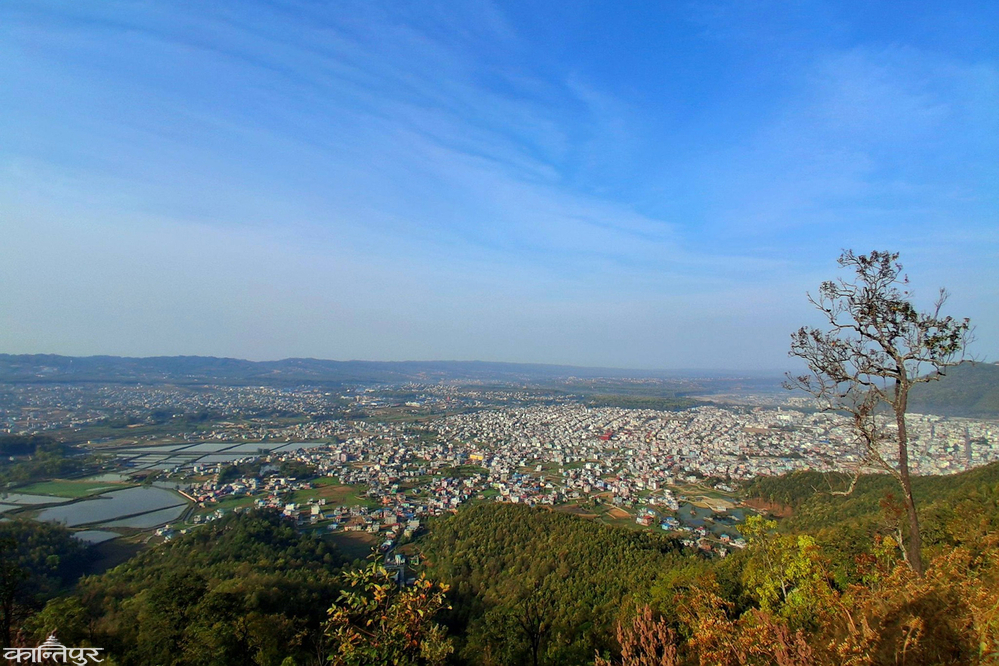
According to Aryal, Hetauda is also considered favorable in terms of weather compared to many other areas. Since it is located between the Terai and the mountains, it is not too hot or too cold, and the terrain and environment are also suitable for residence, which is why people are attracting more people, he said.
Despite the challenge of increasing pressure on urban infrastructure and service delivery with the increasing trend of population growth and migration, the Hetauda Sub-metropolitan City has stated that it has taken forward development and management plans accordingly. Mayor Meena Kumari Lama said that work is being done by prioritizing the service management of citizens who come to Hetauda as a destination for residence.
‘We have worked in a planned manner based on education, health and organized settlement,’ said Mayor Lama, ‘Keeping in mind the increasing population density, we are constructing school buildings, expanding classrooms, investing in quality education and expanding access to health services.’ According to her, health institutions are operating in all wards of the sub-metropolis, and hospitals have been brought into operation in two wards. The sub-metropolis is also collaborating to expand the services of Hetauda Hospital.
She informed that land classification has been implemented for organized urban development, residential areas have been determined, and rules and standards have been implemented to ensure necessary infrastructure in planning and development. ‘We are taking forward sanitation, environmental protection and urban management work on a daily basis with the aim of making Hetauda a beautiful, clean and organized city,’ she said.
As administrative, educational, health and business activities expand as the capital of Bagmati Province, Hetauda is becoming a major destination for migration. The data for the last four years also shows that the population in the sub-metropolis is continuously increasing. Along with this, managing the increasing population density and advancing long-term urban development in a balanced manner has become both a major challenge and an opportunity for the sub-metropolis.