After noticing that the doors of houses in the picturesque settlement were locked, tourism entrepreneur Devendra Nepal of Thaha Municipality has been converting those houses into homestays and hosting guests for the past seven months.
We use Google Cloud Translation Services. Google requires we provide the following disclaimer relating to use of this service:
This service may contain translations powered by Google. Google disclaims all warranties related to the translations, expressed or implied, including any warranties of accuracy, reliability, and any implied warranties of merchantability, fitness for a particular purpose, and noninfringement.
In Bhimphedi-5, Suping, Makawanpur, houses that were vacated by migration have now been converted into attractive homestays. In addition, the barren land has been turned into greenery by producing organic vegetables. Until a few years ago, most of the houses in Suping village were locked. In search of lack of development, unemployment and opportunities, the residents of Suping migrated to Hetauda, Kathmandu, while some had migrated abroad.
After the settlement was vacated, the farmlands were barren. After seeing the doors of the houses in the picturesque settlement locked, Devendra Nepal, a tourism entrepreneur from Thaha Municipality, has been converting the house into a homestay and hosting guests for the past 7 months. He has created greenery by producing vegetables including cauliflower, radish, greens on the barren land. The characteristics of this place are hills, greenery, cool climate and original lifestyle. Near this village, where you can see a beautiful sunset, there are historical tourist sites like the ancient Bhimphedi Bazaar, Gupteshwor Cave, Gumba, Chisapani Garhi and Hattisar. Therefore, tourists from Chitwan, Birgunj, Hetauda and Kathmandu are increasingly coming to Suping.
Businessman Nepal said that he has rented 9 houses in Suping and built a homestay. He has invested about 8 million rupees in them. Nepal said that he has converted the old model houses into homestays in an attractive way without demolishing them. Devendra's 19-year-old son Prateek has tried to combine the natural beauty and original lifestyle of the village with tourism. The houses of this village, which has great potential for tourism and is rich in original culture, are not only full of guests now, the roads and internal roads leading to the homestay have also been paved.
The settlement is about 4 kilometers away from Bhimphedi Bazaar, the old headquarters of Makawanpur. Most of the youth there had left their homes deserted after they migrated in search of employment. Devendra, who was running the Dunatpari Hotel in Pokhara and a resort in Chitlang of Thaha Municipality, came up with the idea of operating a homestay by renting an empty house and barren land in Suping, and Ward Chairman Jahar Singh Lama played a coordinating role. ‘I am happy to see that the homestay is now operating well in the empty house,’ said Ward Chairman Lama, ‘The barren land has also become green.’ He said that this has brought back life to the houses that were vacated by migration, opening the door to new possibilities for commercial tourism in the village. 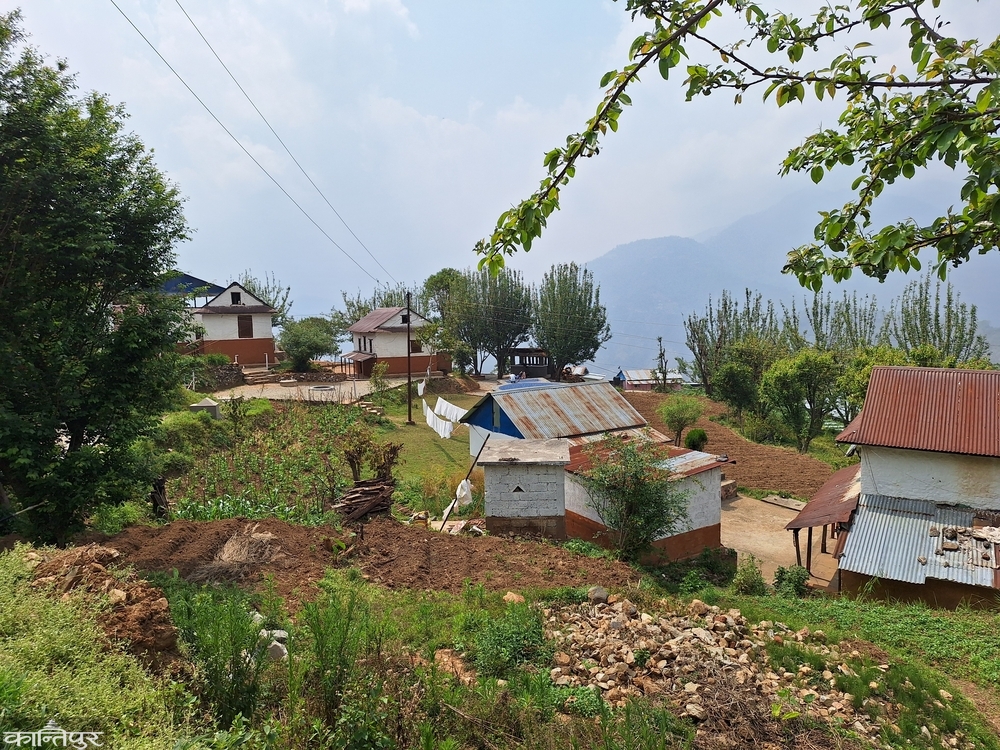
Local Dhruv Pdusaini said that the village has taken on a different charm after the old houses were converted into attractive homestays. ‘Every house has water, electricity, and roads,’ he said, ‘but the locals here have become market-oriented and have moved to the market.’ Now guests have started coming from far and wide. The twinkling lights and hustle and bustle have made the village atmosphere pleasant. The homestay has increased income and also provided employment at the local level.
The old house was renovated and converted into a beautiful homestay in Kartik last year. Nine houses and three cottages have been built and operated on a 25-hectare plot of land that can accommodate up to 50 guests. The homestay has now become another attraction in Suping, which is famous for producing milk, mustard, greens and pears.
Nepal pays a monthly rent of 65,000 rupees for using the empty houses, while the land is being paid annually at 250,000 rupees. Eight people have found employment at the homestay. All of them are locals. The materials produced by the locals are purchased at the homestay itself. The house, which was previously surrounded by grass and moss, is now covered with fruit trees. The walls of the house, including the disappearing Buigal, are covered with white kamero and red clay. Traditional materials such as stone-built water fountains, old chests, threshing floors, mills, and plows have given the homestay an original look. ‘Fridays and Saturdays are always full of guests,’ said Sandesh Joshi, the homestay’s manager. ‘After giving two days off on Saturday and Sunday, the number of tourists coming to the homestay and their stays have increased.’
All the vegetables, gundruk, lentils, millet, corn, and other food items used in the homestay are made from local produce. The homestay has brought life to the deserted settlement.

