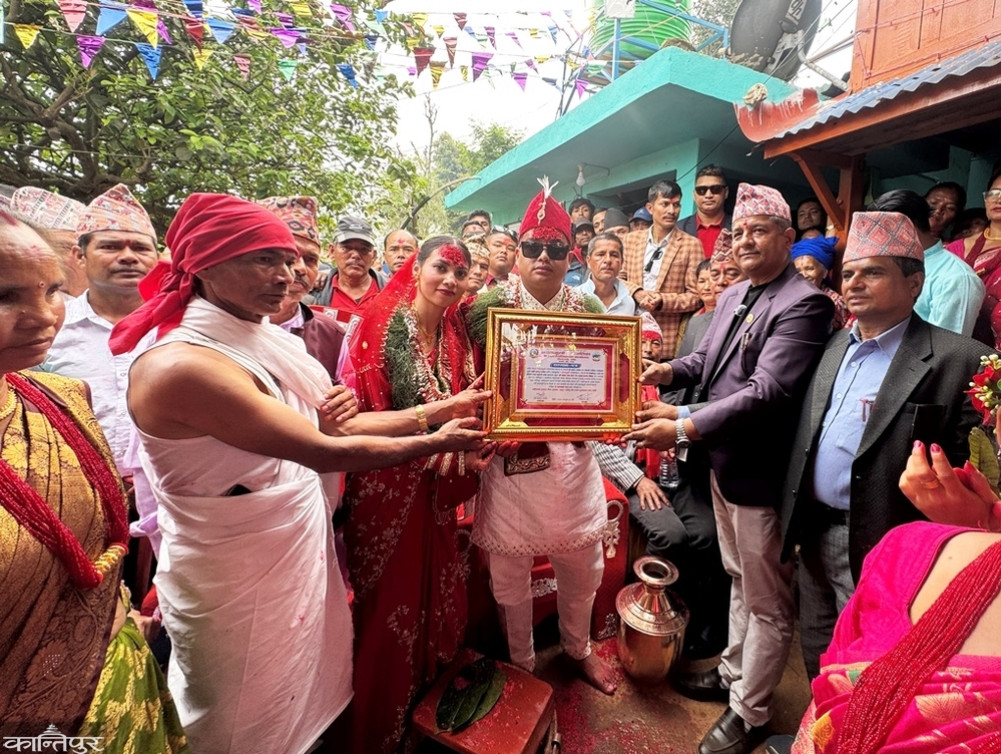
After the lavish wedding of Manju Ramtel of Jwalamukhi-7 and Sangam Rana Magar of Jwalamukhi-6, the rural municipality honored them at the pavilion for their exemplary work against caste discrimination.
We use Google Cloud Translation Services. Google requires we provide the following disclaimer relating to use of this service:
This service may contain translations powered by Google. Google disclaims all warranties related to the translations, expressed or implied, including any warranties of accuracy, reliability, and any implied warranties of merchantability, fitness for a particular purpose, and noninfringement.
While incidents of caste discrimination and untouchability are still happening in various parts of the country, an inter-caste arranged marriage has taken place in Jwalamukhi Rural Municipality of Dhading.
Manju Ramtel of Jwalamukhi-7 and Sangam Rana Magar of Jwalamukhi-6 got married on Saturday with family participation. After the grand arranged marriage, the rural municipality honored the couple at the mandap, saying that they had done exemplary work against caste discrimination.
After the two families reached an agreement, Sangam's family went to Manju's house from the Dalit community with a musical instrument to greet the bride. This inter-caste marriage is seen as a positive example of positive change in society.
Manju had been living in Japan. Their love affair had started even before Manju went to Japan. After understanding each other for a long time, they turned their relationship into marriage.
Manju and Sangam have been living in Japan and Nepal. Manju recently came to Nepal for her wedding. The newlywed couple said that the marriage was possible because they had spoken openly to their families after understanding each other well. ‘If the bride and groom can speak clearly and express their views to their families, there will be no need to break up the relationship because of caste,’ said Manju and Sangam.
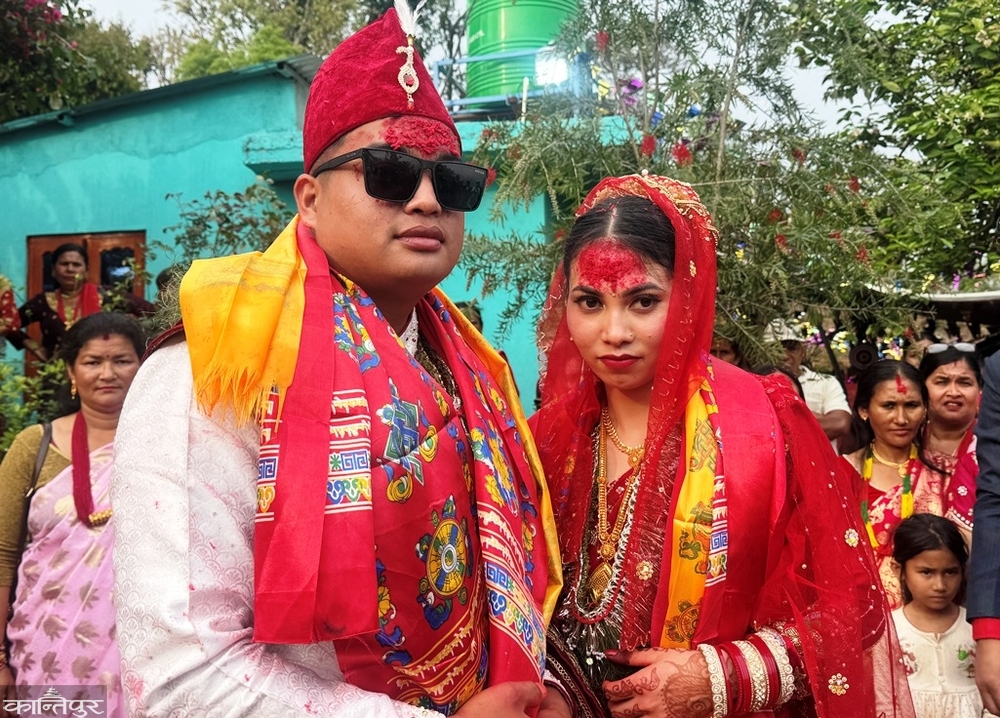
According to Sangam’s father Bed Bahadur Rana Magar, the happiness of their children is more important than society. ‘My son wanted to marry the girl he liked, and we accepted it. We have celebrated the wedding with pomp and show as per tradition,’ he said.
Manju’s father Krishna Ramtel said that although he was initially worried about the negative incidents heard about inter-caste marriages, he gave priority to his daughter’s happiness and got the marriage done based on the groom’s behavior and beliefs. According to him, the marriage was concluded with family consent after the groom's side came to ask for a daughter according to their culture.
Jwalamukhi Rural Municipality has praised their marriage as an exemplary work. Rural Municipality Chairman Yamanath Danai, the chairman of the ward where the groom lives, Kishore Sedai, and the chairman of the bride's ward, Gyanendra Khakural, also attended the wedding. They praised the bride and groom and their families on behalf of the municipality and honored them at the mandap. Municipality Chairman Danai said that this marriage has sent a positive message to the society.
Despite the legal provisions prohibiting any kind of discrimination on the basis of caste, incidents of caste discrimination have not completely ended in practice. Incidents of threats, social pressure or violence due to inter-caste marriages have been made public from time to time in various districts.
According to social activists, in such a situation, inter-caste marriages concluded with family consent can set a positive example in society. The marriage, which was concluded according to tradition with the consent of both families, is seen as an important step towards ending caste discrimination. Village council chair Danai said that such exemplary work will inspire society to move forward towards equality, tolerance and social harmony.