We use Google Cloud Translation Services. Google requires we provide the following disclaimer relating to use of this service:
This service may contain translations powered by Google. Google disclaims all warranties related to the translations, expressed or implied, including any warranties of accuracy, reliability, and any implied warranties of merchantability, fitness for a particular purpose, and noninfringement.
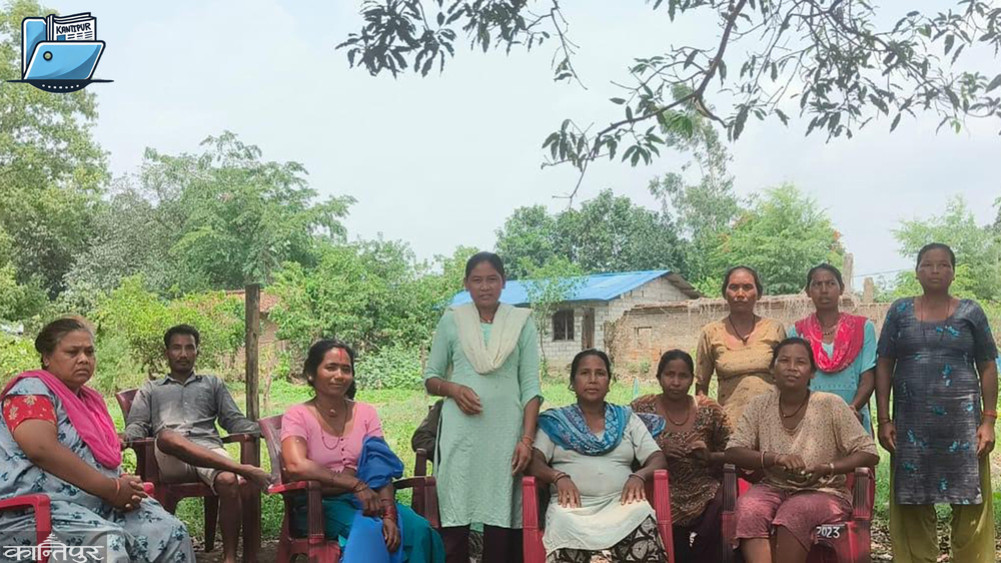
According to the tradition of electing Barghar (Bhalmansa) as the chief person of the village, the women of the Tharu community have started to take the leadership. A Bhalmansa is mandatory in every village. With the beginning of the new year of the Tharu community in the month of Magh, a Bhalmansa is elected in the village, who has to take over the leadership of the entire village.
All the activities of the village are carried out by the decision of Valmansa . Be it a small dispute or a big event, development or hospitality. The presence of good will is mandatory in all social activities from birth to death. The role which was traditionally held by men . Lately Tharu women have started appearing in this role.
Women have proven that they can become successful leaders through leadership ability, understanding and decisive role. Sitawi Katharia of Ghodaghodi municipality-3 Narayan village is the one who is the best. The leadership of Narayan village, which has 178 Tharu and 91 hill community households, has been in the hands of Sitawi for three years. After working as the secretary of Thara community forest user group for 5 years, she is now able to handle the leadership of the entire village alone. "I learned everything I learned after sitting on the working committee of the community forest," she says, "before that I couldn't even speak in front of two people." He believes that because women share their problems with women, when their problems are addressed, it helps in empowering women. Although it was uncomfortable to do the work of Valmansa in the first year, now Sitawi has started to feel comfortable . Now, she can openly talk about the problems of the village with various public programs to the local and state governments.
In the village, everything from solving problems, settling cases, building development, helping the poor is in his head . Even after doing so much work, Sitavi gets disappointed when she doesn't get help from anywhere. She says, "Bhalmansa has nothing". They only give 1500 a year, what will happen to it ? In other villages it is customary to give paddy. My village doesn't even have that.'
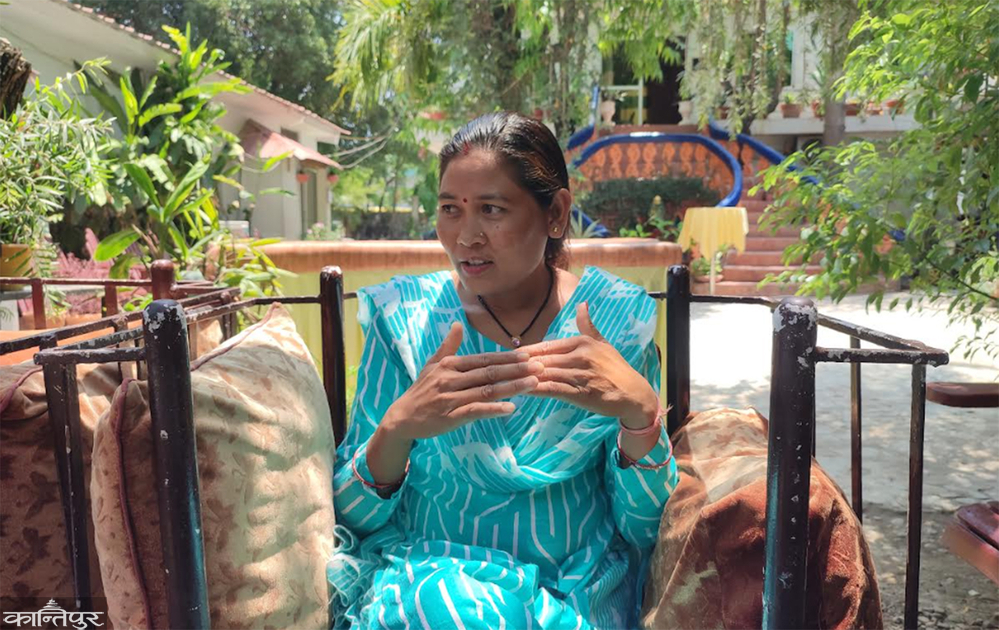
All the activities in the village are discussed in Valmansa's house . Anyone who comes to the village after work arrives at Bhalmansa's house. Tea, breakfast and sometimes food should be arranged for everyone who comes home at that time . She says that even though there is no income from Bhalmansa, there are many ways to spend it. After Sitawi Bhalmansa, there have been many changes in the village. Batoghato, from making available modern agricultural machinery from the municipality, various trainings were conducted on his initiative to make women self-employed. But the former men of Bhalmansa and men of other villages did not support him . At the time of Bhalmansa's election, the men of the village were against him. But Sitawi was selected after the men did nothing in front of the large female presence. Now she is the treasurer of Ghodaghodi Nagar Bhalmansa Committee, which has 76 Bhalmansa members.
While developing leadership skills, Sitavi received inspiration and advice from many. The same courage has also led him towards politics. She says, ``He encourages everyone to be a good leader and should go towards politics. I also want to go and lead not only in the village but also in the municipality.'
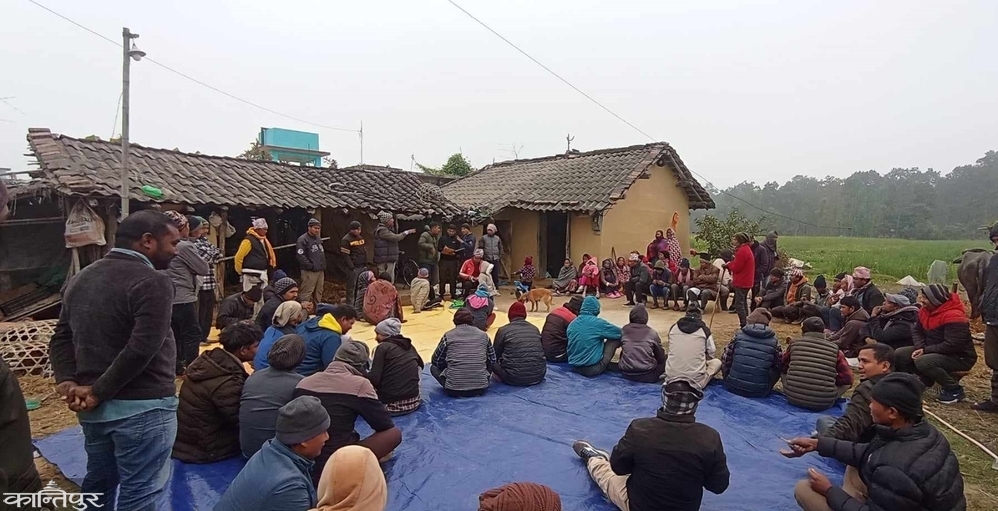
Gyanudevi Chaudhary is another example like Sitawi that women can easily fulfill the responsibility of charity. She is 42 years old from Ghodaghodi-3 Chowratti and is leading 86 households. Gyanudevi was elected in Bhalmansa in January 081 with everyone's consent.
She says that she has started some new work than before after getting sober . At first, when asking for a plan in the ward, they first went to the ward and only then discussed it in the village . But Gyanudevi has made a rule to go to the ward to ask for the plan only after sitting in the village and discussing it. This is the exemplary work he started. After learning about it, the Bhalmansa of other villages have also made the same rule . "In the first village, it was not customary for residents to gather together and discuss what is needed and what kind of plans to ask for." Now, according to the needs of the village, we will prioritize what is needed and go to the ward," she said.
She has experience of facing many challenges while leading the village as a woman in a society that considers men as the main ones. According to him, the biggest problem for women is when someone dies in the village. On the one hand, in Tharu Parampara, it is mandatory for the deceased to go to Malami and spend the night at the house of the deceased. On the other hand, only men participate in both these processes. In this situation, women feel sad about not being able to fulfill their responsibilities. Despite the discomfort, Gyanudevi participates in both these processes . It is difficult for women to stay at night because men usually live in places where people have passed away. I go everywhere as much as possible', she says .
Rajkumar Chaudhary of Godavari Municipality-5 Barwatta village also has the same experience. She has been sober for three years . In the village, even though women can work like men, it is difficult to change the society's view.
In the Tharu community, all activities are collective, especially weddings, deaths and other festivals. It is the responsibility of who will do what work and assign it. If someone does not obey, there are provisions for punishment in the form of a fine . Gyanudevi has imposed a fine of 500 on those who do not do the assigned work in their village. "They do what everyone says even if they have to pay a fine," she said. Local Phulmati Choudhary said that after she became Bhalmansa, it was very easy for the women of the village to get services. He said that women are more active than men in village meetings or other events.
Just like Sitawi, Gyanu's complaint is that Bhalmansa does not have facilities according to work. She says that even if she gets 15 kilos of paddy from every household, she is not satisfied with it because it is a lot of work. For Gyanu, women shouldering the responsibility of the village along with the family is no less than a revolution. She says, "There are many challenges but I have not given up". I will show it by leading the village better than men.'
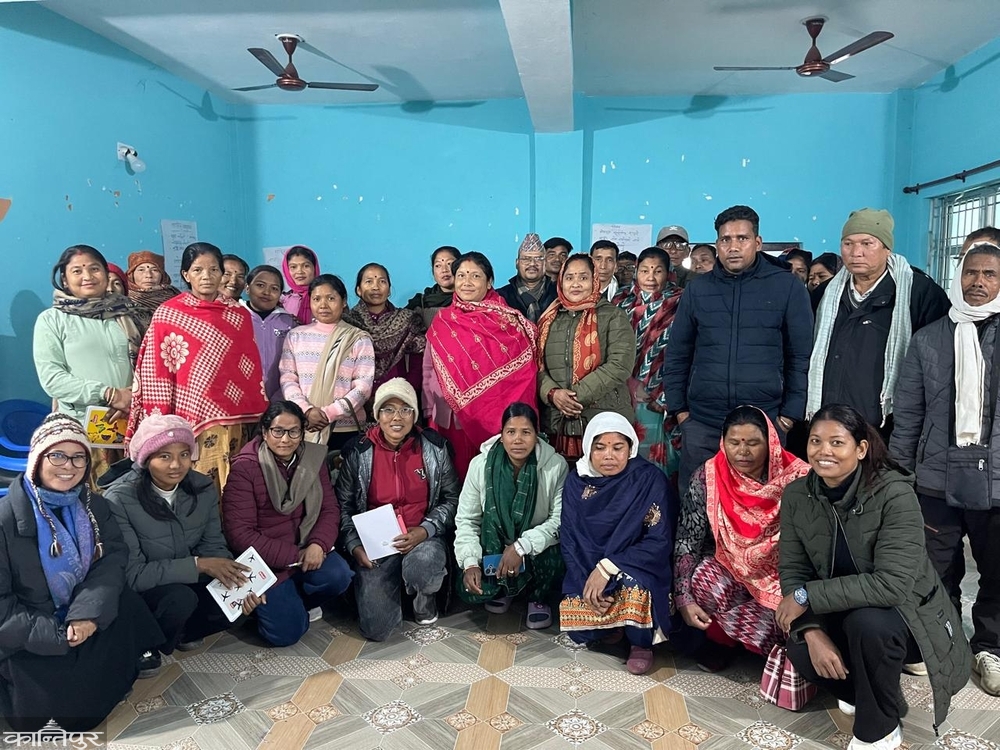
Not only in the village of Ghodaghodi, many women have held the responsibility of Valmansa in various places of Kailali where the Tharu community is located. Naina Chaudhary of Bhajani Municipality-2 Minabasti is also holding the leadership of the village for two years. There are 98 households in his village known as Muktakamaiya Basti.
In a society with a patriarchal mindset, she has experienced that women's leadership is not easily accepted. When she was Bhalmansa, the men protested that why should she make a woman Bhalmansa even though there were men in the village . There were a lot of trees causing human damage in Minabasti. The first thing she did when she got sober was cutting trees with permission from the district forest, ward office and consumer committee. After doing this work which the male nobleman cannot do, he is praised in the village . Naina has also taken training from the municipality and various agencies to develop leadership skills.
She is more interested in politics and lost the ward member by 6 votes in the 074 local level elections. Taking that defeat as a lesson, she is preparing to fight for the ward president in the next election.
Bhalmansa Ganeshdevi Chaudhary of Kailari Rural Municipality-3 is also preparing to contest in the upcoming elections. Having held the responsibility of Valmansa for two years, she was never uncomfortable to work . Two years ago, the men chose her to make a woman Bhalmansa. The arrival of women in the Valmansa system has not only brought about changes in the traditional structure, but has also brought the active participation and leadership of women to new heights in the Tharu community. Tharu leaders say that this has further strengthened the social unity of the village, inclusive decisions and the journey of women's empowerment.
Former central member of the Tharu Kalyankarini Sabha considers Indu Chaudhary Bhalmansa as the first pioneer of Tharu women's leadership. She says, "This is a happy beginning of women's leadership in our community." Earlier, only men used to gather and choose the best man, now the women come saying that we lead the village.'
Although women are not comfortable working like men, she says. "I didn't just do my job with a good heart, I had to get my duties like a man," she said. According to him, since Bhalmansa looks after various events in the village, it is necessary for them to have legal knowledge. For this, he demands that the local government should provide capacity building training.
Biru Tharu, president of Tharu Kalyankarini Sabha Kailali, says that the Valmansa practice has helped Tharu women to take a leadership role. According to him, only 37 women are leading the village in Kailali. The assembly said that there should be capacity building training to develop the leadership of women of good will, but it could not be done due to lack of resources.
Kailali and Kanchanpur tribal Tharu communities in Far West have a majority. The Tharu leaders say that the protection, promotion and development of the barghar custom in this community should be done legally. According to their demand, the Council of Ministers of the Far West Province Government has prepared a "Bill on Protection and Development of Barghar and Bhalmansa Custom".
According to Gita Chaudhary, a member of the Sudurpaschim Provincial Assembly, the bill will be registered in the Provincial Assembly after it is passed by the Legislation Committee. But now the work of the bill has not progressed due to the time of budget. According to Choudhary, a member of the Provincial Assembly, the traditionally functioning Barghar and Bhalmansa system will be implemented after the bill is passed by the Provincial Assembly.