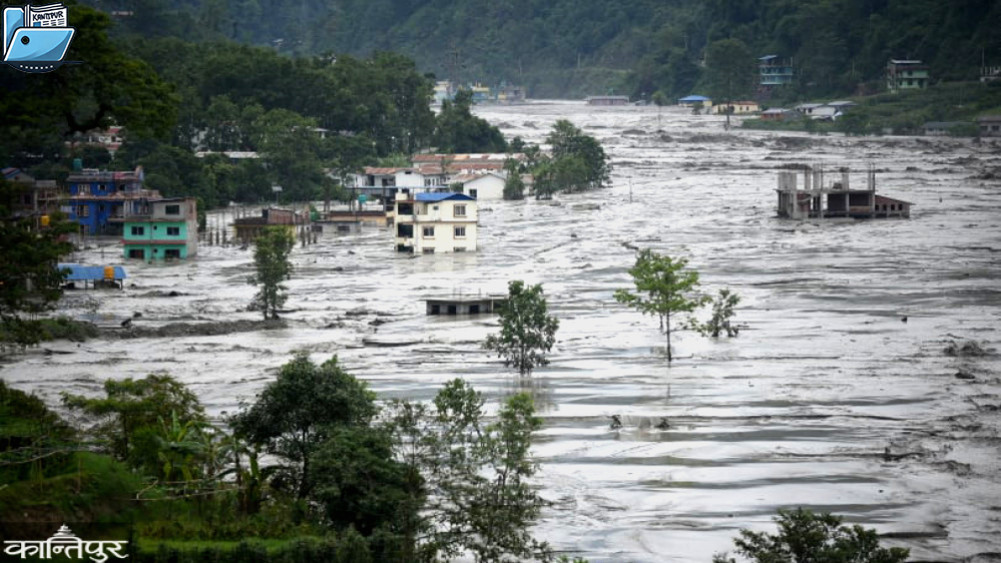
Expert's suggestion to clean the sewers/drains around the house immediately, the municipalities should be prepared and the employees should be stationed in the office.
We use Google Cloud Translation Services. Google requires we provide the following disclaimer relating to use of this service:
This service may contain translations powered by Google. Google disclaims all warranties related to the translations, expressed or implied, including any warranties of accuracy, reliability, and any implied warranties of merchantability, fitness for a particular purpose, and noninfringement.
Monsoon, which is a seasonal effect carried by the wind flow from the Bay of Bengal, usually reaches Kerala on May 31 or June 1 (Jeth 17 or 18) and enters Nepal by June 13 (Jeth 30). However, according to the Indian Meteorological Department, the monsoon entered the southern state of Kerala on Saturday, a week earlier than usual.
As the monsoon has entered India earlier than the average time, the Weather Forecast Division of the Department of Water and Meteorology has estimated that the monsoon will start soon in Nepal. She said that it depends on the speed and activity of monsoon. According to the Indian Meteorological Department told the media, the monsoon that has already set in this year is the earliest since 23 May 2009 in 16 years.
Even though the arrival of monsoon has brought relief from the heat, the damage has already started . Transport services have been affected in various parts of India due to the rains that accompanied the storm. The India Meteorological Department has asked to be alert as the monsoon has entered Kerala and the capital city including New Delhi has received heavy rainfall and will continue till Monday.
2 million citizens may be affected
Five days ago, the Department of Water and Meteorology announced the 'National Monsoon Forum 2082' event. According to the climate forecast of the monsoon season, Nepal is expected to experience more than average rainfall and heat this year. The projection is based on the climate model assessment of the World Meteorological Organization's global and regional climate information production centers and the assessment of the South Asia Seasonal Climate Outlook Forum.
//
It is estimated that 2 million citizens of 450,000 households will be affected by this year's monsoon. Compared to last year, there are more than 200,000 citizens of more than 38,000 households.
Meteorologist Manandhar has suggested that emphasis should be placed on monsoon risk management and mitigation as there is a possibility that monsoon will enter soon. "First of all, everyone had to clean the drains around their houses, if they were blocked, the local municipalities also had to clean them," she said. Dinanath Bhandari, an expert on disaster preparedness and response based on
forecasts, says that state mechanisms should be responsible for monsoon disaster preparedness, rescue and response. "There is no doubt that this year there will be a little more rain and heat in the Himalayan region, so there is no doubt that there will be a risk," he said. There are previous years' experience of going for a walk, not sitting in the office, not leading, and there is more risk, this year did not happen again.' As there is a higher risk of monsoon disaster in June, July and August, it is necessary for the employees to stay in the office in a humane manner.
//
"We started discussing since March, 'Monsoon Preparedness and Response National Action Plan, 2082' has been made, we will make it public by starting the meeting of the executive committee from the morning of June 14th, and it will be circulated from the center to the local level and will be implemented," he said. The
action plan includes topics such as rescue in potentially risky areas, storage of relief materials, and keeping dozer/excavator in readiness. He said that the security agencies have been mobilized and the district disaster management committee is also making preparations in coordination with the local level. "Besides the government mechanism, it is also important to be aware at the civil level," he added, "Water and Meteorological Department, we are authorities, local level We should pay attention to risk reduction by keeping up to date with the warnings issued by etc.'
80 percent rain within 4 months of monsoon
Pre-monsoon is currently underway across the country . Since the beginning of May, it has been raining every day in all the hilly areas . Generally, the monsoon enters Nepal on June 13 and exits on October 2 after 112 days. For monsoon, the currently active western and local winds have to be replaced by the monsoon winds from the Bay of Bengal. Apart from the four months of monsoon, the remaining eight months in Nepal are dominated by western and local winds. Although the eastern wind is active during monsoon, if the wind from the Arabian Sea is active, it will rain in West Nepal as well . Meteorologist Manandhar said that usually the monsoon enters from Koshi region and exits through Sudurpaschim region.
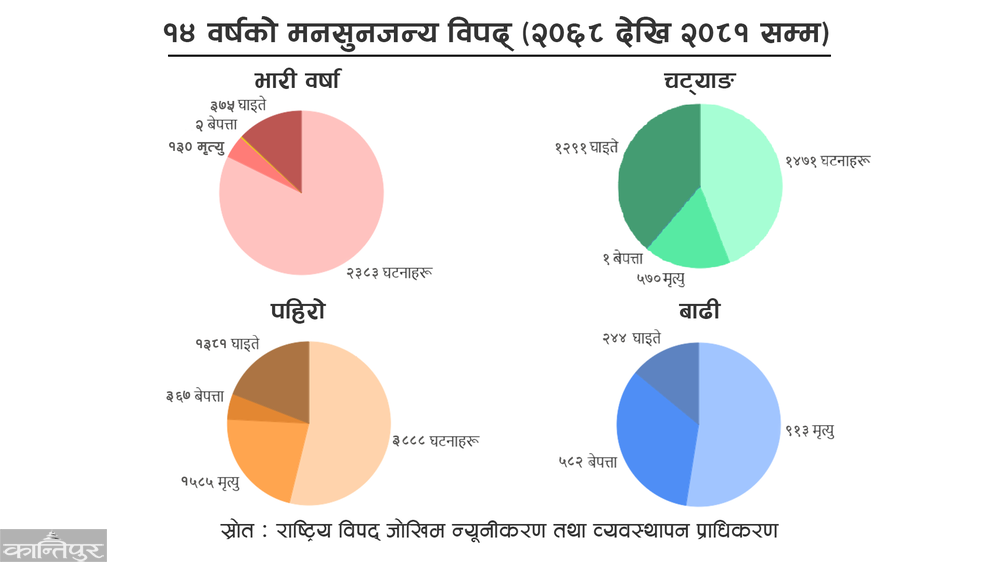
Last year's monsoon started three days early and left 10 days late . 081 When it was active from May 28 to October 26, there was more monsoon rain than Sardar . According to the analysis of the Department of Water and Meteorology, last year there was the heaviest rainfall in the history of 77 years. On July 32, disaster events such as floods, landslides, heavy rains and lightning caused human and physical damage in Solukhumbu's Thame. There were human losses in 63 districts including Okhaldhunga, Dolakha, Taplejung, Sankhuwasabha, Jajarkot, Gorkha, Baglung, Tanahun, Lalitpur, Kavre, Sindhuli, Ramechhap, Makwanpur and Sindhupalchok.
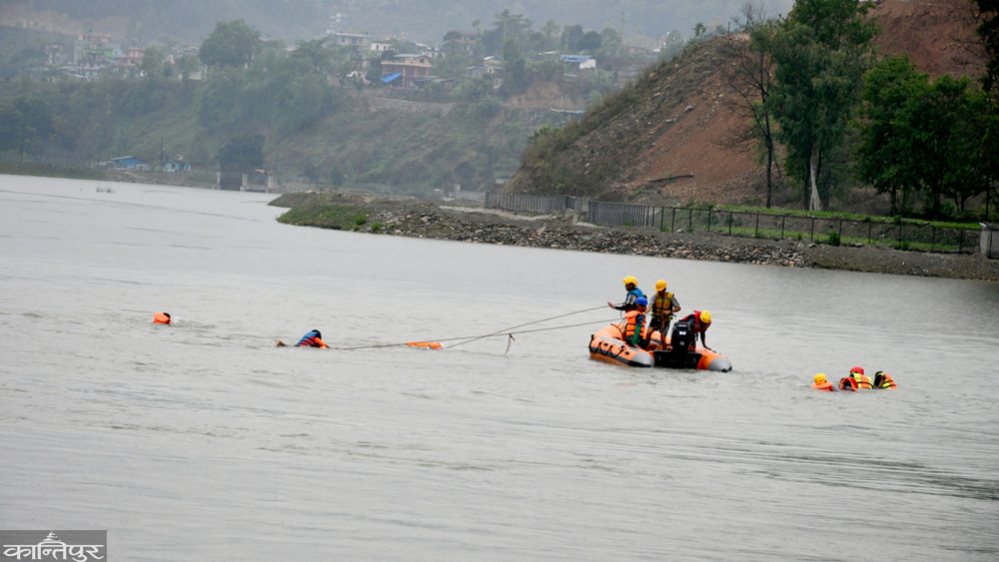
According to the National Disaster Authority's "preliminary assessment of damage and loss", the damage was more than 46 billion 68 million 43 million . 38 billion 92 million 34 million for physical infrastructure including roads, bridges, hydropower, 5 billion 88 million 28 million for agriculture and livestock, 7 million 2 million for education, 2 million 17 million for health and 1 billion 35 million for irrigation.
At the beginning of the monsoon, the hill districts of Koshi province were damaged. Towards the end of October 10th to 13th, Bagmati Province along with Kathmandu Valley suffered the most damage due to floods, landslides and inundation caused by incessant and heavy rains. 276 people died in three days of heavy rain. 18 people were missing and 178 were injured.
As mentioned in the National Disaster Risk Reduction and Management Agency's Action Plan on 'Monsoon Preparedness and Response', 80 percent of the total rainfall throughout the country occurs during the four months of June 18 to October 14 and 20 percent of the rainfall occurs in the remaining eight months.